
The First Public Railway Carried the Future in 36 Wagons
On September 27, 1825, Locomotion No. 1 pulled 36 wagons on the first public steam passenger railway and helped launch the modern railway age.
By Ryan Nichols
- 9 total reach
- 0 reading now•0 active 24h
- 0 shares•0 inbound
- 0 comments
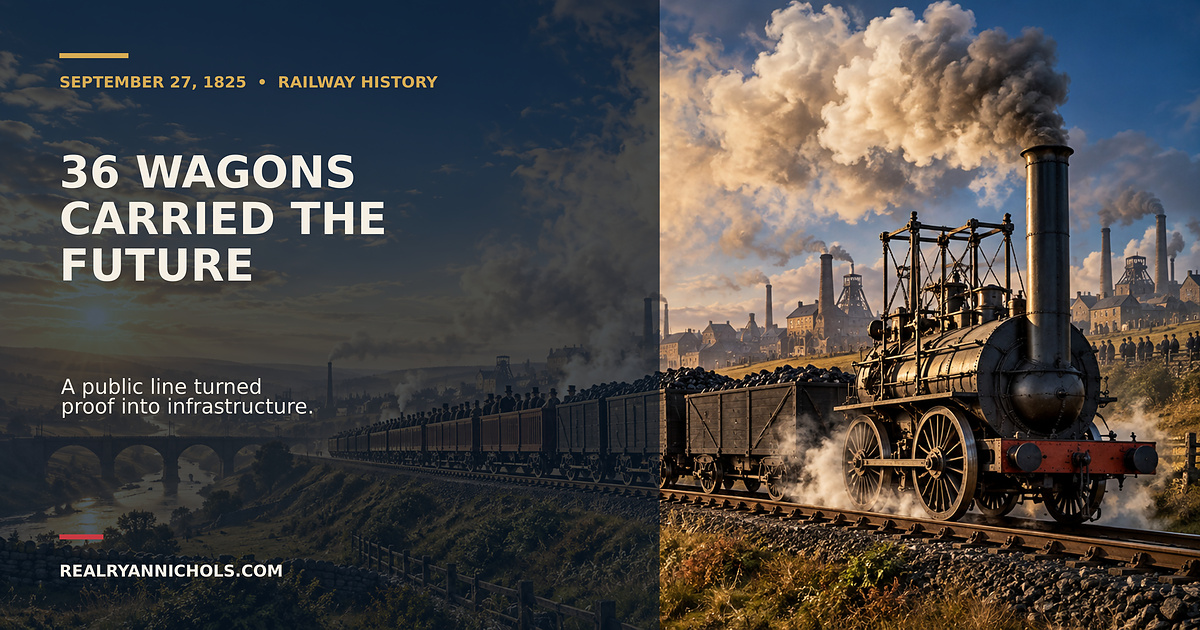
The engine was not the first steam locomotive.
The technology was not perfect.
The train was crowded beyond its official tickets, mixed passengers with coal, and moved through a world that still had reasons to doubt steam power.
Then it left Shildon on September 27, 1825.
The modern railway age moved with it.
A public line, not a private experiment
The National Railway Museum describes the opening journey of the Stockton and Darlington Railway as the first steam-hauled passenger train on a public railway.
Locomotion No. 1 pulled a mixture of coal wagons, one carriage, and wagons filled with passengers. Crowds gathered along the route through County Durham to watch.
The locomotive mattered because of the system around it.
Steam engines had moved before. On this day, a public railway put one to work carrying goods and people on a line built to connect coal country with markets and docks.
The machine was becoming infrastructure.
Reader poll
What makes an invention change the world?
Tap your answer to vote
One tap. Free and anonymous. No signup to vote.
There were more riders than tickets
The museum's history of Locomotion No. 1 says there were officially about 300 ticket holders, but perhaps twice that number climbed aboard.
At the opening, George Stephenson controlled Locomotion as it pulled 36 wagons toward the Stockton terminus.
That picture matters.
This was not a clean demonstration inside a laboratory. It was a public event full of weight, risk, noise, smoke, excitement, and people who wanted to be close enough to say they had seen the future move.
The exact number of passengers is uncertain. The documentary record is clearer about the train's composition, the public crowds, the date, the route, and the historic role of the journey.
The engine was important without being perfect
The National Railway Museum makes a careful point: Locomotion was not the first steam locomotive and did not contain revolutionary technology by itself.
Its importance came from the September 1825 opening and its working life on the Stockton and Darlington Railway.
That is a useful correction to the way innovation stories are often told.
We like a single inventor, a single machine, and a single flash of genius. Real change usually needs more:
- a problem worth solving;
- capital willing to take a risk;
- legal authority to build;
- a route connecting real places;
- workers who learn through failure;
- maintenance after the celebration; and
- people willing to use the thing before it feels normal.
The locomotive became transformative because it entered an operating system.
The railway began as a fight over practical value
The museum's Leonard Raisbeck archive traces the railway idea back to arguments over how to connect County Durham coalfields with Stockton, Darlington, the River Tees, and wider markets.
A canal had supporters. A railway had supporters. Towns and investors had competing interests. Geography shaped the argument because the chosen route could decide who gained access to trade.
Raisbeck advocated for a railway years before the opening. The project moved through surveys, public debate, committee work, financing, law, engineering, and construction.
The first famous train was not the beginning of the work.
It was the moment years of invisible work became visible to a crowd.
The work after opening made the revolution real
The early railway still had to learn how to operate.
The museum notes that steam power was unreliable and that many ordinary trains on the line remained horse-drawn at first. Engineers and railway workers developed more consistent locomotives, repair methods, manufacturing practices, schedules, and a new working culture.
The work could be deadly. Locomotion's boiler exploded in 1828, killing its driver, John Cree. The engine was rebuilt and returned to service.
Locomotion worked on the railway until 1850, later served as a stationary pumping engine, and was eventually preserved in the national collection.
The machine people remember from the opening day carries the marks of later rebuilding. Its surviving appearance reflects work done after the accident, not only the form it had when the crowds first saw it.
That makes the artifact more honest, not less important.
The lesson is bigger than the locomotive
The first public railway did not win because the opening-day engine was flawless.
It won because the line connected something people needed moved with places willing to receive it. It created a repeatable route. Then workers kept improving the machine and the system.
The story sits beside other moments when a small operating proof carried a much larger future. The first FedEx night moved 186 packages through one hub. The first solar car was only 15 inches long. The telegraph wires woke up in a storm and revealed a force people were still learning to understand.
None of those beginnings looked like the mature system that followed.
They moved enough truth into the world for the next version to be built.
Thirty-six wagons left the station
On September 27, 1825, the train carried coal, passengers, risk, and proof.
People climbed aboard faster than the ticket system could contain them. Crowds watched from the route. The locomotive pulled 36 wagons toward Stockton.
The future did not arrive quietly or perfectly.
It arrived working.
If you want more verified stories about inventions, institutions, service, and the imperfect first versions that changed what came next, join the RealRyanNichols.com email or text list. The next story will come directly to you.
Reader poll
Which beginning should the next story follow?
Tap your answer to vote
One tap. Free and anonymous. No signup to vote.
Editorial visual disclosure: The header image is an original AI-assisted historical illustration. It does not depict a surviving photograph, exact wagon configuration, or specific person from the 1825 opening.
You made it to the end
Most people quit at the headline. You didn’t.
So don’t stop here. Pick one.
Read the book
Fighting Shadows is the whole story in my own words: the road into January 6, the D.C. jail, and the fight to get the record out.See the book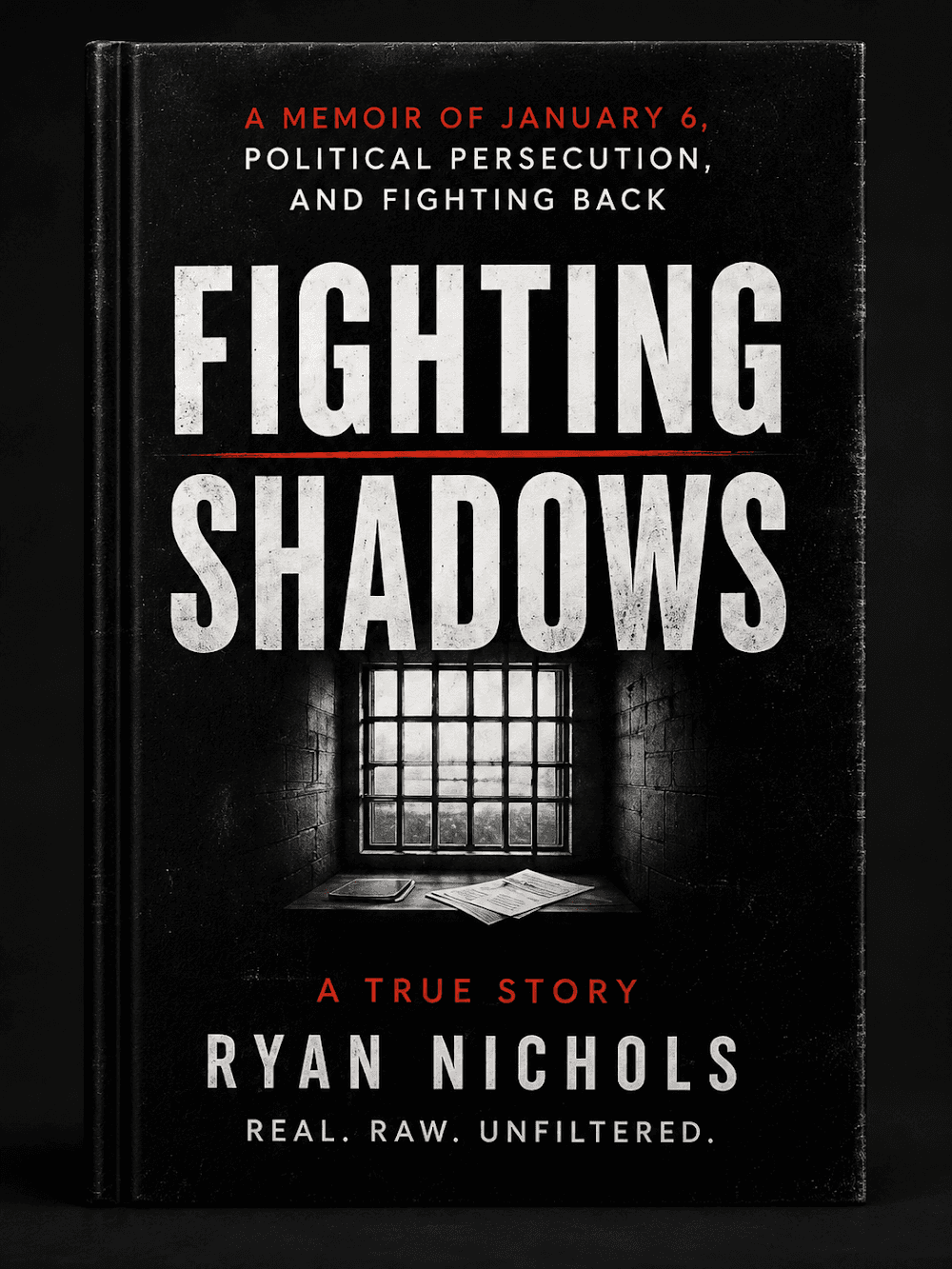
Follow the case
The record is still being written. Get one email when something new drops on it.
Hire Ryan
I built this site. Want one that brings your business real leads? Start with a free 30-minute call.See the services

Tap how this hits you — no signup, everyone sees the count
Share this post — get it back in front of people
Comments
Speak here
Create an account to comment.
This is where people can say what gets buried or cancelled elsewhere. Comments are signed-only, moderated, and tied to a real profile so the record stays usable.
No approved comments yet. Create an account and put the first opinion on the record.