
The First FedEx Night Moved 186 Packages Through One Hub
FedEx began with 14 aircraft, 389 workers, and only 186 packages. Its hub system showed why connected operations can matter more than isolated effort.
By Ryan Nichols
- 170 total reach
- 0 reading now•0 active 24h
- 0 shares•0 inbound
- 0 comments
By Ryan Nichols

On the first official night, the system looked too large for the result.
Federal Express had 389 team members and 14 aircraft. They moved 186 packages to 25 American cities.
That is fewer than 14 packages per airplane.
If you judged the company by that night's efficiency alone, the conclusion could have been brutal. Too many people. Too many planes. Too much infrastructure. Not enough packages.
But the small number was moving through a system built for a much larger future.
The first night was April 17, 1973
FedEx's official company history says Federal Express began operations in Memphis, Tennessee, on April 17, 1973. Fourteen aircraft delivered 186 packages to 25 cities that night.
The company says Memphis was chosen because it was centrally located, its airport was rarely closed by bad weather, officials were willing to make improvements, and hangar space was available.
The Smithsonian's account of Memphis confirms the first-night figures and notes that one of the original Dassault Falcon aircraft entered the National Air and Space Museum collection.
The striking fact is not merely that airplanes carried packages overnight. Air cargo already existed.
The operating idea was that packages from different cities could flow into one central point, be sorted together, and then flow back out toward their destinations. Instead of trying to build every possible city-to-city connection, the network created a common handoff.
The hub was not a stop added to the system. The hub was the system.
{{< poll id="fedex-hub-1" question="What usually breaks first as a business grows?" options="The handoffs|The follow-up|The records|The owner's capacity" >}}
One hub reduced the number of separate problems
Imagine trying to connect 25 cities directly to every other city. Each route becomes its own schedule, its own capacity problem, and its own chance for failure.
A central hub changes the shape of the problem. Each city needs a reliable path into the hub and a reliable path back out. Sorting rules inside the hub decide what goes where next.
That structure creates a business lesson far beyond aviation.
Most growing companies do not fail because nobody is working. They fail because the work travels through too many disconnected routes.
A lead arrives through Facebook. Another comes through a website form. A customer texts one employee. A voicemail sits on another phone. A payment lives in one system. The work order lives in somebody's memory. The owner becomes the only person who knows how to connect the pieces.
The business has activity, but it does not have a hub.
If I Disappeared Tomorrow, Would Your Business Still Run? asks what happens when every route quietly depends on one human switchboard.
A small first result can still test the right system
The 186-package figure is useful because it protects the story from easy mythology.
The first night was not a massive victory by volume. It was proof that the coordinated motion could happen. Aircraft could arrive. Packages could be sorted. Destinations could be assigned. The network could complete the loop.
A good early test does not have to prove the final scale. It has to expose whether the important handoffs work.
Can the lead enter once and reach the right person? Can the customer see what happens next? Can the team tell whether the follow-up occurred? Can a payment trigger delivery? Can the owner see a failure before a customer has to report it?
That is why The Start Button Made a Complicated Machine Feel Possible matters. A system becomes usable when the next action is visible. It becomes scalable when the handoff after that action is visible too.
{{< poll id="fedex-hub-2" question="Where does your customer journey lose the most momentum?" options="First response|Quote or booking|Payment|Delivery and follow-up" >}}
The infrastructure was built before the volume arrived
Building for scale too early can waste money. Building nothing until demand becomes overwhelming can waste the opportunity.
The answer is not to imitate an airline. It is to identify the smallest system that can survive the next level of demand.
For a local service business, that might be one form that creates one customer record, sends one acknowledgment, assigns one owner, schedules one follow-up, and records one outcome.
For a school, it might be one path from inquiry to tour, enrollment, payment plan, course access, and graduate follow-up.
For a professional service firm, it might be one intake that separates urgent matters, qualified prospects, existing clients, and people who need a different resource.
The visible result may still be small. The important question is whether each additional customer can travel through the same dependable route without requiring the owner to reinvent the trip.
Remove Friction Before You Add More Pressure offers a practical way to find the places where work collapses between steps.
A network is only as real as its handoffs
FedEx did not create value by owning isolated airplanes. The value came from timing them together, bringing the work to a common point, sorting it correctly, and completing delivery.
Your website, CRM, phone, calendar, payment processor, email system, and advertising accounts are also isolated equipment until they share a route.
Buying another tool may add capability. It does not automatically add coordination.
The work is in the handoffs.
{{< poll id="fedex-hub-3" question="What would one connected business hub need to control first?" options="Every new lead|Every open job|Every payment|Every follow-up" >}}
If your business is getting attention but the leads, follow-up, payments, and delivery still live in separate places, work with Ryan and The LeadFlow Pro to map the route and build the operating system behind it. Start at The LeadFlow Pro and ask for a business growth diagnostic.
{{< share >}}
Verification note: Historical claims were checked against FedEx's official company history and Smithsonian reporting on August 28, 2026.
Editorial visual disclosure: The header image is an original AI-assisted historical illustration. It is symbolic, contains no real person's likeness, and is not documentary evidence of the 1973 Federal Express operation.
You made it to the end
Most people quit at the headline. You didn’t.
So don’t stop here. Pick one.
Read the book
Fighting Shadows is the whole story in my own words: the road into January 6, the D.C. jail, and the fight to get the record out.See the book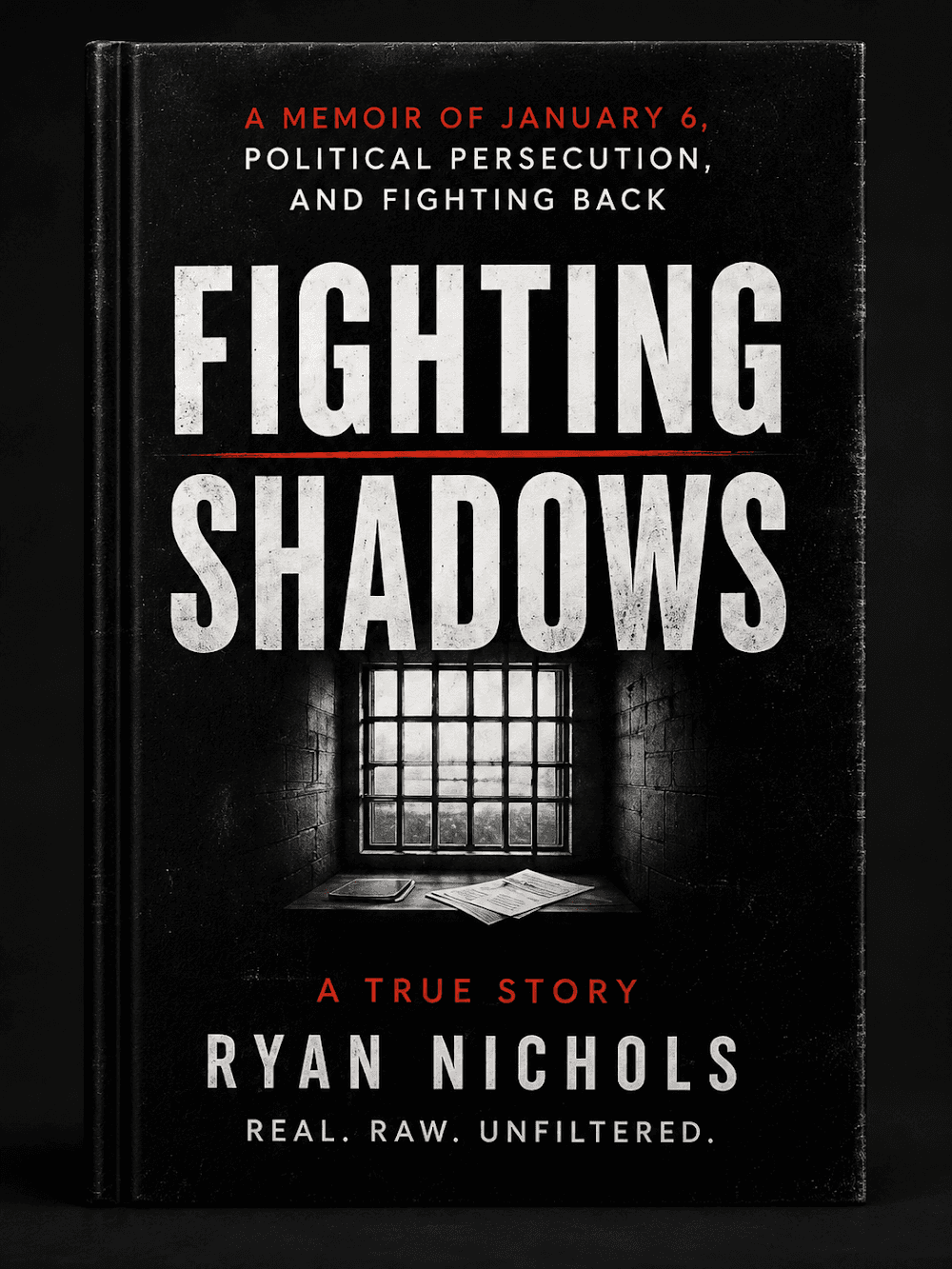
Follow the case
The record is still being written. Get one email when something new drops on it.
Hire Ryan
I built this site. Want one that brings your business real leads? Start with a free 30-minute call.See the services



Tap how this hits you — no signup, everyone sees the count
Share this post — get it back in front of people
Comments
Speak here
Create an account to comment.
This is where people can say what gets buried or cancelled elsewhere. Comments are signed-only, moderated, and tied to a real profile so the record stays usable.
No approved comments yet. Create an account and put the first opinion on the record.