
The Start Button Made a Complicated Machine Feel Possible
Windows 95 launched on August 24, 1995. Its Start button showed that powerful systems become useful when ordinary people can clearly see where to begin.
By Ryan Nichols
- 154 total reach
- 0 reading now•0 active 24h
- 0 shares•0 inbound
- 0 comments
By Ryan Nichols
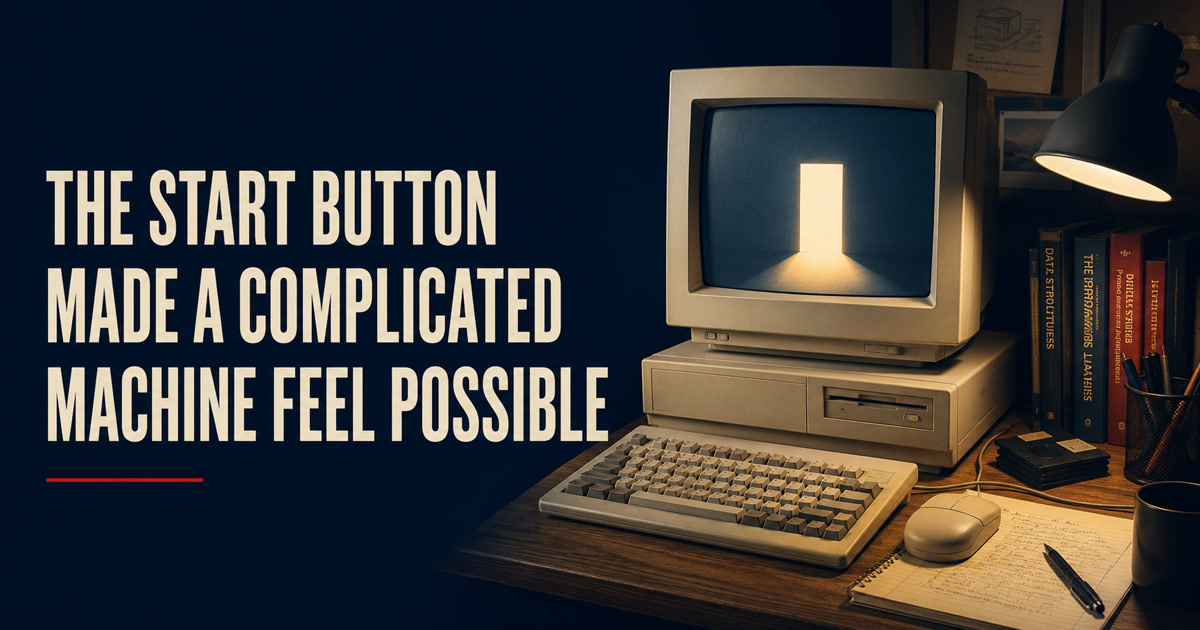
On August 24, 1995, people lined up outside stores to buy an operating system.
Think about how strange that sounds.
They were not waiting for a concert ticket, a new car, or a game console. They were waiting for software that helped a computer manage files, programs, hardware, and memory.
Microsoft spent heavily to make Windows 95 feel like a cultural event. The launch had music, television personalities, midnight sales, and worldwide attention.
But the part that lasted was much smaller.
A button in the lower-left corner told people where to begin.
It said Start.
Reader poll
What makes a new system feel usable first?
Tap your answer to vote
One tap. Free and anonymous. No signup to vote.
The machine had power. People needed a doorway
Personal computers were becoming more capable, but capability creates its own problem.
Where do the programs live? Which window is open? How do you find a file? Where do settings belong? What happens when you connect new hardware? How do you turn the machine off without hurting something?
Technical people can learn a complicated map and forget that a new user does not even know what counts as a landmark.
Microsoft's launch history says Windows 95 introduced the Start button and taskbar, along with desktop shortcuts, the Recycle Bin, support for longer file names, and “plug and play” hardware installation.
Those features did different jobs, but they shared an idea.
Make the computer explain itself through the interface.
The Start button did not remove complexity from the operating system. It gave the complexity a front door.
The launch made software look like a public event
The Computer History Museum describes the August 24 launch as one of the most sweeping media campaigns in computing history. Its timeline says more than one million copies sold in the first four days.
Microsoft's own retrospective remembers midnight store launches and customer lines around the world. The company later reported seven million copies sold in the first five weeks.
By the first anniversary, Microsoft said 40 million units had shipped worldwide.
Sales figures from a company announcement deserve to be identified as company figures. They still demonstrate the scale of adoption.
People were not only buying more software. They were accepting a new common language for using a computer.
Start. Taskbar. Desktop. Explorer. Shortcuts.
Those words helped millions of people build a mental model of a system they could not see inside.
Reader poll
Which design idea matters most in a business system?
Tap your answer to vote
One tap. Free and anonymous. No signup to vote.
A visible beginning reduces fear
The word Start carried more weight than its size.
It answered the first anxious question before the user had to ask it.
What do I click?
A good starting point lowers the price of curiosity. The user can explore because returning to the beginning feels possible.
The taskbar added another kind of confidence. It showed which programs were open. The desktop provided a place to keep recognizable objects. The Recycle Bin made deletion feel recoverable instead of final.
These were interface choices, but they were also trust choices.
A system feels safer when it shows where you are, what is happening, and how to recover from a mistake.
Grace Hopper Built a Bridge Between Words and Machines tells an earlier chapter of the same story. Computing expanded when people could communicate with machines through language closer to their own.
Windows 95 carried that principle into the everyday interface.
The lesson is larger than computers
Businesses build invisible complexity every day.
The lead arrives in one inbox. The customer record lives in another system. The invoice is somewhere else. Notes stay in a phone. Follow-up depends on memory. The owner knows how it all connects because the owner has been carrying the map for years.
Then a new employee opens the system and asks the same question Windows users asked in 1995.
Where do I start?
If the answer requires a forty-minute explanation from the owner, the business does not have a clear front door.
The problem may not be missing power. It may be missing orientation.
The Barcode Worked Because Everybody Agreed to Read the Same Lines is about shared standards connecting separate systems. A front door performs a related job. It gives separate people one shared entry point.
Four questions every system should answer without a meeting
A usable system should make four answers visible.
1. Where does new work enter?
One form, queue, inbox, or dashboard should show what just arrived.
If new work can enter through six channels without one combined view, something will be missed.
2. What needs attention now?
Status should not live in one person's memory.
The system should show what is new, waiting, blocked, overdue, or complete.
3. Who owns the next action?
A record without an owner is a future excuse.
The next responsible person should be visible, along with the promised time.
4. How does somebody recover from a mistake?
People avoid systems that punish exploration.
History, drafts, confirmations, backups, and reversible steps create trust. The Recycle Bin became familiar because it admitted a basic truth: people click the wrong thing.
Reader poll
Which answer is missing in your work today?
Tap your answer to vote
One tap. Free and anonymous. No signup to vote.
Familiar does not mean simple underneath
Windows 95 was not simple software.
It had technical limits, compatibility problems, and a long list of things users still had to learn. “Plug and play” did not make every hardware installation painless. A successful launch does not erase product flaws.
The achievement was not making the machine simple.
It was making the first layer understandable enough for ordinary people to enter.
The Black Box Began With a Memo Nobody Wanted shows another side of system design. Good systems preserve information people will need later, even when collecting it feels inconvenient now.
The Start button solved the opposite moment. Before the record can be preserved, somebody has to know how to begin the work.
Give the work one obvious place to start
Thirty-one years after the Windows 95 launch, the Start button is still recognizable because the problem never left.
Power without orientation feels like confusion.
Features without a doorway feel like clutter.
A system becomes useful when a person can enter it, understand the next move, and recover without calling the builder every time.
If your business has plenty of software but no clear front door, work with Ryan to map the disconnected pieces and build one usable path through them.
What part of your work needs a Start button?
Reader poll
What should become obvious next?
Tap your answer to vote
One tap. Free and anonymous. No signup to vote.
Sharing this is the biggest help. Put it in front of one more person.
Verification note: Historical claims were checked on August 24, 2026 against Microsoft launch and anniversary records and the Computer History Museum's 1995 timeline. Sales figures attributed to Microsoft are presented as company-reported figures.
OG artwork disclosure: The social image is an original synthetic editorial illustration. It is not archival evidence, does not show Microsoft branding or a documented computer, and does not depict an identifiable person.
You made it to the end
Most people quit at the headline. You didn’t.
So don’t stop here. Pick one.
Read the book
Fighting Shadows is the whole story in my own words: the road into January 6, the D.C. jail, and the fight to get the record out.See the book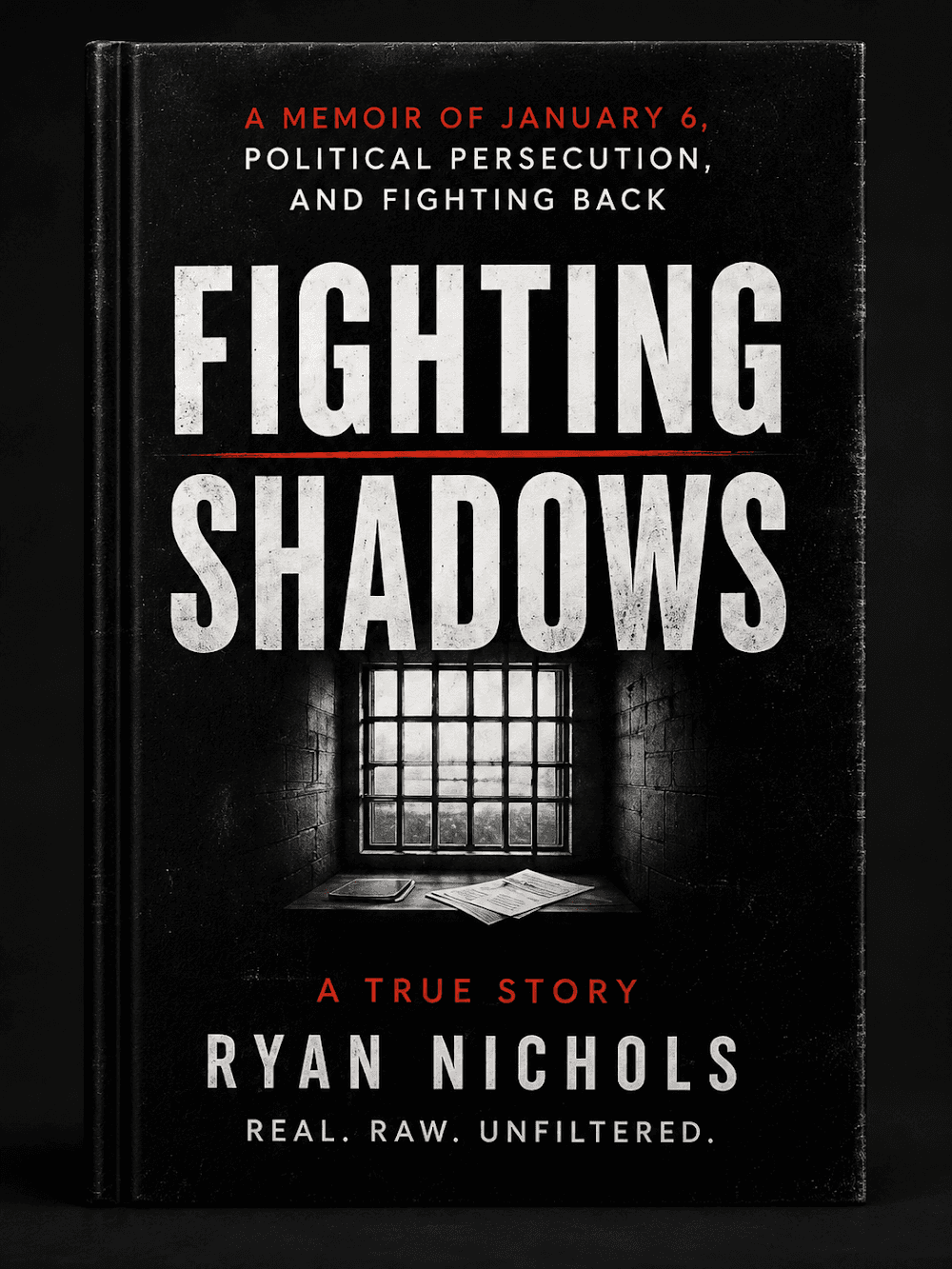
Follow the case
The record is still being written. Get one email when something new drops on it.
Hire Ryan
I built this site. Want one that brings your business real leads? Start with a free 30-minute call.See the services

Tap how this hits you — no signup, everyone sees the count
Share this post — get it back in front of people
Comments
Speak here
Create an account to comment.
This is where people can say what gets buried or cancelled elsewhere. Comments are signed-only, moderated, and tied to a real profile so the record stays usable.
No approved comments yet. Create an account and put the first opinion on the record.