
The Barcode Worked Because Everybody Agreed to Read the Same Lines
The UPC barcode changed retail because competing companies adopted one shared product standard. Its history offers a practical lesson for connected businesses.
By Ryan Nichols
- 156 total reach
- 0 reading now•0 active 24h
- 0 shares•0 inbound
- 0 comments
By Ryan Nichols
Facts last checked: August 9, 2026, 5:15 a.m. Central
The first successful supermarket barcode scan was a pack of chewing gum.
That small purchase on June 26, 1974, did not look like the beginning of a global data system. A cashier moved one item across a scanner in an Ohio grocery store. A machine read lines on the package, matched them to a database, and found the price.
The impressive part was not only the scanner.
The real breakthrough happened before that moment, when retailers, manufacturers, engineers, and standards organizations agreed that every product should identify itself in a language the whole system could read.
The barcode worked because competitors accepted the same rule.
Reader poll
Where does your business lose the most information?
Tap your answer to vote
One tap. Free and anonymous. No signup to vote.
Grocery stores had a data problem
By the late 1960s, American supermarkets carried thousands of products. Employees placed price labels on individual items and keyed numbers into cash registers. Retailers struggled to see accurate inventory or understand what customers were buying without slow manual work.
In 1970, grocery retailers and packaged-goods manufacturers called for a standard machine-readable symbol.
IBM's history of the Universal Product Code explains that engineer George Laurer led the company's response. Earlier barcode ideas used a circular bull's-eye pattern, but printing smears could make that design unreliable. Laurer's team developed a rectangular arrangement of black and white lines that could be scanned from different directions.
An industry committee selected the design, with modifications, and the UPC was formally introduced in 1973.
The code did not contain a beautiful product description. It carried a standardized identity. The checkout system used that identity to retrieve the description and price stored in a database.
That separation mattered. The lines did not need to explain everything. They needed to point every connected system to the same thing.
The first scan was ordinary on purpose
On June 26, 1974, a Marsh supermarket in Troy, Ohio, scanned a 67-cent package of Wrigley's Juicy Fruit gum.
The Smithsonian's National Museum of American History preserves one of the first scanners. Its record explains that a laser reflected from the code, a photo-diode detected the signal, and a computerized register matched that signal with a stored database to determine the product.
The package was not important because gum changed the world that morning.
It was important because an ordinary product moved through a complete handoff:
- A manufacturer assigned and printed an identity.
- A scanner read it.
- A register translated it.
- A database returned the price.
- The sale updated the store's record.
One item crossed several systems without a person retyping its identity at every step.
Reader poll
What breaks most often between your tools?
Tap your answer to vote
One tap. Free and anonymous. No signup to vote.
Adoption was harder than invention
The early system faced a familiar business problem.
Retailers did not want to buy expensive scanners until enough products carried codes. Manufacturers did not want to redesign packaging until enough stores had scanners. The system became useful only when both sides committed.
IBM records that some shoppers doubted the system's accuracy. Labor groups worried about jobs. Retailers questioned the investment. Manufacturers faced new labeling costs.
Those objections were not irrational. A standard can impose real transition costs, and a connector is useless when only one side is connected.
The grocery industry eventually reached enough common adoption for the benefits to become visible. Checkout moved faster. Manual entry errors fell. Stores gained better inventory information. Manufacturers and retailers could coordinate around the same product identity.
GS1's historical timeline shows how the standard expanded. European numbering became compatible with the American UPC. Barcodes moved beyond checkout counters to cartons and wholesale packs. Electronic data interchange later helped trading partners exchange information using shared standards.
The lines on the package were only the front door to a larger agreement.
Your business probably has a barcode problem
Most small businesses do not need to invent a product code.
They do need to decide whether “John Smith” in a Facebook lead form is the same John Smith in the CRM, email platform, calendar, proposal system, invoice tool, and customer-support record.
Without a shared identity, the business creates duplicates. A salesperson cannot see the earlier conversation. A customer repeats the same information. Marketing reports a lead while accounting reports a sale, but nobody can prove those records belong to the same person.
The tools may all work individually. The handoff still fails.
That is the same lesson inside the shipping container's common dimensions. A box became transformative when ships, trucks, cranes, and ports agreed how to handle it.
It is also the operational lesson behind Toyota's stop-the-line rule. A signal only protects quality when people agree what it means, who responds, and what happens next.
Build the shared language before adding another tool
Before buying another platform, write down the identities and events your systems must share.
For a lead-driven business, that list may include:
- one contact ID;
- verified phone and email fields;
- original lead source;
- consent status;
- assigned owner;
- current pipeline stage;
- appointment date;
- proposal status;
- payment status; and
- the last verified activity.
Then decide which system owns each fact.
The CRM may own the pipeline stage. The calendar may own the appointment time. The accounting tool may own payment status. The important part is that every connector knows which value is authoritative and how records match.
Do not let five apps create five versions of the customer.
Reader poll
What would help your system most right now?
Tap your answer to vote
One tap. Free and anonymous. No signup to vote.
Standards create leverage
A good standard can feel boring.
It is a field name, an agreed format, a required receipt, or a definition that everyone uses the same way. It does not make a dramatic sales demonstration by itself.
But boring agreements create powerful systems.
They let one tool hand work to another. They let a new employee understand the record. They let a report connect attention to revenue. They make replacement possible because the business owns the meaning of its data instead of depending on one vendor's private language.
Kodak's mistake was not a failure to invent. As the story of its early digital camera shows, invention cannot help an organization that protects the old system from what the new information means.
The barcode succeeded because an industry changed the system around the invention.
The invitation
Your business does not need every available app.
It needs the right tools, a shared language, a clear owner for every handoff, and evidence that the connection worked.
If your leads, messages, appointments, proposals, and payments are scattered across disconnected platforms, work with Ryan to map the stack before adding more software. The goal is not a wall of logos. The goal is a system where attention can move all the way to a sale without losing the person in the middle.
The first barcode scan looked ordinary. That was the point.
A great system makes the correct handoff ordinary too.
Sharing this is the biggest help. Put it in front of one more person.
Primary and authoritative sources
- IBM, history of the Universal Product Code
- National Museum of American History, early supermarket scanner collection record
- GS1, historical timeline of barcode standards
OG artwork disclosure: The social image is an original synthetic historical reconstruction. It is not an authentic photograph of the first UPC scan, a real product package, or a surviving scanner.
You made it to the end
Most people quit at the headline. You didn’t.
So don’t stop here. Pick one.
Read the book
Fighting Shadows is the whole story in my own words: the road into January 6, the D.C. jail, and the fight to get the record out.See the book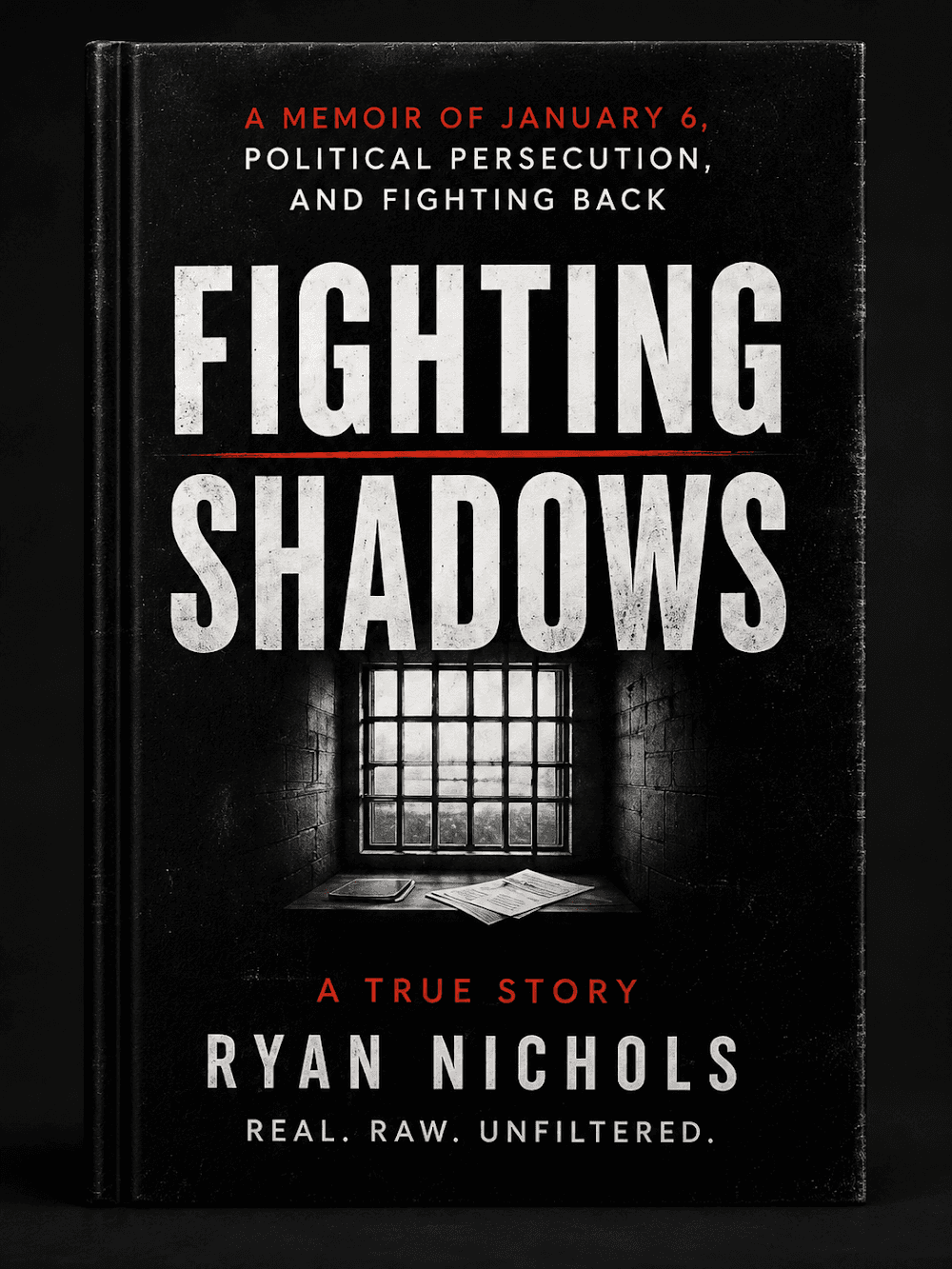
Follow the case
The record is still being written. Get one email when something new drops on it.
Hire Ryan
I built this site. Want one that brings your business real leads? Start with a free 30-minute call.See the services
Tap how this hits you — no signup, everyone sees the count
Share this post — get it back in front of people
Comments
Speak here
Create an account to comment.
This is where people can say what gets buried or cancelled elsewhere. Comments are signed-only, moderated, and tied to a real profile so the record stays usable.
No approved comments yet. Create an account and put the first opinion on the record.