
The Broken Laser Pointer That Proved the Market Was There
In September 1995, the first item sold on the site that became eBay was a broken laser pointer. The unlikely sale proved a marketplace could exist.
By Ryan Nichols
- 147 total reach
- 0 reading now•0 active 24h
- 0 shares•0 inbound
- 0 comments
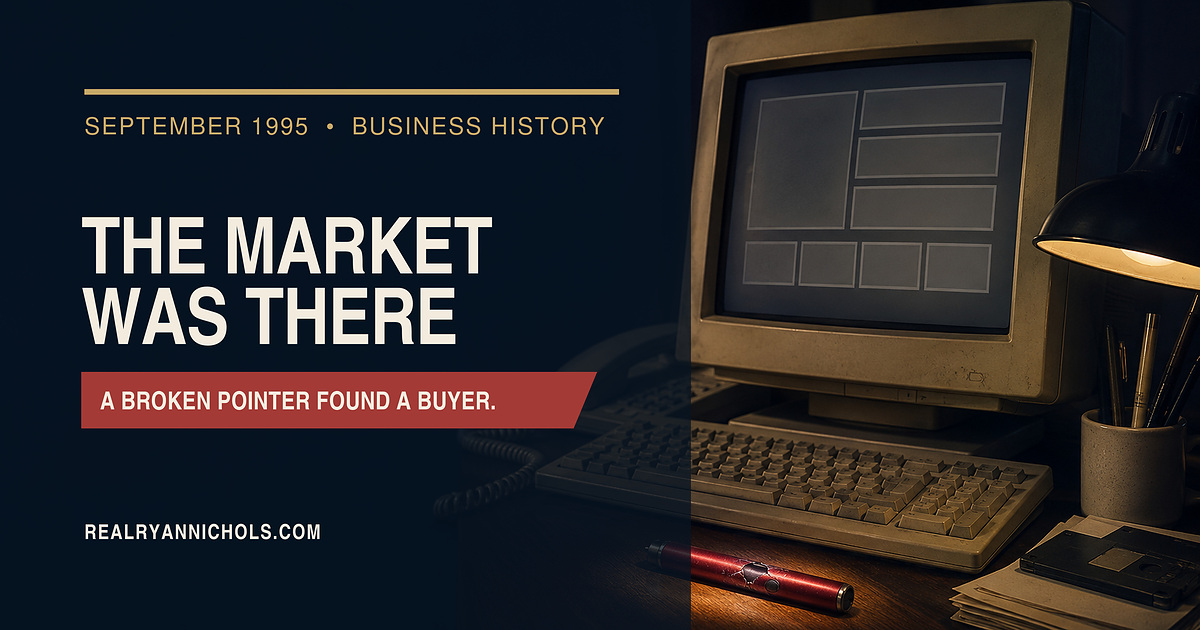
The first item sold on the site that became eBay was broken.
That was not a mistake in the story.
It was the proof.
In September 1995, Pierre Omidyar launched AuctionWeb after spending Labor Day weekend writing code on his personal computer. The company's official history says Canadian buyer Mark Fraser purchased the first item Omidyar listed: a broken laser pointer.
The object did not demonstrate the value of a laser pointer.
It demonstrated the value of a market.
The buyer saw something the seller did not need
Most people looking at a broken gadget see trash, a repair job, or a drawer item that should have been thrown away last year.
That view makes sense when the audience is one household or one local shelf.
An open marketplace changes the math. The person who owns the object does not have to want it. The buyer does not have to want the object for its original purpose. The platform's job is to let those two facts meet.
Omidyar did not need a warehouse full of perfect products to test the idea. One odd listing and one willing buyer were enough to expose the possibility.
That is what good validation looks like. It does not prove every future feature. It proves the smallest important uncertainty.
In this case: will a stranger trust the system enough to buy something from another stranger?
Reader poll
What made the first sale most important?
Tap your answer to vote
One tap. Free and anonymous. No signup to vote.
A myth grew because the truth felt too small
The official eBay history also addresses a more polished origin story. A tale circulated that Omidyar created the site to help his wife collect Pez dispensers. The company says that story was fabricated.
The real beginning is less tidy and more useful.
A founder wrote code at home. The early site was called AuctionWeb. A Canadian bought a broken laser pointer. The transaction revealed demand that would have been invisible in a smaller room.
Business history often gets cleaned up after success. The first experiment becomes a master plan. The lucky break becomes a prediction. The awkward object disappears because it does not look serious enough beside the company that followed.
But the broken pointer is the part worth keeping.
It reminds builders that the first proof rarely looks like the final brand.
The platform was the product
The first sale did not depend on the company manufacturing a better pointer.
AuctionWeb created a connection, a listing, a transaction, and a reason for two people to trust a process that did not exist between them before.
That distinction matters for anyone building a marketplace, directory, lead system, or community platform today.
The inventory may belong to somebody else. The expertise may belong to somebody else. The opportunity can still belong to the system that makes discovery and trust easier.
The platform has to answer hard questions:
- Can the right person find the offer?
- Can both sides understand the terms?
- Can the system record what happened?
- Can a disagreement be handled without pretending it never occurred?
- Can one successful exchange happen again?
The technology matters. The transaction matters more.
Test the uncertainty, not the decoration
Builders often polish the home page before proving the exchange.
They name every plan, build every filter, and spend weeks arranging features around a transaction no real person has completed.
The AuctionWeb story points toward a harder discipline.
Write down the one uncertainty that could kill the idea.
For a service directory, it may be whether a qualified provider will answer a referred request. For a local marketplace, it may be whether a buyer will drive across town for a niche item. For a paid community, it may be whether one person will return after the first meeting.
Then create the smallest honest test that produces evidence.
Do not call interest a sale. Do not call a signup an active user. Do not call a demo a working operation. Name exactly what happened.
The First Solar Car Was 15 Inches Long carries the same lesson from a different machine. A small prototype can be real without pretending it solved everything.
Reader poll
What does your idea still need to prove?
Tap your answer to vote
One tap. Free and anonymous. No signup to vote.
The first receipt changes the conversation
Before the sale, the marketplace was a claim.
After the sale, it was still fragile. It was still small. It still had enormous unanswered questions. But one of those questions now had a receipt.
A real buyer found a real listing and completed a real exchange.
That does not guarantee a giant company. Most first transactions do not become eBay. It does change what the builder should investigate next.
The next question is no longer “Will anybody do this?” It becomes “Why did this person do it, what almost stopped them, and can the system serve the next person without breaking trust?”
That is forward motion grounded in evidence.
The pointer being broken made the evidence stronger. It showed that the market could reveal value the owner could not see.
Keep the odd beginning
The site was renamed eBay in 1997. The company grew far beyond one home computer and one broken object. The official timeline contains the milestones that came later.
But the first sale still carries the cleanest invitation.
Do not wait for the first proof to look impressive.
Build the smallest honest exchange. Let a real person make a real choice. Save the receipt. Then learn from what they did, not from the story you hoped to tell.
For another story about a small prototype carrying a much larger idea, read The First Solar Car Was 15 Inches Long.
Sharing this is the biggest help. Put it in front of one more person.
Historical details were verified September 3, 2026, against eBay's official company timeline. The lesson about validation is editorial analysis.
Editorial visual disclosure: The header image is an original AI-assisted conceptual illustration. It does not depict Pierre Omidyar, Mark Fraser, the actual first sale, or an authentic AuctionWeb screen.
You made it to the end
Most people quit at the headline. You didn’t.
So don’t stop here. Pick one.
Read the book
Fighting Shadows is the whole story in my own words: the road into January 6, the D.C. jail, and the fight to get the record out.See the book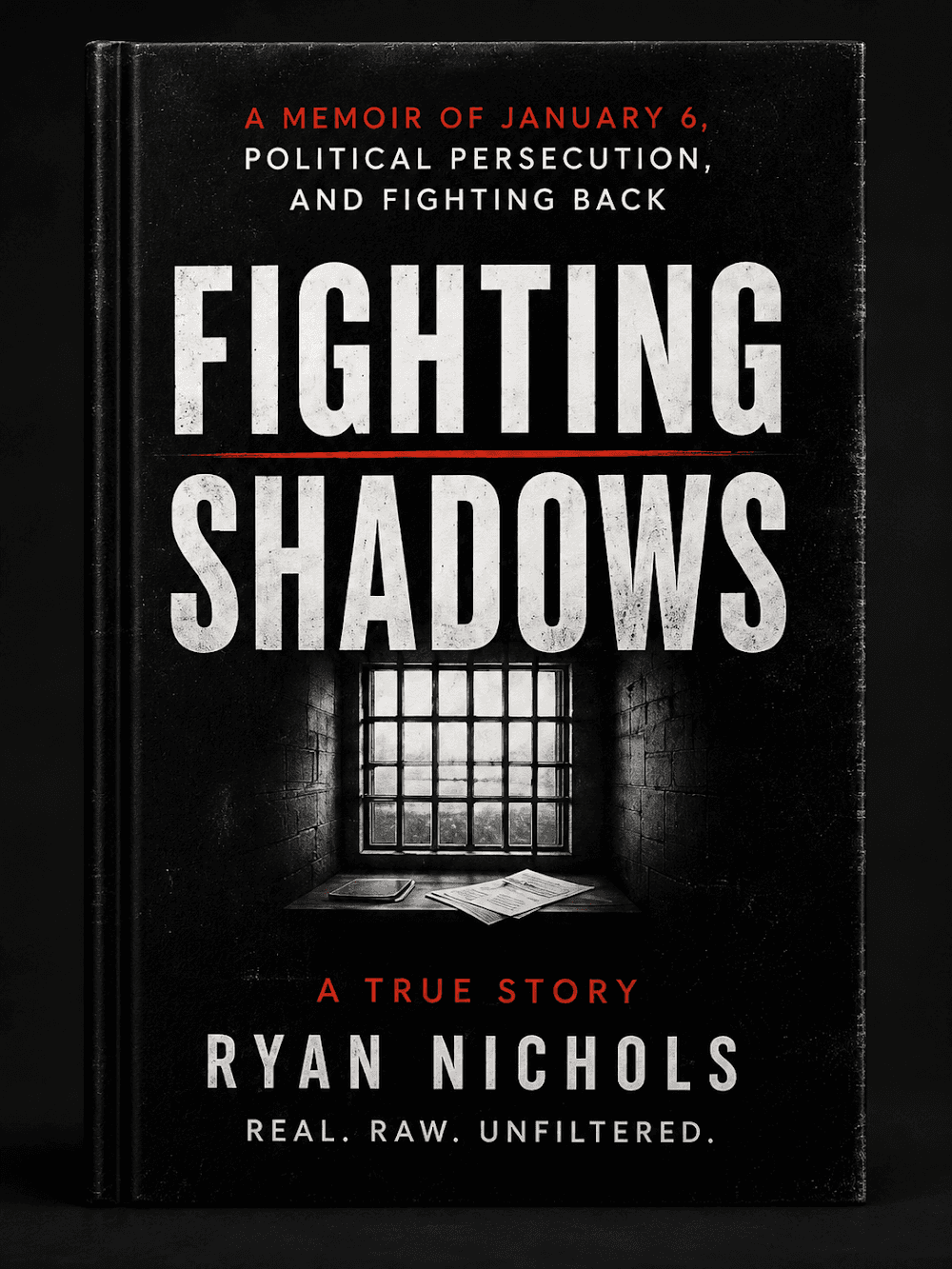
Follow the case
The record is still being written. Get one email when something new drops on it.
Hire Ryan
I built this site. Want one that brings your business real leads? Start with a free 30-minute call.See the services

Tap how this hits you — no signup, everyone sees the count
Share this post — get it back in front of people
Comments
Speak here
Create an account to comment.
This is where people can say what gets buried or cancelled elsewhere. Comments are signed-only, moderated, and tied to a real profile so the record stays usable.
No approved comments yet. Create an account and put the first opinion on the record.