
The Signature That Came After 41 Years
On August 26, 1920, a quiet certification made the Nineteenth Amendment part of the Constitution after 41 years of federal amendment work.
By Ryan Nichols
- 157 total reach
- 0 reading now•0 active 24h
- 0 shares•0 inbound
- 0 comments
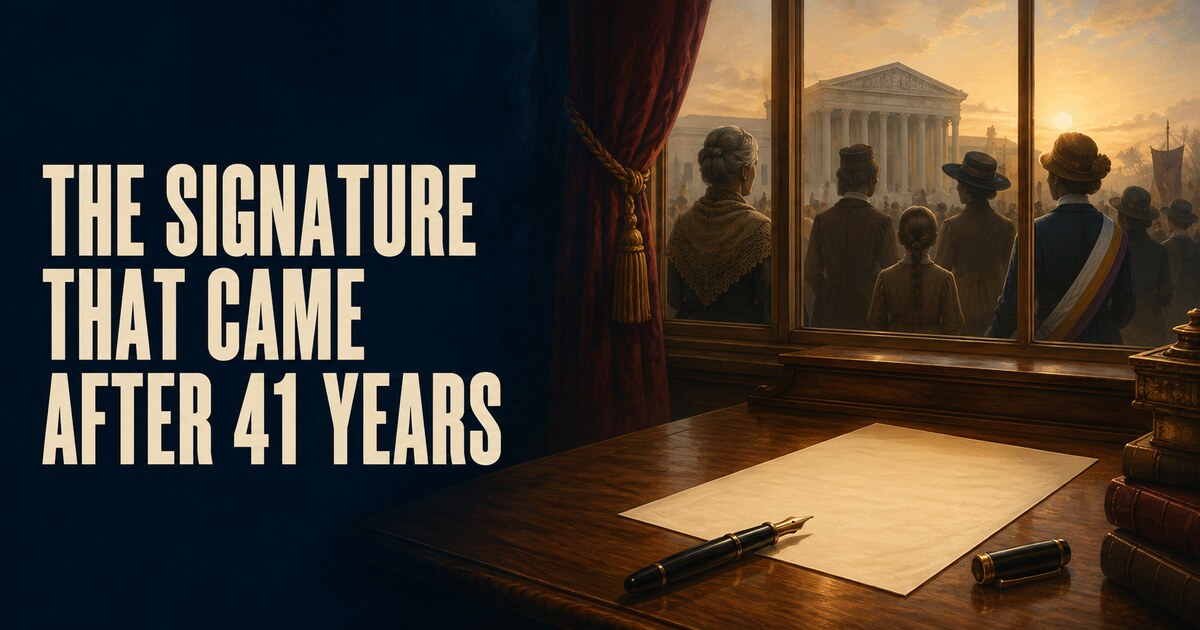
The final act was quiet.
On the morning of August 26, 1920, Secretary of State Bainbridge Colby signed the proclamation certifying that the Nineteenth Amendment had become part of the Constitution. The Library of Congress describes the certification as happening at his home, without the public ceremony some suffrage leaders had hoped to see.
No parade could have contained what came before it anyway.
The signature followed decades of petitions, speeches, organizing, state campaigns, defeats, marches, lobbying, civil disobedience, argument, and persistence. The federal amendment that finally passed Congress had first been introduced 41 years earlier.
The last signature was short. The road to it was not.
A sentence that waited for a country
The amendment's central rule is direct: the right of citizens to vote could not be denied or abridged by the United States or a state on account of sex.
According to the National Archives, a woman suffrage amendment was first introduced in Congress in 1878. Versions of that idea kept returning for the next 41 years. Generations of supporters lectured, wrote, organized, petitioned, picketed, and pressured institutions that had repeatedly said no.
The Senate finally approved the amendment on June 4, 1919, after the House had acted. The proposal then went to the states, where ratification by three-fourths of them was required.
This is where the story becomes local for Texans.
The Texas Legislative Reference Library records that Texas ratified the amendment on June 28, 1919. Texas was the ninth state to ratify and the first state in the South to do so.
That did not finish the amendment, but it moved the count.
{{< poll id="nineteenth-1" question="What keeps a long public cause alive?" options="People who keep organizing|A clear written demand|Small wins along the way|All three together" >}}
Tennessee supplied the final state
By August 1920, the amendment needed one more state.
Tennessee became the thirty-sixth state to ratify on August 18, crossing the constitutional threshold. The National Archives ratification record explains that Tennessee cleared the final hurdle and that Colby certified the ratification eight days later.
The dates matter because constitutional change is not one moment. Congress proposes. States ratify. Certification records that the required process has been completed.
What looked like one signature on August 26 rested on thousands of earlier acts that did not receive a signature, headline, or guarantee.
Somebody organized the meeting that failed. Somebody circulated the petition that was ignored. Somebody returned to a legislature that had rejected the demand before. Somebody made the argument in a room where the votes were not yet there.
History often remembers the door opening. It is less careful about counting how many hands pushed on it first.
The story of the Baltic Way human chain carries the same truth in a different form. A visible breakthrough is usually built from many ordinary people agreeing not to disappear.
The amendment was a breakthrough, not a finish line
The Nineteenth Amendment prohibited denial of the vote on account of sex. It changed the Constitution and expanded the electorate.
It did not erase every barrier to voting.
The National Archives cautions that ratification did not ensure full enfranchisement and that many women remained unable to vote because of discriminatory laws. The National Park Service documents how women of color still faced racial discrimination, intimidation, citizenship restrictions, and other obstacles after 1920.
That distinction does not make the amendment smaller. It makes the history honest.
A durable victory can be real and incomplete at the same time. One legal barrier can fall while other barriers remain. The people who benefit first do not have permission to declare the work finished for everybody else.
This is why the record matters. A simplified story says women won the vote and the struggle ended. The fuller story says the Constitution gained a new protection, millions of women gained access to the ballot, and many Americans still had to fight discriminatory systems that the new words did not automatically remove.
{{< poll id="nineteenth-2" question="How should we tell stories about incomplete victories?" options="Lead with the breakthrough|Lead with who remained excluded|Tell both in the same story|Focus on the original record" >}}
What the quiet certification teaches
The movement did not survive for 41 years because every year looked promising.
It survived because people learned how to continue through delay without confusing delay with defeat. They changed tactics. They worked state by state and federally. They argued among themselves. They made mistakes. They built coalitions. They kept returning to a clear constitutional demand.
Persistence alone does not make a cause right. Bad ideas can be persistent too. The useful lesson is narrower: when a cause is just, evidence-supported, and clearly stated, a failed vote is information about the present. It does not have to become a prophecy about the future.
The first Geneva Convention also began with people trying to turn witnessed harm into a rule that would outlast them. Read The Battlefield Memory That Became the First Geneva Convention for another story about moral conviction becoming durable structure.
The Nineteenth Amendment's certification also shows why procedure matters. The work was not complete when the idea became popular, when Congress voted, or when a decisive state legislature acted. Each step had a constitutional job. The record became durable because the process reached its finish.
The invitation inside the date
August 26 is worth remembering for more than a signature.
It is a reminder that public memory should hold the named leaders, the organizers whose names are less familiar, the women who were still excluded, the Texans who moved the ratification count, and the millions of citizens who carried the new right into an election.
The National Park Service reports that more than eight million women voted in the 1920 election. A sentence on paper became an act repeated in polling places across the country.
That is how constitutional language comes alive. Not because the words are self-executing, but because people use, defend, and extend the protection they contain.
{{< poll id="nineteenth-3" question="What part of this story stays with you?" options="The 41-year campaign|Texas ratifying early|The quiet certification|The work that remained" >}}
For another verified story about ordinary people making freedom visible, read The Human Chain That Reached Across Three Countries.
{{< share >}}
Verification note: Historical claims were checked against the National Archives, Library of Congress, National Park Service, U.S. Senate history, and Texas Legislative Reference Library on August 26, 2026.
Editorial visual disclosure: The header image is an original AI-assisted historical illustration. It is symbolic and does not depict the certification as documentary evidence or portray a real person's likeness.
You made it to the end
Most people quit at the headline. You didn’t.
So don’t stop here. Pick one.
Read the book
Fighting Shadows is the whole story in my own words: the road into January 6, the D.C. jail, and the fight to get the record out.See the book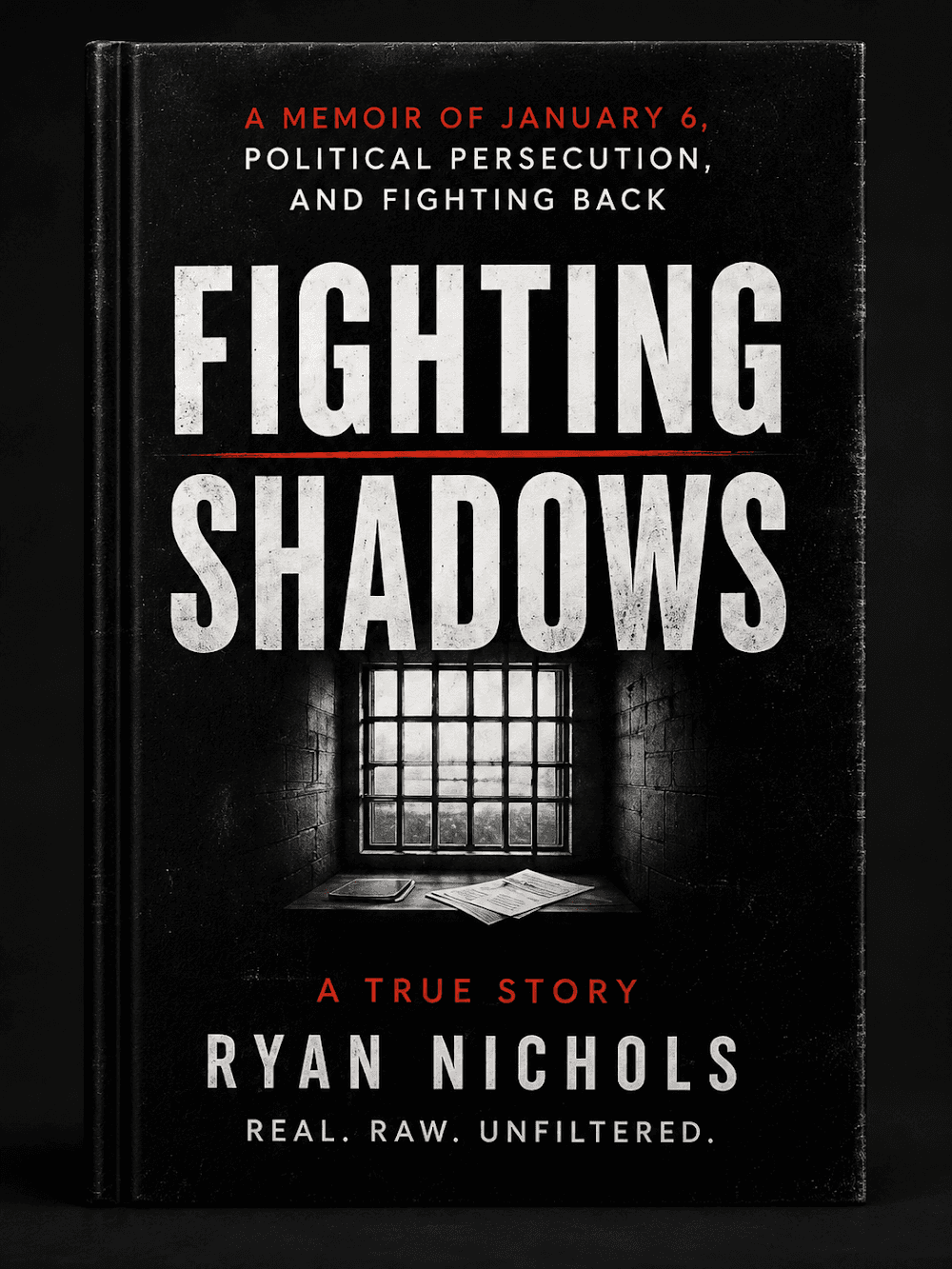
Follow the case
The record is still being written. Get one email when something new drops on it.
Hire Ryan
I built this site. Want one that brings your business real leads? Start with a free 30-minute call.See the services

Tap how this hits you — no signup, everyone sees the count
Share this post — get it back in front of people
Comments
Speak here
Create an account to comment.
This is where people can say what gets buried or cancelled elsewhere. Comments are signed-only, moderated, and tied to a real profile so the record stays usable.
No approved comments yet. Create an account and put the first opinion on the record.