
The Day the Little Rock Nine Reached a Locked Door
On September 4, 1957, nine Black students arrived to attend Central High. The Arkansas National Guard denied them entry, but not the future. Read the story.
By Ryan Nichols
- 148 total reach
- 0 reading now•0 active 24h
- 0 shares•0 inbound
- 0 comments
They came to school.
Nine teenagers arrived at Little Rock Central High School on September 4, 1957, after a federal court said desegregation would continue as planned.
They did not walk through the door.
The Arkansas National Guard blocked their entry.
That morning did not end the story. It exposed the argument at the center of it: whether a constitutional right exists only on paper, or whether public power must make that right real when another public power stands in the way.
The plan before the confrontation
The Supreme Court had ruled in 1954 that segregated public schools were inherently unequal. Little Rock's school board later adopted a gradual integration plan that would begin with the city's high schools in September 1957.
The students selected for Central High ranged from 14 to 17 years old, according to a National Archives account.
Their names were Melba Pattillo Beals, Carlotta Walls LaNier, Elizabeth Eckford, Ernest Green, Gloria Ray Karlmark, Jefferson Thomas, Minnijean Brown Trickey, Terrence Roberts, and Thelma Mothershed Wair.
They would become known together as the Little Rock Nine. On that morning, they were individual students expected to carry the weight of a federal court order through a hostile crowd and into a school building.
On September 2, Arkansas Governor Orval Faubus announced that he was activating the Arkansas National Guard. He claimed the action was needed to preserve order. The next day, a federal judge ruled that desegregation should proceed on September 4.
Then the students arrived.
Reader poll
What gives a court ruling real force?
Tap your answer to vote
One tap. Free and anonymous. No signup to vote.
One student arrived alone
The students had planned to meet and enter together. Elizabeth Eckford did not receive the message about the meeting place.
She arrived alone.
The National Archives history of Executive Order 10730 records that Eckford attempted to enter by herself and faced threats and harassment from an angry segregationist crowd. The Guard denied her entry, as it denied the other students.
Photographs from that day became some of the most recognized images of the crisis. They show why this history should not be reduced to a smooth sentence about progress.
The door did not simply open because the Supreme Court had ruled.
Teenagers had to walk toward it while adults with official authority and a public crowd made clear that the law would not enforce itself.
The first attempt was not the first full day
The dates matter.
September 4 was the first attempt to enter Central High. It was not the day the nine completed a full school day inside.
The crisis continued for weeks. On September 23, the students entered with police protection but were removed because of rioting outside. President Dwight D. Eisenhower then placed the Arkansas National Guard under federal control and sent troops from the 101st Airborne Division to restore order and enforce the court's mandate.
On September 25, the Little Rock Nine attended their first full day at Central High under military escort.
The Eisenhower Presidential Library preserves documents from the federal government's role in the crisis. The National Archives preserves the executive order signed amid the confrontation.
Those records show a sequence, not a miracle. State resistance. Court orders. Failed entry. Mob violence. Federal action. Another entry.
Progress moved because people continued to act after the first door stayed closed.
What the story asks of us
It is easy to honor courage after history has named it courage.
It is harder to recognize what courage cost while the outcome was uncertain.
The students could not know on September 4 exactly how the federal government would respond, how long the confrontation would last, or what the school year would demand from them. They did know the Guard was in front of the building and a hostile crowd was around it.
They came anyway.
That does not mean every person should walk into danger without support. The Little Rock Nine had families, organizers, lawyers, a court order, and a movement around them. The lesson is not reckless individualism.
The lesson is that rights become durable when people organize, document, return, and require institutions to honor their own promises.
Reader poll
Which part of this history should schools emphasize most?
Tap your answer to vote
One tap. Free and anonymous. No signup to vote.
The door was not the finish line
Even after September 25, the nine students faced harassment and violence during the school year. The following year, Little Rock's public high schools closed during a continued fight over integration.
History did not become clean when the cameras captured a federal escort.
But the first blocked attempt mattered. It revealed the obstruction in a form the country could not easily ignore. Nine students had followed the law toward a public school. Armed state power had stopped them.
The contradiction was visible on the steps.
The Little Rock Nine kept going. Their courage did not erase the cruelty they faced. It forced the nation to answer it.
For another story about ordinary people turning a visible line into a demand for freedom, read The Human Chain That Reached Across Three Countries.
Sharing this is the biggest help. Put it in front of one more person.
Historical facts were verified September 4, 2026, against National Archives and Eisenhower Presidential Library materials. Names are presented as documented historical figures.
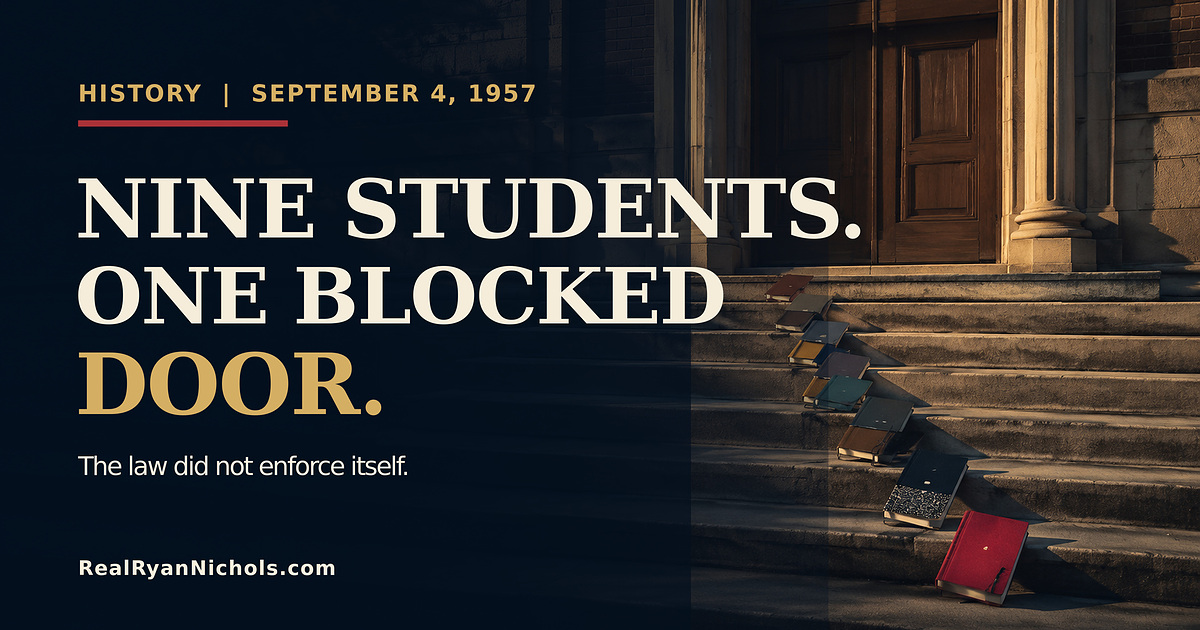
Editorial visual disclosure: The header image is an original AI-assisted symbolic illustration. It does not depict Central High School, the Little Rock Nine, the Arkansas National Guard, or a documentary scene.
You made it to the end
Most people quit at the headline. You didn’t.
So don’t stop here. Pick one.
Read the book
Fighting Shadows is the whole story in my own words: the road into January 6, the D.C. jail, and the fight to get the record out.See the book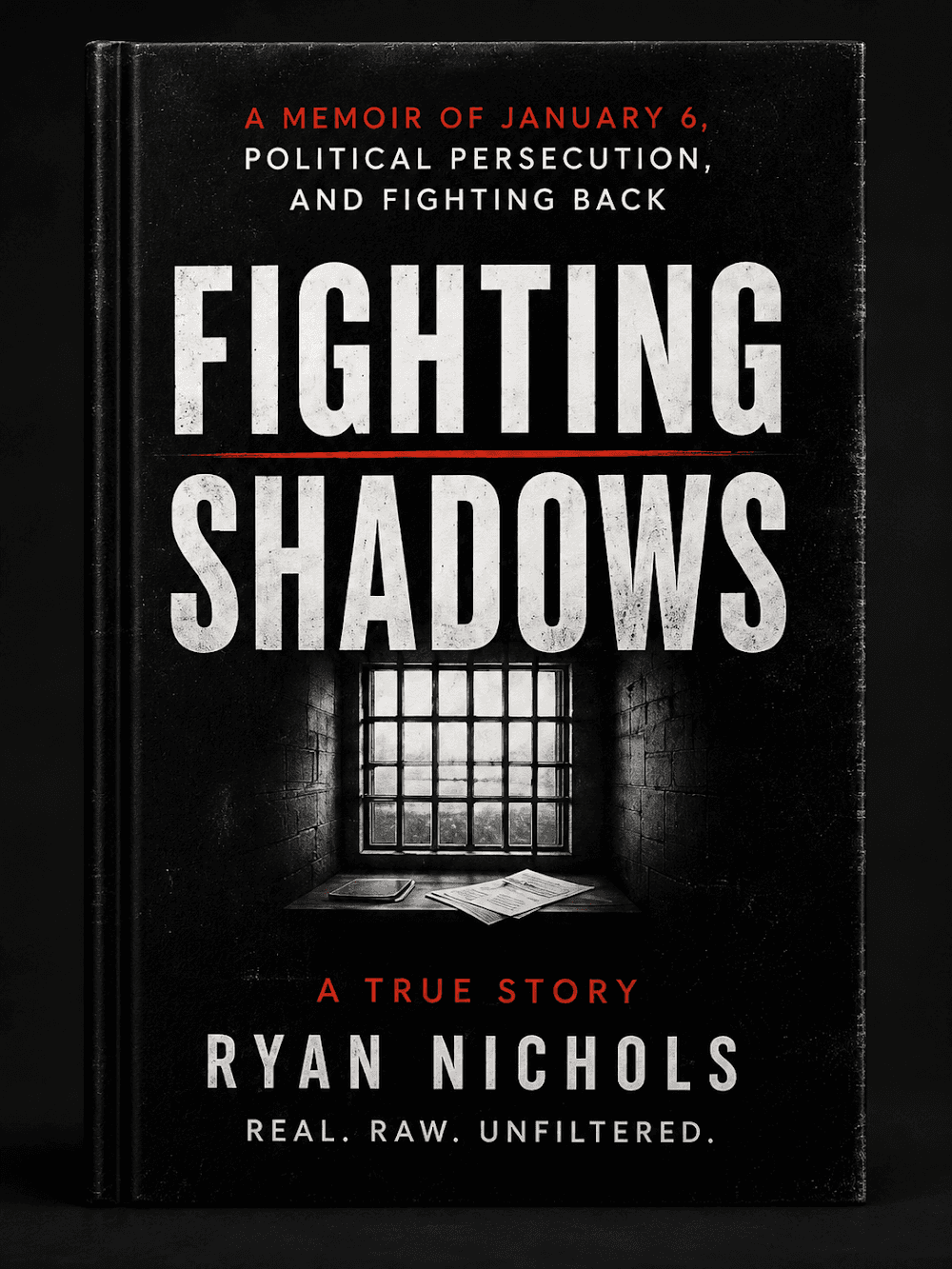
Follow the case
The record is still being written. Get one email when something new drops on it.
Hire Ryan
I built this site. Want one that brings your business real leads? Start with a free 30-minute call.See the services

Tap how this hits you — no signup, everyone sees the count
Share this post — get it back in front of people
Comments
Speak here
Create an account to comment.
This is where people can say what gets buried or cancelled elsewhere. Comments are signed-only, moderated, and tied to a real profile so the record stays usable.
No approved comments yet. Create an account and put the first opinion on the record.