
U.S.–Saudi Nuclear Deal Is Signed—but Trump Says It Depends on Israel Normalization
The U.S.–Saudi 123 nuclear agreement is signed, but Trump says it requires Israel normalization and bars enrichment. Here is what Congress must verify.
By Ryan Nichols
- 320 total reach
- 0 reading now•0 active 24h
- 0 shares•0 inbound
- 0 comments
By Ryan Nichols
Facts last checked: July 24, 2026, 8:03 p.m. Central
The United States and Saudi Arabia have signed a civil nuclear cooperation agreement. That much is official.
What happens next is not.
On July 22, the U.S. Department of Energy announced that Energy Secretary Chris Wright and Saudi Energy Minister Prince Abdulaziz bin Salman had signed a peaceful nuclear cooperation agreement, commonly called a 123 Agreement, plus a separate bilateral safeguards agreement.
DOE said the agreements create the legal foundation for a decades-long, multi-billion-dollar civil nuclear partnership and will be sent to Congress for review.
President Donald Trump then added two major public conditions:
- He said Saudi Arabia will not enrich uranium under the deal.
- He said the United States will not proceed unless Saudi Arabia normalizes relations with Israel by joining the Abraham Accords.
Trump acknowledged Friday that he had not discussed the Abraham Accords condition with Secretary Wright before Wright signed the agreement. He said the condition was nevertheless understood by both Wright and Saudi Arabia.
Saudi Arabia had not publicly accepted that additional condition as of this article’s fact check.
That leaves a high-stakes agreement in an unusual position: signed, publicly described as headed to Congress, but still missing the complete public text needed to reconcile the administration’s statements and outside reporting.
The verified status
| Question | What the public record establishes |
|---|---|
| Was an agreement signed? | Yes. DOE announced the signing on July 22. |
| Who signed it? | U.S. Energy Secretary Chris Wright and Saudi Energy Minister Prince Abdulaziz bin Salman. |
| What kind of agreement is it? | A peaceful nuclear cooperation agreement under Section 123 of the Atomic Energy Act, accompanied by a bilateral safeguards agreement. |
| Is it in force? | The public record reviewed here does not establish that it is in force. DOE says it will be transmitted to Congress for review. |
| Is the complete agreement public? | It was not linked in DOE’s announcement and was not located in the reviewed public record. |
| Does it permit Saudi uranium enrichment? | Trump says no. Earlier reporting based on unnamed sources said the text may preserve a path to future enrichment. The public agreement text is needed to resolve that conflict. |
| Is Israel normalization a written condition? | Trump says the deal is contingent on Saudi Arabia joining the Abraham Accords. The reviewed DOE announcement does not mention that condition. |
| Has Saudi Arabia accepted the condition? | No public acceptance was located as of the fact check. |
This status can change quickly if the administration publishes the text, transmits it to Congress, issues a presidential determination, or Saudi Arabia responds.
Reader poll
What should Congress publish first about the U.S.–Saudi nuclear deal?
Tap your answer to vote
One tap. Free and anonymous. No signup to vote.
What a 123 Agreement actually does
Section 123 of the Atomic Energy Act establishes the framework the United States generally needs before significant transfers of U.S.-origin nuclear material, equipment, or components can occur.
The National Nuclear Security Administration’s official overview says these agreements can also support technical exchanges, scientific research, and safeguards discussions. It says the agreements work alongside the Nuclear Non-Proliferation Treaty and other tools to advance nonproliferation.
The State Department’s 123 Agreement guidance says a conforming agreement must include nine nonproliferation criteria.
That does not mean a 123 Agreement is:
- permission to build a nuclear weapon;
- a construction permit for a specific reactor;
- a guarantee that a U.S. company receives a contract;
- an appropriation of taxpayer money;
- proof that every safety and licensing step is complete; or
- automatically effective upon a Cabinet official’s signature.
It is the legal framework that can make covered civil nuclear cooperation possible, subject to the agreement’s terms, statutory review, export controls, safeguards, licensing, and any additional arrangements.
DOE says the Saudi agreement is intended to expand U.S. nuclear exports, create American jobs, strengthen energy and national security, reinforce nonproliferation standards, and deepen the U.S.–Saudi relationship. Those are the administration’s stated objectives. They are not yet measured outcomes.
What DOE disclosed—and what it did not
DOE’s July 22 announcement confirms:
- the signing of a peaceful nuclear cooperation agreement;
- an accompanying bilateral safeguards agreement;
- a contemplated decades-long, multi-billion-dollar partnership;
- anticipated access for American companies in Saudi Arabia’s nuclear-energy program;
- stated commitments to nuclear safety, security, and nonproliferation; and
- planned congressional review.
The announcement does not link the complete agreements.
It also does not explain:
- whether Saudi Arabia may enrich uranium now or later;
- whether future enrichment could follow a joint study or additional approval;
- whether reprocessing is prohibited;
- what consent rights the United States retains;
- what inspection access applies beyond Saudi Arabia’s existing international obligations;
- whether an International Atomic Energy Agency Additional Protocol is required;
- whether joining the Abraham Accords appears in the signed text;
- what reactors, sites, vendors, financing, or schedule have been selected; or
- what event would terminate or suspend cooperation.
Those are not technical footnotes. They are the terms that determine the nonproliferation risk, the commercial value, and the leverage each government retains.
Trump’s two added conditions
On Thursday, Trump wrote that there would be “no enrichment of material” and said approval was “totally subject” to Saudi Arabia joining the Abraham Accords.
On Friday, during an Oval Office event on American nuclear innovation, Trump repeated the normalization condition. Reuters reported that Trump said he had not discussed the condition with Wright before the agreement was signed, but that it was always understood.
The official White House video confirms the July 24 event exists. The White House page did not provide a transcript in the reviewed version.
The conditions could be implemented in several different ways:
- They may already exist in the signed agreement but were omitted from DOE’s public summary.
- They may exist in a separate written understanding that has not been published.
- They may be presidential conditions on approval or implementation rather than terms Saudi Arabia already signed.
- They may require the parties to amend, supplement, or delay the agreement.
The public record does not yet identify which is true.
Until the text is released, the precise statement is not “the agreement bans enrichment and requires normalization.” It is:
President Trump says the deal will not permit enrichment and will not proceed without Saudi Arabia joining the Abraham Accords; the published DOE summary does not disclose those terms.
The enrichment conflict must be resolved with documents
Before Trump’s statement, the Associated Press reported—based on two unnamed people familiar with the agreement—that it could allow Saudi Arabia to build a uranium-enrichment facility after a joint U.S.–Saudi study.
The AP’s July 22 report also raised questions about the inspection framework and whether the arrangement matches the stricter model used in the U.S.–United Arab Emirates agreement.
Those details are significant, but they remain source-based reporting rather than published provisions readers can inspect themselves.
Trump’s later declaration directly conflicts with the central enrichment implication in that reporting.
The responsible response is not to choose whichever version fits a political preference. Congress and the administration should publish the operative language.
At minimum, the text should answer:
- Is enrichment prohibited for the full agreement term?
- Does the agreement allow a future study, negotiation, consent decision, or amendment?
- Who owns and operates any fuel-cycle facility?
- Does the United States retain a veto over enrichment or reprocessing?
- What happens if Saudi Arabia develops enrichment through a non-U.S. partner?
- Which materials, facilities, technology, and derivatives remain subject to U.S. consent rights?
- What inspection and accounting standards apply?
If the answer is a complete prohibition, the text should make that easy to verify.
If the answer is a conditional future pathway, officials should say so plainly and explain the safeguards.
Why the Abraham Accords condition may be the larger obstacle
The Abraham Accords established or supported normalization between Israel and several Arab or Muslim-majority governments during Trump’s first term.
Saudi Arabia has not joined.
The kingdom has repeatedly tied recognition of Israel to progress toward a Palestinian state. Reuters reported Friday that Saudi officials had not responded to requests for comment on Trump’s added condition.
That means the nuclear agreement is now linked to a diplomatic dispute much larger than reactor exports.
If Trump’s condition is firm, at least three things could happen:
- Saudi Arabia could accept normalization and move the nuclear partnership forward.
- The United States and Saudi Arabia could renegotiate the conditions.
- The agreement could remain signed but never take effect.
The current record does not establish which outcome is likely.
What congressional review should test
DOE says the agreement will now be transmitted to Congress.
Congress should not treat the review as a ceremony. Members should compare the text against the Atomic Energy Act’s nonproliferation requirements and demand clear answers about every side agreement, safeguard, consent right, and condition.
The first oversight questions should be:
1. Where is the full text?
Congress and the public need the 123 Agreement, the bilateral safeguards agreement, the presidential determination, the Nuclear Proliferation Assessment Statement, and any unclassified annexes or side letters.
Legitimate classified material can be protected. The controlling legal obligations should not be replaced by talking points.
2. What exactly is the enrichment rule?
Members should identify the provision that implements Trump’s “no enrichment” statement and determine whether it is permanent, conditional, or subject to later consent.
3. Is normalization a signed obligation or a U.S. approval condition?
If Saudi Arabia did not sign the Abraham Accords condition, Congress should know what legal step makes it binding and what happens if Saudi Arabia refuses.
4. What safeguards go beyond the minimum?
Congress should compare the Saudi arrangement with other U.S. agreements, including the UAE model, and explain any differences in enrichment, reprocessing, inspections, material accounting, and termination rights.
5. What commercial promises have actually been made?
DOE describes a multi-billion-dollar opportunity for U.S. companies. Congress should separate legal market access from actual reactor selections, financing commitments, taxpayer exposure, and signed commercial contracts.
6. What is the exit mechanism?
The agreement should address violations, suspension, termination, material return, and continued safeguards. The public needs to know what leverage remains after technology or equipment is transferred.
Reader poll
Should a U.S.–Saudi civil nuclear agreement require Saudi Arabia to normalize relations with Israel?
Tap your answer to vote
One tap. Free and anonymous. No signup to vote.
What this means for American workers and ratepayers
If the agreement becomes effective and Saudi Arabia selects American technology, U.S. reactor vendors, engineering firms, fuel suppliers, manufacturers, and skilled workers could benefit.
But “multi-billion-dollar partnership” is not the same as a signed purchase order.
The public record does not yet identify:
- a reactor vendor selected by Saudi Arabia;
- the number or model of reactors;
- a project site;
- a final construction price;
- U.S. government financing;
- a construction start date;
- a power-production date; or
- a binding U.S. job estimate.
Those details should be reported when contracts, licenses, and financing become real—not projected from a diplomatic framework.
Fast-moving details and current uncertainties
This story is developing.
Confirmed:
- U.S. and Saudi energy ministers signed a 123 Agreement and bilateral safeguards agreement on July 22.
- DOE says the agreements support peaceful nuclear cooperation and will go to Congress for review.
- Trump says no enrichment will be permitted.
- Trump says the deal depends on Saudi Arabia joining the Abraham Accords.
- Trump said he did not discuss that condition with Wright before the signing.
Not confirmed in a published controlling document:
- the complete agreement text;
- the precise enrichment and reprocessing provisions;
- a written Saudi commitment to normalize relations with Israel;
- Saudi acceptance of Trump’s public condition;
- the formal transmission date to Congress;
- final reactor contracts, financing, sites, or schedules; and
- whether the agreement will ultimately enter into force.
Readers should be cautious with headlines that call the deal either finished or dead. The verified status is between those poles.
Ryan’s Take
This is editorial analysis. It is not presented as a firsthand quotation from Ryan.
Civil nuclear cooperation can create American jobs, strengthen alliances, and give the United States leverage to demand stronger safeguards than Saudi Arabia might accept from another supplier.
That argument is strongest when the terms are public and consistent.
The administration should not ask Americans to trust an unpublished agreement while senior officials describe its most important condition differently. If there is no enrichment, show the clause. If normalization is mandatory, show where Saudi Arabia accepted it—or explain the legal step that makes it a condition before the agreement takes effect.
Congress should review the agreement on the record, not through anonymous leaks, social-media posts, or commercial promises.
This is not an argument against peaceful nuclear energy or partnership with Saudi Arabia. It is an argument that nuclear cooperation, regional diplomacy, and nonproliferation are too important for ambiguity.
Signed does not mean settled.
The next click: ask for the documents
Readers can take one useful action tonight:
- Find your U.S. representative and U.S. senators.
- Ask whether the U.S.–Saudi 123 Agreement has been formally transmitted.
- Request publication of the agreement, safeguards document, unclassified proliferation assessment, enrichment terms, and any written Abraham Accords condition.
- Ask the member to explain publicly whether the agreement should proceed and what safeguards are nonnegotiable.
A concise message:
Please publish and review the complete U.S.–Saudi 123 Agreement and safeguards documents. Identify the exact enrichment and reprocessing terms, explain whether Saudi Arabia accepted the Abraham Accords condition, and state what congressional action you support before nuclear cooperation proceeds.
For related fact-first coverage, read what the House and Senate actually did on Iran war powers and what the new forced-labor tariffs cover. Browse more Politics & Accountability coverage.
Sources
- Department of Energy: United States and Saudi Arabia Reach Historic Nuclear Cooperation Agreement, July 22, 2026
- NNSA: 123 Agreements for Peaceful Cooperation
- State Department: 123 Agreements and nonproliferation criteria
- White House: July 24 announcement on American nuclear innovation
- Reuters: Trump says the deal requires Saudi Arabia to join the Abraham Accords, July 24, 2026
- Associated Press: report on the signed agreement and disputed enrichment pathway, July 22, 2026
Have a public copy of the transmitted agreement, safeguards document, congressional notice, or a correction? Send the source through the report form below. Do not submit classified material, export-controlled technical data, private contact information, or unpublished legal strategy.
Join the optional RealRyanNichols.com email or text list at the bottom of this page for future fact-first updates. Signup is voluntary, consent is never assumed, and every message includes an unsubscribe or STOP option.
Help verify the controlling text and congressional status
What official document, filing, statement, or correction should be reviewed?
Include the issuing agency, date, title, and public URL. Do not submit classified or export-controlled material.
Sharing this is the biggest help. Put it in front of one more person.
You made it to the end
Most people quit at the headline. You didn’t.
So don’t stop here. Pick one.
Read the book
Fighting Shadows is the whole story in my own words: the road into January 6, the D.C. jail, and the fight to get the record out.See the book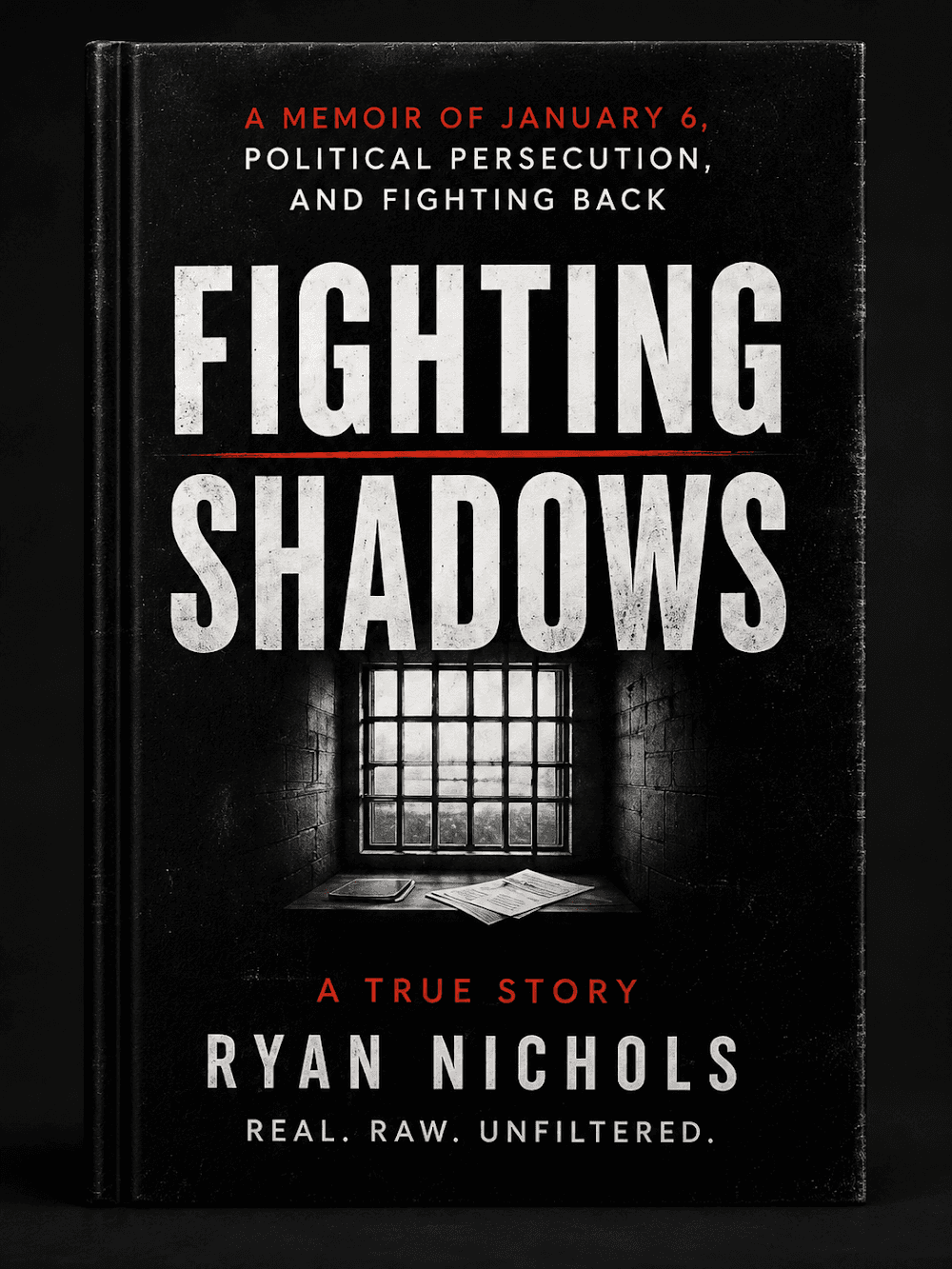
Follow the case
The record is still being written. Get one email when something new drops on it.
Hire Ryan
I built this site. Want one that brings your business real leads? Start with a free 30-minute call.See the services
Tap how this hits you — no signup, everyone sees the count
Share this post — get it back in front of people
Comments
Speak here
Create an account to comment.
This is where people can say what gets buried or cancelled elsewhere. Comments are signed-only, moderated, and tied to a real profile so the record stays usable.
No approved comments yet. Create an account and put the first opinion on the record.