
Trump's Forced-Labor Tariffs Take Effect: What the 10%–12.5% Section 301 Duties Actually Cover
Trump's new Section 301 tariffs on imports from 60 economies took effect July 24. See the rates, exemptions, legal basis, objections and unknowns.
By Ryan Nichols
- 249 total reach
- 0 reading now•0 active 24h
- 0 shares•0 inbound
- 0 comments
By Ryan Nichols
Facts last checked: July 24, 2026, 6:45 a.m. Central
New United States tariffs tied to forced-labor import enforcement took effect at 12:01 a.m. Eastern on July 24, 2026.
The action reaches imports from 60 economies. Depending on the country and product, the new Section 301 duty is 10%, 12.5%, or an amount that brings the combined most-favored-nation and Section 301 rate up to one of those levels. Product exclusions and a narrow in-transit exception apply.
This is not merely an investigation announcement or a proposed rule. The Office of the United States Trade Representative has issued its final action, and the effective time has passed.
It is also not accurate to say every product from every listed economy automatically receives a new flat 12.5% charge. The final notice is 431 pages because the country group, existing tariff rate, product classification, exemptions and shipment timing all matter.
The verified facts
President Donald Trump issued a July 23 memorandum to the United States Trade Representative directing tariff action following 60 investigations.
USTR's final Federal Register notice says the additional duties apply to covered goods entered for consumption, or withdrawn from a warehouse for consumption, on or after 12:01 a.m. Eastern on July 24.
The investigations began March 12. USTR announced determinations June 2, took more public comments, and held hearings July 7–9. According to USTR's July 23 release, the overall process included two rounds of hearings, more than 2,100 public comments and consultations with more than 45 governments.
USTR determined that each investigated economy had failed either to impose or effectively enforce a prohibition on importing goods made wholly or partly with forced labor. Those are USTR's administrative determinations. They should not be rewritten as a claim that every exporter, factory or product from those economies uses forced labor.
The three rate structures
1. A 10% Section 301 duty
The memorandum places the following 17 economies in the 10% group:
- Argentina
- Bangladesh
- Cambodia
- Canada
- Ecuador
- El Salvador
- Guatemala
- Honduras
- India
- Indonesia
- Jordan
- Malaysia
- Mexico
- Pakistan
- Sri Lanka
- Trinidad and Tobago
- United Kingdom
USTR says these economies have an import prohibition, made a relevant trade commitment, or established a partial system intended to prevent some forced-labor goods from entering.
The 10% rate is still subject to product exemptions in the annex. Importers also must examine other applicable trade rules; the country headline alone is not enough to calculate a shipment's total duty.
2. A capped combined rate for five economies
The European Union and Taiwan receive a product-level calculation intended to bring the combined most-favored-nation and Section 301 rate to 10%. If the preexisting MFN rate is already at least 10%, the new Section 301 portion is zero.
Japan, South Korea and Switzerland receive a similar calculation with a 12.5% combined-rate target. If a product's MFN rate is already at least 12.5%, the new Section 301 portion is zero.
That means the new charge on a covered product from these economies may be smaller than the headline rate—or zero—even though the economy remains part of the action.
3. A 12.5% duty for the other investigated economies
The remaining investigated economies generally receive a 12.5% Section 301 duty on covered products. That group includes China, Australia, Brazil, Israel, New Zealand, Norway, Russia, Saudi Arabia, Singapore, South Africa, Thailand, Türkiye, the United Arab Emirates, Vietnam and others named in the memorandum.
Again, "generally" matters. The final annex identifies country- and product-specific exclusions.
Reader poll
Which part of the new tariff action needs the clearest public explanation?
Tap your answer to vote
One tap. Free and anonymous. No signup to vote.
What is exempt
The presidential memorandum and final notice provide exemptions for products that USTR concluded fall into categories such as:
- raw materials whose inclusion could leave the United States without adequate domestic supply;
- products whose inclusion could cause economy-wide disruptions;
- goods that cannot be grown or produced in sufficient quantities or at reasonable prices in the United States;
- products for which a tariff may not meaningfully change the targeted foreign practice; and
- certain products connected to trade-partner commitments on forced-labor import prohibitions.
The annex is not a short general-interest list. It is organized through Harmonized Tariff Schedule classifications. A business deciding whether a particular shipment is covered should use the final USTR notice and current HTSUS classification rather than a social-media summary.
The in-transit exception
The final notice includes a limited transition rule.
Goods are not subject to the new additional duty if they were loaded at the port of loading and already in final transit before 12:01 a.m. Eastern on July 24, and they are entered for consumption or withdrawn from warehouse before 12:01 a.m. Eastern on July 28.
This is not a broad grace period for orders placed before July 24. The shipping and entry conditions both matter.
A future textile mechanism is not operating yet
The administration also directed USTR to establish tariff-rate quotas for certain textile and apparel imports from Bangladesh, Cambodia, Indonesia and Malaysia. The stated goal is to reward their use of United States cotton and textile inputs and reduce reliance on inputs more likely to contain forced labor.
The memorandum says those quotas should begin when feasible, with implementation expected by September 1. Until USTR establishes them, the applicable 10% duties remain in place on covered textile and apparel imports.
What the tariffs do not prove
The action does not prove that every product from a targeted economy was produced with forced labor.
The stated theory is broader: USTR concluded that the economy's failure to block forced-labor goods from entering its own market creates unfair competition and allows tainted inputs to move through global supply chains.
That distinction is central. The tariff is a countrywide trade remedy based on a government-policy determination. It is not a shipment-by-shipment finding that the imported product itself contains forced-labor inputs.
Who pays, and who ultimately bears the cost
The duty is collected at the United States border through the import process. The immediate legal and cash-flow burden generally falls on the importer of record.
The final economic burden is less certain. An importer may absorb part of the cost, negotiate a lower foreign price, change suppliers, reduce its margin or pass some or all of the cost to wholesalers, retailers and consumers. The result will vary by product, competition, contracts, inventory and availability of substitutes.
Therefore:
- it is too early to state a verified nationwide consumer-price effect;
- a 10% tariff does not mechanically mean a 10% retail-price increase;
- it is equally unsupported to promise that American buyers will feel no cost; and
- businesses using imported components may face effects even when they do not sell imported finished goods.
Why the legal basis matters
In February, the Supreme Court held in Learning Resources, Inc. v. Trump that the International Emergency Economic Powers Act did not authorize the tariffs challenged in that case.
This new action invokes a different statute: Section 301 of the Trade Act of 1974. Section 301 expressly gives USTR investigative and remedial authority over certain foreign practices and allows duties or import restrictions after specified procedures.
The February ruling therefore does not automatically invalidate this action.
That does not guarantee the new tariffs will survive every challenge. Courts may be asked to evaluate the investigations, the relationship between USTR's findings and the remedies, compliance with statutory procedure, the breadth of countrywide tariffs, or other legal theories. As of this fact check, the long-term judicial outcome is unknown.
The objections are real—and disputed
Several governments reject the United States' characterization.
Brazil called the action arbitrary and unjustified and has signaled possible use of its reciprocity law and the World Trade Organization. Switzerland has also disputed the U.S. findings, pointing to its own legal prohibitions on forced labor.
Those responses are the positions of the affected governments; they do not by themselves disprove USTR's findings. Likewise, USTR's determination is an executive-branch administrative finding, not an uncontested international judgment.
The disagreement now has at least three layers:
- whether each economy's import controls are legally sufficient;
- whether those controls are effectively enforced; and
- whether broad tariffs are a proportionate or effective response.
What remains unknown
Several important questions cannot yet be answered as settled facts:
- Which trading partners will negotiate, retaliate or pursue formal disputes?
- How quickly will USTR publish measurable conditions for reducing or terminating a country's tariff?
- What will the product-level price effects be after exemptions and existing duties are considered?
- Will the tariffs materially reduce forced-labor goods in global supply chains?
- Will American importers shift sourcing, and will alternative suppliers be demonstrably cleaner?
- What legal challenges will be filed, and how will courts treat the breadth of the remedy?
- When will the textile tariff-rate quotas become operational, and what volumes will they allow?
Those are not side questions. They determine whether this becomes a targeted human-rights trade policy, a long-term baseline tariff system, or both.
Reader poll
What should determine whether a country's tariff is reduced or removed?
Tap your answer to vote
One tap. Free and anonymous. No signup to vote.
Submit a product classification, customs notice, official government response, court filing or independently verifiable business impact. Do not send private account information, trade secrets or personal financial records.
Report what you saw at the D.C. Jail.
If you witnessed these officers — or were held there yourself — say what you saw. Anonymous is fine; leave contact only if we can follow up. Every report is reviewed by hand and becomes part of the record.
Ryan's Take
This is editorial analysis. It is not presented as a firsthand quotation from Ryan.
Forced labor is evil. Governments should not let companies wash forced-labor inputs through a third country and then sell the finished product as clean.
But the moral strength of that goal makes evidence and transparency more important, not less.
If the government places a countrywide tariff on nearly every covered product, it should publish a clear scorecard for every economy: what law is missing, what enforcement failed, what measurable change is required and exactly how a country can earn removal of the tariff. Otherwise, a policy announced as leverage can quietly become a permanent tax without a visible finish line.
Congress should conduct oversight of the evidence, exemptions, economic effects and removal criteria. USTR should publish regular results. Importers should receive usable product-level guidance. Consumers should be told honestly that foreign governments are the target but American businesses pay the duty at entry and may pass costs onward.
The right standard is neither "all tariffs are bad" nor "tariffs never cost Americans anything." The right standard is whether this specific action is lawful, evidence-based, transparent and effective at reducing forced labor without concealing avoidable costs.
What readers can do now
- Read the White House memorandum before relying on a country list posted online.
- Use the final USTR notice for effective dates, product classifications and exemptions.
- Ask elected officials whether they support public country-by-country evidence and measurable tariff-removal standards.
- If you run a business, verify the HTSUS classification, country of origin, exemption status and shipment timing with qualified customs guidance.
For more fact-first congressional coverage, read House Passes Iran War-Powers Resolution as the Senate Blocks a Parallel Measure and What the House's $95 Billion Reconciliation Blueprint Actually Does.
Sharing this is the biggest help. Put it in front of one more person.
Want future Political Facts First articles? You may choose to join the RealRyanNichols.com email or text list. Signup is optional, consent is never assumed, and every message includes an unsubscribe or STOP option.
You made it to the end
Most people quit at the headline. You didn’t.
So don’t stop here. Pick one.
Read the book
Fighting Shadows is the whole story in my own words: the road into January 6, the D.C. jail, and the fight to get the record out.See the book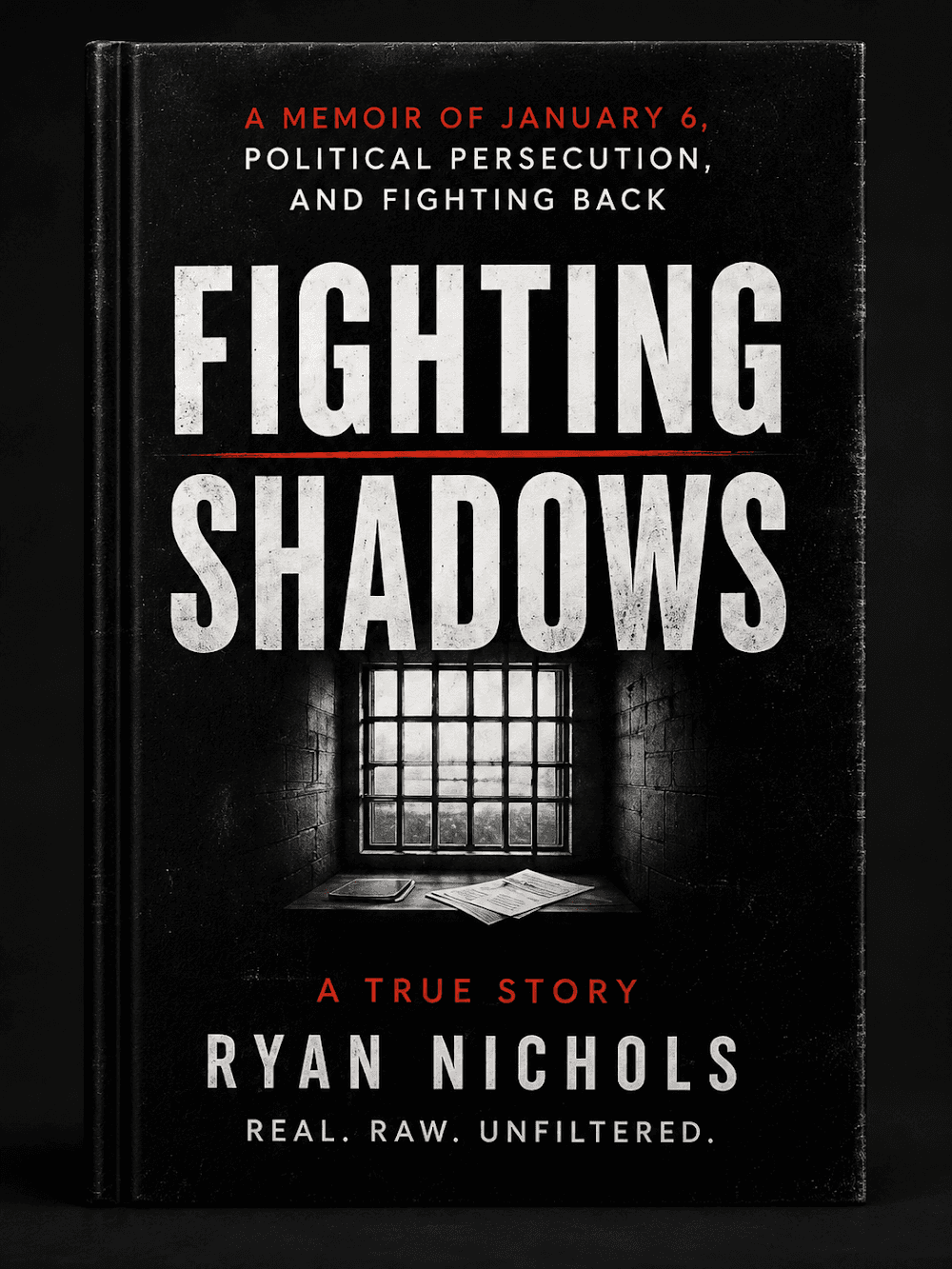
Follow the case
The record is still being written. Get one email when something new drops on it.
Hire Ryan
I built this site. Want one that brings your business real leads? Start with a free 30-minute call.See the services
Tap how this hits you — no signup, everyone sees the count
Share this post — get it back in front of people
Comments
Speak here
Create an account to comment.
This is where people can say what gets buried or cancelled elsewhere. Comments are signed-only, moderated, and tied to a real profile so the record stays usable.
No approved comments yet. Create an account and put the first opinion on the record.