
House Passes H. Con. Res. 113: What the $95 Billion Reconciliation Blueprint Actually Does
The House passed H. Con. Res. 113 by 216–214. Learn what the $95 billion reconciliation blueprint authorizes, what it does not spend, and what happens next.
By Ryan Nichols
- 372 total reach
- 0 reading now•0 active 24h
- 0 shares•0 inbound
- 0 comments
By Ryan Nichols
The U.S. House voted 216–214 on July 22, 2026, to approve H. Con. Res. 113, the chamber’s fiscal year 2027 budget resolution.
The most useful fact is also the one most easily lost in the headlines:
The House did not enact a $95 billion spending bill.
The resolution creates reconciliation instructions for four House committees. Those instructions allow the committees to recommend changes in law that, together, could increase the federal deficit by no more than $95 billion over fiscal years 2027 through 2036. Separate legislation still has to be written, reviewed, passed by both chambers, and presented to the president before any statutory spending or policy change can take effect.
The House vote is a completed fact. The eventual contents of a reconciliation bill, whether the Senate will agree to this budget resolution, whether election-policy provisions could survive Senate rules, and how much of the $95 billion would ultimately be used are not settled facts.
Here is what the official record says, what the vote did not do, and what readers should watch next.
The verified record
The official House Clerk roll call records passage at 4:57 p.m. Eastern on July 22:
- 216 representatives voted yes
- 214 voted no
- One member did not vote
- No Democrat or independent voted yes
- Two Republicans voted no
The two Republican no votes were Thomas Massie of Kentucky and Warren Davidson of Ohio. Independent Kevin Kiley of California also voted no, along with 211 Democrats. One Democrat did not vote.
The resolution’s formal title is “Establishing the congressional budget for the United States Government for fiscal year 2027 and setting forth the appropriate budgetary levels for fiscal years 2028 through 2036.”
The reported text published by the Government Publishing Office directs four committees to send legislative recommendations to the House Budget Committee by September 11, 2026.
Those instructions set the following maximum deficit increases for the 2027–2036 period:
| House committee | Maximum deficit increase allowed by the instruction |
|---|---|
| Armed Services | $60 billion |
| Permanent Select Committee on Intelligence | $13 billion |
| Agriculture | $12 billion |
| House Administration | $10 billion |
| Total | $95 billion |
The operative phrase in each instruction is “increase the deficit by not more than.” That language establishes a ceiling. It is not a line-item appropriation, an agency transfer, or proof that the final measure will use every dollar.
Reader poll
Which part of the proposed $95 billion framework deserves the closest public scrutiny?
Tap your answer to vote
One tap. Free and anonymous. No signup to vote.
What a concurrent budget resolution is—and is not
H. Con. Res. 113 is a concurrent resolution, not a bill or joint resolution that becomes federal law.
A Congressional Research Service explanation of reconciliation makes the distinction clear: a concurrent budget resolution is not presented to the president and is not enacted into law. Any statutory changes to spending or revenue must be enacted later through separate legislation.
That means the July 22 House vote:
- Did approve the House’s proposed fiscal framework and committee instructions.
- Did create a potential route toward later reconciliation legislation.
- Did not appropriate $95 billion.
- Did not transfer money to the Pentagon, intelligence agencies, farms, states, or election offices.
- Did not enact voter-identification or proof-of-citizenship requirements.
- Did not authorize a new military operation.
- Did not bind the Senate to accept the House plan.
- Did not require or receive a presidential signature.
Calling the resolution a “$95 billion package” can be useful shorthand if the procedural stage is also explained. Calling it an enacted $95 billion spending law would be inaccurate.
Why reconciliation matters
The resolution matters because reconciliation can change the normal Senate path for later legislation.
According to CRS, reconciliation instructions tell designated committees to develop legislation that achieves a specified budgetary outcome. The House Budget Committee then combines the recommendations into a reconciliation measure without making substantive revisions.
In the Senate, debate on a reconciliation bill is limited to 20 hours. That limit makes it possible to reach a final vote without the usual cloture process and means a reconciliation bill can pass with a simple majority.
That does not make reconciliation unlimited.
The Senate’s Byrd Rule allows senators to challenge provisions considered “extraneous” to the budget. CRS identifies several tests, including whether a provision changes outlays or revenue, whether its budget effect is merely incidental to a larger nonbudgetary policy, whether it falls within the submitting committee’s jurisdiction, and whether it increases deficits outside the resolution’s budget window. A Byrd Rule point of order generally requires three-fifths of the Senate—60 votes—to waive.
The practical result is a two-part test:
- Can House committees write a proposal that fits the instructions?
- Can that proposal also survive the Senate’s reconciliation limits?
Those answers depend on legislative text that has not yet been publicly completed.
What the four instructions could become
The resolution gives committees budget targets, not detailed programs. Public statements and reporting describe the intended policy areas, but readers should keep intent separate from enacted text.
Armed Services: up to $60 billion
The Armed Services Committee may recommend changes within its jurisdiction that increase the deficit by no more than $60 billion over ten years.
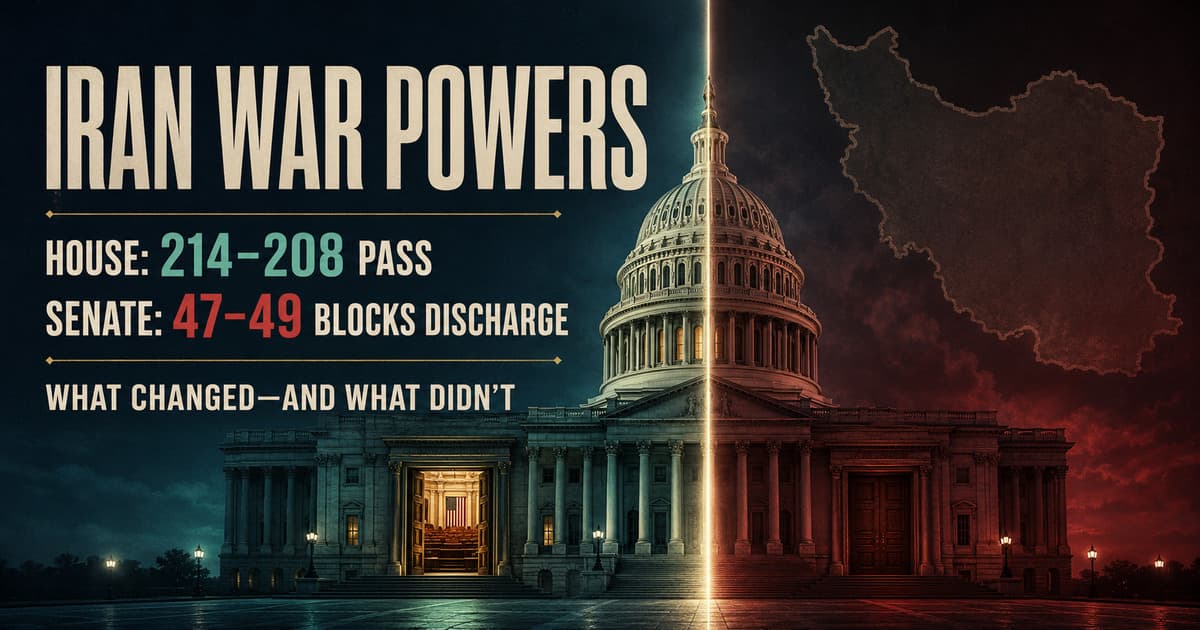
House Republican leaders describe the defense portion as emergency support for U.S. troops and national defense. CQ Roll Call reported that supporters intend the defense and intelligence instructions to address the ongoing war with Iran.
The resolution itself does not provide a weapon-system list, operational plan, deployment schedule, acquisition table, or account-by-account breakdown. Those details would have to appear in later committee recommendations and legislative text.
Intelligence: up to $13 billion
The House Intelligence Committee may recommend changes that increase the deficit by no more than $13 billion.
That amount is separate from the Armed Services instruction, though supporters often discuss the two together as up to $73 billion for defense and intelligence.
The resolution does not identify which intelligence agencies, programs, technologies, facilities, or operations would receive support. Some future details may also be classified, limiting what the public can independently verify.
Agriculture: up to $12 billion
The Agriculture Committee may recommend changes that increase the deficit by no more than $12 billion.
Supporters have described this as assistance for farmers and protection of the national food supply. But the resolution does not specify commodities, eligibility rules, payment formulas, geographic priorities, loss calculations, or administrative costs.
Those details matter. “Farm aid” can refer to very different policies depending on who qualifies, what loss is recognized, how payments are calculated, and whether the assistance addresses a temporary shock or a longer-term market problem.
House Administration: up to $10 billion
The House Administration Committee may recommend changes that increase the deficit by no more than $10 billion.
House leaders have connected this instruction to election-administration priorities, including state support tied to proof-of-citizenship and voter-identification policies. Those policy descriptions come from political leaders and reporting—not from a completed reconciliation bill.
The resolution does not itself change voter-registration requirements or create a state-grant program. Exact eligibility, conditions, enforcement, data handling, state obligations, and voter effects remain unknown until legislative text is released.
This portion may also face a significant Senate rules question. If election-policy requirements produce budget effects that the Senate Parliamentarian considers merely incidental to their nonbudgetary policy purpose, they could be challenged under the Byrd Rule. That is a possible procedural outcome, not a final ruling. No finished provision has yet gone through that review.
Where supporters and opponents disagree
The vote was almost entirely divided by party, but the disagreement was not limited to a standard Republican-versus-Democratic split.
The House Budget Committee majority described the resolution as a path to support troops, protect the food supply, and advance election-integrity policy.
Democrats opposed the resolution and argued that it would add nearly $100 billion to the national debt while prioritizing military operations in Iran over domestic costs. That criticism is a political judgment, but the underlying deficit concern is grounded in the resolution’s own instructions: the four committees are collectively permitted to propose up to $95 billion in deficit increases.
Massie and Davidson opposed the resolution from the Republican side. Conservative criticism focused on the lack of required offsets and the possibility of using reconciliation to add to the debt.
These arguments should not be flattened into slogans:
- Support for troops, farmers, or election safeguards does not establish that every future provision is effective, lawful, or worth its cost.
- Opposition to an unoffset deficit increase does not establish opposition to every underlying purpose.
- A maximum budget instruction does not prove the final bill’s actual cost.
- A political promise about future text is not a substitute for reading the future text.
What remains unknown as of July 23
The public record leaves several major questions open:
- Will the Senate take up H. Con. Res. 113? The House has acted, but no Senate vote on this resolution has occurred.
- Will both chambers agree to identical budget instructions? Reconciliation is not triggered by the House acting alone.
- What will each committee actually write? The September 11 deadline is for recommendations, not a guarantee that text will arrive earlier or pass later.
- Will the proposals use the full $95 billion? The instructions are ceilings.
- Will the final legislation include offsets? The House instructions permit deficit increases; they do not require an equal package of cuts or revenue.
- What would the money fund? Detailed account, program, and recipient language is not in the resolution.
- What election provisions would survive the Byrd Rule? There is no definitive Senate procedural ruling on language that is not yet final.
- When could a reconciliation bill receive a vote? House leaders have discussed work after the August recess, but no final floor schedule or enactment date is guaranteed.
- How would the proposal interact with government funding? Congress is separately dealing with fiscal year 2027 appropriations and a House-passed stopgap bill. A budget resolution, a reconciliation bill, and a continuing resolution are different vehicles.
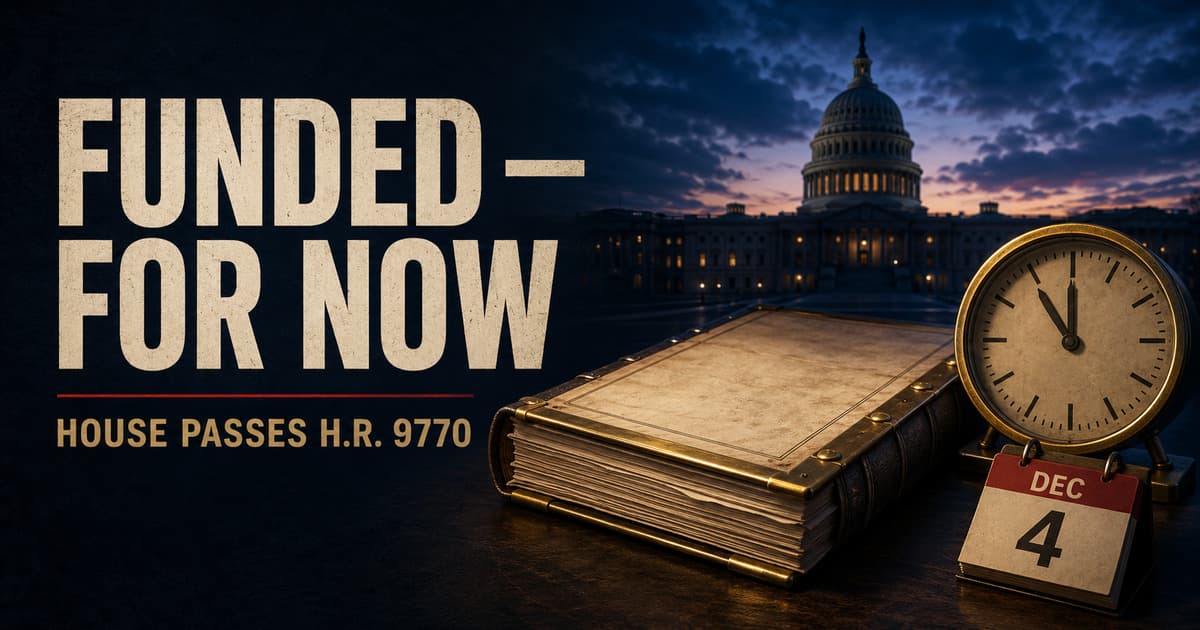
That last distinction matters. Readers following the shutdown debate can review our separate guide to the House-passed stopgap funding bill, H.R. 9770. H.R. 9770 is temporary appropriations legislation. H. Con. Res. 113 is a budget resolution with reconciliation instructions. Neither should be described as the other.
A five-step public accountability checklist
Do not judge this process only by the July 22 vote. Track the next documents:
- Senate action: Does the Senate adopt the House resolution, amend it, or decline to act?
- Committee text: Do the four House committees publish complete legislative recommendations before or by September 11?
- Budget estimates: What do the Congressional Budget Office and committee estimates say about cost, timing, and deficit effects?
- Senate rules review: Which provisions survive, change, or fall under Byrd Rule challenges?
- Final votes and enactment: Do the House and Senate pass identical reconciliation legislation, and does the president sign it?
The next useful click is the source record, not a partisan fundraising email or a cropped social-media claim:
- Read H. Con. Res. 113 on GovInfo
- Read the reported resolution text
- Review House Roll Call 281
- Read the Congressional Research Service reconciliation guide
Reader poll
What should Congress publish first with the committee proposals?
Tap your answer to vote
One tap. Free and anonymous. No signup to vote.
Ryan’s Take
This section is opinion. It follows the verified record above and is not a claim of firsthand participation in congressional negotiations.
Congress can support American troops, protect farmers, secure intelligence capabilities, and debate election integrity without asking the public to confuse a blueprint with a finished law.
The honest headline is not “Congress spent $95 billion.” It is that the House approved a procedural framework that may allow up to $95 billion in later deficit-financed legislation.
That may sound less dramatic, but it is far more useful.
Good policy should survive plain language and public inspection. If the defense need is urgent, show the mission, accounts, safeguards, and measurable result. If farmers need relief, show who qualifies and why. If states are being asked to change election administration, publish the conditions, protect eligible voters, explain the data requirements, and defend the policy under the rules Congress chose to use.
And if lawmakers want to add as much as $95 billion to the deficit, they should say whether the need is temporary, whether an offset was considered, and what taxpayers receive in return.
Facts first means giving credit where it is due: the House held a recorded vote, the resolution is public, and the committee ceilings are visible.
It also means refusing to award a victory—or declare a disaster—before the actual legislation exists.
The public should judge the receipts: the committee text, the cost estimate, the Senate ruling, the final roll calls, and the result.
Read, respond, and follow the next vote
For more source-backed reporting, read our editorial standards, browse the latest politics coverage, and compare this resolution with the separate December 4 stopgap funding proposal.
Join the optional email and text list at the bottom of this page if you want an update when the Senate acts or the committee text is released. You choose what contact information to provide, and this article does not solicit donations.
Submit a source-backed question or correction
What should we verify when the committee text appears?
Share an official document, a specific provision to track, or a factual correction.
Reader poll
What is the most important next checkpoint?
Tap your answer to vote
One tap. Free and anonymous. No signup to vote.
Sharing this is the biggest help. Put it in front of one more person.
You made it to the end
Most people quit at the headline. You didn’t.
So don’t stop here. Pick one.
Read the book
Fighting Shadows is the whole story in my own words: the road into January 6, the D.C. jail, and the fight to get the record out.See the book
Follow the case
The record is still being written. Get one email when something new drops on it.
Hire Ryan
I built this site. Want one that brings your business real leads? Start with a free 30-minute call.See the services
Tap how this hits you — no signup, everyone sees the count
Share this post — get it back in front of people
Comments
Speak here
Create an account to comment.
This is where people can say what gets buried or cancelled elsewhere. Comments are signed-only, moderated, and tied to a real profile so the record stays usable.
No approved comments yet. Create an account and put the first opinion on the record.