
House Passes Stopgap Funding Through December 4: What H.R. 9770 Does—and What Happens Next
A facts-first guide to H.R. 9770, the House-passed stopgap funding bill: the December 4 deadline, programs continued, restrictions, Senate path, and shutdown risk.
By Ryan Nichols
- 308 total reach
- 0 reading now•0 active 24h
- 0 shares•0 inbound
- 0 comments
By Ryan Nichols
The U.S. House voted 220–205 on July 21, 2026, to pass H.R. 9770, a stopgap spending bill designed to keep federal agencies operating after the current fiscal year ends on September 30.
The vote is important, but it did not finish the job.
H.R. 9770 must still pass the Senate and be signed by President Donald Trump before it can become law. If enacted in its current form, it would generally continue federal programs at fiscal year 2026 funding rates through December 4, 2026, while Congress keeps working on the full-year appropriations bills for fiscal year 2027.
That makes the bill a bridge—not a completed federal budget, not a final agreement on next year’s priorities, and not yet a guarantee that a shutdown has been avoided.
Here is what the public record establishes, what the bill would actually do, and what remains unknown.
The verified facts
The House Appropriations Committee reported that H.R. 9770 passed 220–205. The official House voting record identifies the final passage vote as Roll Call 272.
The publicly available bill text published by the Government Publishing Office would continue funding for departments and agencies covered by all 12 annual appropriations areas. Section 101 generally carries forward fiscal year 2026 funding rates and conditions for activities that are not otherwise funded for 2027.
Section 106 says that temporary funding would end for a program when one of three things happens first:
- Congress enacts a full-year appropriation for that program.
- Congress enacts the applicable full-year appropriations bill without funding that program.
- December 4, 2026 arrives.
The result is a temporary operating framework. It buys Congress additional time, but it also creates another funding deadline roughly one month after the November midterm elections.
Reader poll
What matters most to you in a temporary funding bill?
Tap your answer to vote
One tap. Free and anonymous. No signup to vote.
What continues under the bill
The core of H.R. 9770 is continuity. It directs agencies to keep existing projects and activities operating under the authority and conditions in the fiscal year 2026 appropriations laws.
That means the bill is not a simple one-line extension. It includes specific instructions for programs that could otherwise face timing, demand, or legal problems during a temporary funding period.
Among the provisions in the public text:
- Nutrition assistance: Section 111 continues mandatory payments and activities under the Food and Nutrition Act at rates needed to maintain current-law program levels. Section 116 allows the Women, Infants, and Children program, commonly known as WIC, to be funded at a rate necessary to maintain participation.
- Disaster response: Section 122 permits the Federal Emergency Management Agency’s Disaster Relief Fund to operate at the rate necessary for response and recovery under the Stafford Act.
- Flood insurance: Section 121 extends the relevant National Flood Insurance Program authorities through the temporary funding period.
- Small-business lending: Section 118 permits the Small Business Administration to accommodate increased demand for several loan and guarantee programs, including the 7(a) program.
- Wildfire suppression: Section 125 allows Interior Department and Forest Service wildfire-management accounts to operate at rates needed for suppression activities.
- Indian Health Service: Section 123 provides additional operating rates for specified newly opened, renovated, or expanded Indian Health Service facilities.
- Civilian payroll: Section 112 allows agencies to apportion personnel funding at rates needed to avoid furloughs, but only after taking steps to reduce or defer non-personnel administrative expenses.
Those provisions do not establish final fiscal year 2027 policy. They are meant to keep existing government functions from breaking while the regular funding process remains unfinished.
What the bill restricts
A continuing resolution usually preserves the status quo. H.R. 9770 makes that principle explicit.
Section 110 directs agencies to take only the most limited funding action permitted to continue projects and activities. Section 104 generally prevents agencies from starting or resuming projects that did not receive funding in fiscal year 2026.
The Defense Department faces additional restrictions. Section 102 generally blocks temporary funds from being used to begin production of items not previously funded, increase production rates above fiscal year 2026 levels, launch new programs, or initiate certain multiyear procurements without later, specific appropriations.
That matters because a stopgap can prevent a shutdown while still delaying new starts, contracts, hiring plans, production increases, and other decisions that depend on a full-year budget.
The bill also says members of Congress would not receive a cost-of-living adjustment during the period covered by the measure.
Reader poll
Should Congress rely on short-term funding bills while full-year budgets remain unfinished?
Tap your answer to vote
One tap. Free and anonymous. No signup to vote.
What the vote does not mean
House passage does not mean the federal government is now funded through December 4.
The Senate has not yet passed H.R. 9770. Senators could approve the House bill, reject it, allow it to wait, or amend it. If the Senate changes the text, the two chambers would have to agree on the same version before it could go to the president.
The bill also does not complete the 12 full-year appropriations measures. If it becomes law, Congress would still need to finish those bills or approve another extension before December 4.
Nor does a July House vote eliminate the September 30 risk by itself. A shutdown is avoided only if legislation clearing both chambers is signed before current funding expires.
What is disputed or still unknown
Several political and practical questions remain unresolved as of the morning of July 22:
- Will the Senate take up the House bill, and when? No final Senate vote has occurred.
- Will senators demand changes? An amendment could alter the duration, funding conditions, or individual provisions and send the measure back to the House.
- Will the president sign this exact version? Presidential approval cannot be assumed before a bill reaches the White House.
- Will Congress finish full-year appropriations by December 4? The stopgap creates time; it does not guarantee agreement.
- How will agencies manage delayed decisions? The bill authorizes continuity, but restrictions on new starts and the instruction to use limited funding actions can affect planning and execution differently across agencies.
- Is the bill “clean”? Supporters describe it that way because it broadly carries forward current funding. That is a political characterization, not a neutral legal term. The text still contains specific authorities, extensions, limitations, and program instructions that readers should judge for themselves.
The most important distinction is simple: the House vote is a completed fact. Senate passage, presidential approval, and successful implementation are future events.
What East Texans should watch
Federal funding fights can sound distant until a delayed program reaches home.
For East Texas, the practical questions include whether FEMA can keep responding to disasters, whether the National Flood Insurance Program retains authority, whether wildfire resources remain available, whether WIC and nutrition programs operate without disruption, and whether small-business loan guarantees remain usable.
The bill text addresses each of those pressure points. But constituents should also watch how their House members voted, how Texas senators respond, whether the final text changes, and whether Congress turns the extra time into completed appropriations instead of another deadline.
Readers can use the House Clerk’s vote page to review the roll call and the official GPO text to inspect the provisions directly.
Ryan’s Take
This section is clearly labeled opinion. It follows the verified record above and is not a claim of firsthand involvement in the congressional negotiations.
Acting before the edge of a shutdown is better than waiting until federal employees, military families, small businesses, disaster survivors, and ordinary citizens are forced to absorb Washington’s failure.
But passing a temporary extension should not be mistaken for finishing the work.
Congress’s job is not merely to move a crisis from September 30 to December 4. Its job is to make the hard decisions, put the numbers and priorities in public view, pass responsible full-year appropriations, and let voters judge the result.
There is also a basic accountability lesson here: read the bill, not just the victory statement or the outrage post. Supporters are right that H.R. 9770 could prevent disruption if the Senate and president agree. Critics are right to scrutinize what a continuing resolution freezes, delays, or carries forward. Both claims can be tested against the actual text.
The right standard is not whether one party wins the news cycle. It is whether essential services remain available, spending stays transparent, agencies can plan responsibly, and Congress uses the time it has purchased to complete the budget process.
Funded “for now” is better than shut down. It is not good enough to become the permanent method of governing.
Read the record and respond
Start with the primary documents:
- Read H.R. 9770 on GovInfo
- Read the full bill text
- Review the House passage announcement and vote total
- Review House Roll Call 272
For more source-backed reporting, read our editorial standards, browse the latest politics coverage, or explore the public-record archive.
Join the email and text list at the bottom of this page if you want updates when the Senate acts or the bill changes. Signing up is optional and requires only the contact information you choose to provide.
Tell us what Congress should verify next
Which program, restriction, vote, or local effect deserves closer reporting?
Share a government source, local impact, or specific question for follow-up.
Reader poll
What should Congress do before December 4?
Tap your answer to vote
One tap. Free and anonymous. No signup to vote.
Sharing this is the biggest help. Put it in front of one more person.
You made it to the end
Most people quit at the headline. You didn’t.
So don’t stop here. Pick one.
Read the book
Fighting Shadows is the whole story in my own words: the road into January 6, the D.C. jail, and the fight to get the record out.See the book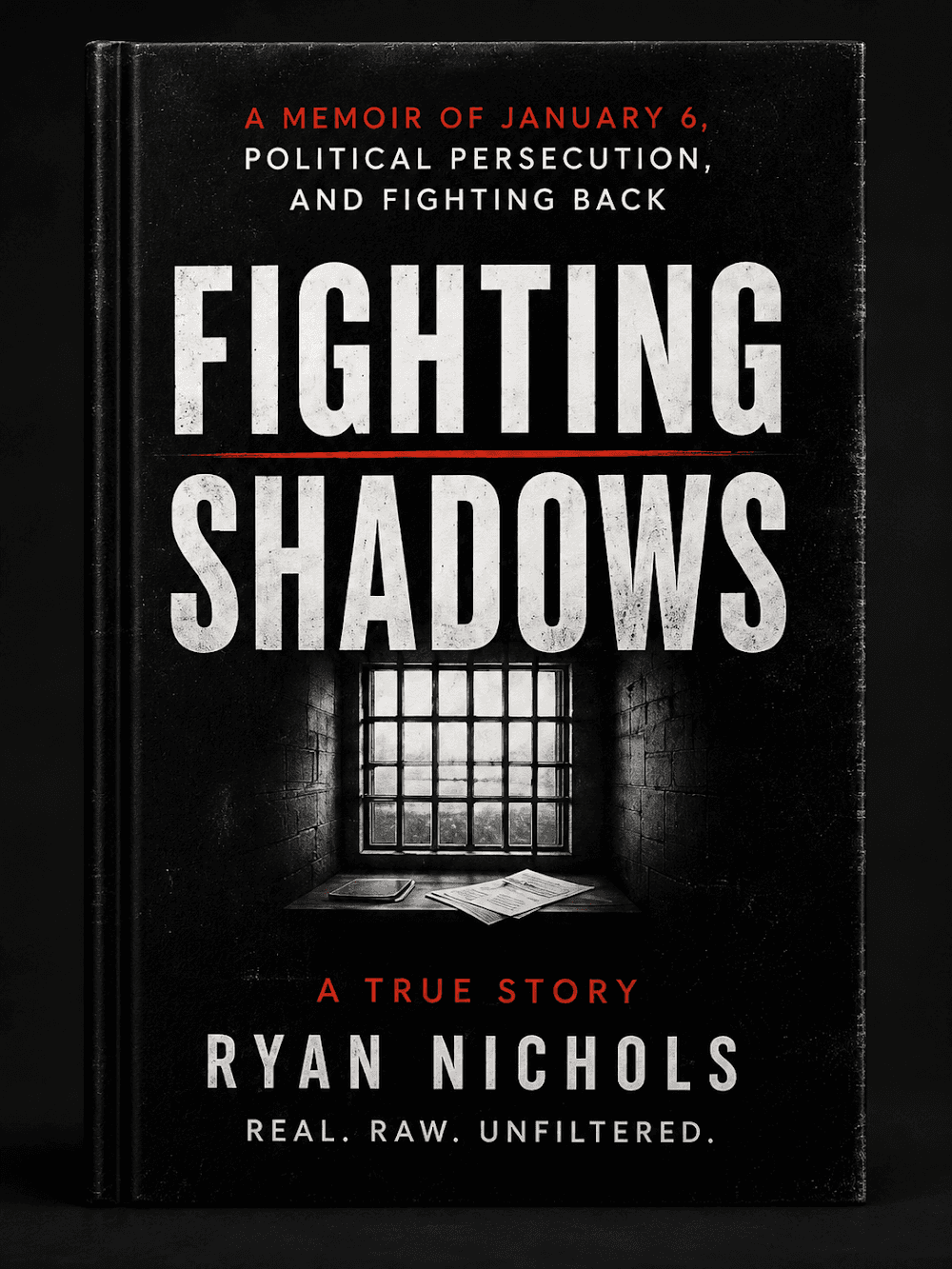
Follow the case
The record is still being written. Get one email when something new drops on it.
Hire Ryan
I built this site. Want one that brings your business real leads? Start with a free 30-minute call.See the services
Tap how this hits you — no signup, everyone sees the count
Share this post — get it back in front of people
Comments
Speak here
Create an account to comment.
This is where people can say what gets buried or cancelled elsewhere. Comments are signed-only, moderated, and tied to a real profile so the record stays usable.
No approved comments yet. Create an account and put the first opinion on the record.