
Should Texas Make Election Day a State Holiday?
Texas polls open 7 a.m. to 7 p.m. and state law protects some voting time. Would an Election Day holiday improve access or add cost without fixing gaps?
By Ryan Nichols
- 196 total reach
- 0 reading now•0 active 24h
- 0 shares•0 inbound
- 0 comments
Labor Day is built around a public idea: sometimes the calendar should stop for something larger than the normal workday.
That raises a fair question less than two months before Texans vote again.
Should Election Day become a state holiday?
The argument sounds simple. Voting matters. Work gets in the way. Close government offices and give people the day.
The actual choice is more complicated. A holiday could help many workers. It could also miss the people whose jobs do not stop when offices close.
The verified Texas baseline
Texas will hold its next uniform election on Tuesday, November 3, 2026. The Texas Secretary of State lists October 5 as the voter-registration deadline, October 19 as the first day of in-person early voting, and October 30 as the final day of early voting. Election Day polls are open from 7:00 a.m. to 7:00 p.m. statewide, according to VoteTexas.gov.
Texas also has workplace protections. The Texas Workforce Commission's employer guide says employees should have at least two hours to vote on Election Day unless they already have two consecutive hours available outside their working hours. The guide says time cutting into normal work hours should be paid.
Election Day is not one of the regular federal holidays listed by the U.S. Office of Personnel Management. Labor Day is.
Those facts were verified on September 7, 2026. They establish the floor. They do not settle the policy question.
The strongest case for a holiday
The case begins with attention.
An election asks citizens to study candidates, understand local measures, travel to a polling place, wait if necessary, and make decisions with consequences. Treating that process like an errand squeezed between a shift and school pickup can send the wrong civic signal.
A state holiday could make voting easier for public employees and workers whose employers follow the state calendar. It could also create space for poll workers, election volunteers, transportation help, and family conversations about voting.
The existing two-hour protection matters, but rights are not always easy to use. A worker may not know the law. A supervisor may discourage the absence without stating an illegal order. Travel, a long line, or an unexpected polling-place change can consume more time than a narrow window allows.
A holiday would be visible. Nobody would need to explain why the day matters.
The strongest case against it
The strongest objection is not that voting is unimportant. It is that a holiday may distribute help unevenly.
Hospitals, restaurants, retail stores, utilities, factories, emergency services, farms, warehouses, and many small businesses do not close simply because government does. Hourly workers could still report for duty while salaried public employees receive the day.
That can turn a universal-sounding policy into a benefit concentrated among people who already have more scheduling control.
There is also a public cost. State offices, schools, courts, and local services would need to adjust calendars and staffing. Parents could face a child-care problem on the very day the policy is supposed to make voting easier.
Texas already offers an early-voting period. Opponents can reasonably argue that the better investment is longer and more predictable early-voting access, more polling locations, better information, and stronger enforcement of existing workplace protections.
Ryan's Take
Making Election Day a state holiday would be a clear statement. It would not be a complete solution.
The question should not be whether the idea sounds patriotic. The question should be whether it helps the voter with the least flexible day.
If Texas creates the holiday, it should pair the gesture with practical measures for people who still work: enforceable paid voting time, clear employer guidance, dependable polling locations, and transportation support where distance is the real barrier.
If Texas does not create the holiday, state leaders should still treat access like an operational responsibility. Twelve hours of polling means little to a person working a twelve-hour shift with a long commute if the law is unclear at the workplace.
The strongest policy may be a combination rather than a slogan: a civic holiday for the institutions that can close, protected time for the workplaces that cannot, and early voting designed around real schedules.
Should Texas Stop Employers From Asking What You Made Before? examined a different workplace rule through the same lens: power looks different on paper than it does in a supervisor's office. Should Texas Set Statewide Rules for License Plate Reader Cameras? also asks when a statewide floor is worth trading some local discretion.
The question
Texas voters have choices before November 3. They can register by October 5, vote early from October 19 through October 30, or vote on Election Day from 7:00 a.m. to 7:00 p.m.
The state still has a policy choice of its own.
Should Texas make Election Day a state holiday, or focus instead on protected paid voting time and expanded early access for workers whose jobs never close?
Sharing this is the biggest help. Put it in front of one more person.
Editorial visual disclosure: The header image is an original AI-assisted conceptual illustration. It does not depict a real polling place, ballot, worker, or government document.
You made it to the end
Most people quit at the headline. You didn’t.
So don’t stop here. Pick one.
Read the book
Fighting Shadows is the whole story in my own words: the road into January 6, the D.C. jail, and the fight to get the record out.See the book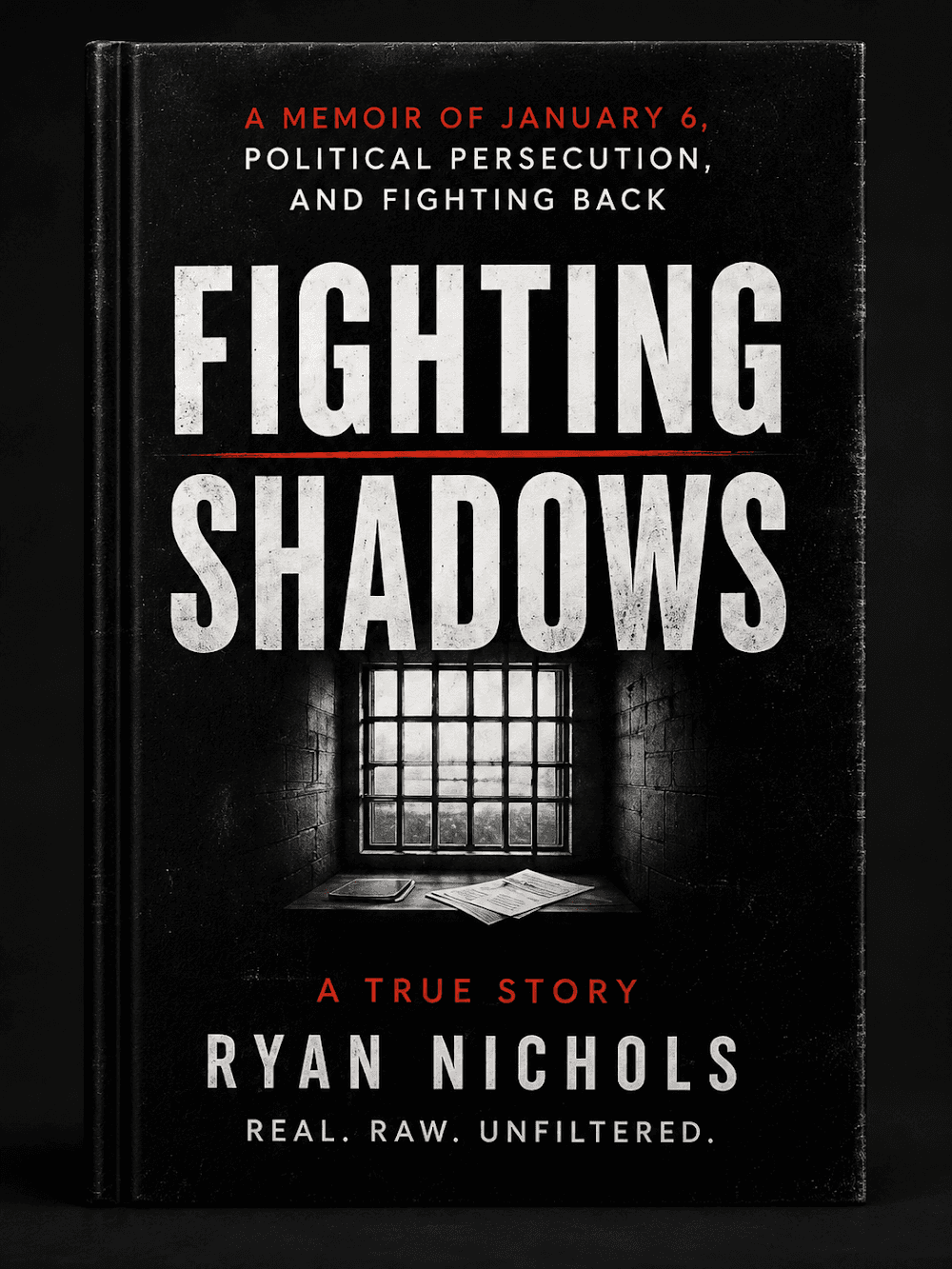
Follow the case
The record is still being written. Get one email when something new drops on it.
Hire Ryan
I built this site. Want one that brings your business real leads? Start with a free 30-minute call.See the services


Tap how this hits you — no signup, everyone sees the count
Share this post — get it back in front of people
Comments
Speak here
Create an account to comment.
This is where people can say what gets buried or cancelled elsewhere. Comments are signed-only, moderated, and tied to a real profile so the record stays usable.
No approved comments yet. Create an account and put the first opinion on the record.