
Stewart Rhodes J6 Case Record: Trial, 18-Year Sentence, Commutation and Vacatur Request
Read Stewart Rhodes' documented January 6 case timeline: 2022 verdict, 18-year sentence, 2025 commutation and the DOJ's pending 2026 vacatur request.
By Ryan Nichols
- 292 total reach
- 0 reading now•1 active 24h
- 0 shares•0 inbound
- 0 comments
By Ryan Nichols
Record last checked: July 22, 2026
Stewart Rhodes' January 6 record is often compressed into one label or one sentence.
The actual procedural history is more precise.
A federal jury convicted him on three counts in November 2022. Judge Amit P. Mehta imposed an 18-year prison term in May 2023. President Donald J. Trump commuted that sentence to time served on January 20, 2025—but did not grant Rhodes a full pardon in that proclamation. A district-court order later held that the original judicial sentence remained intact while its supervised-release conditions would not be enforced. Then, in April 2026, the Justice Department asked the D.C. Circuit to vacate the convictions so prosecutors could seek permanent dismissal of the indictment.
Those are different legal events. A commutation is not a pardon. A government motion is not a court ruling. A jury verdict is not a complete description of a human being.
This profile keeps the events separate and identifies what the public record establishes, what Rhodes has said for himself, and what remains unresolved.
Quick record
- Full federal-record name: Elmer Stewart Rhodes III
- Publicly known as: Stewart Rhodes
- Federal case: United States v. Rhodes et al., No.
1:22-cr-00015-APM - Court: U.S. District Court for the District of Columbia
- Trial judge: U.S. District Judge Amit P. Mehta
- Arrest: January 13, 2022
- Jury verdict: November 29, 2022
- Sentence: 18 years' imprisonment and 36 months' supervised release, imposed May 25, 2023
- Clemency: Sentence commuted to time served on January 20, 2025
- Current appellate issue: DOJ requested vacatur and remand for dismissal in April 2026; no later dispositive order was verified in the public sources reviewed for this article
- Archive profile: Stewart Rhodes case-file profile
Reader poll
Which part of a case profile helps you judge the record fairly?
Tap your answer to vote
One tap. Free and anonymous. No signup to vote.
What the government charged
The Justice Department announced a seditious-conspiracy indictment on January 13, 2022, the same date Rhodes was arrested in Texas.
The later DOJ verdict release identifies Rhodes as the founder of the Oath Keepers and says prosecutors alleged that he and others coordinated before January 6 through private and encrypted communications.
According to the government's trial theory, members and affiliates organized teams, brought tactical gear, and staged firearms outside Washington in what prosecutors called quick-reaction-force arrangements. The government asserted that those weapons could have been transported into the city if called for.
Two limits matter when describing that allegation:
- The firearms were staged outside the District and were not deployed on January 6, according to the later reporting reviewed for this profile.
- Rhodes remained outside the Capitol building. The government's own verdict release says Rhodes and Thomas Caldwell remained outside while other Oath Keepers entered.
Neither limitation erases the charges the jury considered. Both belong in an accurate record because they prevent a reader from assuming conduct the sources do not establish.
What the jury decided
After an eight-week trial and approximately three days of deliberations, the jury returned its verdict on November 29, 2022.
The Justice Department's official release reports that Rhodes was found guilty of:
- seditious conspiracy;
- obstruction of an official proceeding; and
- tampering with documents or proceedings.
The release separately identifies the broader counts returned against co-defendant Kelly Meggs. Those counts should not be silently copied onto Rhodes' record.
The archive still needs the native verdict form and complete trial transcript to present a page-by-page account of every count, acquittal, evidentiary ruling, and defense argument. Until those records are captured, this profile uses the convictions specifically identified in the official verdict record and avoids inventing a fuller count-by-count disposition.
The sentence and the terrorism enhancement
On May 25, 2023, Judge Mehta sentenced Rhodes to 18 years in federal prison followed by 36 months of supervised release.
The DOJ sentencing release says the court applied the federal sentencing guideline adjustment associated with conduct calculated to influence or affect government by intimidation or coercion.
That sentencing finding is frequently shortened into the claim that Rhodes was “convicted of terrorism.” That wording is inaccurate. He was not convicted of a separate federal terrorism count. The court applied a terrorism-related sentencing enhancement to the offenses of conviction.
Prosecutors had requested 25 years. The court imposed 18 years, which was the longest January 6 sentence at that point. The punishment later became one of the central examples cited by people who argue that the Biden-era prosecution was excessive and politically weaponized.
That criticism is editorial and political analysis. The underlying facts remain the jury verdict, the guideline rulings, and the sentence recorded by the court.
Reader poll
What should every sentencing profile explain clearly?
Tap your answer to vote
One tap. Free and anonymous. No signup to vote.
The January 20, 2025 clemency action
President Trump signed the January 6 clemency proclamation on January 20, 2025.
The proclamation did two different things:
- It commuted the sentences of 14 named people to time served, including Stewart Rhodes.
- It granted full, complete, and unconditional pardons to the other covered January 6 defendants.
Rhodes was in the first group. His prison sentence ended, and public reporting documented his release the following day. But the proclamation did not itself erase his convictions or call his relief a pardon.
That distinction matters because a commutation changes the punishment being executed while generally leaving the underlying judgment in place. A pardon is a broader exercise of clemency.
What Rhodes said after release
Rhodes has publicly rejected the government's interpretation of his role.
During his January 22, 2025 visit to Capitol Hill, the Associated Press reported that he said: “I didn't lead anything.” He asked why he should feel responsible for the violence and continued advocating for full pardons for the people who had received commutations rather than pardons.
That is a verified firsthand position attributed to Rhodes. It is not presented as an independent finding that overrides the jury record.
Other post-release reports describe Rhodes challenging the fairness of his prosecution and seeking restoration of legal rights that a commutation did not automatically restore. This archive has not authenticated a complete post-release interview or account-owned recording. Short quotations are therefore kept tied to the reporting that captured them.
The supervised-release order
The distinction between commutation and pardon produced an immediate legal dispute.
After Rhodes' release, Judge Mehta briefly imposed restrictions involving entry into Washington and the Capitol grounds. The court then reconsidered the effect of the presidential proclamation.
In a January 27, 2025 published court order, Judge Mehta concluded that the original judicial sentences remained intact, but that the unconditional commutation could reasonably be read to extinguish enforcement of the supervised-release conditions.
The result was narrow but important:
- the court did not rewrite the original judgment;
- the court declined to dismiss the supervised-release term as though it had never existed; and
- Rhodes and the affected co-defendants were no longer bound by the judicial conditions of supervised release.
The order also vacated the newly imposed travel restrictions.
The Justice Department's 2026 vacatur request
On April 14, 2026, the Justice Department changed its litigating position in the pending appellate cases.
According to Associated Press reporting on the filing, prosecutors asked the D.C. Circuit to vacate the convictions of Rhodes and other Oath Keepers and Proud Boys defendants so the government could seek permanent dismissal of the underlying indictments.
The government described dismissal as an exercise of prosecutorial discretion and said it had determined that dismissal was in the interests of justice.
That filing did not, by itself, vacate Rhodes' convictions. An appellate court must grant the request, issue an order, and remand the case before a district court can act on the indictment.
The Proud Boys appeal later produced a separate July 2026 vacatur and dismissal affecting Ethan Nordean, Joseph Biggs, Zachary Rehl, and Dominic Pezzola. That result should not be automatically copied to Rhodes' Oath Keepers case. The public sources reviewed through July 22 did not establish a final D.C. Circuit order resolving the Rhodes request.
The native April 14 appellate filing and any later order remain priority capture targets.
What the current record means
As of this article's July 22 review, the most defensible summary is:
- Rhodes was convicted by a federal jury on November 29, 2022.
- He received an 18-year sentence on May 25, 2023.
- President Trump commuted that sentence to time served on January 20, 2025.
- The district court held that the judgment remained intact but its supervised-release conditions would not be enforced.
- DOJ asked the D.C. Circuit in April 2026 to vacate the convictions and remand for dismissal.
- A final order granting that Oath Keepers request was not verified in the source set reviewed for this publication.
That summary may change when the appellate court acts. The archive should change with it—quickly, visibly, and with the new order attached.
What remains incomplete
This profile still needs:
- the native January 2022 indictment and later superseding indictment;
- the complete verdict form and trial transcript;
- the native judgment and May 25, 2023 sentencing transcript;
- the defense sentencing memorandum and government's sentencing memorandum;
- the complete D.C. Circuit docket and April 14, 2026 DOJ motion;
- any later appellate mandate or remand order;
- an individual clemency certificate, if one was issued for the commutation;
- a full authenticated post-release interview; and
- a portrait or post-release photograph with documented provenance and reuse authorization.
No portrait has been assigned to this article or profile because the archive does not yet possess a provenance-cleared image. The social artwork is symbolic and does not depict Rhodes or claim to reproduce evidence.
Ryan's Take
This section is editorial analysis. The source record above stands on its own.
The site's editorial position is that the Biden-era Justice Department weaponized January 6 prosecutions, and an 18-year sentence for a man the government's own release says remained outside the Capitol deserves exacting public scrutiny.
That does not require pretending the jury verdict never happened. It requires preserving the verdict, the government's theory, the defense position, the punishment, the commutation, and the later DOJ reversal in the correct order.
The April 2026 filing is especially important. The same department that defended these convictions asked an appellate court to vacate them in the interests of justice. Readers deserve the filing itself, the court's eventual answer, and a clear explanation of whether the indictment is actually dismissed.
Accountability cannot stop at the defendant. Prosecutors, judges, appellate courts, presidents, and publishers all make decisions that shape the record. Every one of those decisions should remain visible.
Explore the connected case file
- Read the full Stewart Rhodes profile
- Compare the connected profiles of Kelly Meggs, Thomas Caldwell, and Jessica Watkins
- Review the separate Donald J. Trump clemency profile
- Follow people, events, and source relationships in the J6 Case Nexus
- Vote in the authenticated Top 25 J6 Cases
- Browse the January 6 people directory
If you have a native filing, trial exhibit, sentencing transcript, appellate order, commutation certificate, verified interview, or photograph with clear reuse permission, submit it for verification. Include its origin, date, and any chain-of-custody information rather than sending an unlabeled screenshot.
Were you there?
Report what you saw at the D.C. Jail.
If you witnessed these officers — or were held there yourself — say what you saw. Anonymous is fine; leave contact only if we can follow up. Every report is reviewed by hand and becomes part of the record.
Join the optional email or text list for source-backed J6 archive updates and new profile expansions. Signing up is voluntary, and the archive remains free to read.
Sharing this is the biggest help. Put it in front of one more person.
Reader poll
What should the archive verify next for Stewart Rhodes?
Tap your answer to vote
One tap. Free and anonymous. No signup to vote.
You made it to the end
Most people quit at the headline. You didn’t.
So don’t stop here. Pick one.
Read the book
Fighting Shadows is the whole story in my own words: the road into January 6, the D.C. jail, and the fight to get the record out.See the book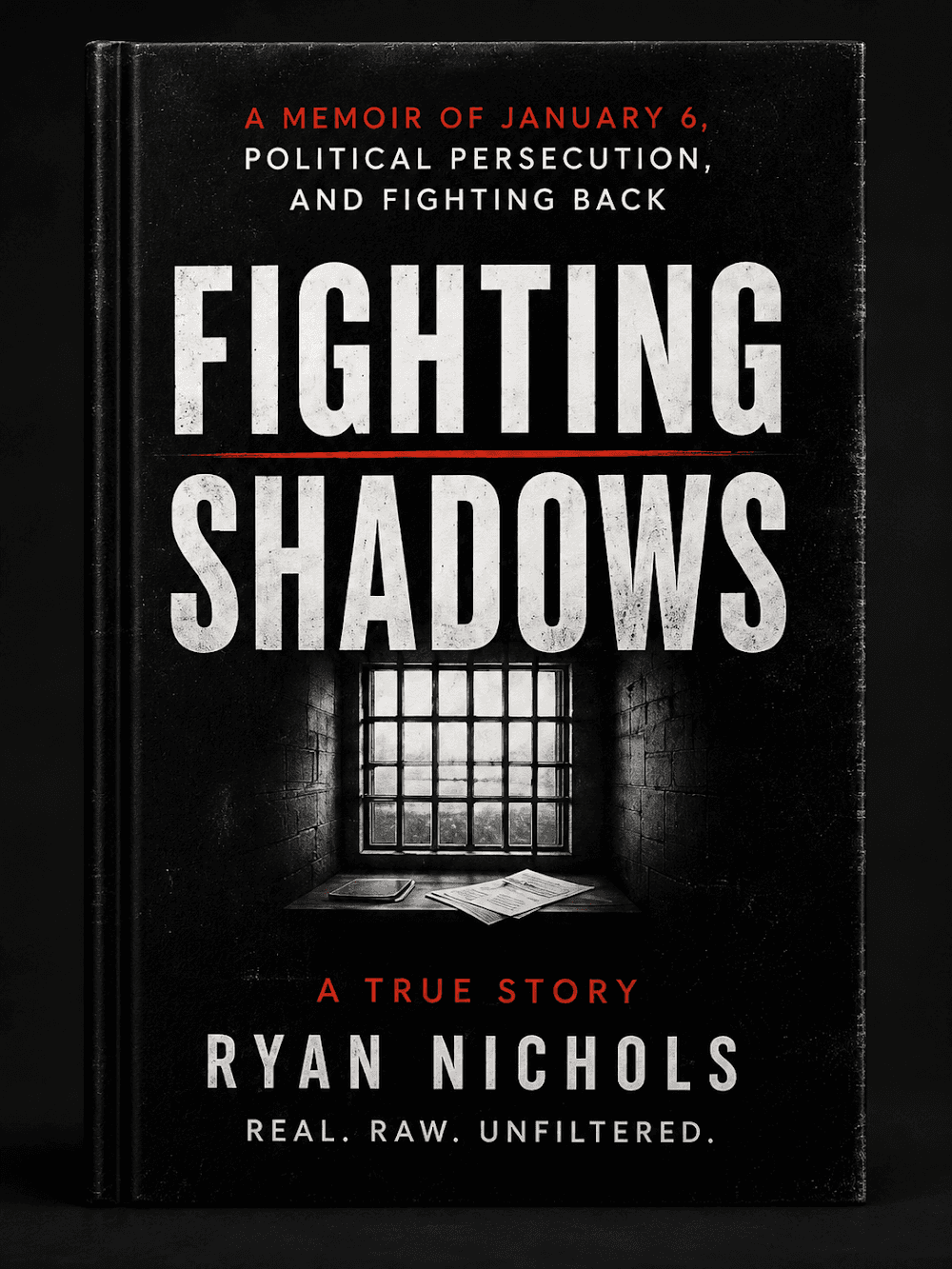
Follow the case
The record is still being written. Get one email when something new drops on it.
Hire Ryan
I built this site. Want one that brings your business real leads? Start with a free 30-minute call.See the services
Tap how this hits you — no signup, everyone sees the count
Share this post — get it back in front of people
Comments
Speak here
Create an account to comment.
This is where people can say what gets buried or cancelled elsewhere. Comments are signed-only, moderated, and tied to a real profile so the record stays usable.
No approved comments yet. Create an account and put the first opinion on the record.