
Julian Khater J6 Case Record: Detention, 80-Month Sentence and Full Pardon
A source-backed Julian Khater timeline covering his 2021 arrest and detention appeal, 2022 plea, 80-month sentence, record conflict and 2025 pardon.
By Ryan Nichols
- 281 total reach
- 0 reading now•0 active 24h
- 0 shares•0 inbound
- 0 comments
By Ryan Nichols
Record last checked: July 22, 2026
Julian Elie Khater's January 6 record cannot be told accurately with one headline.
He was arrested on March 14, 2021—not March 15, the date the Justice Department announced the arrest. A judge ordered him detained before trial, and the D.C. Circuit affirmed that custody decision. He later pleaded guilty to two felony counts of assaulting, resisting, or impeding officers with a dangerous weapon. Judge Thomas F. Hogan imposed an 80-month prison sentence in January 2023. President Donald J. Trump then granted a full, complete, and unconditional pardon to Khater and other covered convicted defendants on January 20, 2025.
One part of the public record remains unresolved: the DOJ's sentencing release reports 36 months of supervised release, while the department's January 6 sentencing table reports 24 months. Until the native judgment is captured, a responsible archive should disclose both figures instead of silently choosing one.
This article separates the charging allegations, detention findings, guilty plea, sentence, medical-record context concerning Officer Brian Sicknick, presidential pardon, and this site's editorial view.
Quick record
- Full federal-record name: Julian Elie Khater
- Federal case: United States v. Khater et al., No.
1:21-cr-00222-TFH-1 - Court: U.S. District Court for the District of Columbia
- Judge: U.S. District Judge Thomas F. Hogan
- Co-defendant: George Pierre Tanios
- Arrest: March 14, 2021, at Newark Liberty International Airport
- Pretrial detention order: May 12, 2021
- Detention appeal: D.C. Circuit No.
21-3033; affirmed July 26, 2021 - Guilty plea: September 1, 2022, to two felony counts under 18 U.S.C. §111(a)(1) and (b)
- Sentence: 80 months' imprisonment, $10,000 fine and $2,000 restitution, imposed January 27, 2023
- Supervised release: official-source conflict between 24 and 36 months; native judgment not yet captured
- Clemency: full, complete, and unconditional pardon on January 20, 2025
- Archive profile: Julian Khater case-file profile
Reader poll
Which record matters most for understanding a federal case?
Tap your answer to vote
One tap. Free and anonymous. No signup to vote.
The arrest date matters
The Justice Department's March 15, 2021 announcement says Khater and Tanios were arrested on Sunday, March 14. It says Khater was arrested as he left an airplane at Newark Airport and Tanios was arrested at his West Virginia residence.
That distinction corrects an error that had appeared in Khater's archive profile. March 15 was the press-release date, not the arrest date.
At the complaint stage, prosecutors alleged that Khater retrieved a canister from Tanios' backpack and sprayed a chemical substance toward U.S. Capitol Police and Metropolitan Police officers. The announcement listed conspiracy, assault, civil-disorder, obstruction, restricted-grounds, and Capitol-grounds allegations.
Those were accusations supporting a criminal complaint, not findings of guilt. The Justice Department's own release states that a complaint is a formal accusation for establishing probable cause and that a defendant is presumed innocent unless proven guilty.
The later plea covered two specific assault counts. It should not be described as a guilty plea to every allegation listed at arrest.
The detention decision was not a guilt verdict
Judge Hogan entered a pretrial detention order on May 12, 2021. Khater appealed.
On July 26, 2021, the D.C. Circuit affirmed that order. The three-judge panel said the district court made the individualized assessment required by the Bail Reform Act and did not clearly err in finding that no release condition would reasonably assure community safety.
The appellate judgment recounted the district court's findings about the alleged chemical-spray assaults, their effect on officers, and what the lower court viewed as evidence of planning and coordination. Those findings supported a custody decision under the pretrial-release framework.
They did not convict Khater. The appeal concerned whether he should remain detained while the prosecution was pending. That distinction belongs in any fair case profile because pretrial detention and criminal guilt answer different legal questions under different standards.
What Khater pleaded guilty to
On September 1, 2022, Khater pleaded guilty to two felony counts of assaulting, resisting, or impeding officers with a dangerous weapon, in violation of 18 U.S.C. §111(a)(1) and (b).
The official DOJ plea release says Khater admitted using pepper spray against officers near the Capitol. The two counts were tied to officers identified in the public record as C. Edwards and B. Sicknick.
The complete plea agreement and statement of offense are still missing from this archive. Until those native records are captured, the article relies on the offense description in the official plea announcement and does not invent a defense account, an unrecorded admission, or a broader disposition.
Khater has not supplied firsthand words to this publication, and no authenticated long-form post-pardon interview was located in the reviewed record. The article therefore does not place words in his mouth.
Reader poll
Should detention decisions be displayed separately from convictions?
Tap your answer to vote
One tap. Free and anonymous. No signup to vote.
The 80-month sentence
On January 27, 2023, Judge Hogan sentenced Khater to 80 months in prison, a $10,000 fine, and $2,000 in restitution, according to the Justice Department's sentencing release.
The release also says the court imposed 36 months of supervised release. But another official DOJ source—the department's January 6 sentencing table—reports 24 months.
That discrepancy is not a small editorial detail. Supervised release is part of the sentence. The native criminal judgment is the controlling document most likely to resolve the conflict, and this archive does not yet possess it. The accurate public position is therefore:
- 80 months' imprisonment, a $10,000 fine, and $2,000 restitution are consistent across the reviewed official summaries;
- the supervised-release term is disputed within the government's published records; and
- the archive needs the signed judgment before treating either 24 or 36 months as final.
The sentence Khater actually served ended through presidential clemency in January 2025. The original sentence nevertheless remains part of the case history and should be recorded accurately.
What the Sicknick medical finding does—and does not—establish
Officer Brian Sicknick died on January 7, 2021. Because Khater pleaded guilty to an assault count involving Sicknick, public descriptions sometimes collapse the assault case and Sicknick's death into a single claim.
The official medical record does not support doing that.
On April 19, 2021, the U.S. Capitol Police announced that the District of Columbia's chief medical examiner determined Sicknick died of natural causes after suffering two strokes. The department also said events on January 6 played a role in his duty status, but the medical classification remained natural causes.
Khater was not charged with causing Sicknick's death. He pleaded guilty to assaulting officers with pepper spray. Both facts belong in the record. Neither should be erased, and neither should be expanded into a claim the charging and medical documents do not make.
The January 20, 2025 pardon
President Trump issued a January 6 clemency proclamation on January 20, 2025.
The proclamation created three groups:
- Fourteen named people received commutations to time served.
- All other people convicted of covered January 6 offenses received full, complete, and unconditional pardons.
- The attorney general was directed to seek dismissal with prejudice of pending indictments.
Khater was not among the 14 named commutation recipients. Because he had been convicted, his relief falls under the second provision: a full pardon. Describing it merely as a commutation or a generic release would understate what the proclamation says.
A pardon is an exercise of presidential clemency. It does not rewrite the historical fact that Khater pleaded guilty or the fact that the court imposed a sentence. It changes his legal position through the constitutional pardon power. That distinction lets readers understand the sequence without treating either the plea or the pardon as if it never occurred.
Timeline
- January 6, 2021: The Capitol events and conduct later charged by prosecutors occurred.
- March 14, 2021: Khater was arrested at Newark Liberty International Airport.
- March 15, 2021: DOJ publicly announced the arrests of Khater and Tanios.
- March 17, 2021: A federal indictment was returned in the District of Columbia case.
- May 12, 2021: Judge Hogan ordered Khater detained pending trial.
- July 26, 2021: The D.C. Circuit affirmed the detention order in No.
21-3033. - September 1, 2022: Khater pleaded guilty to two felony §111 counts.
- January 27, 2023: Judge Hogan imposed the 80-month sentence, fine and restitution.
- January 20, 2025: President Trump granted full pardons to covered convicted January 6 defendants outside the named commutation group, including Khater.
- July 22, 2026: This article and the connected archive record were reviewed against the cited public sources.
What remains incomplete
The public case file still needs:
- the native criminal complaint and indictment;
- the May 12, 2021 detention order and detention-hearing transcript;
- the complete D.C. Circuit docket and mandate;
- the plea agreement and statement of offense;
- the signed judgment resolving the 24-versus-36-month supervised-release conflict;
- the sentencing memoranda and sentencing transcript;
- Bureau of Prisons custody and release records;
- an individual pardon certificate, if one was issued;
- an authenticated firsthand interview or statement from Khater or an authorized representative; and
- a photograph with documented provenance and reuse authorization.
No portrait was assigned to this article because the archive does not have a provenance-cleared image. Its social artwork is symbolic and does not claim to depict Khater, an actual exhibit, or a government document.
Ryan's Take
This section is editorial analysis. The source record above stands on its own.
This site's editorial position is that the Biden-era Justice Department weaponized January 6 prosecutions and imposed punishments that deserve sustained public scrutiny. An 80-month sentence, following more than a year of pretrial detention, is a substantial exercise of federal power. The public should be able to examine the detention transcript, plea documents, judgment, sentencing arguments, prison history, and clemency certificate—not just read a prosecutorial press release.
That scrutiny is strongest when it refuses shortcuts. Khater pleaded guilty to two serious federal assault counts. Officer Sicknick's death was ruled natural causes, and Khater was not charged with causing it. President Trump later granted a full pardon. All three statements can be true at once.
The supervised-release conflict shows why this archive matters. Even official government sources can disagree. A durable case file should expose the conflict, obtain the controlling judgment, and correct itself visibly when stronger evidence arrives.
Supportive coverage is not served by inventing a defense or minimizing a documented plea. It is served by putting every consequential government action on the same timeline and giving the person involved a clear route to add authenticated firsthand evidence.
Explore the connected case file
- Read the complete Julian Khater profile
- Compare co-defendant George Pierre Tanios' profile
- Review the archive's Brian Sicknick medical-record source
- See the clemency decision through the Donald J. Trump profile
- Follow people, events and documents through the J6 Case Nexus
- Vote in the authenticated Top 25 J6 Cases
- Browse the January 6 people directory
If you have the signed judgment, plea documents, detention transcript, sentencing transcript, pardon certificate, a verified interview, or a photograph with clear reuse permission, submit it for review. Include its origin, date, and chain-of-custody information rather than sending an unlabeled screenshot.
Were you there?
Report what you saw at the D.C. Jail.
If you witnessed these officers — or were held there yourself — say what you saw. Anonymous is fine; leave contact only if we can follow up. Every report is reviewed by hand and becomes part of the record.
Join the optional email or text list for source-backed J6 archive updates and new case-file expansions. Signing up is voluntary, and the archive remains free to read.
Sharing this is the biggest help. Put it in front of one more person.
Reader poll
What should the archive verify next for Julian Khater?
Tap your answer to vote
One tap. Free and anonymous. No signup to vote.
You made it to the end
Most people quit at the headline. You didn’t.
So don’t stop here. Pick one.
Read the book
Fighting Shadows is the whole story in my own words: the road into January 6, the D.C. jail, and the fight to get the record out.See the book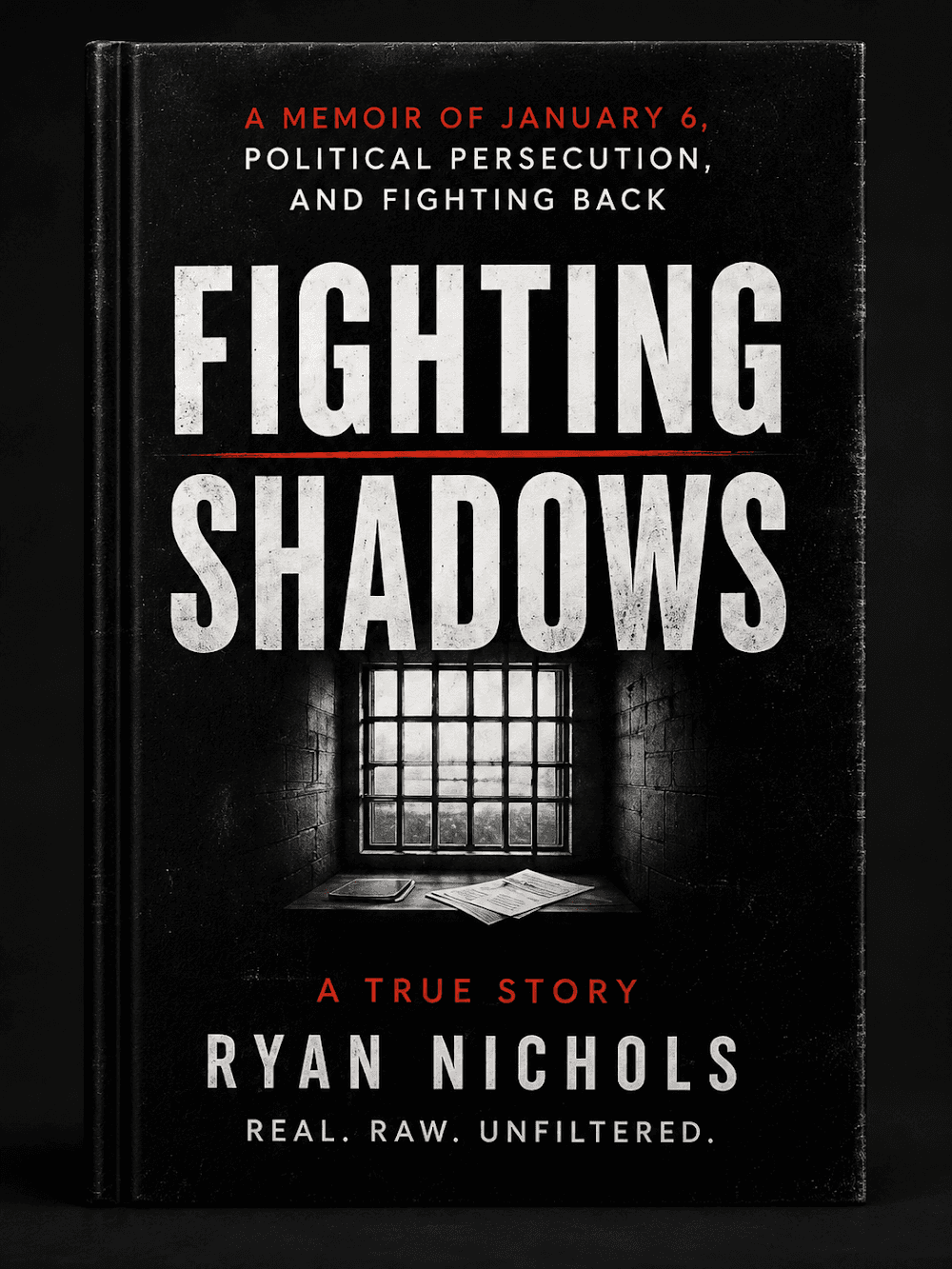
Follow the case
The record is still being written. Get one email when something new drops on it.
Hire Ryan
I built this site. Want one that brings your business real leads? Start with a free 30-minute call.See the services
Tap how this hits you — no signup, everyone sees the count
Share this post — get it back in front of people
Comments
Speak here
Create an account to comment.
This is where people can say what gets buried or cancelled elsewhere. Comments are signed-only, moderated, and tied to a real profile so the record stays usable.
No approved comments yet. Create an account and put the first opinion on the record.