
Peter Schwartz J6 Case Record: Sentence, Fifth Amendment Ruling and Pardon
Read the documented Peter J. Schwartz January 6 case timeline: arrest, trial, 170-month sentence, D.C. Circuit Fifth Amendment ruling, vacated obstruction count, and 2025 pardon.
By Ryan Nichols
- 249 total reach
- 0 reading now•0 active 24h
- 0 shares•0 inbound
- 0 comments
By Ryan Nichols
Peter J. Schwartz's January 6 case cannot be understood from one headline or one number.
Yes, the district court imposed a 170-month prison sentence in May 2023. But that was not the end of the legal record. On January 17, 2025, the U.S. Court of Appeals for the D.C. Circuit vacated Schwartz's obstruction conviction, ordered a new sentencing process, and held that law enforcement violated the Fifth Amendment when agents compelled him to unlock his phone. Three days later, President Donald J. Trump issued the January 6 clemency proclamation that fully pardoned Schwartz and ended his imprisonment.
Those are separate legal events. This profile keeps them separate, puts them in order, and links readers directly to the underlying sources.
Quick record
- Name: Peter J. Schwartz, also publicly known as Pete Schwartz
- Federal case: United States v. Schwartz, No. 1:21-cr-00178
- Court: U.S. District Court for the District of Columbia
- Trial judge: U.S. District Judge Amit P. Mehta
- Arrest: February 4, 2021
- Jury verdict: December 6, 2022
- Original sentence: 170 months, imposed May 5, 2023
- Appellate decision: January 17, 2025
- Clemency: Full pardon under the January 20, 2025 proclamation
- Archive profile: Peter Schwartz case-file profile
Reader poll
Which part of a case profile helps you most?
Tap your answer to vote
One tap. Free and anonymous. No signup to vote.
Who is Peter Schwartz?
Public records and local Owensboro reporting describe Schwartz as an Owensboro, Kentucky, native who worked as a traveling welder in Uniontown, Pennsylvania, before his arrest. That human detail matters. A court file records motions, verdicts, and sentences; it rarely explains the complete life of the person named on its cover.
This article does not claim to speak for Schwartz. The archive does not yet have a verified post-release interview, an authenticated firsthand statement, or an approved portrait with documented reuse rights. Until those materials are available, the record should say only what the sources support.
What the government charged and what the jury decided
Schwartz was arrested on February 4, 2021. The federal case later joined him for trial with Jeffrey Scott Brown and Markus Maly.
According to the Justice Department's May 5, 2023 sentencing release, a jury convicted Schwartz on December 6, 2022, of nine felony counts and two misdemeanor counts. The counts included four assault-related felonies, civil disorder, obstruction of an official proceeding, restricted-area offenses, disorderly conduct, and an act-of-physical-violence count.
Descriptions of the underlying conduct in this article come from the jury record, the Justice Department, and the later appellate opinion. They are not presented as a complete description of Schwartz's character, motives, or life.
The D.C. Circuit's January 17, 2025 opinion summarized trial evidence concerning a folding chair, chemical spray on the Lower West Terrace, and the passing of a spray canister inside the Lower West Terrace tunnel. The appellate court upheld the sufficiency of the evidence for the dangerous-weapon findings it reviewed. It also denied Schwartz's severance claim.
That same opinion, however, found two major legal problems affecting his judgment.
The 170-month sentence
On May 5, 2023, Judge Mehta sentenced Schwartz to 170 months in prison, followed by three years of supervised release, and ordered $2,000 in restitution. At the time, it was the longest January 6 sentence yet imposed, although later sentences in other cases exceeded it.
The length of that sentence became one of the central reasons Schwartz's name remained prominent in the national January 6 debate. A full case profile must preserve the sentence accurately. It also must record what happened to the judgment on appeal.
The obstruction count was vacated after Fischer
On June 28, 2024, the Supreme Court decided Fischer v. United States, No. 23-5572. The Court narrowed the circumstances in which prosecutors may use 18 U.S.C. § 1512(c)(2), a statute concerning obstruction of an official proceeding.
When Schwartz's appeal reached decision, the government agreed that his § 1512(c)(2) conviction could not remain under Fischer. The D.C. Circuit therefore vacated that count and remanded for resentencing because the original sentence had been calculated with a conviction that no longer stood.
That is a specific legal result: one obstruction conviction was vacated, and the case was sent back for a new sentencing process. It would be inaccurate to say the D.C. Circuit vacated every count in that opinion.
The compelled phone unlock violated the Fifth Amendment
The phone issue was separate from Fischer.
The district court had found that FBI agents compelled Schwartz to unlock his cellphone with his thumbprint, but it ruled that the act was not testimonial and denied suppression. The D.C. Circuit disagreed.
The appellate court held that compelling Schwartz to unlock the phone communicated information the government did not already know with the required certainty, including that he had control over the device, knew its passcode, and could access its contents. Because that compelled act was testimonial, the Fifth Amendment applied.
The court then rejected the government's good-faith argument. It remanded the judgment so the district court could determine whether evidence obtained from the phone affected some or all of Schwartz's remaining counts.
This holding matters beyond one defendant. Phones contain messages, photographs, location history, account access, and a detailed map of a person's private life. The opinion creates an important public record about the constitutional boundary between possession of a device and compelled assistance in opening it for the government.
Reader poll
Should compelled phone unlocking receive the same protection as compelled testimony?
Tap your answer to vote
One tap. Free and anonymous. No signup to vote.
What the D.C. Circuit did—and did not—decide
The January 17 opinion did four different things relevant to Schwartz:
- It vacated the § 1512(c)(2) obstruction conviction under Fischer.
- It ordered resentencing because the original guidelines calculation included that count.
- It found a Fifth Amendment violation in the compelled phone unlock.
- It sent the case back for the district court to determine which remaining counts, if any, were affected by evidence from the phone.
The court denied Schwartz's other appellate claims. It did not complete the count-by-count harmless-error analysis itself, and it did not impose a new sentence.
The January 20, 2025 pardon
Three days after the appellate decision, President Trump issued his January 20, 2025 clemency proclamation. The proclamation commuted the sentences of 14 named people and granted a full, complete, and unconditional pardon to all other people convicted of qualifying January 6 offenses.
Schwartz was not one of the 14 named commutation recipients. His January 6 convictions therefore fell within the proclamation's pardon provision. The Office of the Pardon Attorney explains the clemency action and the certificate process. Local reporting documented that Schwartz was released from custody.
The pardon and the appellate ruling should not be blended together:
- The D.C. Circuit vacated the obstruction count because of Fischer and found an independent Fifth Amendment violation.
- The President then exercised constitutional clemency authority over Schwartz's qualifying January 6 convictions.
One came from a court applying law to the appeal. The other came from the President's Article II pardon power.
What remains unknown or incomplete
The current public archive still needs several items before this file can be called complete:
- The native district-court judgment and sentencing transcript
- A native copy of the D.C. Circuit opinion from the court's own media host, with a file-content hash
- The post-opinion appellate mandate and district-court docket entries showing exactly how the pardon affected the pending remand
- A pardon certificate issued specifically in Peter J. Schwartz's name, if publicly available
- An authentic post-release interview or statement from Schwartz
- An authentic profile photograph with clear provenance and permission for republication
The archive will not fill those gaps with guesses. If a source cannot yet be authenticated, it should be marked pending—not converted into a claim.
Ryan's Take
This section is editorial analysis. The court record above stands on its own.
The site's stated position is that January 6 defendants were subjected to Biden-era DOJ weaponization, and the Schwartz record supplies concrete reasons for continued scrutiny: an extraordinary 170-month sentence, an obstruction conviction that later could not stand under Fischer, and a constitutional violation in the compelled opening of his phone.
Acknowledging those legal failures does not require erasing the jury record. Preserving the jury findings does not require ignoring the appellate court. The honest approach is to hold every institution to the same standard: show the evidence, identify who is making each claim, record every correction, and update the public file when a higher court changes the legal picture.
That is the purpose of this archive. A person is more than the harshest line in a government press release. A case is more than its first judgment. And accountability must include the government as well as the governed.
Explore the connected record
- Read the full Peter Schwartz profile
- Compare the connected profiles of Jeffrey Scott Brown and Markus Maly
- Explore the J6 Case Nexus to follow people, court records, events, and source connections
- Vote in the authenticated Top 25 J6 Cases list
- Browse the complete J6 archive
If you have a native filing, sentencing transcript, pardon certificate, verified interview, or photograph with clear reuse permission, send it through the archive intake. Include the source URL, date, and how you obtained it so the record can be verified before publication.
Were you there?
Report what you saw at the D.C. Jail.
If you witnessed these officers — or were held there yourself — say what you saw. Anonymous is fine; leave contact only if we can follow up. Every report is reviewed by hand and becomes part of the record.
Join the optional email or text list for source-backed archive updates and new profile expansions. Signing up is voluntary, and the archive remains free to read.
Sharing this is the biggest help. Put it in front of one more person.
Reader poll
What should this archive verify next for Peter Schwartz?
Tap your answer to vote
One tap. Free and anonymous. No signup to vote.
You made it to the end
Most people quit at the headline. You didn’t.
So don’t stop here. Pick one.
Read the book
Fighting Shadows is the whole story in my own words: the road into January 6, the D.C. jail, and the fight to get the record out.See the book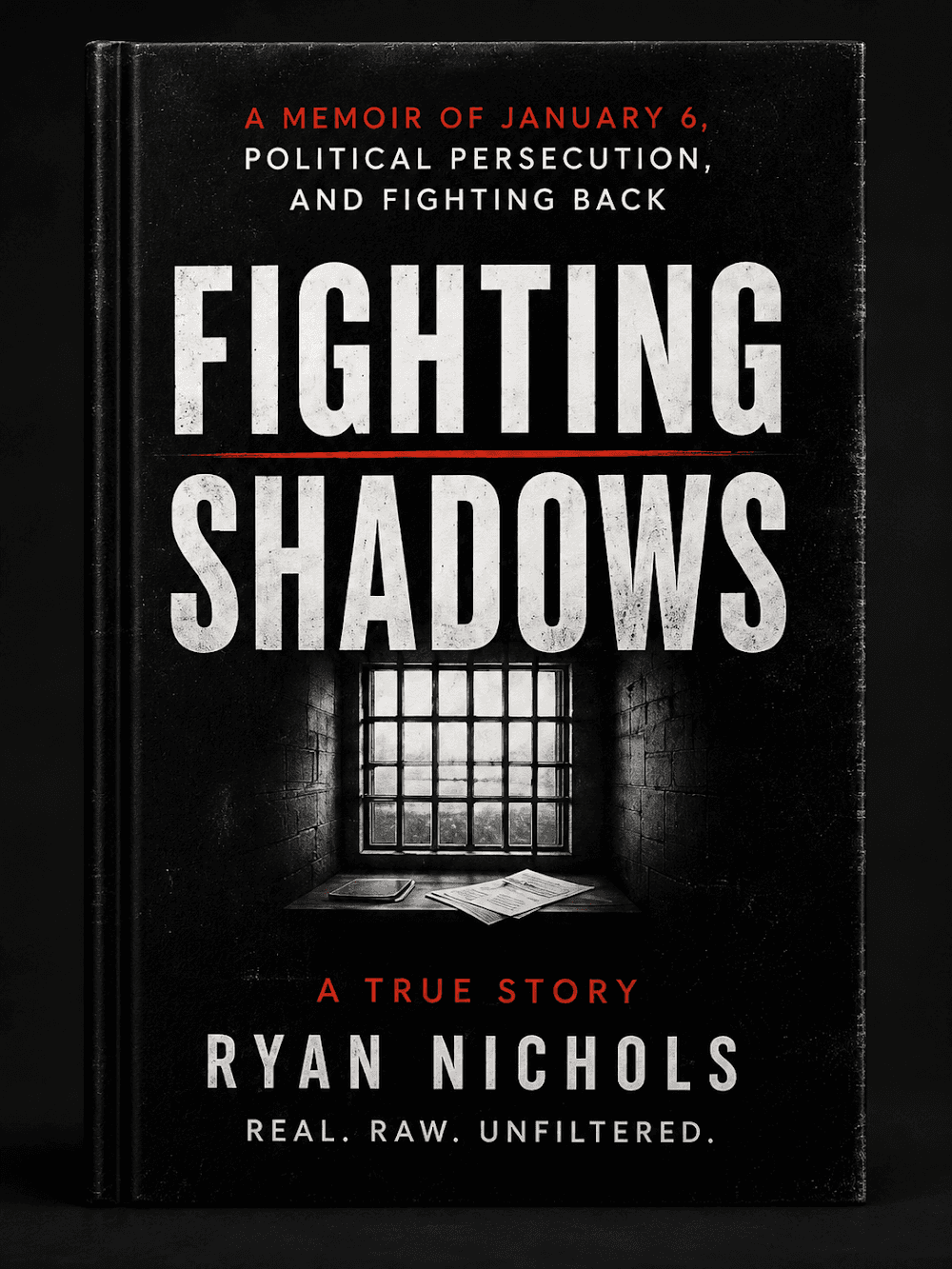
Follow the case
The record is still being written. Get one email when something new drops on it.
Hire Ryan
I built this site. Want one that brings your business real leads? Start with a free 30-minute call.See the services
Tap how this hits you — no signup, everyone sees the count
Share this post — get it back in front of people
Comments
Speak here
Create an account to comment.
This is where people can say what gets buried or cancelled elsewhere. Comments are signed-only, moderated, and tied to a real profile so the record stays usable.
No approved comments yet. Create an account and put the first opinion on the record.