
The Grocery Store That Let Shoppers Serve Themselves
Piggly Wiggly changed grocery shopping in 1916 by letting customers serve themselves. The deeper business lesson is about redesigning the whole path.
By Ryan Nichols
- 123 total reach
- 0 reading now•0 active 24h
- 0 shares•0 inbound
- 0 comments
By Ryan Nichols
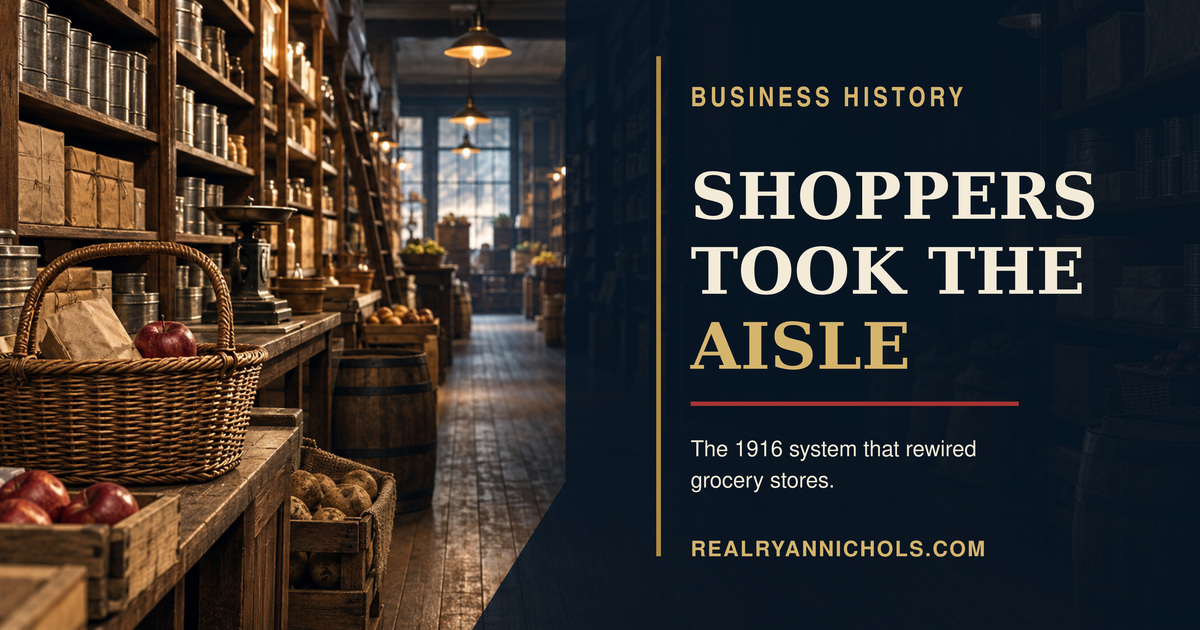
The strange part of the first true self-service grocery store was not the food.
It was the freedom to touch it.
In the common grocery model of the early twentieth century, a customer gave an order to a clerk. The clerk gathered the goods from behind counters or shelves. Shopping moved through an employee because the store was designed around control.
Clarence Saunders changed the path.
Piggly Wiggly's official history says he founded the business in Memphis in 1916 after recognizing the time and expense built into clerk-served shopping. His answer was to let customers move through the store and serve themselves.
The idea sounds ordinary now because it won.
The innovation was a system, not a shelf
It is easy to describe the change as “customers picked up their own groceries.” That misses most of the work.
Once customers walked the aisles, the store had to make products understandable without a clerk standing beside them. Goods needed consistent placement. Prices had to be visible. The path through the store had to make sense. Baskets had to carry the order. Checkout had to gather the transaction at the end.
One permission changed every step around it.
That is what real system design often looks like. The visible feature is small. The operating model underneath it is not.
According to the company's official history, Saunders was responding to wasted time and expense in the older clerk-service method. The site calls Piggly Wiggly America's first true self-service grocery store.
The company history confirms Memphis, 1916, and the self-service model. Sources differ on the exact ceremonial “first” date associated with founding and opening. The durable fact is the transformation, not a convenient anniversary line.
Customers were given work and control
Self-service did not remove work. It reassigned it.
Customers now searched, compared, selected, and carried products. In exchange, they gained speed, privacy, and choice. The store reduced labor in one part of the system and created new demands in merchandising, labeling, inventory, and checkout.
That trade is still alive in modern business.
Online banking lets customers complete tasks a teller once handled. Travel sites let passengers build itineraries. Business software lets owners configure systems that once required a specialist.
Self-service works when the customer gains more control than confusion.
It fails when a company removes the person but leaves no clear path.
A familiar idea can still be radical
The most successful innovations become invisible.
Nobody walks into a modern grocery store and stops to admire the right to choose a can from a shelf. The behavior has become part of the room.
That invisibility can fool builders into thinking a great idea must look futuristic. Often the strongest change is a rearrangement of ordinary parts.
The customer was already present. The products were already there. The problem was the sequence connecting them.
The Night the Telegraph Wires Woke Up tells another story about infrastructure becoming useful only when people could move information through it. Harry Beck Made London Legible by Leaving Most of London Out shows how redesigning the path can matter more than preserving every old detail.
The lesson for builders now
If customers keep asking a person to perform the same simple task, do not immediately blame the customer or hire another clerk.
Study the path.
Ask:
- Can the customer see the available choices?
- Are the terms and prices understandable?
- Is the next step obvious?
- Can they recover from a mistake?
- Is human help available when the problem stops being routine?
Good self-service does not abandon people. It gives them control over the predictable parts and preserves human attention for the parts that require judgment.
The Broken Laser Pointer That Proved the Market Was There carries the same deeper lesson: an accidental demonstration can reveal a job people were already trying to do.
The aisle is the invitation
Piggly Wiggly did more than tell shoppers they were empowered.
It built a room where the new behavior was possible.
That is the standard worth carrying forward. Do not announce that people have control while forcing them through a hidden, confusing, or dependent process. Arrange the path so they can act.
If this kind of overlooked business history is useful to you, join the RealRyanNichols.com email and text list for the next story.
Sharing this is the biggest help. Put it in front of one more person.
Verified September 6, 2026, using Piggly Wiggly's official company history and linked sources.
Editorial visual disclosure: The header image is an original AI-assisted historical concept. It is not a photograph of the original store, Clarence Saunders, or a documented event.
You made it to the end
Most people quit at the headline. You didn’t.
So don’t stop here. Pick one.
Read the book
Fighting Shadows is the whole story in my own words: the road into January 6, the D.C. jail, and the fight to get the record out.See the book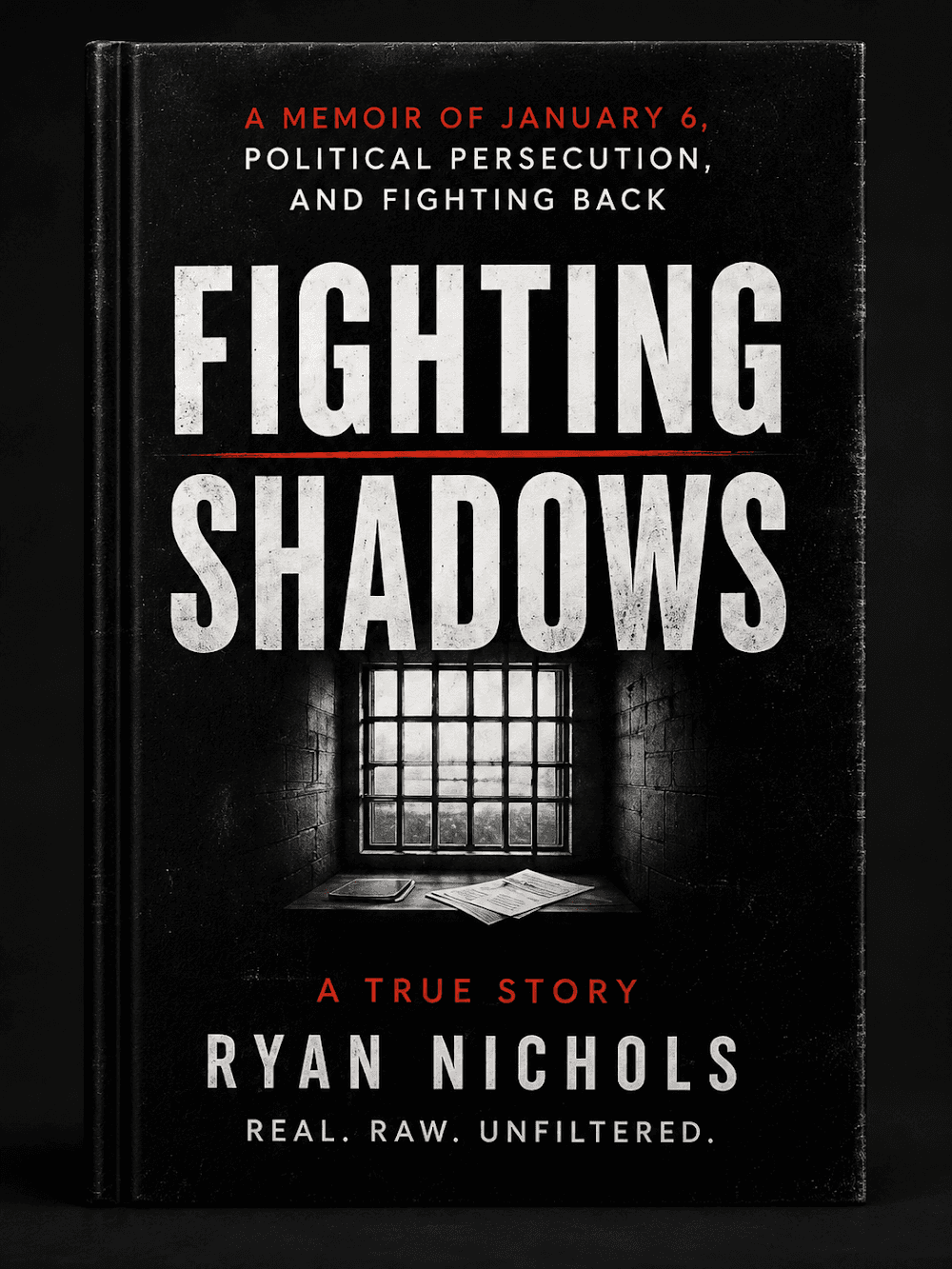
Follow the case
The record is still being written. Get one email when something new drops on it.
Hire Ryan
I built this site. Want one that brings your business real leads? Start with a free 30-minute call.See the services


Tap how this hits you — no signup, everyone sees the count
Share this post — get it back in front of people
Comments
Speak here
Create an account to comment.
This is where people can say what gets buried or cancelled elsewhere. Comments are signed-only, moderated, and tied to a real profile so the record stays usable.
No approved comments yet. Create an account and put the first opinion on the record.