
Should Texas Require Customer-Service Bots to Say They Are AI?
Texas requires some government AI disclosures. Should private customer-service bots also identify themselves before collecting details or offering help?
By Ryan Nichols
- 141 total reach
- 0 reading now•0 active 24h
- 0 shares•0 inbound
- 0 comments
By Ryan Nichols
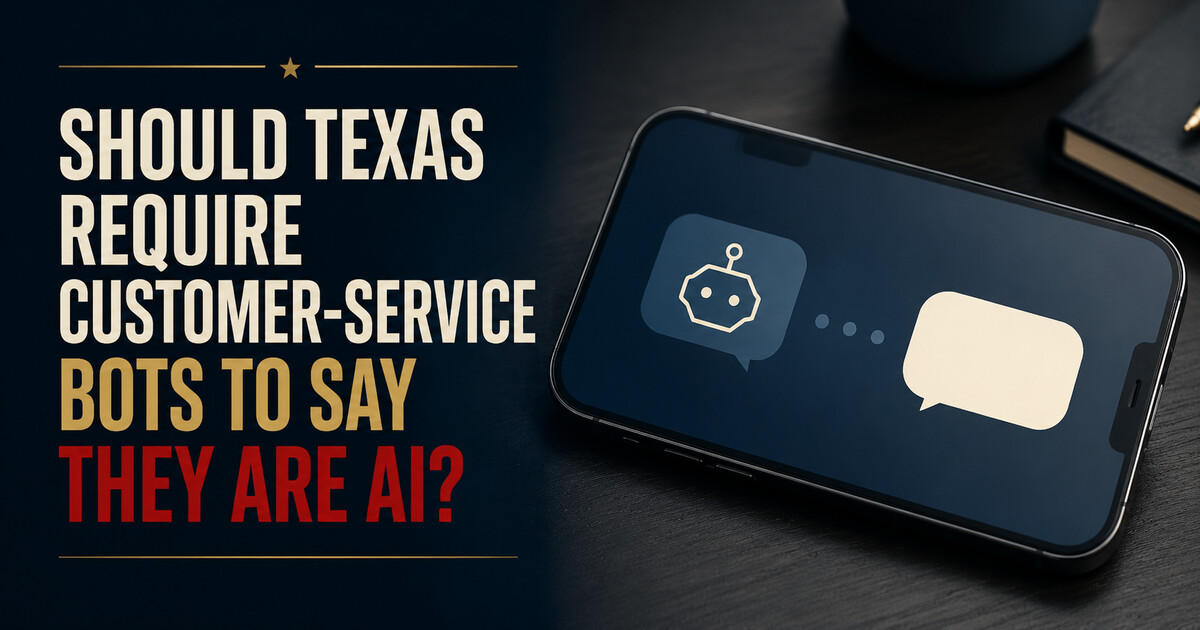
A customer can spend ten minutes explaining a problem before realizing nobody human was listening.
That does not make the bot useless. A good automated system can find an order, reset a password, answer a routine question, and operate after the human office closes. The problem begins when the customer cannot tell what kind of conversation is happening.
Texas already has a live experiment in disclosure. The question is whether the rule should reach farther.
The verified facts
As verified on August 25, 2026, the Texas Responsible Artificial Intelligence Governance Act, commonly called TRAIGA, has been effective since January 1, 2026.
The law says a governmental agency that makes an AI system available to interact with consumers must disclose that the consumer is interacting with AI. The disclosure must come before or at the time of interaction, must be clear and conspicuous, must use plain language, and may not use a dark pattern.
The Texas Attorney General’s consumer guidance confirms that TRAIGA governs entities deploying AI in Texas and describes the law’s consumer protections. But the interaction-disclosure section in the enacted text is written around governmental agencies. It does not create a general opening-message rule for every private retailer, bank, airline, utility, or delivery company using a customer-service bot.
That gap is the actual policy question. It would be misleading to claim Texas has no AI rules. It would also be misleading to claim every commercial service bot already has to identify itself under this particular disclosure section.
{{< poll id="ai-bot-disclosure-1" question="When a service chat begins, do you usually know whether the first response is human?" options="Yes, clearly|Usually|Not until something goes wrong|I rarely use service chat" >}}
The strongest case for a disclosure rule
The strongest argument is not that bots are bad. It is that identity changes how a customer communicates.
People share account numbers, describe financial pressure, explain medical or travel problems, and make decisions based on what the service agent appears to understand. A person may reasonably use different language with a machine, especially when the system can summarize, store, route, or analyze the conversation.
Disclosure also sets honest expectations. A bot can be fast without having judgment. It can retrieve a policy without having authority to make an exception. It can sound empathetic without understanding the weight of what was said.
A short opening notice such as “You are chatting with an automated AI assistant” costs little. It does not ban the tool. It does not require a company to explain its model. It simply lets the customer know what is on the other side of the screen.
Clear notice could also improve service. If customers know the limits at the start, they can ask for a human sooner instead of repeatedly trying to persuade a system that cannot change the outcome.
The strongest case against a new mandate
The strongest objection is that a broad law can become clumsy very quickly.
“AI” covers more than chatbots. A search tool that suggests help articles may use machine learning. A phone menu may classify the caller’s intent. A human representative may use AI to summarize the conversation while remaining fully responsible for the answer. If lawmakers write the definition badly, customers could face warnings on nearly every digital interaction.
There is also a difference between useful notice and compliance theater. A tiny link buried in terms and conditions technically discloses something while telling the customer almost nothing. A repeated warning before every routine step could become noise that everybody ignores.
Businesses may argue that competition already rewards clarity and punishes frustrating service. They may also warn that state-by-state rules force companies to build fifty versions of the same support experience.
Those are serious concerns. A disclosure law should not pretend every automated feature is a human impersonator.
{{< poll id="ai-bot-disclosure-2" question="Which concern matters more to you?" options="Customers deserve clear notice|A broad rule would create warning fatigue|Human escalation matters more than a label|Companies should decide" >}}
Ryan’s Take: disclose the conversation, not every tool
Editorial analysis: Texas should require a clear notice when a private company uses a conversational bot as the apparent customer-service representative.
The trigger should be narrow. It should apply when the system directly conducts a text or voice conversation with a consumer, collects information from that consumer, or offers an answer that appears to come from a service agent. It should not apply every time software ranks a help page or assists a human employee behind the scenes.
The notice should appear at the beginning in plain language. No buried link. No technical paragraph. No demand that the customer understand the company’s software stack.
The rule should also require a truthful statement about human escalation. If a human is available, tell the customer how to reach one. If no human is available during that interaction, say so. A fake “agent” button that only opens another bot is worse than no button at all.
This is the same principle behind Should AI-Assisted Articles Carry a Label?: disclosure should help the reader understand what they are receiving, not serve as a ritual disclaimer that excuses poor work.
Texas has recently confronted other questions where consumer protection and implementation costs collide, including app-store age verification. The right answer is rarely “regulate everything” or “trust every company.” The useful work is defining the moment when a consumer needs a fact in order to make an informed choice.
What a workable rule could say
A narrow Texas rule could include four parts:
- A plain-language notice before or with the bot’s first substantive response.
- A clear path to a human when the company offers human service for that issue.
- No repeated warning for every message in the same conversation.
- Enforcement focused on companies that hide the bot’s identity or falsely present it as human, not businesses that make a good-faith formatting mistake.
That standard would preserve automation while protecting the customer from a basic deception about who, or what, is listening.
Trustworthy systems name their limits. The business lesson in The Recall That Changed Every Medicine Cabinet is that credibility is built by confronting a problem clearly, not by waiting for the public to discover it.
{{< poll id="ai-bot-disclosure-3" question="What should Texas require from private customer-service bots?" options="Disclosure plus human escalation|Disclosure only|Voluntary company policies|No special rule" >}}
Should Texas require a private customer-service bot to identify itself as AI before it starts collecting your information or answering your problem?
{{< share >}}
Verification note: Current legal claims were checked against the enrolled text of Texas H.B. 149 and Texas Attorney General consumer guidance on August 25, 2026. This article is editorial analysis, not legal advice.
Editorial visual disclosure: The header image is an original AI-assisted editorial illustration. It does not depict a real company, interface, person, or conversation.
You made it to the end
Most people quit at the headline. You didn’t.
So don’t stop here. Pick one.
Read the book
Fighting Shadows is the whole story in my own words: the road into January 6, the D.C. jail, and the fight to get the record out.See the book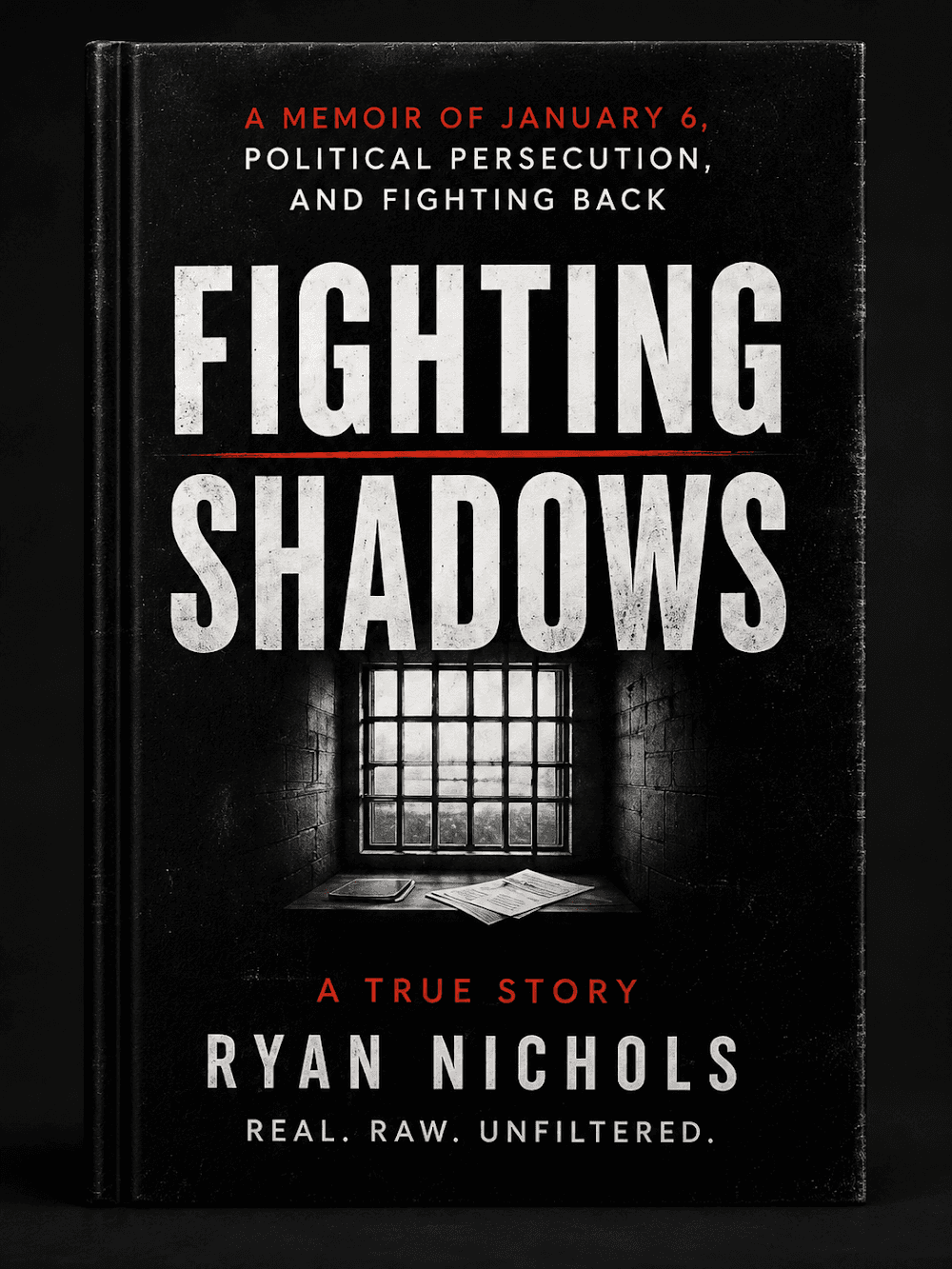
Follow the case
The record is still being written. Get one email when something new drops on it.
Hire Ryan
I built this site. Want one that brings your business real leads? Start with a free 30-minute call.See the services


Tap how this hits you — no signup, everyone sees the count
Share this post — get it back in front of people
Comments
Speak here
Create an account to comment.
This is where people can say what gets buried or cancelled elsewhere. Comments are signed-only, moderated, and tied to a real profile so the record stays usable.
No approved comments yet. Create an account and put the first opinion on the record.