
Should Texas Require Employers to Disclose AI Screening Before You Apply?
Texas restricts some harmful AI uses, but job applicants may not get notice before automated screening. Should employers have to disclose it first?
By Ryan Nichols
- 162 total reach
- 0 reading now•0 active 24h
- 0 shares•0 inbound
- 0 comments
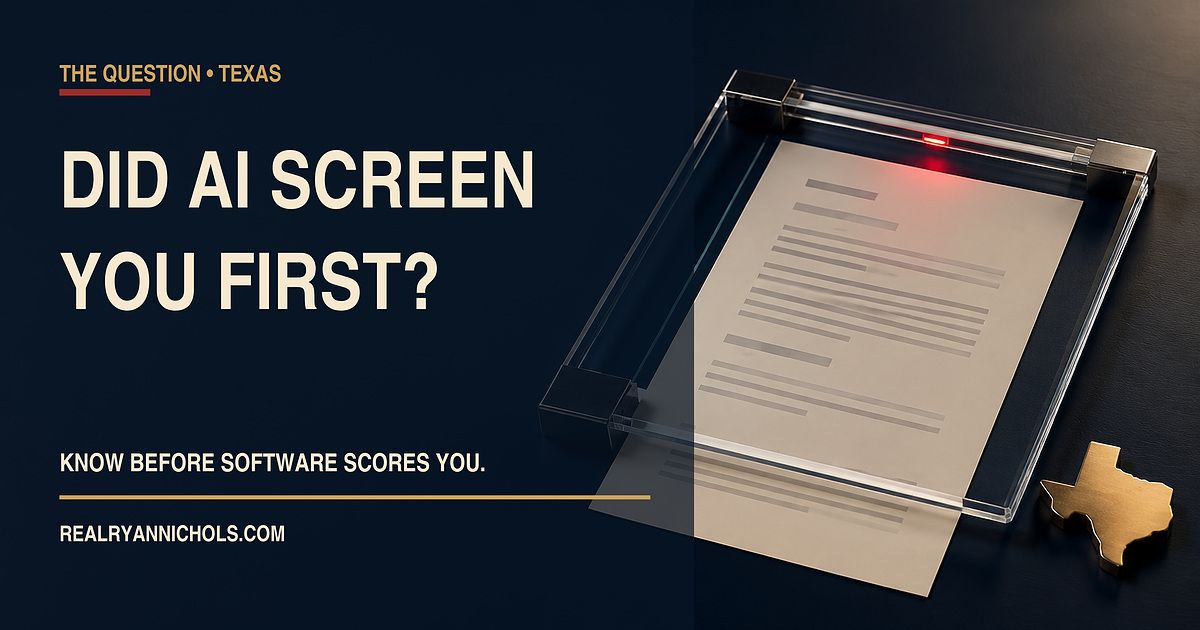
You can spend an hour tailoring a résumé, answer every question, and submit the application without knowing whether a person will read it first.
An automated tool may rank it. A screening system may score the language. A video platform may structure an interview. Software may decide which applications reach a recruiter.
The question is not whether employers should be allowed to use technology.
The question is whether Texas applicants should be told when automated screening materially helps decide who moves forward.
The verified starting point
Texas already has a statewide AI law.
The Texas Responsible Artificial Intelligence Governance Act took effect January 1, 2026. The Texas attorney general's public overview says the law prohibits certain harmful uses, including developing or deploying an AI system with the intent to unlawfully discriminate against a protected class.
But the same overview says disparate impact alone is not enough to prove that prohibited intent. It also says the attorney general has exclusive enforcement authority and the law does not create a private right of action.
The law contains disclosure rules in some settings. Government agencies must disclose when consumers interact with an AI system, and health-care providers have disclosure duties when AI is used in relation to services or treatment.
The enrolled text of House Bill 149 defines “consumer” to exclude someone acting in an employment context. Nothing in that general consumer disclosure section creates a universal advance notice for a private-sector applicant whose résumé is ranked by software.
Texas lawmakers considered the problem in 2025. House Bill 5118 proposed a study of automated employment decision tools after an earlier version contemplated direct requirements. The official history shows it did not reach final passage.
This week, the Legislative Reference Library's interim-hearing guide lists a Texas workforce charge on AI, competitiveness, worker resiliency, education, upskilling, and responsible adoption. Hiring disclosure is one concrete part of that larger conversation.
Reader poll
Have you ever known AI screened your job application?
Tap your answer to vote
One tap. Free and anonymous. No signup to vote.
The strongest case for disclosure
The pro-disclosure case starts with a simple principle: people should know the kind of process judging them.
A short notice would not require an employer to reveal source code or publish a proprietary model. It could say that an automated tool will materially rank, recommend, or screen applications, identify the vendor or category of tool, and explain how an applicant can request an accommodation or human review.
That notice could help applicants with disabilities. The Equal Employment Opportunity Commission's AI and ADA resource page links guidance for workers and employers on software, algorithms, and AI used to assess applicants and employees.
Disclosure also creates internal discipline. If a company must say a tool affects hiring, somebody has to know what the tool does, who owns the decision, and where an applicant can challenge a mistake.
That is not anti-business. It is basic process ownership.
The rule could be narrow. It could apply only when automation is a controlling factor, not when software schedules an interview, checks spelling, or organizes records.
The strongest case against a statewide mandate
The opposition has real arguments.
First, “AI” is broad. A badly written law could force a disclosure for ordinary search, sorting, or workflow software that does not meaningfully decide anything.
Second, employers may use several tools from several vendors. A notice requirement could turn into another box applicants click without reading while adding compliance work for small businesses.
Third, a disclosure can create false confidence. Telling an applicant that AI was used does not prove the system is accurate, fair, audited, or important to the final decision.
Fourth, existing state and federal discrimination laws already apply to employment decisions. A separate notice rule could create overlapping standards without giving applicants a useful remedy.
Finally, Texas may prefer to wait for evidence, federal guidance, or a more precise definition of automated employment decision tools before regulating private hiring systems.
Those concerns should shape the rule. They do not make the question disappear.
Ryan's Take: require a plain notice when automation can close the door
Editorial analysis: Texas should require a short, plain-language notice when an automated system materially ranks, recommends, or rejects an applicant before a person completes an independent review.
The notice should answer four questions:
- Is an automated system materially evaluating this application?
- What kind of information does it evaluate?
- How can the applicant request a disability accommodation?
- Is there a path to correct inaccurate information or request human review?
The line should be material influence, not mere use.
An applicant-tracking system that stores a résumé is not the same as a scoring system that decides the résumé never reaches a recruiter. A calendar tool is not the same as an automated interview assessment.
Texas can protect ordinary business software while requiring honesty at the point where software can quietly close the door.
Should Texas Require Customer-Service Bots to Say They Are AI? asked whether people deserve to know who, or what, is speaking to them. Hiring raises a harder version of the same principle because the system may never speak. It may simply decide.
The answer is not to ban automation. Used carefully, consistent criteria can reduce arbitrary human decisions. The answer is to make the material role visible and keep a human path open when the stakes are employment.
Reader poll
Where should Texas draw the line?
Tap your answer to vote
One tap. Free and anonymous. No signup to vote.
Reasonable people can disagree about the cost and scope. They should not have to pretend the decision is still entirely human when it is not.
Should Texas require employers to tell applicants, before they apply, when automated screening can materially decide whether a human ever sees them?
Sharing this is the biggest help. Put it in front of one more person.
Legal and legislative sources were verified September 2, 2026. Ryan's Take is editorial analysis, not a claim about any specific employer or hiring vendor.
Editorial visual disclosure: The header image is an original AI-assisted conceptual illustration. It does not depict a real employer, applicant, résumé, software interface, or government record.
You made it to the end
Most people quit at the headline. You didn’t.
So don’t stop here. Pick one.
Read the book
Fighting Shadows is the whole story in my own words: the road into January 6, the D.C. jail, and the fight to get the record out.See the book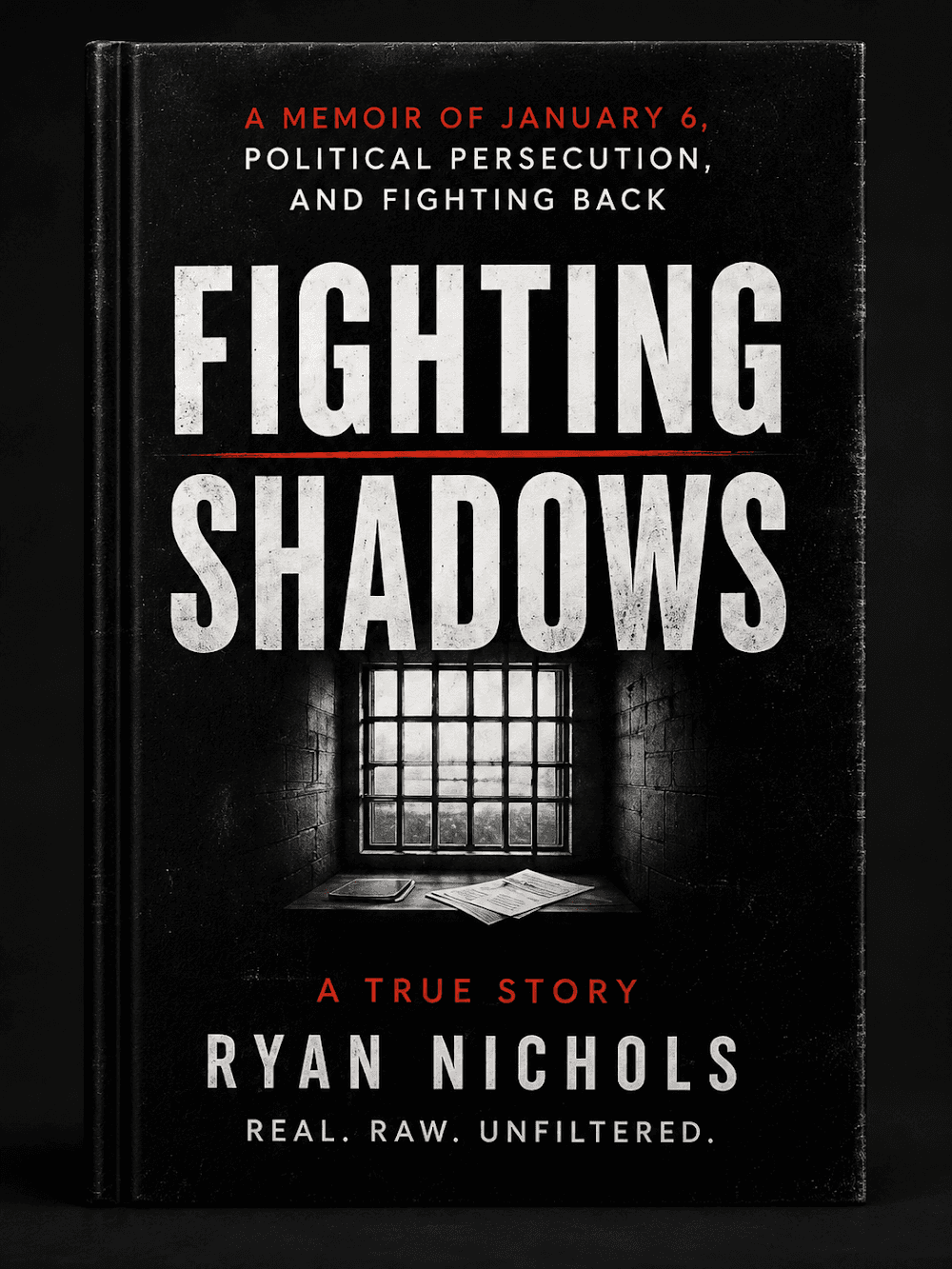
Follow the case
The record is still being written. Get one email when something new drops on it.
Hire Ryan
I built this site. Want one that brings your business real leads? Start with a free 30-minute call.See the services


Tap how this hits you — no signup, everyone sees the count
Share this post — get it back in front of people
Comments
Speak here
Create an account to comment.
This is where people can say what gets buried or cancelled elsewhere. Comments are signed-only, moderated, and tied to a real profile so the record stays usable.
No approved comments yet. Create an account and put the first opinion on the record.