
Trump’s New Defense Supply-Chain Order: What Changes, What It Targets, and What Is Still Unknown
What Trump’s July 20, 2026 defense supply-chain executive order requires, its deadlines, covered critical materials, foreign-supplier rules, and what remains unknown.
By Ryan Nichols
- 286 total reach
- 0 reading now•1 active 24h
- 0 shares•0 inbound
- 0 comments
By Ryan Nichols
President Donald Trump signed a sweeping executive order on July 20, 2026, directing the federal defense establishment to tighten restrictions on critical materials connected to adversary nations and to demand much deeper visibility into contractor supply chains.
The order is significant because it moves beyond a general promise to “buy American.” It sets dates, tells contractors what information they may have to produce, narrows the circumstances for certain waivers, and identifies penalties the government may consider when a contractor does not replace an unreliable foreign source.
It is also not self-executing in every respect. Several of its most consequential requirements depend on regulations, implementation guidance, funding, contractor data, and decisions that have not yet been made public.
Here is what the official record establishes—and what it does not.
The verified facts
The executive order published by the White House says the United States should source not only finished military equipment, but also the materials and components needed to manufacture, maintain, repair, and sustain that equipment, from the United States or allied nations.
The order is built in part around 10 U.S.C. § 4872, an existing federal procurement law. The statute generally restricts acquisition of specified materials produced or manufactured in covered nations, while preserving defined exceptions and national-security waivers.
The law currently identifies these covered materials:
- Samarium-cobalt magnets
- Neodymium-iron-boron magnets
- Tungsten metal powder
- Tungsten heavy alloy and components containing it
- Tantalum metals and alloys
- Molybdenum
The statute identifies North Korea, China, Russia, and Iran as covered nations. It also contains exceptions for circumstances including nonavailability, some contingency operations, certain commercial products and electronic devices, and specified recycled materials.
The new order does not erase every statutory exception. Instead, it directs how the executive branch should use waivers and how contractors must document the problem when a noncompliant source cannot immediately be removed.
Reader poll
Which part of the defense supply chain should receive the closest public scrutiny?
Tap your answer to vote
One tap. Free and anonymous. No signup to vote.
What changes on January 1, 2027
Beginning January 1, 2027, the order directs the department and military services to stop issuing specified waivers under Section 4872 except through the process described in the order.
When a waiver remains necessary, the contractor or subcontractor must submit a mitigation plan that:
- Identifies the noncompliant material’s source.
- Documents exhaustive efforts to find a compliant source, or shows that one was unavailable at the time.
- Explains how the contractor will remove the noncompliant material from its supply chain.
- Provides a strict projected timeline for completing that work.
The order adds an important limit: a contractor generally cannot call a domestic source “unavailable” merely because it failed to qualify that source. It must show active, adequately funded, ongoing qualification efforts.
If officials determine that a contractor committed fraud, deliberately misled the government, or knowingly failed to carry out an approved mitigation plan, the order directs the department to use available contractual remedies and permits a referral to the attorney general for possible investigation or prosecution.
That language does not mean a contractor has already committed wrongdoing. It describes a future enforcement path and still requires evidence, legal process, and an official determination in an individual case.
The government wants a map from raw material to finished product
The order’s most ambitious provision may be its supply-chain mapping requirement.
Within 180 days, the secretary is directed to develop policy and implementation guidance requiring prime contractors and subcontractors at every tier to map critical supply chains for designated national-security acquisitions. Within 90 days after that guidance is completed, the department is directed to issue implementing regulations.
The proposed rules are supposed to require an “indentured Bill of Materials”—a detailed record tracing components, parts, equipment, software, and materials back to the origin of raw materials.
Contractors would also have to vet suppliers for:
- Financial risk
- Foreign ownership, control, or influence
- Manufacturing and supply risk, including sole-source dependence and limited capacity
After vetting, a contractor would have to notify the government of a significant supply-chain risk within 15 days and provide a confidential corrective-action plan within 45 days. The order says the department may use artificial intelligence to help identify vulnerabilities, bottlenecks, and single points of failure.
This is not a small paperwork change. The defense industrial base reaches far beyond the familiar names that build aircraft, ships, vehicles, missiles, and communications systems. A July 2025 Government Accountability Office review reported that the department relies on a global network of more than 200,000 suppliers and has limited insight into the vast majority of lower-tier suppliers that provide raw materials and parts.
That oversight finding helps explain why the new order emphasizes tracing the chain instead of looking only at the prime contractor.
Why critical materials matter
Rare-earth magnets and other critical materials are small compared with a finished weapons platform, but they can be essential to its performance.
In a September 2024 GAO report on critical materials, the watchdog said these materials support high-performance military capabilities and that supply disruption could create a high potential for national-security harm. GAO also reported that the United States imported more than 95 percent of the rare earths it consumed from 2019 through 2022, with almost three-quarters of those imports coming from China.
The same report noted a basic market problem: total defense demand represented less than 0.1 percent of global rare-earth demand. That means the Pentagon can be a powerful buyer of weapons while still having limited influence over the worldwide market for the underlying minerals.
The executive order addresses that vulnerability by tightening sourcing discipline and forcing better visibility. It cannot, by itself, create a mine, processing plant, magnet factory, trained workforce, testing program, or commercially viable substitute overnight.
Reader poll
Should defense contractors have to disclose lower-tier foreign suppliers to the government?
Tap your answer to vote
One tap. Free and anonymous. No signup to vote.
The deadlines to watch
The order creates several measurable checkpoints:
- Within 90 days: A strategy to accelerate testing and qualification of new sources and materials.
- Within 180 days: A list of available enforcement remedies; policy and guidance for critical supply-chain mapping; and regulatory action aimed at qualifying alternative sources.
- Within 90 days after the mapping guidance: Implementing regulations.
- January 1, 2027: The tighter waiver policy begins.
- Every six months through January 1, 2028: Reports to the national security adviser on waivers, mitigation plans, and regulatory progress.
Some reports may include a classified annex. The order does not promise that all underlying supplier data or every progress report will be made public.
It also states that implementation must be consistent with existing law and is subject to available appropriations. In plain English: agencies still need lawful authority and money to carry out the work.
What is disputed or still unknown
No responsible assessment can declare the policy a success or failure one day after it was signed.
These questions remain open:
- Which acquisitions will be covered? The secretary retains substantial discretion to identify the acquisitions connected to national security and the critical supply chains that must be mapped.
- Which additional suppliers will be designated unreliable? The order incorporates the statutory covered nations but also allows further designation by the secretary.
- How expensive will compliance be? The order directs regulators to avoid unduly burdening small businesses, new entrants, and nontraditional defense companies, but it provides no public cost estimate.
- Can contractors actually trace every lower tier? GAO found disagreement inside the department: some officials said supplier-origin information was readily available, while others warned that mandatory disclosure could be costly or resisted by suppliers.
- Will domestic and allied capacity be ready in time? A waiver policy can create pressure to diversify, but qualification, processing, production, and testing take time.
- How much will the public be able to verify? Proprietary information and classified national-security details will limit disclosure even if the government gains better visibility.
- Will enforcement be consistent? The text lists possible contractual consequences, but results will depend on regulations, evidence, personnel, and case-by-case decisions.
Those are not reasons to ignore the policy. They are the standards by which the public should judge its implementation.
Ryan’s Take
This is the clearly labeled opinion section. It summarizes the standing editorial perspective Ryan has approved for this political lane; it is not additional reporting or a claim of firsthand involvement.
America should not discover, during a war or national emergency, that a critical weapons component depends on a government that considers us an enemy.
That principle is straightforward. The execution is not.
Political leaders like the headline “made in America.” The real test begins several layers below the logo stamped on the finished product. Where was the mineral mined? Where was it refined? Who made the magnet, chip, bearing, sensor, circuit board, or software dependency? Who owns that supplier? Is there a second source if the first one disappears?
If the government cannot answer those questions, it does not truly know its own readiness.
Trump’s order is strongest where it demands receipts: trace the materials, identify the source, document the waiver, fund the mitigation plan, set a deadline, and report the progress.
But accountability must run both ways. Contractors should be held to their promises, and the administration should be judged against its own calendar. The public should be told what can safely be disclosed: how many waivers remain, how many mitigation plans are complete, how many new American or allied sources qualify, and whether small businesses are being pushed out by compliance costs.
“Trust us” is not a supply-chain strategy. A map, a deadline, a responsible source, and a verified result are.
Facts first. Then measure the outcome.
Read the source record and respond
Start with the primary documents:
- Read the full July 20 executive order
- Read 10 U.S.C. § 4872
- Read GAO’s 2025 defense supplier review
- Read GAO’s 2024 critical-materials review
For more source-driven coverage, read our editorial standards, search the site, or explore the public-record case archive.
Join the email and text list at the bottom of this page for new facts-first political coverage, public records, and major updates. We will ask for a name and a reliable way to reach you; we do not solicit donations in this article.
Share a source or perspective
What should the public verify next?
Send an official document, local industry insight, or a specific question for follow-up.
Reader poll
What result would best prove this order is working?
Tap your answer to vote
One tap. Free and anonymous. No signup to vote.
Sharing this is the biggest help. Put it in front of one more person.
You made it to the end
Most people quit at the headline. You didn’t.
So don’t stop here. Pick one.
Read the book
Fighting Shadows is the whole story in my own words: the road into January 6, the D.C. jail, and the fight to get the record out.See the book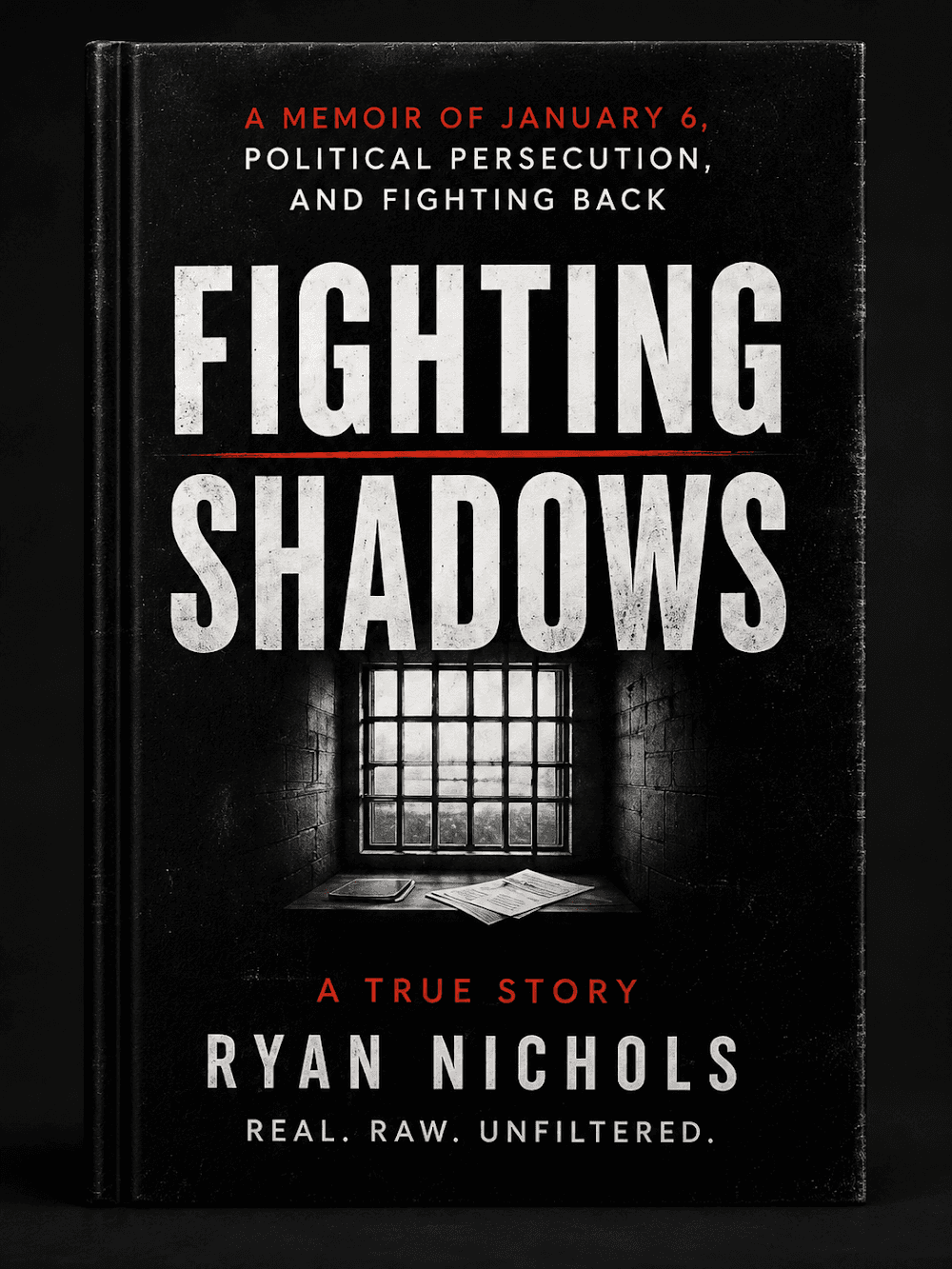
Follow the case
The record is still being written. Get one email when something new drops on it.
Hire Ryan
I built this site. Want one that brings your business real leads? Start with a free 30-minute call.See the services
Tap how this hits you — no signup, everyone sees the count
Share this post — get it back in front of people
Comments
Speak here
Create an account to comment.
This is where people can say what gets buried or cancelled elsewhere. Comments are signed-only, moderated, and tied to a real profile so the record stays usable.
No approved comments yet. Create an account and put the first opinion on the record.