
Star Trek Lasted Three Seasons. Its Future Kept Going for 60 Years
Star Trek premiered September 8, 1966, ran three seasons and 79 episodes, then found a second life. Its 60-year story is a lesson in patient reach.
By Ryan Nichols
- 115 total reach
- 0 reading now•0 active 24h
- 0 shares•1 inbound
- 0 comments
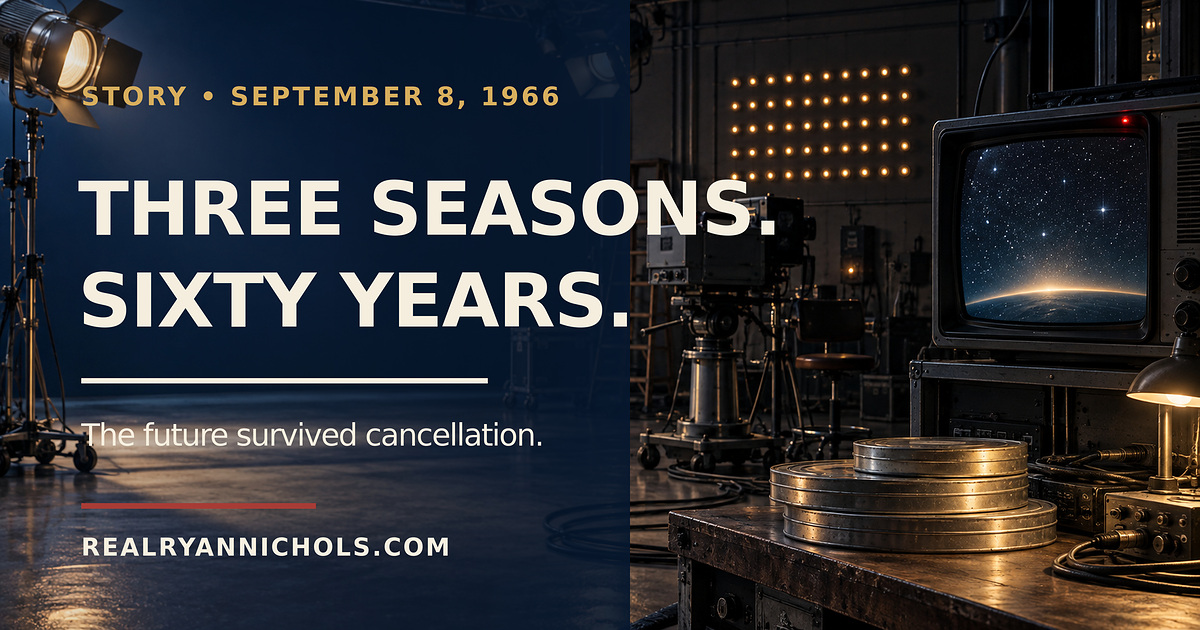
The future arrived on network television on September 8, 1966.
It did not arrive as a guaranteed institution. It arrived as a new science-fiction series with uncertain ratings, expensive effects, and only a few seasons ahead of it.
Sixty years later, the original cancellation looks like a middle chapter.
That is what makes the story useful beyond television.
The first night did not reveal the whole reach
The Television Academy records that Star Trek premiered on NBC on September 8, 1966, and remained on the network until June 3, 1969. Its archive describes a modest original run of three seasons and 79 episodes.
Those numbers could have been the obituary.
The ratings were not strong enough to keep the original series in production. The network run ended. The sets came down. The people who measured success in that season had an answer.
But television distribution was changing what an ending meant.
Reruns put the same episodes in front of viewers who had missed the first broadcast. Local stations could schedule the show again. A scattered audience had time to find one another, remember the characters, organize, and ask for more.
The show did not need the first audience to be the final audience.
The artifact survived the verdict
One of the most powerful pieces of the story is not fictional.
The Smithsonian’s National Air and Space Museum holds the original studio model of the starship Enterprise, used in the 1960s television production. The museum notes that the show presented a racially integrated, multinational crew and gave viewers a future shaped by exploration rather than inevitability.
The object is physical evidence that somebody built the future by hand.
It was paint, lights, wiring, careful photography, and repeated passes in front of a camera. The ship that seemed to cross the galaxy began as a studio model that had to hold up under close inspection.
That is not less impressive than the illusion.
It is more.
A canceled project can still be complete enough to travel
People often talk about persistence as if it means forcing the same door forever.
This story offers a different version.
The original production stopped. The episodes remained. Because the work was complete enough to be rerun, shared, discussed, and discovered, the audience could keep carrying it after the first institution stopped paying for more.
That is a hard lesson for builders.
Your work needs a life outside the room where it was approved. A useful article needs a link people can pass. A tool needs instructions somebody else can understand. A record needs enough context to survive the person who first explained it. A small business needs a process that does not disappear when one employee leaves.
The First Electronic Television Image Was One Straight Line tells the beginning of the medium. Voyager 1 Left Earth Carrying a Record for Strangers tells a real space story about building a message for an unknown audience. Both are about sending something beyond the moment that created it.
The future people could enter
The show’s durability was not only about spaceships.
Its future had a crew drawn from different nations and backgrounds working on the same bridge. It used imagined worlds to talk about prejudice, war, authority, duty, fear, and cooperation. The adventure made the argument easier to enter.
The Television Academy’s interview archive preserves the memories of writers, producers, and performers who made that original run. The archive also shows how much larger the story became: films, later series, books, conventions, and an international audience.
The future kept expanding because people saw room for themselves inside it.
That is the part worth remembering on the anniversary. A story lasts when the audience can do more than admire it. They can inhabit it, debate it, carry it, and hand it to somebody younger.
Build the part that can outlive the first no
Not every canceled project becomes a cultural institution. Most do not.
The lesson is not that rejection secretly guarantees greatness. It does not.
The lesson is that the first distribution decision is not always the final measure of a finished work. A useful thing can move through reruns, archives, recommendations, classrooms, collections, and conversations that its original creators could not schedule.
Make the work clear enough to travel.
Keep the source. Label the date. Preserve the artifact. Give people a way to find the next part. Do not confuse one gatekeeper’s calendar with the outer edge of the audience.
Three seasons ended.
The future kept going.
Join the RealRyanNichols.com email and text list if you want the next verified history and technology story delivered when it is published.
Sharing this is the biggest help. Put it in front of one more person.
Editorial visual disclosure: The header image is an original AI-assisted conceptual illustration. It does not reproduce the Enterprise, a Star Trek character, logo, set, or copyrighted frame.
You made it to the end
Most people quit at the headline. You didn’t.
So don’t stop here. Pick one.
Read the book
Fighting Shadows is the whole story in my own words: the road into January 6, the D.C. jail, and the fight to get the record out.See the book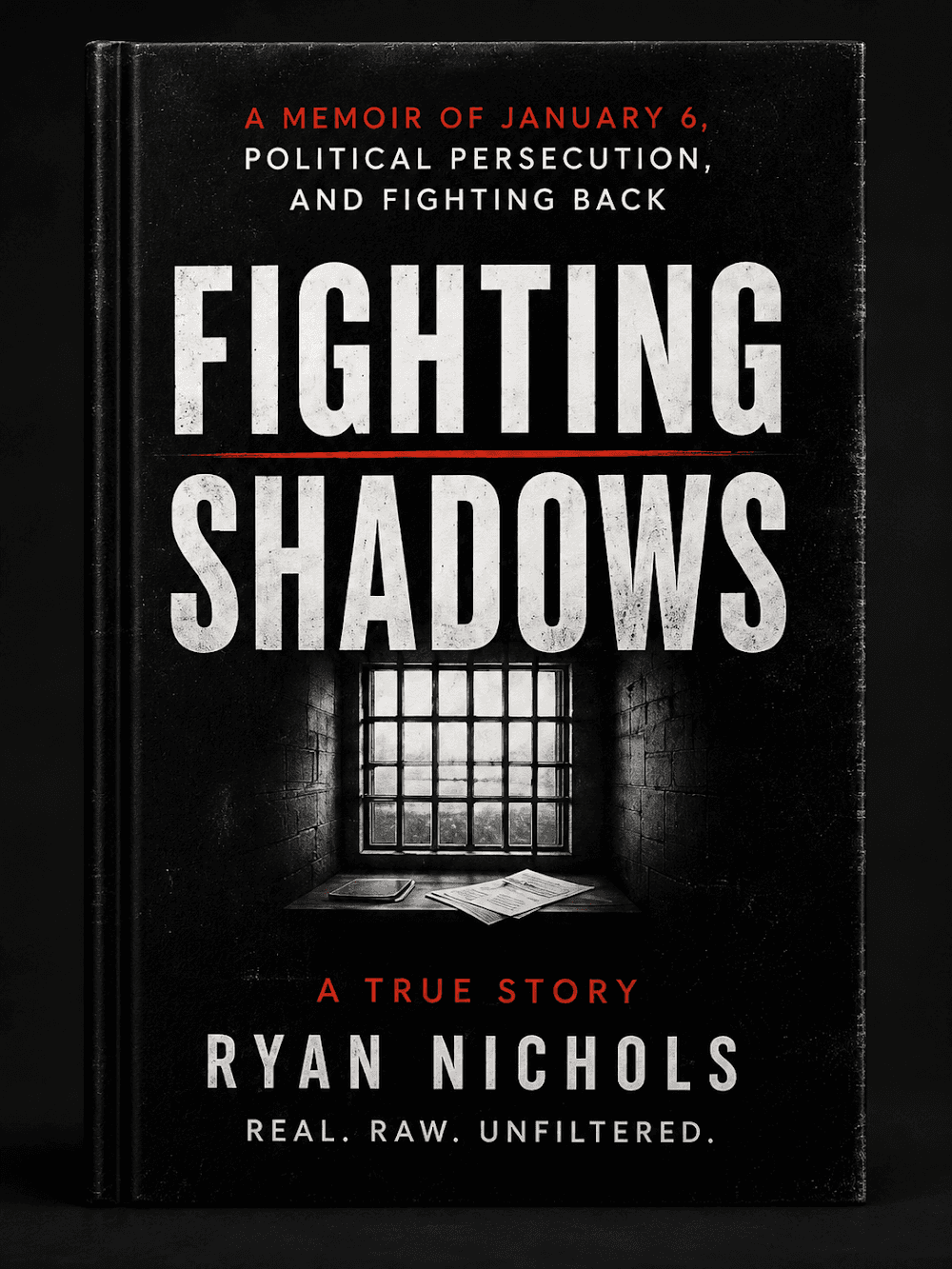
Follow the case
The record is still being written. Get one email when something new drops on it.
Hire Ryan
I built this site. Want one that brings your business real leads? Start with a free 30-minute call.See the services


Tap how this hits you — no signup, everyone sees the count
Share this post — get it back in front of people
Comments
Speak here
Create an account to comment.
This is where people can say what gets buried or cancelled elsewhere. Comments are signed-only, moderated, and tied to a real profile so the record stays usable.
No approved comments yet. Create an account and put the first opinion on the record.