
Should Texas’s Deepfake Rule Start Earlier Than 30 Days Before an Election?
By Ryan Nichols
- 48 total reach
- 0 reading now•0 active 24h
- 0 shares•0 inbound
- 0 comments
A convincing fake video can travel across Texas before a campaign finishes writing its correction.
State law already recognizes the danger. It makes certain election deepfakes a crime.
The question is whether the law starts too late.
Under the current Texas rule, the deepfake-video offense applies when a person acts with intent to injure a candidate or influence an election and causes the video to be published or distributed within 30 days of that election.
Should the state move that line farther out?
What Texas law says now
Texas Election Code Section 255.004 covers communications that falsely appear to come from another source. It also creates an offense for a person who, with the required election-related intent, creates a “deep fake video” and causes it to be published or distributed within 30 days of an election.
The statute defines a deepfake video as a video created with intent to deceive that appears to show a real person performing an action that did not happen.
That definition is narrower than the everyday use of the word “deepfake.” It focuses on video. It requires deceptive intent. It also requires the publication or distribution to fall inside the 30-day window.
As of verification on October 1, 2026, those limits appear in the current online text of Chapter 255.
Reader poll
Is a 30-day election deepfake window long enough?
Tap your answer to vote
One tap. Free and anonymous. No signup to vote.
The strongest case for an earlier start
Voters do not begin forming opinions thirty days before Election Day.
Fundraising, endorsements, early narratives, primary contests, and mail voting all begin earlier. A synthetic video released sixty or ninety days out can shape a race, disappear from the daily news, and keep circulating through private messages long after a correction is published.
An earlier window could give candidates and prosecutors a clearer tool before the final month. Supporters might also argue that the state should cover deceptive synthetic audio and still images, not only video, because modern generation tools can imitate a voice or create a false scene without producing a traditional video.
There is a practical timing problem too. Texas early voting begins before Election Day. A rule keyed only to the final election date may leave less protection during the period when voters are already receiving ballots, seeing campaign messages, and making decisions.
The strongest version of this argument is not “ban AI.” It is “do not let a campaign lie with a fabricated performance and then hide behind the calendar.”
The strongest case for keeping the rule narrow
Election law sits next to the First Amendment.
Political satire, parody, reenactments, edited clips, commentary, and artistic work can all alter reality. A broad law may chill lawful speech if speakers cannot tell where criticism ends and a criminal deepfake begins.
The current statute includes intent requirements and a limited time window. Those limits can be seen as guardrails against overreach.
There is also an enforcement problem. A longer window does not automatically make a false video easier to trace. The original creator may be anonymous, outside Texas, or beyond the reach of a timely prosecution. Campaigns could use accusations of “deepfake” as a weapon against authentic but embarrassing material.
Critics of expansion can reasonably ask for a faster civil correction process, disclosure labels, platform provenance tools, or expedited court orders instead of a broader criminal offense.
Ryan’s Take
Thirty days is too short for the way modern campaigns and modern media work.
Texas should consider a longer window, but the state should not write a vague ban on anything “AI-generated.” The conduct should stay tied to a materially false depiction of a real person, deceptive intent, and an effort to influence an election.
The law should also distinguish between two remedies.
First, a fast civil process should help a candidate or voter obtain a correction, label, or removal order when the evidence is clear and the election is close.
Second, criminal penalties should remain reserved for deliberate, material deception, not jokes, disclosed reenactments, criticism, or obvious parody.
A disclosure rule could cover a broader range of synthetic media than a criminal ban. If a campaign intentionally creates realistic media showing a candidate saying or doing something that never happened, the viewer should not have to become a forensic analyst to learn that fact.
The hard cases Texas would have to define
Any proposal should answer these questions in public:
- Does it cover audio and still images?
- What counts as a material alteration?
- How visible must a disclosure be?
- Who is responsible when a supporter, consultant, or anonymous account posts the file?
- What evidence proves deceptive intent?
- How quickly can a court act before voting ends?
- How are satire, commentary, and news reporting protected?
Those details matter more than a slogan.
Should Texas Disclose AI Screening Before You Apply? asks a similar transparency question in employment. Should Texas Require Insurers to Disclose When AI Touched a Claim? puts it in insurance. Should Texas Require One-Click Subscription Cancellation? tests the same boundary between freedom and informed consent in a different market.
The election version carries a harder clock. Once votes are cast, a later correction may be true and still arrive too late.
Reader poll
What should Texas change first?
Tap your answer to vote
One tap. Free and anonymous. No signup to vote.
Should Texas move its deepfake-election rule earlier than 30 days before voting ends?
Editorial note: This is policy analysis, not legal advice. The statute was verified at 4:25 a.m. Central on October 1, 2026, against the official online Texas Election Code linked above.
Editorial visual disclosure: The header image is an original AI-assisted conceptual illustration. It does not depict a real candidate, campaign, recording, or piece of evidence.
You made it to the end
Most people quit at the headline. You didn’t.
So don’t stop here. Pick one.
Read the book
Fighting Shadows is the whole story in my own words: the road into January 6, the D.C. jail, and the fight to get the record out.See the book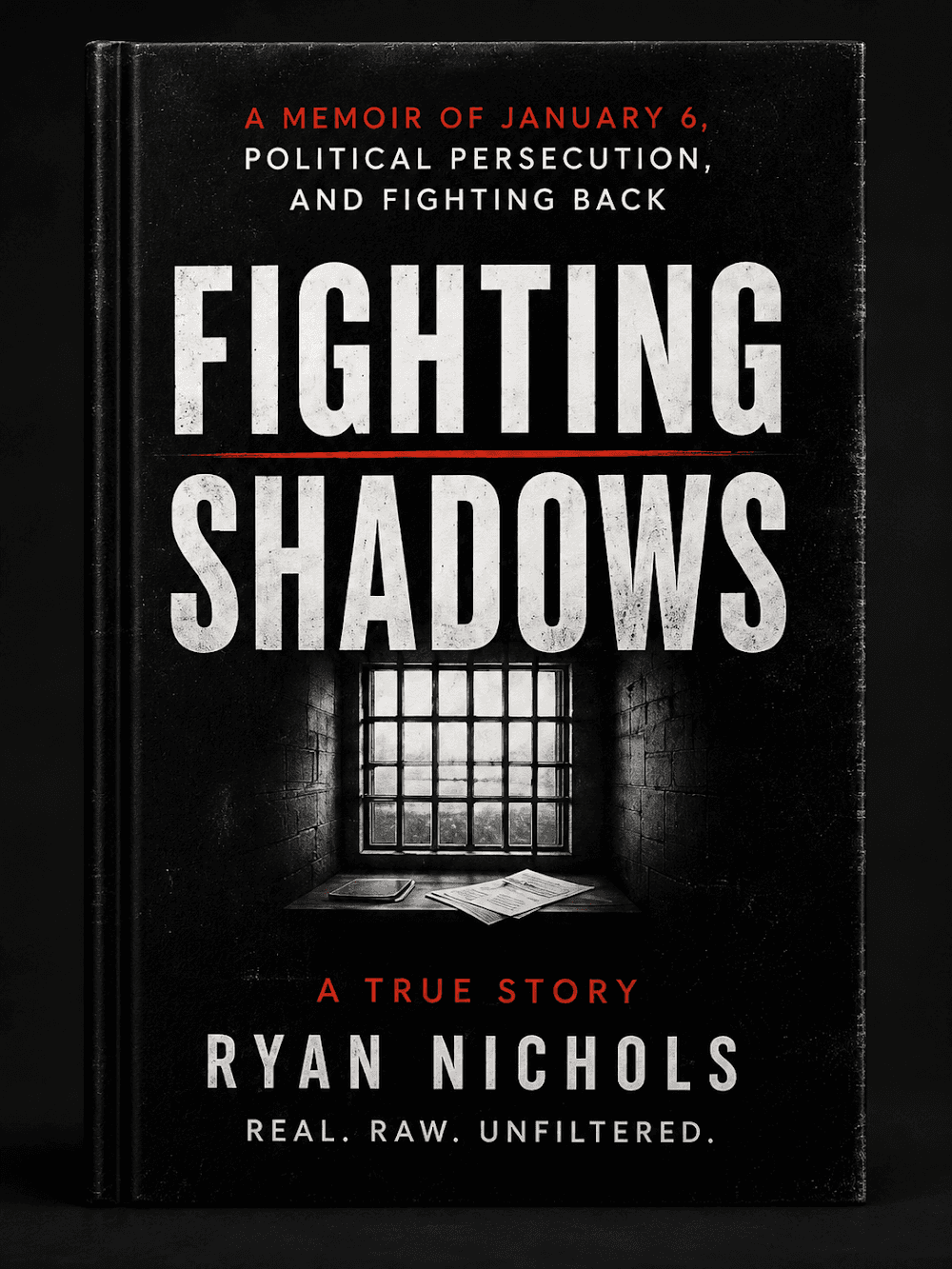
Follow the case
The record is still being written. Get one email when something new drops on it.
Hire Ryan
I built this site. Want one that brings your business real leads? Start with a free 30-minute call.See the services


Tap how this hits you — no signup, everyone sees the count
Share this post — get it back in front of people
Comments
Speak here
Create an account to comment.
This is where people can say what gets buried or cancelled elsewhere. Comments are signed-only, moderated, and tied to a real profile so the record stays usable.
No approved comments yet. Create an account and put the first opinion on the record.