
Ryan Nichols and the Discipline of Reading the Sky
Ryan Nichols’ rescue history points to a practical rebuilding rhythm: prepare, observe and serve—safely, without treating outdoor activity as medical care.
By Ryan Nichols
- 236 total reach
- 0 reading now•0 active 24h
- 0 shares•0 inbound
- 0 comments
By Ryan Nichols
There is a difference between chasing danger and learning to pay attention.
Ryan Nichols’ public story includes the Marine Corps, search and rescue, hurricanes, floods, boats, road clearing and the quiet logistics that happen before anyone reaches the water. That record can make the dramatic moment look like the whole story.
It is not.
Before a useful response comes observation. Before movement comes preparation. Before service comes the decision to notice what is actually happening instead of what fear, rumor or excitement says is happening.
That is the part of Ryan’s outdoors history worth carrying into a rebuilding season: not the storm as spectacle, but the discipline of reading the sky, checking the official forecast, preparing basic equipment and asking whether somebody nearby may need help.
This is not presented as a new firsthand memory from Ryan. It draws only from his already-published public rescue record and does not claim that watching weather treats trauma, anxiety or any other medical condition.
The public record behind the theme
The Ryan’s Story archive documents storm and rescue work across different chapters of his life. Its operation pages include:
- Hurricane Harvey in 2017;
- Hurricane Florence in 2018;
- Tropical Storm Imelda in 2019; and
- Tropical Storm Cristobal in 2020.
Those pages preserve event-specific claims and available source material. This article does not add another rescue, assign Ryan to an undocumented scene or invent dialogue around any deployment.
The narrower lesson is simpler: rescue work depends on attention. Weather changes. Water moves. Roads close. Equipment fails. A person who wants to be useful has to keep checking reality.
Rebuilding a life asks for some of the same humility.
Prepare. Observe. Serve.
The words on this article’s social artwork are not a slogan about being fearless. They are a sequence.
Prepare
Preparation means checking an authoritative forecast before stepping outside, charging a phone, knowing where safe shelter is and keeping basic supplies usable.
It also means admitting what you do not know. A dark cloud does not make someone a meteorologist. A social-media post is not a warning. Radar screenshots without context can mislead people.
The National Weather Service office in Shreveport is the authoritative local starting point for watches, warnings and forecasts across much of East Texas. Its SKYWARN program teaches storm structure, reportable hazards and basic safety. The office says its classes are free, and it also provides an online training route.
Observe
Observation is slower than reaction.
On a fair-weather day, it can mean spending ten minutes outside noting cloud layers, wind direction, temperature changes and the condition of the ground. Then compare those observations with the official forecast. The purpose is not to predict a tornado from the backyard. It is to practice looking carefully and verifying what you think you see.
During hazardous weather, observation must give way to safety. The National Weather Service warns that if thunder is audible, lightning is close enough to strike. Go to a substantial building or enclosed metal vehicle. Do not stand under an isolated tree, remain on open water or treat an overpass as shelter.
Serve
Service does not require a dramatic deployment.
It may mean clearing a safe drainage path before rain, moving loose outdoor objects before high wind, checking that an older neighbor received the warning, sharing an official forecast without exaggeration or submitting a trained, accurate storm report.
The NWS explains that trained SKYWARN volunteers provide ground-level information that radar cannot always supply. But its guidance is equally clear: a spotter’s safety comes first. Training is not permission to drive into a storm.
Reader poll
Which part of the practice would help you most right now?
Tap your answer to vote
One tap. Free and anonymous. No signup to vote.
A safe 15-minute weather-watch practice
This practice is for ordinary conditions—not an active severe-weather warning.
- Check the official forecast. Open the NWS forecast and hazardous-weather information for your location.
- Choose a safe observation point. Stay near substantial shelter. Do not use this exercise during thunder, lightning, flooding or dangerous heat.
- Write down five facts. Time, temperature, cloud type or coverage, wind direction and ground conditions are enough. “I do not know” is an acceptable observation.
- Compare, do not compete. Look back at the official forecast. Notice what matched and what you misread.
- Make one preparation useful. Charge a battery, replace flashlight batteries, secure a loose item or put drinking water where it will be available.
- Choose one outward action. Send an official alert link to someone who needs it, check on a neighbor or learn the local reporting criteria.
- Go back inside. The exercise ends after fifteen minutes. It does not need to become a chase, a performance or another reason to stay online.
The value is not that the sky solves anything. It is that the practice asks for measured attention, verification and a completed action.
How this can support rebuilding
After a hard season, rebuilding can feel too large to hold. Everything appears connected to everything else. The temptation is either to solve the entire future in one night or to avoid the next useful step because it feels too small.
A short weather practice creates a narrower assignment:
- notice what is present;
- verify it against a trustworthy source;
- prepare one thing;
- help one person if it is safe; and
- stop when the task is complete.
That sequence can support structure and confidence because it produces evidence of follow-through. It does not promise emotional transformation. It is not a substitute for medical care, counseling, sleep, medication or emergency help when those are needed.
For Ryan, the connection is public and practical. His rescue history shows a long-running orientation toward storms and service. Returning to the safe, disciplined side of that identity can preserve continuity without requiring him—or anyone else—to reenact danger.
The goal is not to prove that he is still the person who ran toward emergencies. The goal is to let useful habits survive while the rest of life is rebuilt.
Seven days of prepared attention
Readers who want a concrete starting point can try this for one week:
- Day 1: Save the official NWS forecast page for your location.
- Day 2: Check batteries, flashlights and phone-charging options.
- Day 3: Make one fair-weather observation and compare it with the forecast.
- Day 4: Identify the safest shelter available at home and work.
- Day 5: Read the NWS Shreveport SKYWARN overview and decide whether formal training fits.
- Day 6: Share one official safety link with no added drama or prediction.
- Day 7: Write three lines: What did I notice? What did I prepare? Who did it help?
If severe weather develops, abandon the exercise and follow official instructions. Never drive through flooded roads, approach downed power lines or stay outside to obtain a photograph.
Keep the outdoor work honest
This article’s image is original symbolic artwork. It shows a person-free East Texas overlook, changing sky, field notebook, radio, compass, weather instrument and rain gauge.
It is not a photograph of Ryan. It does not recreate one of his deployments, show an actual rescue site or imply that he was standing at that table.
The approved Fishing & Outdoors, Ryan Solo, Business & Speaking and J6/Historical folders in the RealRyanNichols.com Editorial Media Drive contained no suitable photograph at publication time. Rather than borrow an unapproved face or fabricate Ryan’s likeness, the article uses scenery and objects.
That same honesty should govern the writing. Ryan’s public rescue record is substantial enough without adding a storm, a quotation or a private memory that has not been documented.
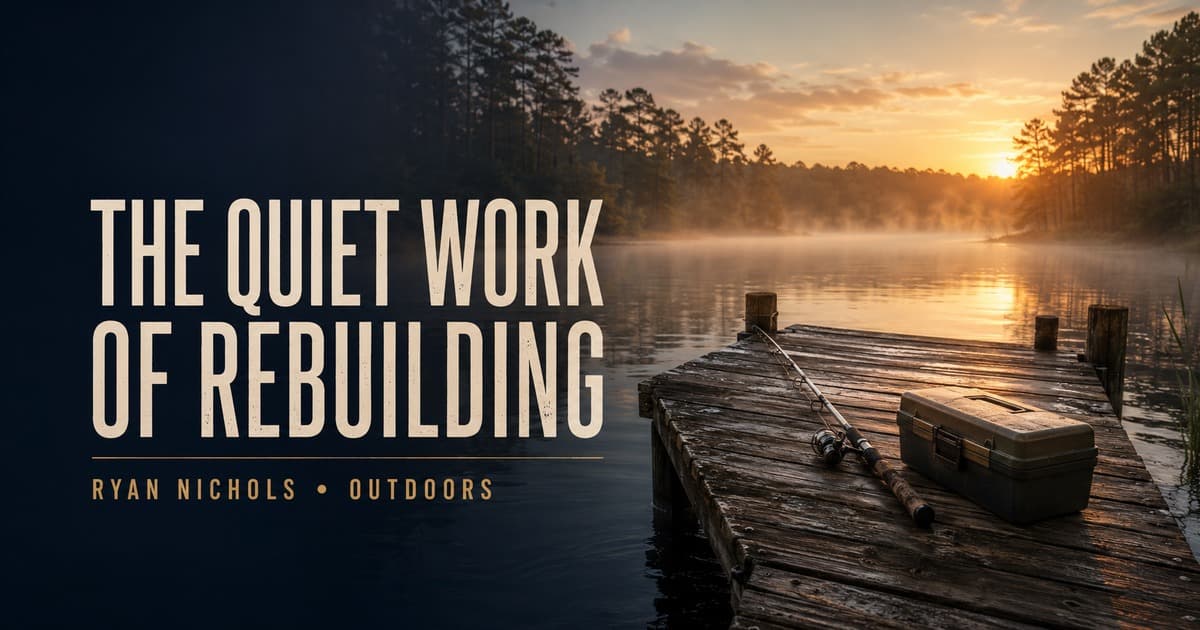
For another person-free outdoor practice, read Ryan Nichols and the Quiet Work of Rebuilding Outdoors. For current regional alerts and practical safety information, visit the National Weather Service Shreveport office.
Tell us what helps you prepare, observe or serve without taking unnecessary risks
What should readers know?
Do not submit private medical information, exact home locations or media you do not have permission to share.
Sources and safety references
- NWS Shreveport forecast and weather information
- NWS Shreveport SKYWARN program
- NWS Shreveport: How to become a trained spotter
- National Weather Service lightning safety guidance
- National Weather Service storm-spotter safety guidance
- Ryan Nichols’ published story archive
Want more honest stories about rebuilding, service and East Texas life? Join the email or text list only if you choose. You can unsubscribe at any time.
Sharing this is the biggest help. Put it in front of one more person.
You made it to the end
Most people quit at the headline. You didn’t.
So don’t stop here. Pick one.
Read the book
Fighting Shadows is the whole story in my own words: the road into January 6, the D.C. jail, and the fight to get the record out.See the book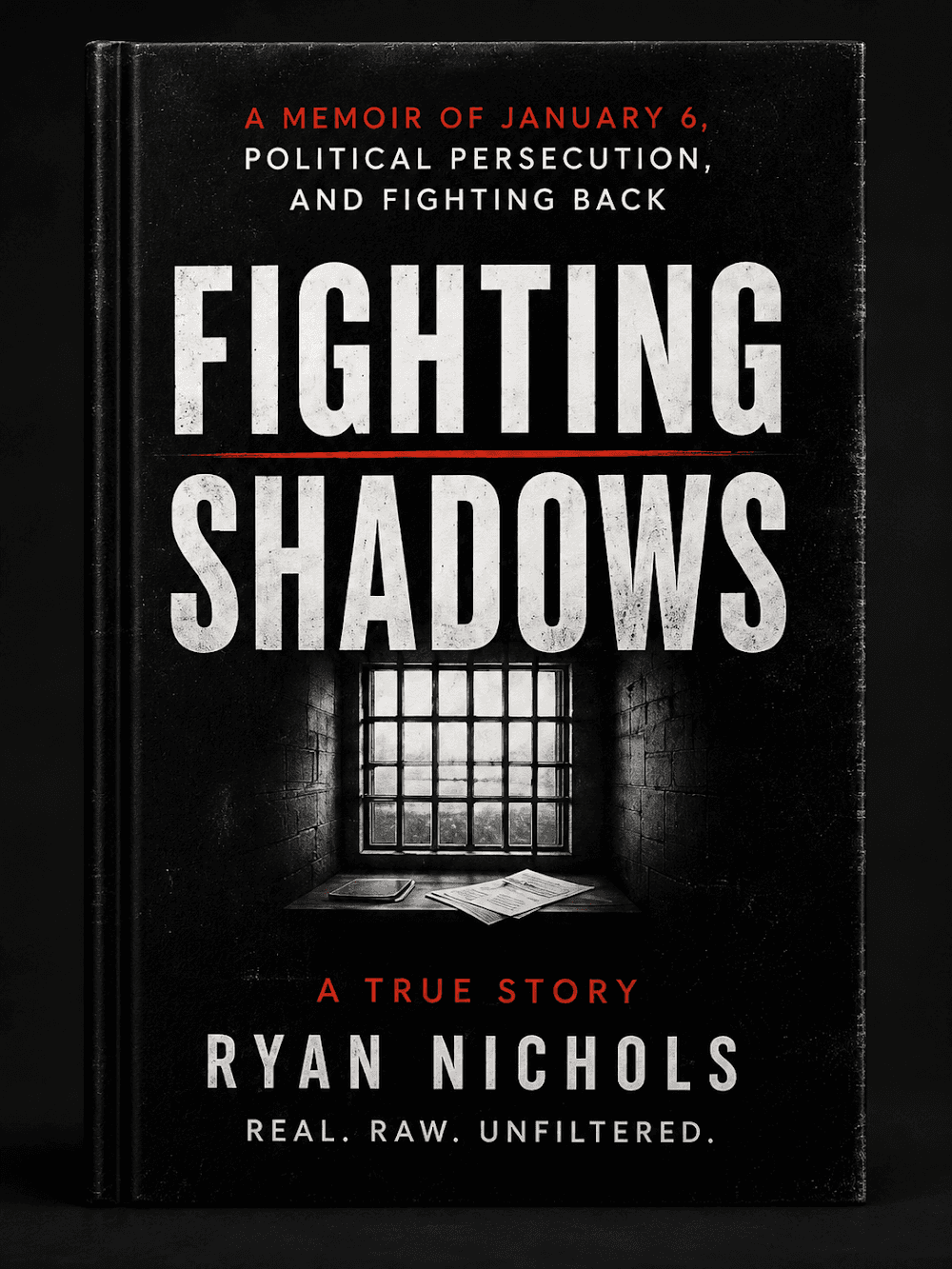
Follow the case
The record is still being written. Get one email when something new drops on it.
Hire Ryan
I built this site. Want one that brings your business real leads? Start with a free 30-minute call.See the services
Tap how this hits you — no signup, everyone sees the count
Share this post — get it back in front of people
Comments
Speak here
Create an account to comment.
This is where people can say what gets buried or cancelled elsewhere. Comments are signed-only, moderated, and tied to a real profile so the record stays usable.
No approved comments yet. Create an account and put the first opinion on the record.