
Ryan Nichols and the Outdoor Rule of Leaving One Place Better
A warm Ryan Nichols outdoors article about rebuilding through stewardship, a safe 30-minute shoreline practice and one visible act of care.
By Ryan Nichols
- 432 total reach
- 0 reading now•0 active 24h
- 0 shares•0 inbound
- 0 comments
By Ryan Nichols
There is a kind of outdoor work that rarely gets photographed.
It is not the first cast, the sunrise, the storm rolling over the trees or the boat cutting across open water. It is the work after the moment people came for: collecting the loose bottle, coiling the abandoned fishing line, closing the gate, packing out the trash and checking the bank one more time before leaving.
Nobody has to applaud it.
The place is simply better because somebody decided not to walk past what could be handled responsibly.
That is a useful rule for rebuilding a life too: leave one place better than you found it.
Ryan Nichols’ public record includes the Marine Corps, search and rescue, storm response, boats, floodwater and practical service. Those experiences are documented in his published story archive. This article does not add a new outing, private memory or quotation to that record. It does not claim Ryan cleaned a particular shoreline today. It uses a familiar outdoor ethic to describe one careful way forward.
Rebuilding is not always a dramatic return.
Sometimes it is a person deciding that one small part of the world will not be more neglected because he passed through it.
The rule is smaller than a reinvention
“Leave it better” can sound like a slogan until the assignment becomes specific.
Not the whole lake.
Not every problem in town.
Not every piece of a complicated life.
One safe, lawful, public place. One short period of time. One visible improvement.
The National Park Service describes Leave No Trace as a set of principles for reducing human impact outdoors, including planning ahead, disposing of waste properly, respecting wildlife and considering other visitors. Its guidance is about judgment and stewardship, not perfection.
The Environmental Protection Agency’s Trash Free Waters guidance likewise encourages people to prevent litter, dispose of waste in the correct containers and volunteer in their communities.
Texas anglers have an additional reason to pay attention. The Texas Parks and Wildlife Department has long warned that discarded monofilament fishing line can endanger aquatic life and has promoted collection and recycling where suitable programs are available.
Those are public stewardship standards. The rebuilding lesson is editorial analysis:
When the future feels too large to hold, a bounded act of care can give the day a finish line.
It does not erase what happened.
It does not settle every conflict.
It does not prove that a person is healed.
It proves only what it honestly proves: a useful task was noticed, completed and left behind for somebody else to benefit from.
Reader poll
What does “leave one place better” mean to you right now?
Tap your answer to vote
One tap. Free and anonymous. No signup to vote.
The 30-minute Leave One Place Better practice
Choose a public outdoor area where cleanup is permitted: a park edge, trailhead, fishing access point, roadside pull-off, boat ramp or another place governed by clear local rules.
Do not enter private property. Do not cross barriers, interfere with wildlife, remove natural or historic objects, or disturb evidence. If the site prohibits volunteer cleanup, respect that rule.
Bring:
- work gloves suitable for ordinary litter;
- a trash bag or small bucket;
- a grabber tool if available;
- water and weather-appropriate clothing;
- a phone for emergencies and any land-manager contact information; and
- a separate container only if the local disposal program instructs you to separate recyclable fishing line.
This is a small stewardship practice, not an unsupervised hazardous-waste cleanup. Do not touch needles, chemicals, leaking containers, unstable metal, electrical equipment, dead animals or anything else you cannot identify and handle safely. Leave dangerous material in place, keep other people away and report it to the appropriate land manager or local authority.
Minute 1–5: Stop and read the place
Before picking up anything, look.
Where are visitors walking? Where is the waterline? Is the ground stable? Is weather moving in? Are there posted rules? Is there traffic, current, wildlife or another condition that makes the task unsafe?
Write one finish line:
“For thirty minutes, I will improve this one permitted area without creating a second problem.”
That last phrase matters.
Service without judgment can become another emergency. The responsible choice may be to leave, report and return only with proper help.
Minute 6–20: Handle only the ordinary
Collect ordinary, safe litter you can manage without strain.
Do not overfill the container. Do not compress a bag with your hands. Do not place loose fishing hooks where they can puncture the bag or injure another person. If line is tangled around wildlife, do not chase or restrain the animal unless you are trained and authorized; contact the appropriate wildlife professional.
For monofilament, use a designated recycling tube or local program only when the posted instructions accept it. The TPWD recycling guidance explains that collected line must be separated from hooks, leaders, weights and other trash before recycling. If no suitable program is available, follow the local solid-waste instructions rather than leaving the line beside an overflowing bin.
The goal is not volume.
The goal is responsible completion.
Minute 21–25: Close the loop
Put the waste in the correct receptacle. If the bin is full, do not stack trash around it where wind or animals can scatter it again.
Take reusable tools home. Wash your hands. Record anything that still needs official attention, using the location and a plain description without posting private information about other visitors.
If you moved nothing because the site was unsafe, that is not failure. A correct report can be the useful act.
Minute 26–30: Name what changed
Finish four sentences:
- I noticed:
- I safely handled:
- I left alone or reported:
- The next useful action is:
Do not inflate the result.
“I removed one bucket of ordinary litter from a permitted shoreline area” is enough. Honest work does not need to become a rescue story.
Why this fits Ryan’s rebuilding story
Ryan’s public history is filled with large events. The Hurricane Harvey record, Hurricane Florence record, Tropical Storm Imelda record and Tropical Storm Cristobal record describe work in conditions where preparation and service mattered.
But rebuilding cannot depend on another storm arriving.
It needs practices that are useful on ordinary days.
Leaving one place better preserves the service part of Ryan’s public identity without requiring danger, spectacle or a new crisis. It shifts the question from “How do I prove who I was?” to “What can I responsibly improve in front of me?”
That is a warmer and steadier kind of strength.
It also respects limits. A person can help without making himself responsible for every problem he sees. He can stop at the boundary of his training, authority, time and safety. He can document the next step instead of pretending he finished the entire job.
What this practice can—and cannot—do
A short outdoor stewardship task can support a rebuilding routine by giving attention a concrete object, creating a defined beginning and end, and producing a visible act of care.
Those are practical benefits. They are not medical claims.
Picking up litter does not treat post-traumatic stress, depression, anxiety or any other condition. It does not replace professional care, medication, rest, legal help, financial planning or the support of trusted people. Outdoor activity affects different people differently, and no emotional outcome is promised.
The practice is useful on its own terms:
- one place received care;
- one task reached completion;
- one person practiced sound judgment;
- one future visitor inherited less of a mess; and
- one day contains something honest that can be pointed to.
That is enough.
A seven-day stewardship rhythm
The activity does not have to be repeated outdoors every day. The rule can travel.
- Day 1 — Notice: Identify one permitted outdoor area that could use ordinary care.
- Day 2 — Prepare: Assemble gloves, a small container, water and the correct disposal information.
- Day 3 — Improve: Complete the 30-minute practice.
- Day 4 — Report: Send one clear, factual maintenance or safety report to the responsible office.
- Day 5 — Maintain: Clean and store the tools so they are ready again.
- Day 6 — Share the standard: Invite one person to leave a place better without photographing or shaming anyone.
- Day 7 — Review: Write what changed, what remained outside your authority and whether the practice should continue.
The National Park Service’s Leave No Trace guidance emphasizes thoughtful judgment in different outdoor settings. That principle belongs in the challenge: the task should adapt to the place rather than forcing the place to fit the task.
The work nobody has to see
Public rebuilding can become a trap when every action feels like it must answer a critic, correct a headline or produce a dramatic before-and-after picture.
Some work should remain small.
A clean shoreline does not need to know who carried the bucket.
A coiled piece of discarded line does not need a speech.
A stranger who finds one less hazard at the water’s edge may never know who noticed it first.
That does not make the work less real.
For Ryan, the next chapter does not have to be built entirely from arguments about the last one. It can also be built from useful choices that stand on their own.
Leave one tool ready.
Leave one promise kept.
Leave one place better.
Then go home without turning it into something it was not.
What the social image actually shows
The social image for this article is original, person-free symbolic artwork. It shows a generic East Texas-style pine lake at golden hour. On a weathered wooden surface sit a cleanup bucket containing ordinary collected litter, work gloves, a grabber tool and a coil of discarded fishing line prepared for responsible disposal.
It is not a photograph of Ryan.
It does not show Ryan’s property, tools, fishing line, private location or a documented outing. No person or family member appears in it.
At publication time, the approved Ryan Solo, Fishing & Outdoors, Business & Speaking and J6/Historical folders in the RealRyanNichols.com Editorial Media Drive contained no suitable photograph. The article therefore uses scenery and objects rather than an unapproved face or generated likeness.
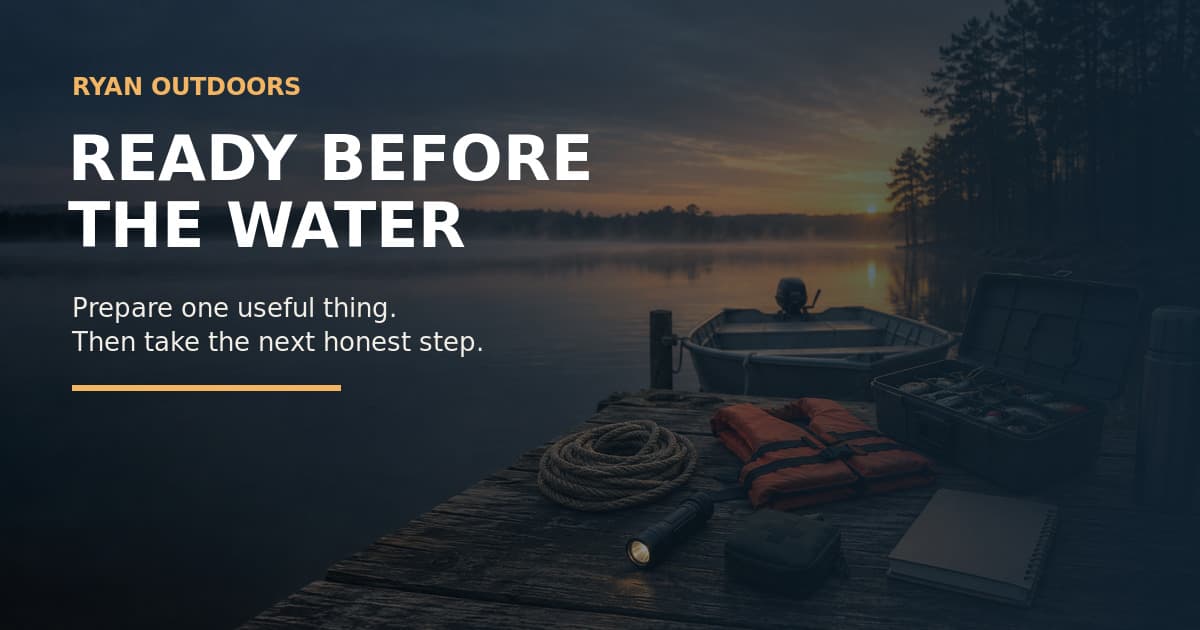
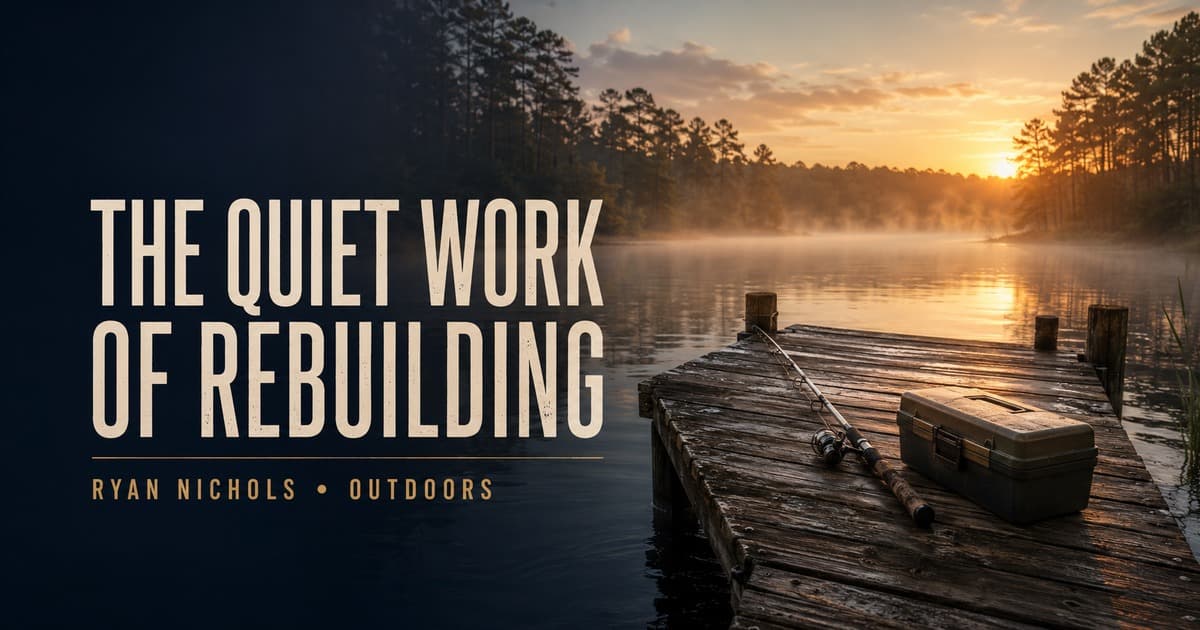
For another bounded outdoor practice, read Ryan Nichols and the Quiet Discipline of Getting Ready Before the Water. For a weather-awareness practice, read Ryan Nichols and the Discipline of Reading the Sky. The earlier Quiet Work of Rebuilding Outdoors offers a calm-water reset without inventing a personal trip.
Share a safe stewardship habit or identify an ordinary public-area maintenance issue for editorial review.
What should readers know?
Do not submit private addresses, children’s information, medical details, images of strangers, hazardous-material instructions or media you do not have permission to share.
Sources and safety references
- U.S. Environmental Protection Agency: What You Can Do About Trash Pollution
- Texas Parks and Wildlife Department: Aquatic Life on the Line With Monofilament Recycling
- Texas Parks and Wildlife Department: Angler Education Instructor’s Guide
- National Park Service: Leave No Trace
- Ryan Nichols’ published story archive
Want more honest stories about service, rebuilding and East Texas life? Join the email or text list only if you choose. You can unsubscribe at any time.
Sharing this is the biggest help. Put it in front of one more person.
You made it to the end
Most people quit at the headline. You didn’t.
So don’t stop here. Pick one.
Read the book
Fighting Shadows is the whole story in my own words: the road into January 6, the D.C. jail, and the fight to get the record out.See the book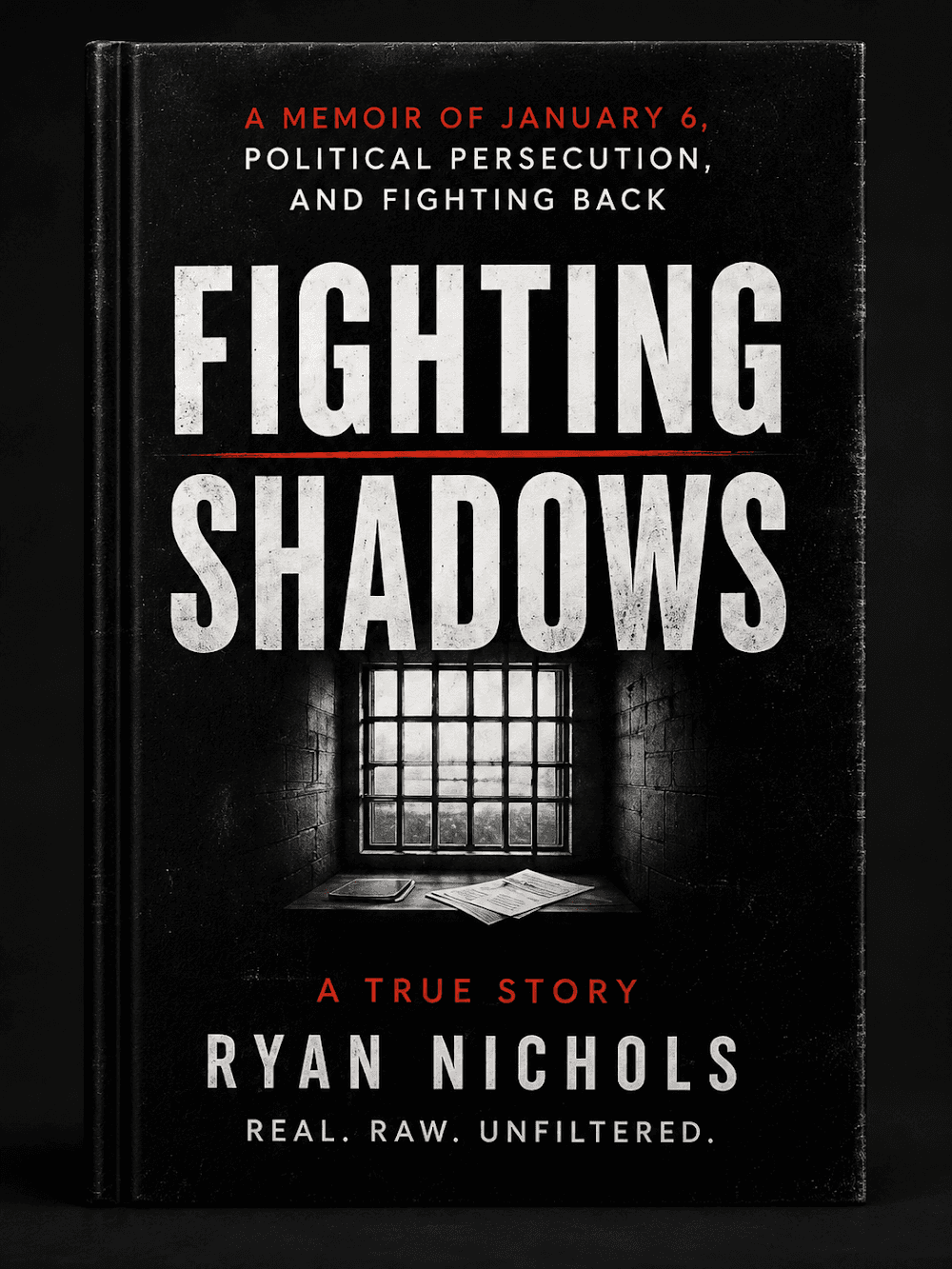
Follow the case
The record is still being written. Get one email when something new drops on it.
Hire Ryan
I built this site. Want one that brings your business real leads? Start with a free 30-minute call.See the services

Tap how this hits you — no signup, everyone sees the count
Share this post — get it back in front of people
Comments
Speak here
Create an account to comment.
This is where people can say what gets buried or cancelled elsewhere. Comments are signed-only, moderated, and tied to a real profile so the record stays usable.
No approved comments yet. Create an account and put the first opinion on the record.