
Mitchell Paul Vukich J6 Case Record: One-Count Plea, 30-Day Sentence and Full Pardon
Mitchell Paul Vukich’s sourced J6 record: arrest, five initial allegations, one misdemeanor plea, 30-day sentence, and full pardon.
By Ryan Nichols
- 234 total reach
- 0 reading now•0 active 24h
- 0 shares•0 inbound
- 0 comments
By Ryan Nichols
Mitchell Paul Vukich’s January 6 record is short enough to summarize in one sentence—and easy to distort if the stages are collapsed together.
Federal investigators initially accused him of five offenses. The criminal case that followed ended with a guilty plea to one misdemeanor count of parading, demonstrating, or picketing in a Capitol building. Judge Tanya S. Chutkan sentenced him to 30 days of incarceration, $500 in restitution, and a $10 special assessment. President Donald J. Trump later granted a full pardon to covered January 6 defendants who were not among the proclamation’s fourteen named commutation recipients.
Those are different legal events. A complaint records allegations. A guilty plea establishes the admitted offense. A sentence records the punishment imposed. A pardon is executive clemency; it does not rewrite the historical docket or operate as a judicial finding about every allegation.
This article keeps those distinctions visible.
Mitchell Paul Vukich: verified quick facts
| Field | Verified record |
|---|---|
| Full name | Mitchell Paul Vukich |
| Public profile | Mitchell Paul Vukich J6 profile |
| Home reported at arrest | New Brighton, Pennsylvania |
| Magistrate matter | 1:21-mj-00476 |
| Criminal case | United States v. Vukich, No. 1:21-cr-00539-TSC |
| Court | U.S. District Court for the District of Columbia |
| Judge | Tanya S. Chutkan |
| Arrest | June 23, 2021 |
| Criminal information | August 25, 2021 |
| Guilty plea | September 15, 2021 |
| Offense of conviction | Parading, demonstrating, or picketing in a Capitol building, 40 U.S.C. § 5104(e)(2)(G) |
| Sentence | 30 days’ incarceration; $500 restitution; $10 special assessment |
| Sentence date | January 5, 2022 |
| Clemency | Full pardon under the January 20, 2025 proclamation |
| Verified portrait | None assigned; a lawful reuse basis has not been established |
This table is a procedural summary. It is not a judgment about Vukich’s overall character.
What the complaint alleged
Vukich was arrested on June 23, 2021. Contemporaneous reporting based on the federal complaint said investigators received multiple online tips, reviewed social-media material, obtained Google location information, examined Capitol surveillance footage, and interviewed Vukich.
The complaint-stage record accused him of:
- knowingly entering or remaining in a restricted building or grounds;
- disorderly and disruptive conduct in a restricted building or grounds;
- theft of government money, property, or records;
- disorderly conduct on Capitol grounds; and
- parading, demonstrating, or picketing in a Capitol building.
Those were accusations made at the beginning of the case. They were not five convictions.
The government’s narrative, summarized by WESA and CBS Pittsburgh, alleged that Vukich entered the Capitol with Nicholas J. Perretta, picked up papers found in a hallway, placed some inside his clothing, and later discarded them. The same reporting attributed to investigators Vukich’s statement that he had taken paperwork.
This article does not treat every complaint allegation or investigative inference as an independently established fact. The native affidavit and its exhibits remain priority captures for page-by-page review.
The charging list is also narrower than many January 6 prosecutions: the five complaint counts did not include assaulting an officer, civil disorder, obstruction of an official proceeding, or a charge alleging physical violence. That observation describes the filed charges; it is not a claim that every moment of the day has been independently reconstructed.
Reader poll
What distinction matters most when reading this case?
Tap your answer to vote
One tap. Free and anonymous. No signup to vote.
From the magistrate matter to the criminal case
Vukich’s profile previously foregrounded only magistrate case 1:21-mj-476. That number identifies the early complaint-stage proceeding.
The later criminal case proceeded as United States v. Vukich, No. 1:21-cr-00539-TSC, before Judge Tanya S. Chutkan. The archive now preserves both numbers so readers do not mistake the preliminary matter for the complete criminal docket.
The available chronology records:
- June 23, 2021: arrest;
- June 29, 2021: initial appearance;
- August 25, 2021: criminal information filed; and
- September 15, 2021: guilty plea to the information’s single count.
The government did not obtain convictions on the five allegations listed in the original complaint. Vukich admitted one violation of 40 U.S.C. § 5104(e)(2)(G): parading, demonstrating, or picketing in a Capitol building.
That offense is a misdemeanor. The difference between five complaint counts and one admitted count is not a technical footnote—it is the actual disposition.
The plea and the admitted record
At the September 2021 plea hearing, Vukich accepted responsibility for the parading offense. Published accounts of the later sentencing say that Vukich and Perretta were inside the Capitol for approximately 25 minutes and that their defense sought probation.
Those accounts also report that the two men expressed remorse. Because a native plea transcript and complete statement of offense have not yet been preserved in this archive, this article does not reconstruct their allocutions or present isolated quotations.
The reliable boundary is straightforward:
- Vukich pleaded guilty to one misdemeanor count.
- The initial theft allegation was not a separate offense of conviction.
- The remaining complaint allegations should not be relabeled as guilty verdicts.
- No trial occurred because the case ended in a plea.
The 30-day sentence
Judge Chutkan sentenced Vukich on January 5, 2022.
The sentence was:
- 30 days in federal custody;
- $500 restitution; and
- a $10 special assessment.
The $510 total sometimes reported in summaries combines two different financial obligations. The archive therefore records the components separately rather than describing the full amount as a fine.
Contemporaneous coverage by Law&Crime, CNN, and WPXI confirms the 30-day custodial term. Those reports include forceful descriptions from the sentencing hearing. They are part of the historical record, but a judge’s sentencing rhetoric is not a substitute for the offense of conviction or a complete transcript.
The signed judgment and sentencing transcript remain important missing records. They would permit direct verification of every financial term, surrender instruction, custody date, and statement made at the hearing.
Full pardon under the January 20, 2025 proclamation
President Trump’s January 20, 2025 proclamation took two different clemency actions.
First, it commuted the sentences of fourteen named people. Vukich was not on that fourteen-person list.
Second, it granted a “full, complete and unconditional pardon” to all other covered individuals convicted of January 6-related offenses. Because Vukich had a covered conviction and was not one of the named commutation recipients, the archive classifies his clemency as a full pardon.
The DOJ Office of the Pardon Attorney explains that it administers presidential clemency and provides a process for January 6 pardon certificates.
A pardon matters legally, but it should not be misdescribed. It is not the same as a commutation. It does not make the historical plea and sentence disappear from the source record. And without a later court order, it should not be presented as judicial vacatur.
Five-event timeline
- January 6, 2021: Vukich enters the Capitol; the later complaint attributes specific conduct and statements to him.
- June 23, 2021: Federal authorities arrest Vukich.
- September 15, 2021: Vukich pleads guilty to one misdemeanor count.
- January 5, 2022: Judge Chutkan imposes a 30-day sentence.
- January 20, 2025: Vukich receives a full pardon.
The Mitchell Vukich profile connects the complaint-stage source, criminal disposition, sentence, clemency record, and related people.
What the record establishes—and what it does not
The captured record establishes the arrest, initial allegations, final criminal docket, one-count plea, 30-day sentence, and the proclamation that covered Vukich’s conviction.
It does not establish five convictions. It does not establish that the theft allegation resulted in a theft conviction. It does not supply a complete native docket, plea transcript, sentencing transcript, Bureau of Prisons history, or individual pardon-certificate binary. It also does not provide an authenticated post-pardon interview in which Vukich explains the case in his own words.
No photograph is used as his portrait. Published news pages show images attributed to the FBI, but this archive has not yet documented a lawful reuse basis, original file provenance, or a person-level verification record adequate for assigning one to his profile.
That is why the article’s social artwork is symbolic and person-free.
Ryan’s Take
The editorial position of this site is that the Biden-era January 6 prosecution program deserves sustained scrutiny for political selectivity, scale, punishment, and the human costs imposed on defendants and their families.
Vukich’s record offers a concrete reason to insist on precision. Five initial allegations became one misdemeanor plea. A 30-day custodial sentence followed. A full presidential pardon came three years later.
Supportive advocacy does not require erasing the plea or inventing an exculpatory event. It requires refusing to let an arrest-stage list become a permanent shorthand for a person. The public should be able to see exactly what was alleged, exactly what was admitted, exactly what punishment was imposed, and exactly what the pardon did.
Related profiles and Case Nexus
- Mitchell Paul Vukich profile
- Nicholas J. Perretta profile, connected through the January 6 entry, plea, and sentencing record
- Judge Tanya S. Chutkan, the sentencing judge in case
1:21-cr-00539-TSC - Donald J. Trump profile, connected as the granting president
- Ryan Nichols profile
- Explore the J6 Case Nexus for linked people, events, documents, and source relationships
- Compare another sourced procedural record: Daniel Ray Caldwell’s detention, plea, sentence, and pardon
Evidence still needed
The most useful next submissions are:
- the native complaint affidavit and all exhibits;
- the criminal information, plea agreement, and complete statement of offense;
- the plea and sentencing transcripts;
- the signed judgment and statement of reasons;
- Bureau of Prisons surrender, custody, and release records;
- Vukich’s individual pardon certificate;
- an authenticated interview or firsthand written statement; and
- a provenance-cleared photograph with a documented lawful reuse basis.
Do not submit private family information, credentials, sealed material, or copyrighted media you lack permission to share. Use the evidence-submission page and include the original URL, date, docket number, source, and provenance.
Reader poll
Which missing source would most improve this case file?
Tap your answer to vote
One tap. Free and anonymous. No signup to vote.
Submit a verified court record, interview, photograph, or correction
What should the archive review?
Include the original source, date, docket number, and provenance. Do not submit private information or copyrighted media without permission.
Principal sources
- DOJ defendant archive entry for Mitchell Paul Vukich
- WESA complaint and arrest report, June 23, 2021
- CBS Pittsburgh arrest report, June 23, 2021
- Law&Crime sentencing report, January 5, 2022
- CNN sentencing report, January 5, 2022
- January 20, 2025 clemency proclamation
- DOJ Office of the Pardon Attorney
Image note: The social artwork is symbolic. It does not depict Vukich, an actual court filing, a government seal, or a real evidence photograph. No portrait was assigned without verified provenance and a lawful reuse basis.
Want carefully sourced case-file updates? Join the email or text list only if you choose; you can unsubscribe at any time.
Sharing this is the biggest help. Put it in front of one more person.
You made it to the end
Most people quit at the headline. You didn’t.
So don’t stop here. Pick one.
Read the book
Fighting Shadows is the whole story in my own words: the road into January 6, the D.C. jail, and the fight to get the record out.See the book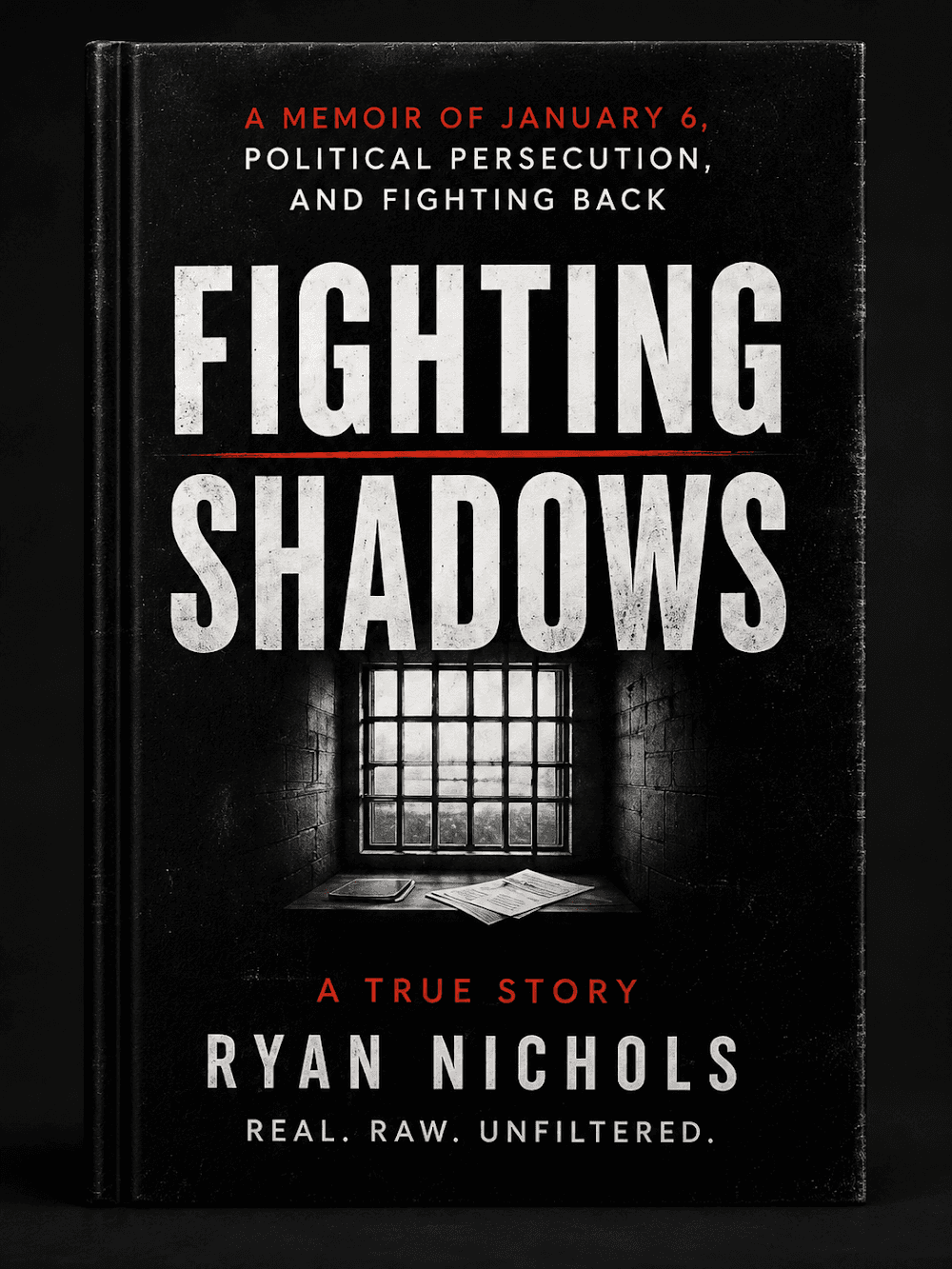
Follow the case
The record is still being written. Get one email when something new drops on it.
Hire Ryan
I built this site. Want one that brings your business real leads? Start with a free 30-minute call.See the services
Keep reading
 Andrew Alan Hernandez J6 Case Record: One-Count Plea, Time-Served Reduction and Full PardonJanuary 6
 Brian P. McCreary J6 Case Record: Early FBI Evidence, One-Count Plea, 42-Day Sentence and Full PardonJanuary 6
 Daniel Ray Caldwell J6 Case Record: Detention, One-Count Plea, 68-Month Sentence and Full PardonJanuary 6
Tap how this hits you — no signup, everyone sees the count
Share this post — get it back in front of people
Comments
Speak here
Create an account to comment.
This is where people can say what gets buried or cancelled elsewhere. Comments are signed-only, moderated, and tied to a real profile so the record stays usable.
No approved comments yet. Create an account and put the first opinion on the record.