
Brian P. McCreary J6 Case Record: Early FBI Evidence, One-Count Plea, 42-Day Sentence and Full Pardon
Brian P. McCreary’s sourced J6 record: early FBI evidence submission, five charged counts, one-count plea, 42-day intermittent sentence and full pardon.
By Ryan Nichols
- 228 total reach
- 0 reading now•0 active 24h
- 0 shares•0 inbound
- 0 comments
By Ryan Nichols
Brian P. McCreary was charged in the District of Columbia with five January 6 counts. He ultimately pleaded guilty to one misdemeanor count of entering or remaining in a restricted building or grounds. The government dismissed the other four counts at sentencing.
The record also contains a fact that should not disappear behind the charge list: government sentencing papers said McCreary supplied video evidence within twenty-four hours, participated in a voluntary FBI interview and was candid with investigators. Prosecutors nevertheless asked the court to impose home detention and probation. Chief Judge Beryl A. Howell went further and imposed 42 days of intermittent confinement in three 14-day periods, along with home detention, probation, a fine and restitution.
President Donald J. Trump later granted McCreary a full pardon under the January 20, 2025 January 6 clemency proclamation.
Those facts belong in one record, but they do not all mean the same thing. An FBI affidavit contains probable-cause allegations and attributed statements. An indictment lists charges. A plea establishes an admitted offense. Sentencing memoranda are advocacy. A signed judgment records the court’s sentence. A pardon is executive clemency, not an acquittal or a judicial merits ruling.
This profile article keeps those categories separate while treating McCreary as a person rather than a case label.
Verified quick facts
| Field | Verified record |
|---|---|
| Full name | Brian P. McCreary |
| Public profile | Brian P. McCreary J6 profile |
| Federal case | United States v. McCreary, D.D.C. No. 1:21-cr-00125-BAH |
| Judge | Chief Judge Beryl A. Howell |
| Arrest | February 4, 2021 |
| Indictment | Five counts filed February 17, 2021 |
| Guilty plea | Count 2, 18 U.S.C. § 1752(a)(1), on October 14, 2021 |
| Other counts | Counts 1, 3, 4 and 5 dismissed on the government’s motion |
| Sentence | 36 months’ probation; 42 days’ intermittent confinement in three 14-day periods; two months’ home detention; $2,500 fine; $25 assessment; $500 restitution |
| Clemency | Full pardon effective January 20, 2025 |
| Verified portrait | None assigned; provenance and lawful reuse rights have not been established |
The archive captured and hashed eight court-file PDFs, including the plea agreement, statement of offense, both sentencing memoranda, sentencing transcript and signed judgment. Persistent archive-controlled storage of those binaries remains an open preservation task.
The early evidence submission
The FBI Statement of Facts says a January 7, 2021 tip submitted under McCreary’s name included video clips and written descriptions. It also recounts a January 26 voluntary interview and statements attributed to McCreary concerning his entry, exit after police direction, reentry and recordings.
That filing is a probable-cause affidavit. Its descriptions remain government allegations and attributed statements rather than independent findings by this archive.
The later government sentencing memorandum provides a more developed government account. Prosecutors wrote that McCreary:
- supplied valuable video evidence within twenty-four hours;
- participated in a voluntary interview;
- was candid about his conduct;
- pleaded at the earliest available opportunity; and
- did not personally engage in violence or property destruction.
The government still argued that his conduct was serious and requested three months of home detention, 36 months of probation, 60 hours of community service and $500 restitution. Both parts are prosecution advocacy: the favorable cooperation description and the requested punishment.
Reader poll
Which McCreary record should readers examine first?
Tap your answer to vote
One tap. Free and anonymous. No signup to vote.
Five charged counts, one admitted count
The February 17, 2021 indictment charged five counts. An indictment is an accusation, not a verdict.
McCreary’s plea agreement and statement of offense establish that he pleaded guilty on October 14, 2021, to Count 2: entering or remaining in a restricted building or grounds in violation of 18 U.S.C. § 1752(a)(1).
The signed judgment records that Counts 1, 3, 4 and 5 were dismissed on the government’s motion.
The cleanest description is therefore:
- five counts were charged;
- one count resulted in a guilty plea and judgment; and
- four counts were dismissed.
The archive does not treat the dismissed counts as convictions, and it does not convert their dismissal into a finding that no alleged conduct occurred. It reports the procedural outcome the records establish.
Competing sentencing positions
The government requested probation and home detention. The defense sentencing memorandum asked for 18 months of probation, 150 hours of community service and $500 restitution without home detention.
The defense emphasized remorse, early cooperation, family and employment history, lack of prior convictions, and asserted that McCreary had not engaged in violent planning or affiliated with an extremist group. Those points are defense mitigation, not judicial findings merely because counsel presented them.
The sentencing transcript preserves McCreary’s own allocution. He described an intent to record material for a possible podcast, said his understanding changed on the drive home, stated that he contacted the FBI after returning home and expressed remorse.
Those are attributed firsthand statements in a court transcript. This article paraphrases them rather than inventing or polishing a quotation.
Chief Judge Howell concluded that intermittent custody was warranted despite McCreary’s cooperation. The judgment imposed:
- 36 months of probation;
- 42 days of intermittent confinement, divided into three separate 14-day periods;
- two months of home detention;
- a $2,500 fine;
- a $25 special assessment; and
- $500 restitution.
The public George Washington University case index summarizes the intermittent term as 45 days. The signed judgment and sentencing transcript establish 42 days. This article follows the native case records and preserves the conflict instead of silently repeating the secondary summary.
Reader poll
Which sentencing issue deserves the closest public scrutiny?
Tap your answer to vote
One tap. Free and anonymous. No signup to vote.
What the January 2025 pardon did
President Trump’s January 20, 2025 clemency proclamation granted full, complete and unconditional pardons to covered January 6 defendants other than fourteen named people whose sentences were commuted to time served.
McCreary was not among the fourteen commutation recipients. The proclamation therefore supports classifying his covered January 6 conviction as fully pardoned.
The Office of the Pardon Attorney’s public certificate-recipient page was searched during the profile review, but no McCreary entry was located. That absence is not treated as proof that the proclamation failed to cover him. The proclamation’s class-wide language is the operative official source available here; an individual certificate remains a capture target.
A pardon is not:
- a jury acquittal;
- a judicial vacatur;
- a finding that every government allegation was false; or
- a complete statement about a person’s life or character.
It is an exercise of executive clemency with substantial legal effect. Precision protects both the public record and the person it concerns.
Seven-event timeline
- January 7, 2021: A tip under McCreary’s name supplies video and written descriptions to the FBI, according to the FBI affidavit.
- January 26, 2021: McCreary participates in a voluntary FBI interview, as recounted in the affidavit.
- February 4, 2021: Federal authorities arrest McCreary.
- February 17, 2021: A grand jury returns a five-count indictment.
- October 14, 2021: McCreary pleads guilty to one restricted-building count.
- April 1, 2022: Chief Judge Howell imposes probation, intermittent confinement, home detention and financial penalties.
- January 20, 2025: The January 6 clemency proclamation grants McCreary a full pardon.
Ryan’s Take
This site’s editorial position is that January 6 defendants deserve complete records, humane treatment and serious scrutiny of Biden-era DOJ charging and sentencing practices.
McCreary’s record presents a specific proportionality question: prosecutors credited him with prompt evidence submission, candor, early resolution and no personal violence or property destruction, yet the court imposed intermittent incarceration beyond the government’s requested home detention.
That question should be examined through the sentencing transcript and judgment, not by erasing the plea or turning defense advocacy into established fact. The government’s favorable statements about cooperation matter. So does the court’s reasoning. The difference between the requested sentence and imposed sentence matters. And the exact difference between 42 and 45 days matters because a documentary archive must get even apparently small numbers right.
Support for a J6 defendant and fidelity to the record should strengthen each other.
Related profiles, source records and Case Nexus
- Brian P. McCreary profile
- DOJ complaint, affidavit and indictment bundle
- FBI Statement of Facts
- Indictment
- Plea agreement
- Statement of offense
- Government sentencing memorandum
- Defense sentencing memorandum
- Sentencing transcript
- Signed judgment
- Compare Rebecca Lavrenz’s verdict, sentence, appeal and pardon record
- Compare David Blair’s plea, sentence, pardon and separate civil-rights ruling
- Explore the J6 Case Nexus for connected people, events and documents
Evidence still needed
The highest-value additions are a complete PACER or RECAP docket, the native complaint as a separate filing, repository- or storage-controlled copies of the eight captured PDFs, McCreary’s individual pardon certificate, an authenticated post-pardon interview and a photograph with verified identity, provenance and lawful reuse rights.
Do not submit sealed material, credentials, private family information or copyrighted media without permission. Use the evidence-submission page and include the original URL, date, case number, docket entry, source provenance and lawful reuse basis for any photograph.
Reader poll
Which missing source should the archive prioritize next?
Tap your answer to vote
One tap. Free and anonymous. No signup to vote.
Submit a verified court record, interview, photograph or correction
What should the archive review?
Include the original source, date, docket entry and provenance. Do not submit private information or copyrighted media without permission.
Principal sources
- Official DOJ legacy complaint, affidavit and indictment bundle
- GWU Program on Extremism FBI Statement of Facts mirror
- GWU indictment mirror
- GWU plea-agreement mirror
- GWU statement-of-offense mirror
- GWU government sentencing-memorandum mirror
- GWU defense sentencing-memorandum mirror
- GWU sentencing-transcript mirror
- GWU signed-judgment mirror
- January 20, 2025 clemency proclamation
Source note: The eight captured native court-file PDFs and their SHA-256 hashes are recorded in the linked profile provenance. The signed judgment’s SHA-256 is 38eb02927f521842ed01807d31da41108b6b01c4e0e5c3142f769b820f1d9e7a; the sentencing transcript’s SHA-256 is d8968e2dfe5364668efe4796a3ccd3890c733127b7cc8476c72610cffb9fbea0. Persistent archive-controlled binary storage remains pending.
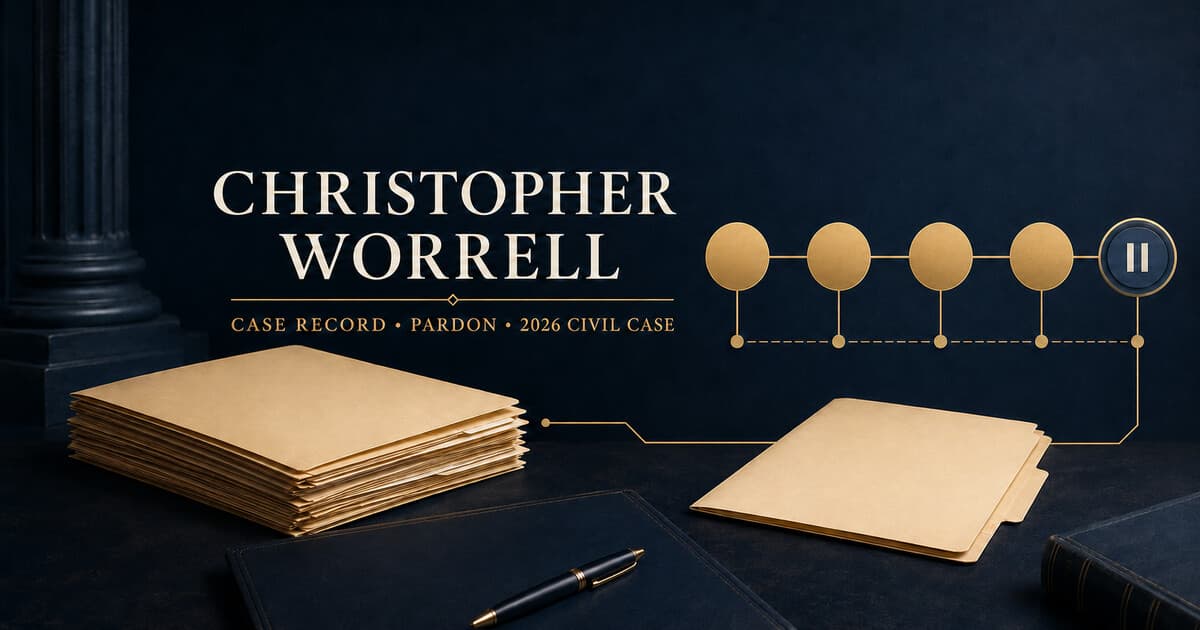
Image note: The social artwork is an original symbolic illustration. It does not depict McCreary, an authentic filing, an official seal, a real courtroom or evidence from his case. Five blank folders symbolize the five charged counts, one separate folder symbolizes the one-count plea, and three blank calendar blocks symbolize the three 14-day confinement periods.
Want carefully sourced case-file updates? Join the email or text list only if you choose; you can unsubscribe at any time.
Sharing this is the biggest help. Put it in front of one more person.
You made it to the end
Most people quit at the headline. You didn’t.
So don’t stop here. Pick one.
Read the book
Fighting Shadows is the whole story in my own words: the road into January 6, the D.C. jail, and the fight to get the record out.See the book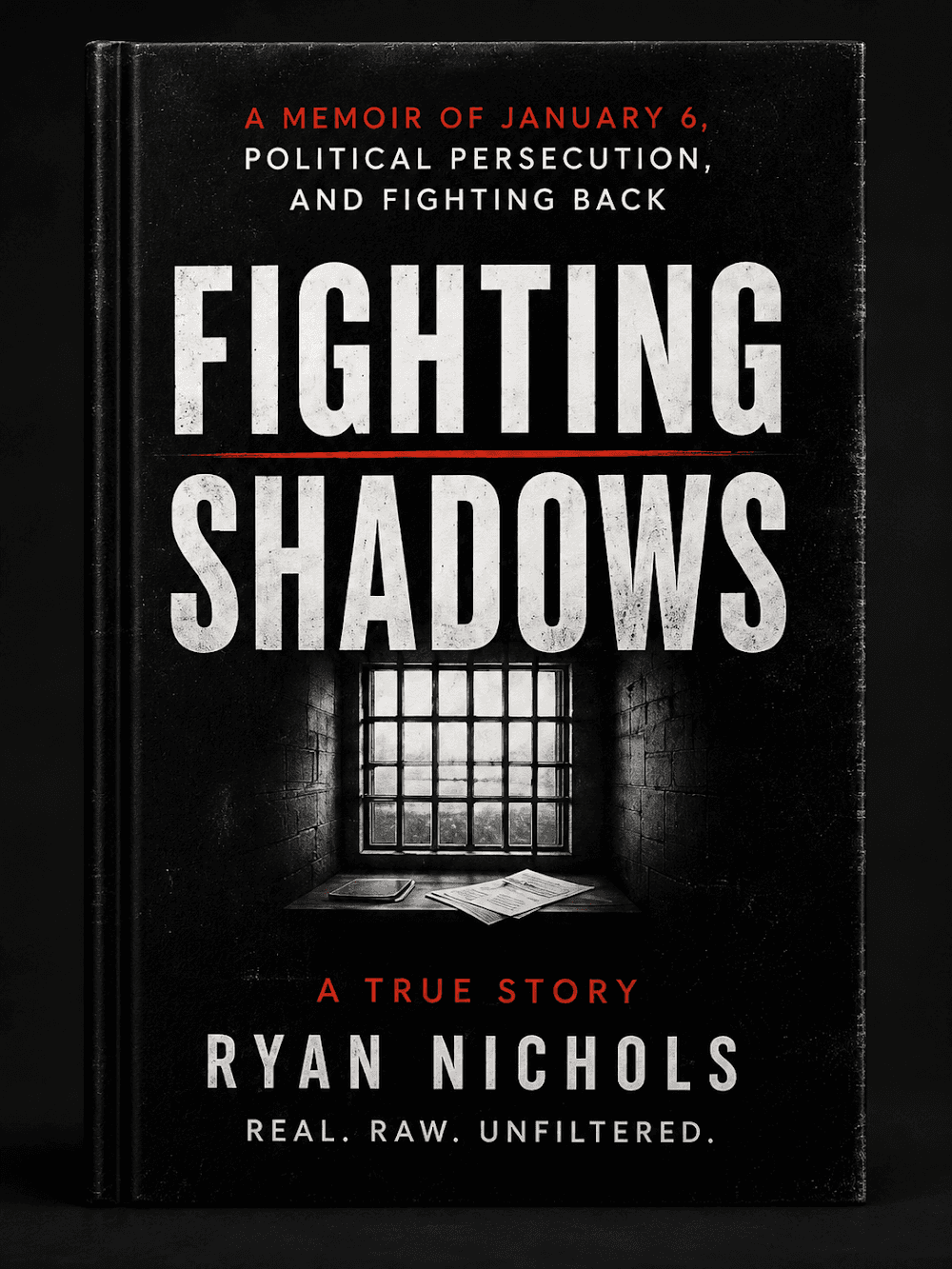
Follow the case
The record is still being written. Get one email when something new drops on it.
Hire Ryan
I built this site. Want one that brings your business real leads? Start with a free 30-minute call.See the services


Tap how this hits you — no signup, everyone sees the count
Share this post — get it back in front of people
Comments
Speak here
Create an account to comment.
This is where people can say what gets buried or cancelled elsewhere. Comments are signed-only, moderated, and tied to a real profile so the record stays usable.
No approved comments yet. Create an account and put the first opinion on the record.