
David Alan Blair J6 Case Record: Felony Plea, Five-Month Sentence, Pardon and 2026 Civil-Rights Ruling
David Alan Blair’s sourced J6 record: arrest, felony plea, reported five-month sentence, pardon, and a 2026 qualified-immunity civil-rights ruling.
By Ryan Nichols
- 213 total reach
- 0 reading now•0 active 24h
- 0 shares•0 inbound
- 0 comments
By Ryan Nichols
David Alan Blair’s public record now contains two federal cases that must not be blended together.
The first is his January 6 criminal prosecution in United States v. Blair, No. 1:21-cr-00186, in the U.S. District Court for the District of Columbia. Blair was arrested in February 2021, pleaded guilty in March 2022 to interfering with law enforcement during a civil disorder, and was sentenced in July 2022. The Associated Press reported that Judge Christopher R. Cooper imposed five months in prison, 18 months of supervised release and $2,000 in restitution. President Donald J. Trump later granted Blair a full pardon under the January 20, 2025 January 6 clemency proclamation.
The second is Blair’s civil lawsuit, Blair v. District of Columbia et al., No. 1:23-cv-01574-AHA. On July 21, 2026, Judge Amir H. Ali granted summary judgment to Metropolitan Police Officers Kevin Peralta and Aaron Smith on Blair’s federal civil-rights claims because the court found them entitled to qualified immunity. The opinion also said that, viewing disputed evidence in Blair’s favor at that stage, a reasonable jury could find the challenged baton strikes objectively unreasonable. The court remanded Blair’s remaining D.C.-law claims to D.C. Superior Court.
That ruling did not establish final civil liability. It also did not say every challenged use of force was reasonable. Both boundaries matter.
Verified quick facts
| Field | Verified record |
|---|---|
| Full name | David Alan Blair |
| Public profile | David Alan Blair J6 profile |
| January 6 criminal case | United States v. Blair, D.D.C. No. 1:21-cr-00186 |
| Criminal-case judge | Judge Christopher R. Cooper |
| Arrest | February 17, 2021 |
| Guilty plea | March 29, 2022 |
| Offense of conviction | Interfering with law enforcement during a civil disorder |
| Sentence reported by AP | Five months’ imprisonment; 18 months’ supervised release; $2,000 restitution |
| Clemency | Full pardon under the January 20, 2025 proclamation; DOJ recipient list entry BLAIR, DAVID |
| Civil case | Blair v. District of Columbia et al., D.D.C. No. 1:23-cv-01574-AHA |
| Civil-case judge | Judge Amir H. Ali |
| Federal civil ruling | Summary judgment for Officers Kevin Peralta and Aaron Smith based on qualified immunity |
| Local-law claims | Remanded to D.C. Superior Court |
| Verified portrait | None assigned; lawful reuse permission and complete person-level provenance have not been established |
The signed criminal judgment has not yet been captured for this archive. The sentence is therefore labeled as reported by the Associated Press rather than presented as a newly verified judgment transcription.
What the criminal record establishes
The Justice Department’s March 29, 2022 plea announcement states that Blair was arrested on February 17, 2021 and pleaded guilty to interfering with law enforcement during a civil disorder.
That DOJ announcement also gives the government’s account of Blair’s conduct at the Capitol. It says Blair entered the restricted grounds and was involved in confrontations near law-enforcement lines. Those descriptions are attributed to prosecutors and court documents. They are not being converted here into independent findings about every disputed moment.
The later civil opinion recounts an important procedural point: Blair pleaded guilty to the civil-disorder count, and the remaining criminal counts were dismissed. A complete summary therefore should not describe him as convicted on every offense originally charged.
On July 13, 2022, the Associated Press reported that Judge Cooper sentenced Blair to five months in prison, followed by 18 months of supervised release, and ordered $2,000 in restitution. Blair’s signed judgment and sentencing transcript remain priority capture targets.
What the pardon did
President Trump’s January 20, 2025 proclamation granted full, complete and unconditional pardons to covered January 6 defendants other than fourteen named people whose sentences were commuted.
The Office of the Pardon Attorney’s public recipient list includes the entry BLAIR, DAVID. Those official records support classifying Blair’s clemency as a full pardon.
A pardon is executive clemency. It is not the same as an acquittal, an appellate reversal, or a judicial finding that every allegation was false. It also does not establish a person’s complete moral character.
Reader poll
Which distinction matters most in David Blair’s record?
Tap your answer to vote
One tap. Free and anonymous. No signup to vote.
The separate civil-rights lawsuit
Blair later sued the District of Columbia and Metropolitan Police Officers Kevin Peralta and Aaron Smith. His federal claims invoked 42 U.S.C. § 1983; his complaint also included D.C.-law assault-and-battery and negligent-training-or-supervision claims.
The central source is Judge Ali’s July 21, 2026 memorandum opinion. The ten-page opinion was issued at summary judgment, where the court addressed competing motions and had to apply specific rules about disputed evidence.
The court’s analysis contains two conclusions that can sound contradictory if qualified immunity is not explained.
First, the court said that, when the evidence was viewed in Blair’s favor, a reasonable jury could find the officers’ use of force objectively unreasonable. The opinion also noted that an internal Metropolitan Police Department investigation found the challenged force unjustified under department policy. That internal policy conclusion was part of the evidentiary record; it was not itself a final judicial finding of constitutional liability.
Second, the court held that Officers Peralta and Smith were entitled to qualified immunity. Judge Ali concluded Blair had not identified sufficiently similar precedent that clearly established the unlawfulness of the particular force at issue under the circumstances the officers confronted.
The result was summary judgment for the officers on the federal claims and denial of Blair’s cross-motion. The court then declined to keep supplemental jurisdiction over the remaining D.C.-law claims and remanded them to D.C. Superior Court.
What qualified immunity did—and did not—decide
Qualified immunity is a defense available to government officials sued for damages under federal law. In broad terms, a plaintiff must overcome both the underlying constitutional question and the separate requirement that the violated right was clearly established in a sufficiently particularized way.
In Blair’s case, the federal claims failed at the clearly-established-law step. That means the officers prevailed on those claims even though the court said a jury could find the challenged strikes objectively unreasonable when the evidence was taken in Blair’s favor.
The opinion did not:
- enter a damages award for Blair;
- find the officers liable under federal law;
- decide that every use of force was reasonable;
- resolve the merits of the remanded D.C.-law claims;
- erase Blair’s criminal plea or sentence; or
- decide the criminal prosecution again.
The opinion also did not make the MPD policy review equivalent to a constitutional judgment. Department policy and federal constitutional law are related but distinct standards.
This is why the archive treats “force could be found objectively unreasonable” and “officers received qualified immunity” as simultaneous parts of the ruling rather than choosing one and hiding the other.
Reader poll
What should readers understand first about the July 21 opinion?
Tap your answer to vote
One tap. Free and anonymous. No signup to vote.
Six-event timeline
- January 6, 2021: Blair is present at the U.S. Capitol; later criminal and civil filings address separate aspects of the day.
- February 17, 2021: Federal authorities arrest Blair.
- March 29, 2022: Blair pleads guilty to interfering with law enforcement during a civil disorder.
- July 13, 2022: Judge Cooper imposes the sentence reported by the Associated Press.
- January 20, 2025: President Trump grants Blair a full pardon.
- July 21, 2026: Judge Ali issues the qualified-immunity opinion and remands the D.C.-law claims.
What remains unresolved or uncaptured
The archive has preserved and hashed the ten-page civil opinion. It still needs the complete PACER or RECAP dockets in both cases; the native criminal complaint and affidavit; charging documents; plea agreement and statement of offense; signed judgment; sentencing memoranda and transcript; Bureau of Prisons custody chronology; Blair’s individual pardon-certificate binary; the civil complaint and briefing; the separate civil order; the D.C. Superior Court remand docket; authenticated firsthand statements; and a photograph with verified provenance and lawful reuse rights.
The current public record also does not establish the final result of the remanded local-law claims. Any later Superior Court filing or ruling should be added only after the native record is captured and verified.
No photograph is presented as Blair’s portrait. The social artwork is original, symbolic and person-free.
Ryan’s Take
This site’s editorial position is that January 6 defendants deserve complete records, humane treatment and serious scrutiny of Biden-era DOJ charging, confinement and sentencing practices.
Blair’s record adds another reason accuracy matters. It is possible to acknowledge his felony plea and reported sentence while also documenting a federal judge’s conclusion that a jury could view the challenged police force as unreasonable. It is possible to report qualified immunity without turning it into a declaration that every strike was justified. It is possible to support a J6 defendant without inventing an acquittal or concealing a source.
Advocacy is strongest when it refuses false choices. Preserve the prosecution record. Preserve the pardon. Preserve the civil opinion. Preserve the limits of each one.
Related profiles, documents and Case Nexus
- David Alan Blair profile
- July 21, 2026 qualified-immunity opinion
- Donald J. Trump profile, connected here only as the granting president
- Explore the J6 Case Nexus for connected people, events and documents
- Compare Daniel Caldwell’s detention, plea, sentence and pardon
- Compare Jake Lang’s pretrial detention and dismissal record
Evidence still needed
The highest-value additions are the native criminal plea and sentencing records, the full civil docket and separate order, the receiving D.C. Superior Court docket, the individual pardon certificate, and a provenance-cleared photograph.
Submit photographs only with identity confirmation, the original source, photographer or rights-holder information, and a documented lawful reuse basis. Do not submit sealed material, credentials, private family information, or copyrighted media without permission.
Use the evidence-submission page and include the original URL, date, docket number, filing number and provenance.
Reader poll
Which source would most improve David Blair’s case file?
Tap your answer to vote
One tap. Free and anonymous. No signup to vote.
Submit a verified court record, interview, photograph or correction
What should the archive review?
Include the original source, date, docket number and provenance. Do not submit private information or copyrighted media without permission.
Principal sources
- DOJ plea announcement, March 29, 2022
- Associated Press sentencing report via PBS, July 13, 2022
- January 20, 2025 clemency proclamation
- DOJ Office of the Pardon Attorney certificate-recipient list
- Memorandum opinion, Blair v. District of Columbia et al., ECF No. 46, July 21, 2026
- Native opinion PDF mirror
Source note: The civil-opinion PDF was verified as a ten-page, 294,294-byte, unencrypted PDF and hashed SHA-256 3656e91626a013241360f6999109eb324b780af42798541099217e837e8ff7c7. Persistent archive-controlled binary storage and comparison against a PACER or RECAP copy remain pending.
Image note: The social artwork is an original symbolic illustration. It does not depict Blair, an authentic filing, an official seal, a police badge, a weapon or real evidence.
Want carefully sourced case-file updates? Join the email or text list only if you choose; you can unsubscribe at any time.
Sharing this is the biggest help. Put it in front of one more person.
You made it to the end
Most people quit at the headline. You didn’t.
So don’t stop here. Pick one.
Read the book
Fighting Shadows is the whole story in my own words: the road into January 6, the D.C. jail, and the fight to get the record out.See the book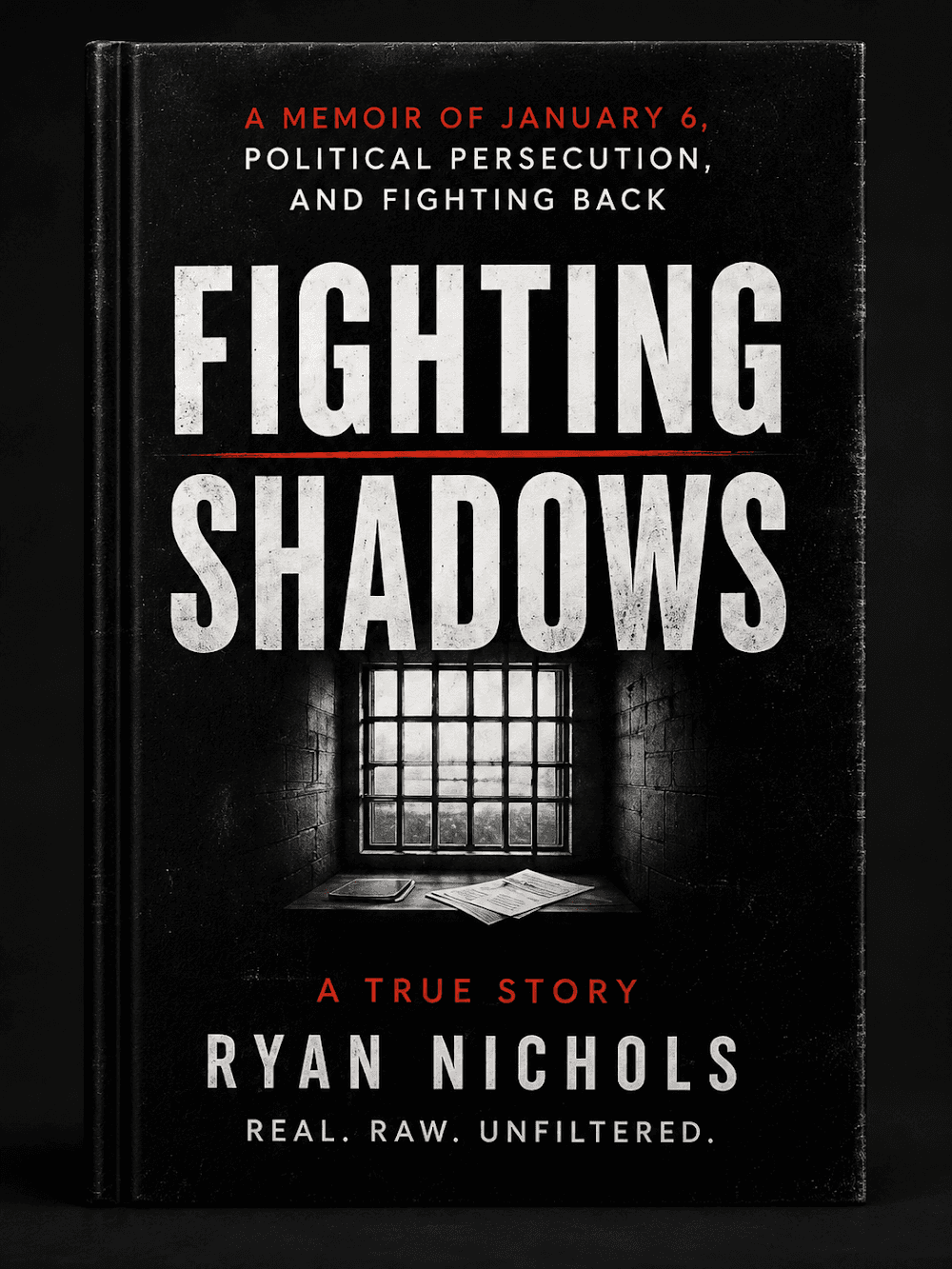
Follow the case
The record is still being written. Get one email when something new drops on it.
Hire Ryan
I built this site. Want one that brings your business real leads? Start with a free 30-minute call.See the services

Tap how this hits you — no signup, everyone sees the count
Share this post — get it back in front of people
Comments
Speak here
Create an account to comment.
This is where people can say what gets buried or cancelled elsewhere. Comments are signed-only, moderated, and tied to a real profile so the record stays usable.
No approved comments yet. Create an account and put the first opinion on the record.