
Andrew Alan Hernandez J6 Case Record: One-Count Plea, Time-Served Reduction and Full Pardon
Andrew Alan Hernandez’s sourced J6 record: six charges, one obstruction plea, 18-month sentence, time-served reduction, full pardon, and later litigation.
By Ryan Nichols
- 213 total reach
- 0 reading now•0 active 24h
- 0 shares•0 inbound
- 0 comments
By Ryan Nichols
Andrew Alan Hernandez’s January 6 case cannot be accurately reduced to either “six charges” or “pardoned.”
A federal grand jury charged him with six counts. He later pleaded guilty to one felony count of aiding and abetting obstruction of an official proceeding. Judge Colleen Kollar-Kotelly imposed an 18-month prison sentence, three years of supervised release, $2,000 in restitution, and a $100 special assessment. The prison term was later reduced to time served. President Donald J. Trump then granted Hernandez a full pardon under the January 20, 2025 clemency proclamation.
One more chapter matters. After the pardon, the government asked the district court to vacate the conviction and dismiss the indictment with prejudice under Federal Rule of Criminal Procedure 48(a). On April 4, 2025, the court denied that request and directed further briefing on Hernandez’s separate motion under 28 U.S.C. § 2255.
Those are different legal events. An indictment records accusations. A plea establishes an admitted offense. A sentence records punishment. A reduction changes that punishment. A pardon is executive clemency. And a denied dismissal motion means the court did not erase the conviction through that requested procedure.
Verified quick facts
| Field | Verified record |
|---|---|
| Full name | Andrew Alan Hernandez |
| Public profile | Andrew Alan Hernandez J6 profile |
| Home reported in DOJ releases | Riverside, California |
| Criminal case | United States v. Hernandez, No. 1:21-cr-00445-CKK |
| Court and judge | U.S. District Court for the District of Columbia; Colleen Kollar-Kotelly |
| Arrest | February 25, 2021 |
| Indictment | June 30, 2021 |
| Guilty plea | September 21, 2022 |
| Offense of conviction | Aiding and abetting obstruction of an official proceeding, 18 U.S.C. §§ 1512(c)(2) and 2 |
| Original sentence | 18 months’ imprisonment; 36 months’ supervised release; $2,000 restitution; $100 special assessment |
| Later sentence change | Imprisonment reduced to time served by a February 1, 2024 order, as recorded in the court’s 2025 opinion |
| Clemency | Full pardon under the January 20, 2025 proclamation |
| Post-pardon ruling | Rule 48(a) dismissal motion denied April 4, 2025; § 2255 matter set for further briefing |
| Verified portrait | None assigned; lawful reuse permission and person-level provenance have not been established |
This is a procedural summary, not a judgment about Hernandez’s character.
What the government alleged about January 6
The Justice Department’s plea release attributes the following account to court documents.
DOJ said Hernandez attended the Ellipse rally, marched toward the Capitol carrying a backpack and an American flag on a pole with a camera attached, passed a barricade after it was pushed down, and moved toward the East Rotunda Door. The government said he entered the Capitol at approximately 2:37 p.m., reached the Senate Gallery, remained there until about 2:45 p.m., took photographs of himself, and exited at approximately 2:51 p.m.
Those descriptions are the government’s account of the evidence and admitted record. This archive does not transform every phrase in a press release into an independent finding.
The timing is material. On DOJ’s account, Hernandez was inside for roughly fourteen minutes. Contemporaneous local reporting also stated that he was not accused of assaulting a law-enforcement officer. That describes the filed case; it is not a claim that every moment has been independently reconstructed.
Early reporting repeated additional FBI allegations about Hernandez’s social-media activity, political beliefs, employment, and identification. Those claims came from the complaint-stage affidavit. Until the native affidavit and exhibits are preserved and reviewed page by page, they should remain attributed allegations—not a permanent label for a person.
Six indictment counts did not become six convictions
The preserved DOJ mirror and contemporaneous case reporting identify a six-count indictment: obstruction and aiding and abetting; entering a restricted area; disorderly conduct in a restricted area; entering a congressional gallery; disorderly conduct in a Capitol building; and parading, demonstrating, or picketing in a Capitol building.
Those were charges, not verdicts. Hernandez first pleaded not guilty. He later admitted only the obstruction count under 18 U.S.C. §§ 1512(c)(2) and 2. Reporting on the plea states that the other five counts were dismissed under the agreement.
That distinction is central: six accusations became one offense of conviction. No trial occurred.
Reader poll
Which distinction is most important in this record?
Tap your answer to vote
One tap. Free and anonymous. No signup to vote.
The plea and 18-month sentence
Hernandez pleaded guilty on September 21, 2022. DOJ’s release records the admitted offense and its account of his route through the Capitol. The native plea agreement, complete statement of offense, and plea transcript remain priority captures because they would show the precise stipulations and allocution in the parties’ own filed words.
On January 30, 2023, Judge Kollar-Kotelly sentenced Hernandez. The official DOJ sentencing release confirms:
- 18 months in prison;
- 36 months of supervised release; and
- $2,000 in restitution.
The later court opinion identifies the judgment as ECF No. 59. Contemporaneous docket summaries also record a mandatory $100 special assessment.
The plea and sentence are legal facts. They are not proof of Hernandez’s overall moral character, and this article does not use sentencing language to define him beyond the case.
The prison term was reduced to time served
The old profile stopped at the original 18-month sentence. The April 4, 2025 court opinion supplies a material later fact: a February 1, 2024 order reduced Hernandez’s imprisonment to time served.
The native reduction order, ECF No. 66, has not yet been preserved in this archive. The court opinion verifies the result, but not enough of the underlying filing history is available here to state the legal basis or calculation. This article therefore does not speculate about why the reduction was granted or how much of the original term Hernandez served.
Full pardon on January 20, 2025
President Trump’s January 20, 2025 proclamation commuted the sentences of fourteen named people and granted a “full, complete and unconditional pardon” to all other covered individuals convicted of January 6-related offenses.
Hernandez was not one of the fourteen commutation recipients. The DOJ Office of the Pardon Attorney’s certificate-recipient release expressly lists “HERNANDEZ, ANDREW ALAN.” Together, those official records support classifying his clemency as a full pardon.
A pardon is not the same as a commutation, vacatur, acquittal, or finding that every complaint allegation was false. It is an exercise of presidential clemency.
The post-pardon effort to dismiss the case
Hernandez had filed a motion under 28 U.S.C. § 2255 on January 18, 2025, while serving supervised release. On January 21, the government moved under Rule 48(a) to dismiss the indictment with prejudice, citing the proclamation.
In its April 4, 2025 memorandum opinion and order, the court recorded the original sentence, the time-served reduction, the pardon-related filings, and the parties’ competing arguments about whether Rule 48(a) could be used after a final conviction.
Judge Kollar-Kotelly denied the government’s Rule 48(a) motion. The ruling did not deny that Hernandez had been pardoned. It held that the requested dismissal procedure was unavailable on the record and authorities presented. The court then set further briefing on Hernandez’s § 2255 motion.
The captured record does not establish the later final disposition of that § 2255 matter. Until a native later order or current docket report is obtained, the archive will not claim that the conviction was vacated, that the indictment was dismissed, or that the post-conviction motion was finally denied.
Eight-event timeline
- January 6, 2021: Hernandez enters the Capitol and Senate Gallery, according to the admitted government account.
- February 25, 2021: Federal authorities arrest Hernandez in Riverside, California.
- June 30, 2021: A federal grand jury returns the six-count indictment.
- September 21, 2022: Hernandez pleads guilty to one obstruction count.
- January 30, 2023: Judge Kollar-Kotelly imposes the 18-month sentence.
- February 1, 2024: The prison term is reduced to time served.
- January 20, 2025: Hernandez receives a full presidential pardon.
- April 4, 2025: The court denies the government’s Rule 48(a) dismissal motion.
The Andrew Alan Hernandez profile connects the source records and timeline without treating a charge, plea, sentence, pardon, or judicial disagreement as proof of character.
What the record establishes—and what it does not
The present record establishes the arrest, six-count charging stage, single-count plea, original sentence, later time-served reduction, full pardon, and the April 2025 denial of the government’s dismissal motion.
It does not establish six convictions. It does not establish that the pardon judicially vacated the plea. It does not prove the final outcome of Hernandez’s § 2255 motion. It also does not supply the complete native docket, every transcript, the individual pardon-certificate binary, Bureau of Prisons custody history, or an authenticated post-pardon interview.
No photograph is being presented as Hernandez’s portrait. Published pages include images attributed to federal investigators, but this archive has not documented a lawful reuse basis and complete person-level provenance. The article’s social artwork is therefore symbolic and person-free.
Ryan’s Take
The editorial position of this site is that the Biden-era January 6 prosecution program deserves sustained scrutiny for political selectivity, charging decisions, punishment, and the human cost imposed on defendants and families.
Hernandez’s record shows why that scrutiny must remain factual. Six charges became one plea. An 18-month prison term was later cut to time served. A full pardon ended the clemency question, yet a judge still rejected the government’s chosen route for wiping away the final conviction.
Supportive advocacy does not require pretending the plea never happened or inventing a dismissal that the judge refused to grant. It requires showing every stage, correcting outdated summaries, and refusing to let arrest-stage allegations become a permanent substitute for the disposition.
Related profiles and Case Nexus
- Andrew Alan Hernandez profile
- Donald J. Trump profile, connected as the granting president
- Ryan Nichols profile
- Derek Kinnison, Felipe Martinez, Ronald Mele, and Erik Warner, separately charged Riverside County defendants mentioned in contemporaneous regional reporting
- Explore the J6 Case Nexus for connected people, events, and documents
- Compare Mitchell Vukich’s one-count plea, 30-day sentence, and pardon
- Compare Daniel Caldwell’s detention, plea, sentence, and pardon
Evidence still needed
The highest-value additions are the native complaint and exhibits; indictment; plea agreement and statement of offense; judgment; February 2024 reduction order; complete § 2255 and Rule 48 briefing; every order entered after April 4, 2025; individual pardon certificate; custody and release records; and an authenticated firsthand interview.
A photograph should be submitted only with identity confirmation, original-source provenance, and a documented lawful reuse basis. Do not submit sealed material, private family information, credentials, or copyrighted media without permission.
Use the evidence-submission page and include the source, date, docket number, original URL, and provenance.
Reader poll
Which source would most improve this case file?
Tap your answer to vote
One tap. Free and anonymous. No signup to vote.
Submit a verified court record, interview, photograph, or correction
What should the archive review?
Include the original source, date, docket number, and provenance. Do not submit private information or copyrighted media without permission.
Principal sources
- DOJ plea release, September 21, 2022
- DOJ sentencing release, January 30, 2023
- April 4, 2025 memorandum opinion and order
- January 20, 2025 clemency proclamation
- DOJ Office of the Pardon Attorney certificate-recipient list
- ABC7/City News Service sentencing report
Source note: The connected legal-research service did not return a current docket report during this review. The article therefore identifies the final § 2255 disposition as an open capture need instead of guessing.
Image note: The social artwork is an original symbolic illustration. It does not depict Hernandez, an authentic filing, an official seal, or a real evidence photograph.
Want carefully sourced case-file updates? Join the email or text list only if you choose; you can unsubscribe at any time.
Sharing this is the biggest help. Put it in front of one more person.
You made it to the end
Most people quit at the headline. You didn’t.
So don’t stop here. Pick one.
Read the book
Fighting Shadows is the whole story in my own words: the road into January 6, the D.C. jail, and the fight to get the record out.See the book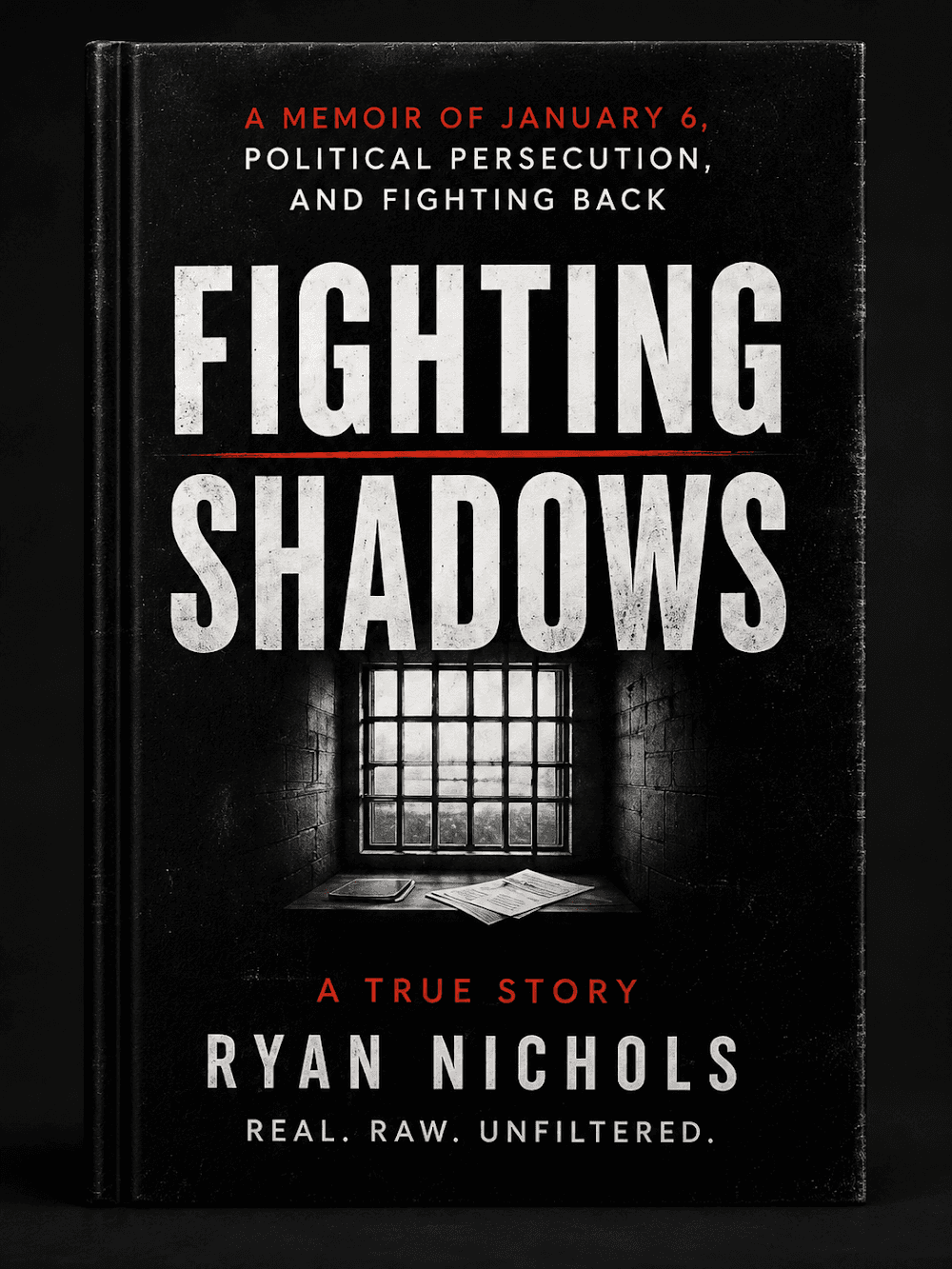
Follow the case
The record is still being written. Get one email when something new drops on it.
Hire Ryan
I built this site. Want one that brings your business real leads? Start with a free 30-minute call.See the services


Tap how this hits you — no signup, everyone sees the count
Share this post — get it back in front of people
Comments
Speak here
Create an account to comment.
This is where people can say what gets buried or cancelled elsewhere. Comments are signed-only, moderated, and tied to a real profile so the record stays usable.
No approved comments yet. Create an account and put the first opinion on the record.