
Claude Opus 5 Is Here: Price, 1M Context, Agent Upgrades and the Limits to Watch
Claude Opus 5 is available now with a 1M-token context window and stronger agent work. See verified pricing, access, risks and one practical test.
By Ryan Nichols
- 289 total reach
- 0 reading now•0 active 24h
- 0 shares•0 inbound
- 0 comments
By Ryan Nichols
Anthropic released Claude Opus 5 on July 24, 2026, and the practical story is not simply that another benchmark leader arrived.
The model is built for work that lasts: large codebases, long research sessions, multi-step professional tasks, tool use, document production and teams of cooperating agents. It has a one-million-token context window, can produce up to 128,000 output tokens in one request and uses adaptive thinking by default.
The API price did not increase from Claude Opus 4.8: $5 per million input tokens and $25 per million output tokens.
Those facts create a real opportunity. They also create a risk that is easy to miss. A model that can read more, write more, use more tools and work longer can consume more money, touch more systems and compound a wrong assumption farther before a person notices.
Claude Opus 5 should therefore be understood as a more capable worker that still needs a clear job, limited permissions, checkpoints and an independent final review.
What Anthropic released
According to Anthropic's July 24 announcement, Claude Opus 5 is now the default model on Claude Max and the strongest model available on Claude Pro.
For developers, the current API model ID is:
claude-opus-5
Anthropic's model documentation lists these current specifications:
- Context window: 1 million tokens
- Maximum output: 128,000 tokens
- API input price: $5 per million tokens
- API output price: $25 per million tokens
- Thinking: adaptive thinking, enabled by default
- Relative latency: moderate
- Reliable knowledge cutoff: May 2026
- Training-data cutoff: May 2026
The one-million-token window is both the default and the maximum. It does not require a special long-context beta header, and Anthropic says standard token pricing applies throughout the window.
That does not mean every one-million-token request will be useful, fast or cheap. Context capacity is a ceiling, not a guarantee that the model will give equal attention to every detail or that loading an entire archive is the best workflow.
Reader poll
What would you test with a 1M-token context window?
Tap your answer to vote
One tap. Free and anonymous. No signup to vote.
Where Claude Opus 5 is available now
Anthropic says Opus 5 is available across its products and major cloud channels.
Claude plans and apps
Opus 5 is the new default model on Claude Max and the strongest model offered on Claude Pro. Access and usage limits still depend on the subscriber's plan, current capacity and workspace controls.
The announcement says the model is available on all platforms. That includes Claude's web and app experiences, Claude Code and Claude Cowork where the relevant plan and product are supported.
Claude API
The model is available to all Claude API customers as claude-opus-5.
Cloud platforms
Anthropic's current Opus 5 developer guide lists availability through:
- Amazon Bedrock as
anthropic.claude-opus-5; - Google Cloud as
claude-opus-5; and - Microsoft Foundry.
One limitation is easy to overlook: Anthropic says Priority Tier is not supported on Opus 5. Organizations with committed Priority Tier traffic should not assume existing capacity arrangements automatically transfer to the new model.
What it costs
Standard Claude Opus 5 API pricing is:
- Input: $5 per million tokens
- Output: $25 per million tokens
That is the same published base rate as Opus 4.8 and half the published base rate of Claude Fable 5.
Anthropic also offers a Fast mode research preview that it says runs at roughly 2.5 times the default speed. Fast mode costs twice the standard rate:
- Fast input: $10 per million tokens
- Fast output: $50 per million tokens
The availability is narrower than the ordinary model. Anthropic's documentation says Fast mode for Opus 5 is currently available on the Claude API, not on Amazon Bedrock, Google Cloud or Microsoft Foundry. Claude Code can use it through usage credits.
The token rate is not the entire cost of an agent workflow. Tool calls, managed runtime, web search, code execution, storage and other platform services may carry their own charges. A long session can also reuse cached prompt material at different rates when prompt caching is enabled.
For scale, consider a request with 200,000 uncached input tokens and 20,000 output tokens:
- input: 200,000 × $5 / 1,000,000 = $1.00
- output: 20,000 × $25 / 1,000,000 = $0.50
- base model total: $1.50
That is arithmetic using the published token rates. It excludes tools, runtime, caching differences, retries and any connected service.
A one-million-token input request at the base rate would cost $5 in input tokens alone before the model produces an answer or uses a paid tool. The context window is large enough that cost controls should be designed before a team starts filling it.
The most important behavior change: thinking is on by default
On Opus 4.8, API requests did not use adaptive thinking unless the developer enabled it. On Opus 5, adaptive thinking is the default.
Developers can control how much effort the model uses. Lower effort can reduce tokens and latency. Higher levels are intended for harder work.
There is a migration trap: Anthropic says disabling thinking is accepted only at high effort or below. Trying to disable thinking while using xhigh or max effort returns a 400 error.
The max_tokens setting also covers the model's total output budget, including thinking and the visible response. Existing applications that set a tight output ceiling may need to revisit that limit.
Anthropic identifies other behavior changes that teams should test rather than discover in production:
- default responses and written deliverables may run longer;
- the model may narrate progress more often in agentic sessions; and
- it may delegate to subagents more readily in multi-agent systems.
Those behaviors can be useful. They can also create unnecessary output, extra coordination cost or more activity than a workflow designer expected.
Reader poll
Which Opus 5 change needs the closest control?
Tap your answer to vote
One tap. Free and anonymous. No signup to vote.
Why long-running agents matter
Most current AI use is still turn-based: a person asks, the model answers and the interaction ends.
The emerging model is different. A person gives an objective, an AI plans the work, uses tools, delegates pieces, checks progress, revises its approach and returns only when the job is complete or blocked.
Anthropic says Opus 5 improves most on precisely that kind of work. Its launch materials emphasize:
- multi-step software engineering;
- root-cause debugging rather than surface fixes;
- spreadsheet and slide production;
- professional research and analysis;
- long-context instruction following;
- computer use; and
- coordination between writer and verifier agents.
The opportunity for a small business is significant. One well-designed workflow could gather public research, compare it against internal documents, produce a draft, run a verification pass and create a review checklist.
The model should not be the final signer. The better design is to let it do the expensive preparation while a person retains judgment over the action that creates legal, financial, operational or public consequences.
Anthropic's benchmark claims are evidence, not a guarantee
Anthropic reports state-of-the-art or leading performance on several coding, computer-use, knowledge-work and scientific evaluations. It also says Opus 5 more than doubles Opus 4.8's performance on one Frontier-Bench setup and performs near Fable 5 on a Cursor coding benchmark at half the model price.
Those are Anthropic's reported results. Some evaluations use internal runs, selected harnesses, fallback behavior or partner testing. They do not prove that Opus 5 is best for every company's documents, code, tools, users or failure modes.
The correct response to a launch benchmark is not blind trust or reflexive dismissal. It is a controlled test using work that resembles the actual job.
Teams should compare:
- completion quality;
- factual error rate;
- total tokens and tool calls;
- time to a reviewable result;
- consistency across repeated runs;
- number of unnecessary changes;
- ability to follow permissions; and
- how often a person must intervene.
The metric that matters is not whether a model won a public chart. It is whether it completes your task more reliably at an acceptable total cost.
Safeguards and fallbacks can change what actually handled the request
Anthropic says Opus 5 is its most aligned model in its pre-deployment behavioral audit and that it does not advance the frontier in risky biological or offensive-cyber capabilities. Those are company findings described in the launch announcement and associated system card, not an independent guarantee that harmful or reckless output is impossible.
Opus 5 uses stronger guardrails for a narrow range of cyber work. Anthropic says its classifiers allow source-code vulnerability discovery but block binary vulnerability scanning, penetration testing and exploit generation.
When a request is flagged in Claude.ai, Claude Code or Claude Cowork, the default behavior is to fall back to Opus 4.8. API developers can enable automatic fallback as well.
That is operationally important. A user may believe an Opus 5 workflow completed end to end when a portion was actually handled by another model.
Fallback can be better than a blocked task, but it should be observable. For regulated, audited or benchmarked work, log:
- the requested model;
- the model that actually responded;
- the reason for fallback when available;
- tool calls and approvals;
- the final reviewer; and
- any retry or escalation.
Practical risks to manage
A larger context can hide weak evidence
Loading a million tokens does not automatically create a reliable knowledge base. Duplicate records, old versions, unsupported claims and conflicting instructions can all enter the same prompt.
Use a manifest. Identify each source, date, owner and authority. Ask the model to cite the exact file or link behind important conclusions.
Long agent runs compound wrong assumptions
An agent can execute the wrong plan very efficiently. Require an early written restatement of the objective, scope, prohibited actions and success test before it begins.
More delegation can widen the blast radius
Subagents can help separate research, drafting and verification. They can also duplicate effort, overwrite work or spread an incorrect premise. Give each agent a bounded role and make one coordinator responsible for resolving conflicts.
Better output can encourage overtrust
Polished writing, clean code and professional-looking spreadsheets can still contain errors. Use deterministic tests for code, formula checks for spreadsheets, source checks for research and a person with authority for the final decision.
The full cost may appear after the run
Input, output, cached tokens, tools, runtime and retries can be recorded in different places. Set a token or dollar budget and define what the agent should do when it reaches the limit.
One thing to test: a writer-verifier challenge
The most useful first test is not an open-ended instruction to “run the business.” Use a bounded task with a known answer and a reversible output.
Prepare
Choose 10 to 20 non-sensitive source files: public documents, sample contracts, product notes, test code or a mock spreadsheet. Include two deliberate problems:
- one outdated or conflicting source; and
- one claim that is not supported by any source.
Do not use private client data, privileged material, credentials, medical records, active legal strategy or production write access.
Run
Give Opus 5 this assignment:
- Create a source manifest with filename, date and purpose.
- Identify conflicts and missing evidence before drafting.
- Produce one specific deliverable using only supported facts.
- Delegate a separate verification pass.
- Cite the source behind every material claim.
- Stop before publishing, sending, merging or changing an external system.
- Report total tokens, tool calls, fallbacks and unresolved issues.
Run the same task once at medium effort and once at high or max effort.
Score
Grade both runs on:
- unsupported claims caught;
- conflicting source handled correctly;
- citations that actually support the sentence;
- useful work completed;
- unnecessary output or tool use;
- total cost and elapsed time; and
- whether the model respected the stop boundary.
If the higher-effort run is not materially better, the lower setting may be the smarter production choice. If both runs miss the planted unsupported claim, do not grant the workflow broader authority.
Reader poll
Would you test Opus 5 against your current AI model?
Tap your answer to vote
One tap. Free and anonymous. No signup to vote.
Editorial analysis
Claude Opus 5 is important because it pushes high-end agent capability into a price tier already familiar to Opus users.
The strongest commercial opportunity is not replacing every person with a model. It is giving one person a better research, production and verification team without multiplying handoffs.
The risk is confusing capability with authority.
A model may be able to read the archive, write the code, operate the tools and coordinate subagents. That does not mean it should be allowed to publish the article, send the payment, merge the code, contact the customer or make the legal judgment without review.
The durable pattern is:
large context, narrow permissions, visible checkpoints and an accountable human decision.
Sources and what to watch
Primary Anthropic sources used for this article:
- Introducing Claude Opus 5 — July 24, 2026
- Claude models overview and current specifications
- What's new in Claude Opus 5
- Claude API pricing
- Context-window documentation
- Mid-conversation tool changes
Watch for independent evaluations, changes to plan limits, Priority Tier support, broader Fast mode availability, clearer fallback telemetry and real-world comparisons of total task cost rather than token price alone.
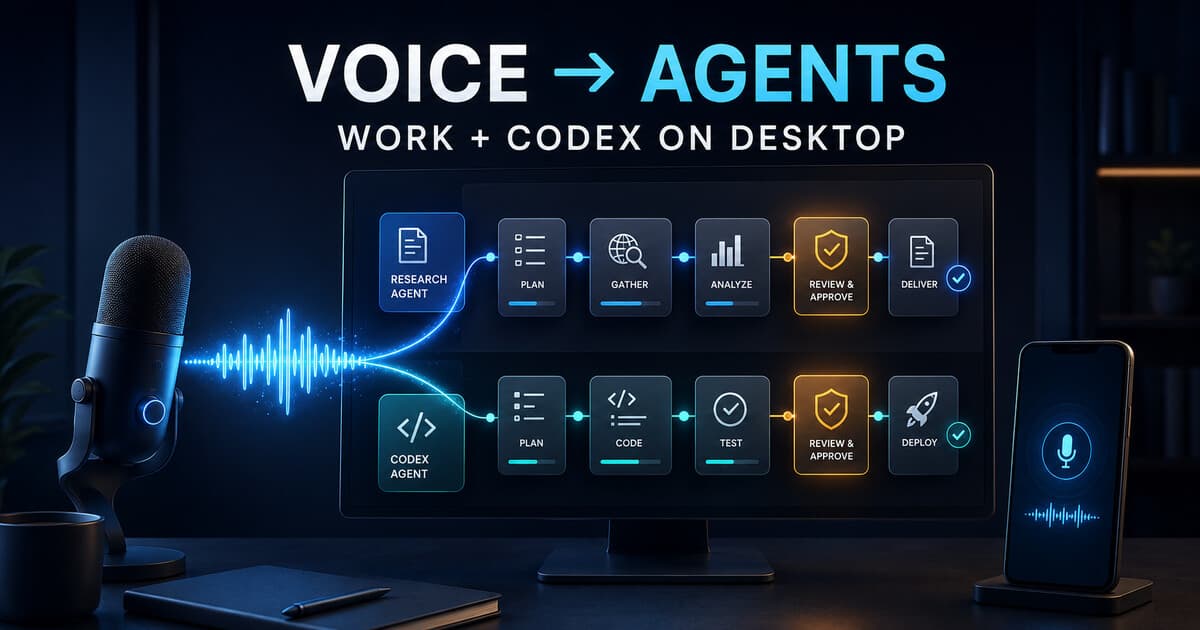
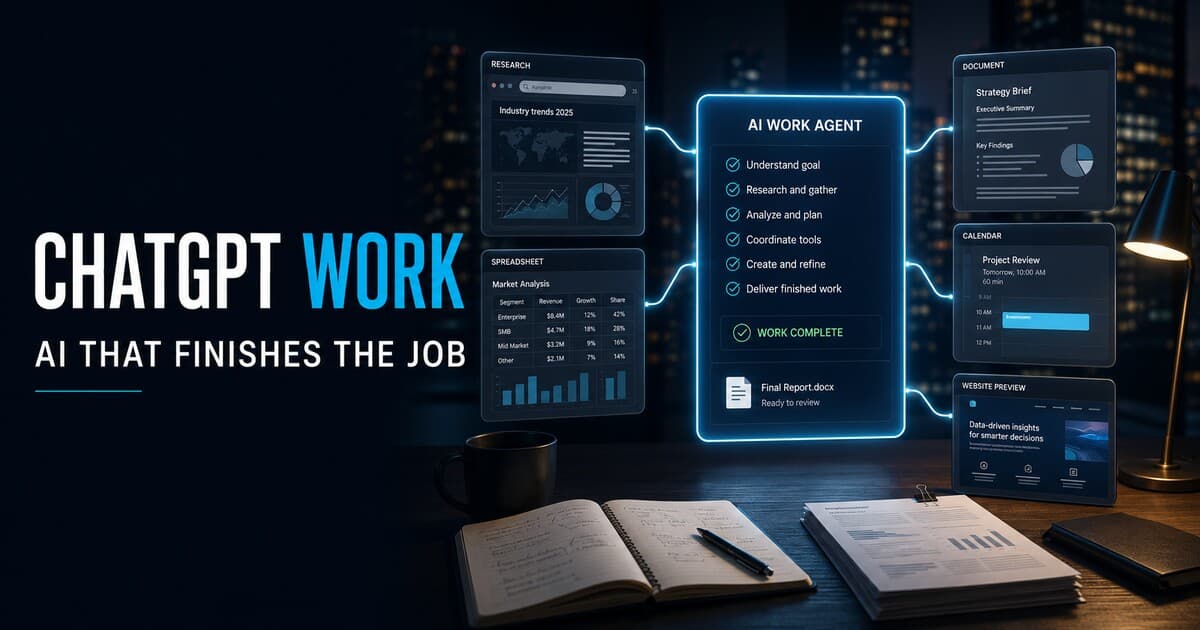
For the other side of the frontier-model race, see GPT-5.6 Sol, Terra and Luna: pricing and multi-agent modes. To understand how voice is becoming an agent-control layer, read ChatGPT Voice now controls Work and Codex on desktop.
Join the optional email or text list at the bottom of this page for future Claude, ChatGPT, AI-agent and emerging-technology updates. You choose what contact information to provide and can unsubscribe at any time.
Share a verified Opus 5 rollout update, test result, cost observation or correction
What became available, worked, failed or needs correction?
Include your plan or platform, model ID, effort setting, test method and an official source when possible. Do not submit passwords, API keys, confidential records, client data or private personal information.
Sharing this is the biggest help. Put it in front of one more person.
You made it to the end
Most people quit at the headline. You didn’t.
So don’t stop here. Pick one.
Read the book
Fighting Shadows is the whole story in my own words: the road into January 6, the D.C. jail, and the fight to get the record out.See the book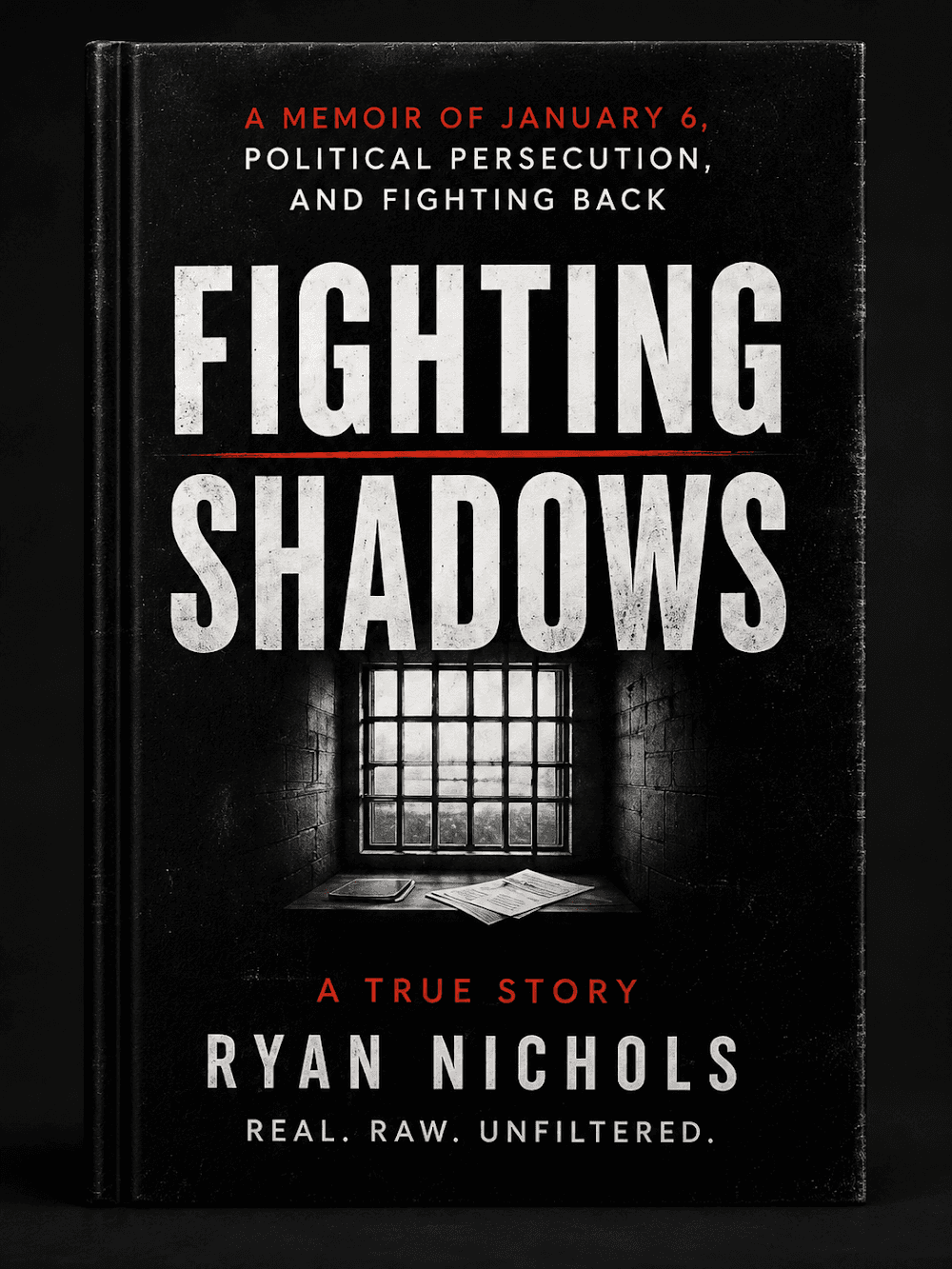
Follow the case
The record is still being written. Get one email when something new drops on it.
Hire Ryan
I built this site. Want one that brings your business real leads? Start with a free 30-minute call.See the services
Keep reading

Tap how this hits you — no signup, everyone sees the count
Share this post — get it back in front of people
Comments
Speak here
Create an account to comment.
This is where people can say what gets buried or cancelled elsewhere. Comments are signed-only, moderated, and tied to a real profile so the record stays usable.
No approved comments yet. Create an account and put the first opinion on the record.