
ChatGPT Work Changes the AI Job: From Answering Questions to Finishing Work
ChatGPT Work explained: current availability, GPT-5.6 models, pricing, scheduled tasks, Sites, practical opportunities, risks, limits, and one test to try.
By Ryan Nichols
- 307 total reach
- 0 reading now•0 active 24h
- 0 shares•0 inbound
- 0 comments
By Ryan Nichols
For years, most people used artificial intelligence like a better search box: ask a question, receive an answer, copy the useful part, and do the real work somewhere else.
ChatGPT Work is an important break from that pattern.
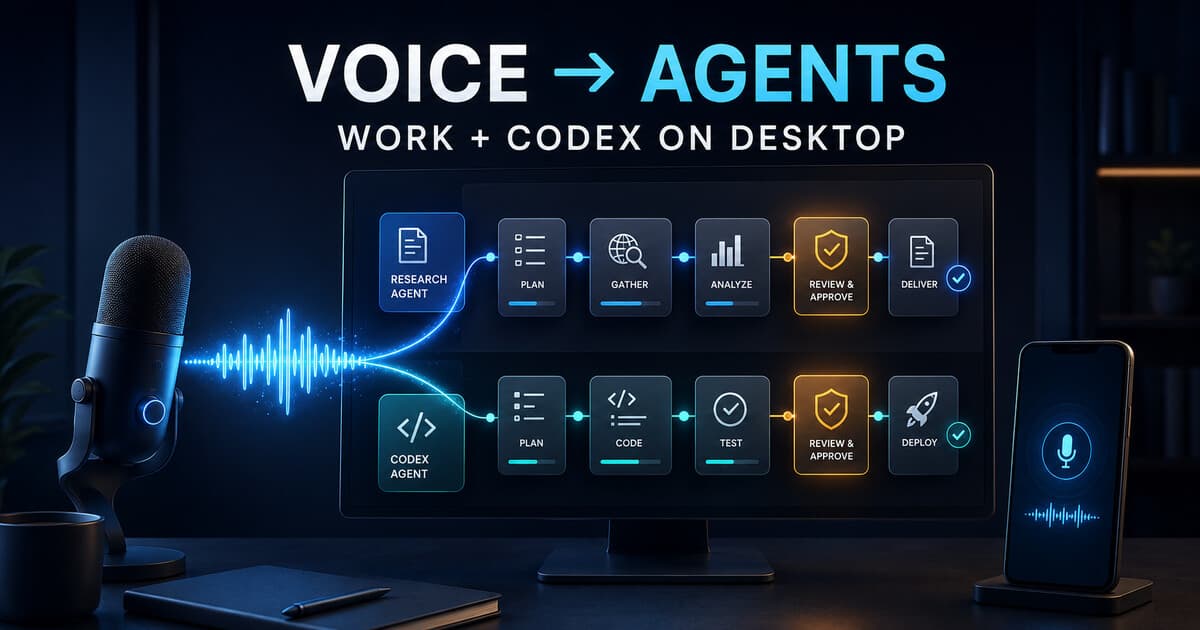
OpenAI describes Work as an agent for longer, multi-step assignments. It can gather information, work across approved files and connected tools, create finished documents, spreadsheets, presentations, reports, and lightweight websites, and keep a project moving through scheduled or trigger-based tasks.
That does not mean ChatGPT suddenly became an employee, a manager, or an infallible decision-maker. It means the useful unit of AI is changing from a response to a reviewed result.
That distinction matters to business owners, independent creators, researchers, nonprofit leaders, political campaigns, local newsrooms, and anyone buried under work that requires several tools and several steps.
The verified facts
OpenAI introduced ChatGPT Work on July 9, 2026. The company says it can research and analyze information, use connected apps and files, create finished deliverables, and run once, repeat on a schedule or trigger, or monitor for changes through Scheduled Tasks.
OpenAI’s current ChatGPT Work product page says the experience is powered by the GPT-5.6 model family. For eligible paid plans, OpenAI’s GPT-5.6 documentation lists three Work options:
- GPT-5.6 Sol for complex, open-ended and high-value work.
- GPT-5.6 Terra for balanced everyday work.
- GPT-5.6 Luna for faster, lower-cost work.
Work is not simply another name for regular ChatGPT or Codex.
- Chat is the fast conversational experience for questions, brainstorming, search, and everyday help.
- Work is designed to complete longer tasks and deliver finished artifacts.
- Codex remains the dedicated software-development environment for repositories, terminals, testing, code review, and technical changes.
OpenAI says Work can connect context from more than 1,400 plugins. It can also use Projects, which keep related instructions, chats, and files together. In the desktop app, users can grant access to local files and supported desktop applications. On the web and mobile, Work runs in the cloud and cannot directly reach files stored only on a person’s computer.
Reader poll
Which kind of finished result would save you the most time each week?
Tap your answer to vote
One tap. Free and anonymous. No signup to vote.
What it costs and who can use it
Availability is still rolling out, so an eligible account may not see Work immediately.
OpenAI’s current product and support pages say:
- Work is available on ChatGPT web and mobile for eligible paid plans.
- The macOS and Windows desktop apps make Work available across plan types, although Free accounts receive only limited desktop access.
- Plus, Pro, Business, Enterprise, and Education users are the primary paid rollout groups for web and mobile.
- Workspace administrators can restrict access by role or workspace policy.
The underlying ChatGPT plan prices have not been replaced by a separate flat “Work subscription.” According to OpenAI’s current ChatGPT pricing page and business documentation:
- ChatGPT Plus: $20 per month.
- ChatGPT Pro: $100 per month for 5× Plus usage or $200 per month for 20× Plus usage.
- ChatGPT Business: $25 per user per month when billed monthly, or $20 per user per month when billed annually, with a two-seat minimum.
- Enterprise and Education: contract pricing and workspace-specific controls.
The important cost limitation is usage. Work and Codex share the same agentic usage and credit pool. Longer tasks, larger context, more tool use, stronger models, and bigger outputs can consume more of that allowance. Plus and Pro users can purchase additional credits after reaching included limits. Business, Enterprise, and Education workspaces may use shared credit pools and administrator-set limits.
There is no responsible universal promise that a certain number of Work assignments will fit inside a plan. A five-minute document cleanup and a multi-hour research, data, and website project do not consume the same resources.
Why this development matters
The big opportunity is not that AI can write more words. The opportunity is that one controlled workflow can cross boundaries that previously required a person to move information manually from app to app.
Consider a weekly business review. A traditional process might require someone to:
- Search email for open customer issues.
- read meeting notes and team messages.
- export sales data.
- update a spreadsheet.
- identify missed follow-ups.
- build a short presentation.
- schedule the next review.
An agentic workflow can gather approved context, perform the analysis, produce the spreadsheet and presentation, and prepare the follow-up list. The person remains responsible for confirming that the sources, numbers, recommendations, recipients, and permissions are correct.
That last sentence is the line between useful automation and reckless automation.
Practical opportunities
Small-business operations: Create a weekly performance brief, compare actual results with goals, identify unpaid invoices or neglected leads, and prepare a prioritized action list.
Research and reporting: Collect primary sources, organize claims and counterclaims, produce a source table, draft a report, and flag facts that still need human verification.
Sales and marketing: Analyze a campaign, segment responses, draft follow-ups, prepare a calendar, and create finished content assets for review.
Documents and presentations: Turn scattered notes, spreadsheets, and source files into a coherent document or executive-ready presentation.
Recurring monitoring: Watch an approved source for a change, build a daily or weekly briefing, or keep a recurring project moving through Scheduled Tasks.
Lightweight websites: ChatGPT Sites can create interactive dashboards, trackers, reports, prototypes, and internal portals without leaving Work.
ChatGPT Sites is useful, but it is not every website
OpenAI released ChatGPT Sites in public beta. It is available on paid plans except Free and Go, subject to rollout, account limits, region, and workspace settings. At launch, Sites is not available in the European Economic Area, Switzerland, or the United Kingdom.
Sites can be excellent for a dashboard, project tracker, internal portal, report, prototype, or simple public experience. But OpenAI documents important boundaries:
- Beta limits can restrict new Sites, storage, or high-usage public Sites.
- Some frameworks, private networks, databases, background services, and hosting patterns are not supported.
- Sites cannot process protected health information or payment-card data.
- Sites cannot enable financial transactions.
- Enterprise public publishing is off by default and requires administrator approval.
- A Site must be reviewed for files, forms, sign-in behavior, links, generated content, and access settings before publication.
In other words, Sites can accelerate a useful web experience. It does not eliminate the need for security, privacy, legal compliance, domain control, database design, backups, or a durable production stack when the project grows.
The risks people should understand
1. A finished-looking answer can still be wrong
Good formatting is not evidence. A polished report can contain a bad assumption, an outdated figure, a missing source, or a fabricated detail. Require citations, open the sources, and independently verify consequential claims.
2. Connected tools increase both value and exposure
An agent becomes more useful when it can reach email, files, calendars, databases, and business tools. Every connection also expands what could be exposed or changed if permissions are too broad.
Grant the smallest access necessary. Keep sensitive projects separated. Do not upload passwords, private keys, protected health information, payment-card data, or confidential material unless the product, plan, agreement, and security controls are appropriate for that data.
3. Scheduled work can repeat a mistake
A one-time error is bad. A scheduled error can happen every morning before anyone notices. Review the first several runs, define failure conditions, and require the task to stop when a source is missing, contradictory, or unavailable.
4. External actions need a human checkpoint
The safest default is simple: AI may research, draft, organize, analyze, and prepare. A person approves sending, publishing, purchasing, deleting, changing permissions, contacting customers, or making a legal, medical, financial, or employment decision.
5. Usage can become a real operating cost
Work is designed for substantial assignments, and substantial assignments consume agentic usage. Choose the model that matches the task, keep the scope clear, reuse clean project context, and monitor the account’s usage panel.
Reader poll
Where should AI always stop for human approval?
Tap your answer to vote
One tap. Free and anonymous. No signup to vote.
One thing to test today
Do not begin by connecting every account you own. Start with a low-risk, repeatable assignment whose result you can judge.
Try this prompt in ChatGPT Work:
Build a one-page weekly technology briefing for my business. Use only the official sources and files I provide. Give me five developments, why each matters, one practical action for each, and a source table with direct links and publication dates. Clearly mark anything uncertain. Create the briefing as a document and a separate tracking spreadsheet. Stop before emailing, publishing, scheduling, or changing any external system. Ask for my approval before every external action.
Then provide three to five official sources you already trust.
Judge the result on five questions:
- Did every important factual claim have a source?
- Did the source actually support the claim?
- Did the finished files match the requested structure?
- Did Work obey the instruction to stop before external action?
- Would repeating this assignment save more time than it costs to review?
If the answer is yes, refine the instructions and run it again. Only after the workflow is dependable should you consider scheduling it.
Analysis: the real shift is accountability for outcomes
The first wave of generative AI rewarded people who learned how to ask better questions. The agentic wave will reward people who can define a complete outcome, provide trustworthy context, set boundaries, and verify the result.
That is a more demanding skill than prompting.
The strongest operator will not be the person who tells AI, “Handle everything.” It will be the person who can say:
- Here is the exact goal.
- Here are the approved sources.
- Here is what you may access.
- Here is what you may not change.
- Here is the format I need.
- Here is how success will be tested.
- Here is where you must stop for approval.
ChatGPT Work makes AI materially more useful because it can carry more of the process. That same capability makes source discipline, access control, review, and accountability more important—not less.
Sources, corrections, and what to watch next
Primary sources used for this article:
- OpenAI: ChatGPT Work product overview
- OpenAI: ChatGPT release notes for the July 9 launch
- OpenAI: ChatGPT Work and Codex availability and limitations
- OpenAI: GPT-5.6 models and plan availability
- OpenAI: ChatGPT plans and pricing
- OpenAI: Creating and managing ChatGPT Sites
- OpenAI: Work mode best practices
Explore more AI and technology coverage, review our editorial standards, or tell us about a technology story we should verify.
Join the optional email and text list at the bottom of this page for future ChatGPT, Claude, AI-agent, and emerging-technology updates. You can unsubscribe at any time.
Share what happened when you tested it
What worked, failed, or needs verification?
Send a result, official source, limitation, correction, or practical workflow readers should know about. Do not include passwords, private keys, confidential client data, or private personal information.
Reader poll
What should we test next?
Tap your answer to vote
One tap. Free and anonymous. No signup to vote.
Sharing this is the biggest help. Put it in front of one more person.
You made it to the end
Most people quit at the headline. You didn’t.
So don’t stop here. Pick one.
Read the book
Fighting Shadows is the whole story in my own words: the road into January 6, the D.C. jail, and the fight to get the record out.See the book
Follow the case
The record is still being written. Get one email when something new drops on it.
Hire Ryan
I built this site. Want one that brings your business real leads? Start with a free 30-minute call.See the services
Keep reading


Tap how this hits you — no signup, everyone sees the count
Share this post — get it back in front of people
Comments
Speak here
Create an account to comment.
This is where people can say what gets buried or cancelled elsewhere. Comments are signed-only, moderated, and tied to a real profile so the record stays usable.
No approved comments yet. Create an account and put the first opinion on the record.