
The Patent Was Refused. The Telescope Still Changed the Sky.
By Ryan Nichols
- 5 total reach
- 0 reading now•0 active 24h
- 0 shares•0 inbound
- 0 comments

The government refused the patent. The idea did not care.
In October 1608, Dutch spectacle maker Hans Lipperhey applied for a patent on an instrument that made distant objects appear closer. The patent was not granted. Questions of originality were already circling the device, and the basic arrangement was considered too easy to copy.
That sounds like the end of an inventor’s story.
It was the beginning of a different story, one in which the lack of exclusive control helped news of the instrument move faster than any single workshop could contain it.
An invention with disputed ownership
The University of Cambridge’s history of Galileo’s telescope places Lipperhey’s patent application in October 1608. It also notes that another Dutchman, Jacob Metius, made a similar claim and that the invention’s precise origin is uncertain.
That uncertainty matters. The telescope should not be told as a clean tale in which one lone genius suddenly created a finished instrument.
Spectacle makers already understood lenses. Several people were working near the same idea. The arrangement could be demonstrated, copied, and improved. The patent officials saw enough doubt to refuse exclusive rights.
They still recognized military value. A device that could make a distant church tower, ship, or army formation appear nearer was useful before anybody pointed it at Jupiter.
Reader poll
What matters most in the history of an invention?
Tap your answer to vote
One tap. Free and anonymous. No signup to vote.
The news reached Galileo
By 1609, reports of the Dutch instrument had reached Galileo Galilei in Italy. According to Cambridge, he built his own version without seeing the original. His first instrument magnified roughly eight times. He then kept improving the design.
The important move was not merely stronger magnification. Galileo turned the tube upward.
The Cambridge University Library exhibition on Galileo’s telescope describes the observations that followed: mountains on the Moon, many more stars in the Milky Way than could be seen with the naked eye, and moons orbiting Jupiter.
Those observations did not instantly settle every argument about the universe. They did make old certainty harder to defend.
If the Moon had an uneven surface, it did not match the idea of a perfectly smooth heavenly body. If smaller bodies moved around Jupiter, then not everything in the heavens moved around Earth. The instrument did not just enlarge objects. It enlarged the field of evidence.
A tool is only as strong as its calibration
Early telescope makers faced a practical problem: how could they measure the curvature of a lens accurately enough to reproduce and improve it?
The Smithsonian’s history of the spherometer explains how later instrument makers used a device with three fixed legs and a central screw to measure curved surfaces. The tool became important for testing lenses and mirrors.
That is a reminder often lost in invention stories. The famous breakthrough depends on quiet measurement. A telescope becomes more than a clever tube when makers can compare glass, control curvature, reduce error, and build the next version from evidence instead of guesswork.
Publication moved the argument
Galileo published Sidereus Nuncius, usually translated as The Starry Messenger, in March 1610. The work carried his observations into a much larger public argument.
Words and drawings mattered because few readers could look through Galileo’s instrument themselves. They had to judge reports, examine diagrams, compare claims, and decide whether the new evidence deserved belief.
The telescope created a second problem alongside the scientific one: who gets trusted when a new instrument shows something that established authorities did not expect?
That question still follows every new tool. Better evidence does not remove human resistance. It gives the argument something harder than reputation to work with.
The failed patent did not stop the future
It would be too simple to say the patent refusal caused modern astronomy. It did not. Lens craft, competition, correspondence, patronage, publication, and Galileo’s relentless improvements all mattered.
But the refusal reveals something true about useful ideas. Ownership can reward invention, yet no legal boundary can guarantee that an idea will remain still once other people can understand and rebuild it.
Lipperhey did not receive the exclusive right he sought. Metius did not disappear from the record. Galileo did not invent the first Dutch spyglass. What survived was larger than the clean hero story.
An instrument moved from terrestrial advantage to celestial evidence. A disputed device became a new way of seeing. The sky had not changed, but humanity’s permission to question it had.
The First Public Railway Carried the Future in 36 Wagons tells another story about a technology becoming public infrastructure. The First Solar Car Was 15 Inches Long shows how a small demonstration can carry an idea far beyond its first practical use. USS Nautilus Proved the Impossible Under the North Pole follows the same pattern at a different scale: build, test, measure, then let evidence change the boundary.
Reader poll
Which part of the telescope story stays with you?
Tap your answer to vote
One tap. Free and anonymous. No signup to vote.
History is full of moments when a blocked path did not stop the work. Join the RealRyanNichols.com newsletter if you want the next story about the builders, failures, and evidence that changed what people believed was possible.
Sources
- University of Cambridge: Galileo’s Telescope, accessed October 2, 2026.
- Cambridge University Library: Seeing the Stars, accessed October 2, 2026.
- Smithsonian National Museum of American History: Spherometers Reveal How Round Is Round, accessed October 2, 2026.
Editorial visual disclosure: The header image is an original AI-assisted conceptual illustration. It is not a photograph of Lipperhey’s or Galileo’s instruments, records, or workshop.
You made it to the end
Most people quit at the headline. You didn’t.
So don’t stop here. Pick one.
Read the book
Fighting Shadows is the whole story in my own words: the road into January 6, the D.C. jail, and the fight to get the record out.See the book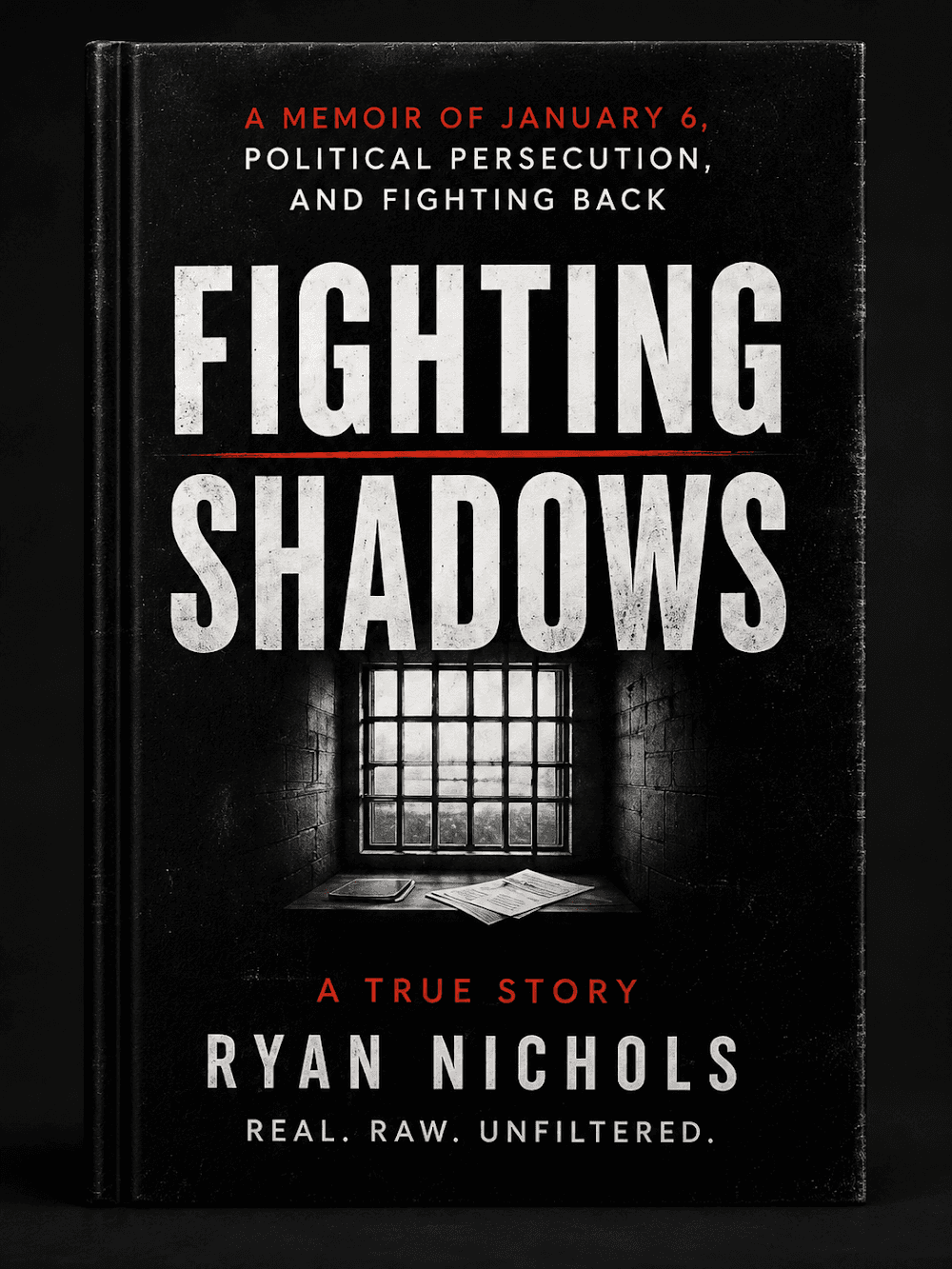
Follow the case
The record is still being written. Get one email when something new drops on it.
Hire Ryan
I built this site. Want one that brings your business real leads? Start with a free 30-minute call.See the services

Tap how this hits you — no signup, everyone sees the count
Share this post — get it back in front of people
Comments
Speak here
Create an account to comment.
This is where people can say what gets buried or cancelled elsewhere. Comments are signed-only, moderated, and tied to a real profile so the record stays usable.
No approved comments yet. Create an account and put the first opinion on the record.