
How to Keep Moving Forward When Life Knocks You Down: A 7-Day Reset
Life knocked you down and you need a way forward. Use the Carry, Cut, Create decision tool and this honest seven-day reset to rebuild momentum.
By Ryan Nichols
- 332 total reach
- 0 reading now•0 active 24h
- 0 shares•0 inbound
- 0 comments
By Ryan Nichols
Getting back up is not one decision.
It is a series of smaller decisions made while part of you is still tired, disappointed, angry, embarrassed, grieving, or unsure whether the effort will matter.
That is what most encouragement gets wrong. It jumps from the fall to the comeback. It skips the awkward middle, where the damage is real, the plan no longer fits, and you still have to answer ordinary questions:
- What must I protect?
- What can I stop carrying?
- What do I build next?
You do not need to pretend the setback was a gift. Some losses are simply losses. Some doors close unfairly. Some plans fail because of your own choices. Others fail because circumstances changed or someone else made a decision you could not control.
The goal is not to force every painful thing into an inspiring story.
The goal is to stop letting the painful thing make every decision that comes after it.
This seven-day reset uses three words: Carry. Cut. Create.
Carry what still matters. Cut what keeps draining the future. Create one piece of evidence that your life is moving again.
Reader poll
Which part of a setback is hardest for you right now?
Tap your answer to vote
One tap. Free and anonymous. No signup to vote.
The Carry, Cut, Create decision tool
Take a sheet of paper and draw three columns. You can also use the notes app on your phone. Do not make it beautiful. Make it honest.
Column one: Carry
Write down what must come with you into the next chapter.
This is not everything you already have. It is what remains true, useful, responsible, or worth protecting.
You might carry:
- a responsibility that still belongs to you;
- a relationship that is healthy enough to repair;
- a skill the setback did not take away;
- a lesson you paid dearly to learn;
- a value you refuse to trade for relief;
- a promise that still deserves to be kept;
- a basic routine that keeps your life from drifting.
Carry is about continuity. A setback can change your plan without erasing your character, experience, responsibilities, or ability to learn.
Ask yourself:
- What is still mine to protect?
- What remains useful even though the old plan failed?
- Who or what deserves steady care from me this week?
- Which lesson would make the pain more expensive if I refused to learn it?
Do not put guilt in this column merely because it feels heavy. Weight alone does not make something your responsibility.
Column two: Cut
Write down what cannot keep receiving your time, attention, money, or emotional energy.
Cut does not always mean a dramatic ending. Sometimes it means reducing access. Sometimes it means declining an obligation. Sometimes it means ending a habit of checking, explaining, arguing, avoiding, spending, rescuing, or starting over every Monday.
You might cut:
- a deadline that no longer matches reality;
- an expense that belongs to the old plan;
- the need to convince someone committed to misunderstanding you;
- a project you keep alive only because quitting feels embarrassing;
- a source of noise that keeps reopening the same wound;
- a standard of perfection that prevents useful work;
- a promise you made from panic and cannot responsibly keep.
Cut is not permission to abandon people, bills, duties, or consequences. It is a demand to separate real responsibility from dead weight.
Ask yourself:
- What am I maintaining only because I am afraid of how stopping will look?
- What keeps taking from me without helping me serve, heal, work, or grow?
- Which expectation belongs to a version of life that no longer exists?
- What can be paused, reduced, delegated, renegotiated, or ended responsibly?
The word responsibly matters. Moving forward is not running away with better branding.
Column three: Create
Write down the next small thing that would prove movement.
Not the final result. Not a five-year plan. Not the speech you will give after everything works.
Create something visible:
- a one-page budget;
- a cleaned work surface;
- a sent application;
- a scheduled appointment;
- a written boundary;
- a repaired item;
- a new morning checklist;
- the first page of a proposal;
- a list of three people you can ask for help;
- a simple plan for the next seven days.
The best Create item is small enough to finish and meaningful enough to change what happens next.
Ask yourself:
- What can exist by the end of this week that does not exist today?
- What would make tomorrow easier?
- What result would be useful even if nobody applauded it?
- What can I complete without waiting for permission, perfect confidence, or ideal conditions?
Your one-page reset worksheet
Fill this out before beginning the challenge:
| Carry | Cut | Create |
|---|---|---|
| One responsibility I will protect: ______ | One drain I will reduce: ______ | One useful thing I will finish: ______ |
| One value I will keep: ______ | One expectation I will release: ______ | One habit I will begin: ______ |
| One person I will stay connected to: ______ | One distraction I will limit: ______ | One next-step conversation: ______ |
| One lesson I will remember: ______ | One commitment I will renegotiate: ______ | One piece of proof by Day 7: ______ |
Now circle only one item in each column.
That gives you three decisions for the week. You may do more, but you are not allowed to bury the reset under twenty new promises.
Reader poll
Which decision would create the most relief this week?
Tap your answer to vote
One tap. Free and anonymous. No signup to vote.
The seven-day challenge
This is not a seven-day transformation. It is a seven-day interruption of the pattern that keeps you stuck.
Day 1: Name the facts
Write one page beginning with:
“What happened is…”
Use plain facts. Remove predictions, insults, mind-reading, and permanent language.
“I missed the deadline” is a fact. “I ruin everything” is a verdict.
“The relationship ended” is a fact. “Nobody will ever stay” is a prediction.
“The plan lost money” is a fact. “I will never build anything worthwhile” is fear presenting itself as evidence.
You cannot make a sound decision while facts and self-punishment are mixed together.
Day 2: Complete the three columns
Finish the Carry, Cut, Create worksheet. Circle one item in each column.
Then write one sentence:
“For the next seven days, I will protect ______, reduce ______, and finish ______.”
Put the sentence where you will see it.
Day 3: Set your minimum floor
Hard seasons create all-or-nothing thinking. If you cannot perform at your best, you may be tempted to stop showing up at all.
Build a minimum day with five basic commitments:
- care for your body;
- complete one responsibility;
- spend a short period without noise;
- contact one safe person;
- prepare one thing for tomorrow.
Your floor is not your ceiling. It is the structure that keeps one hard day from becoming a lost week.
Day 4: Make one repair
Choose one thing you can repair without controlling somebody else’s response.
Pay part of what you owe. Correct the mistake. Replace the broken item. Send the overdue answer. Apologize without defending yourself. Organize the documents. Reschedule the appointment.
Repair is powerful because it converts regret into responsibility.
If the damage cannot be fully repaired, do the honest portion that still belongs to you.
Day 5: Ask clearly for help
Do not send “I’m struggling” to ten people and hope somebody guesses what you need.
Ask one trustworthy person for one specific form of help:
- “Can you look over this one-page plan?”
- “Can you sit with me while I make this call?”
- “Can you recommend someone qualified for this problem?”
- “Can you check on me Friday and ask whether I finished?”
Help is most useful when the request is clear, limited, and honest.
If professional, medical, financial, pastoral, or legal help fits the situation, asking for qualified support is action, not weakness.
Day 6: Build the proof
Finish the Create item you circled.
Do not expand it halfway through. A finished one-page plan is better than an abandoned twenty-page system. One completed application is better than a folder of opportunities you never contacted. A realistic weekly budget is better than a perfect annual forecast you avoid opening.
Take a picture, save the file, check the box, or write down the completion date.
You are building evidence for yourself: I can still finish something useful.
Day 7: Review without performing
Answer five questions:
- What became clearer this week?
- What did I carry well?
- What did I cut that needs to stay cut?
- What did I create that changes next week?
- What is the next responsible step?
Do not grade the week based only on how you feel. Feelings matter, but they are not the only evidence.
Look for completed actions, clearer boundaries, repaired responsibilities, reduced noise, and a next step you can name.
What to do when you miss a day
Do not restart the entire challenge because Tuesday went badly.
Resume with the next unfinished day.
This matters because people often turn one missed action into a new identity: “There I go again. I never finish anything.” Then they abandon six useful decisions to punish themselves for missing one.
That is not discipline. It is surrender wearing the clothes of high standards.
If you miss a day, write:
“I missed Day ____. The reason was ____. The adjustment is ____.”
Then continue.
Resilience is not the absence of interruption. It is the ability to return without wasting another week on shame.
Forward may look smaller than you expected
Moving forward may mean taking a different job, reducing expenses, changing the plan, beginning treatment, rebuilding trust slowly, returning to work with less confidence than before, or admitting that the original goal no longer fits.
It may not feel triumphant.
It may feel like opening the mail, showing up for the appointment, telling the truth, keeping your word, putting the phone down, or completing the ordinary work you avoided while waiting to feel strong again.
That still counts.
You do not have to call the fall a blessing. You do not have to become grateful for every wound. You do not have to promise that this time you will never struggle again.
Carry what matters.
Cut what keeps stealing from the future.
Create one piece of evidence that you are moving.
Then do it again next week.
Reader poll
What would count as real forward motion by next week?
Tap your answer to vote
One tap. Free and anonymous. No signup to vote.
If you need a smaller first step before beginning the seven-day reset, use the 15-minute restart. You can also Start Here or read more about rebuilding a life and a record.
If you want future practical articles about resilience, responsibility, faith, work, and rebuilding, you may join the email or text list at realryannichols.com/#join. Signing up is optional, and you can unsubscribe at any time.
Sharing this is the biggest help. Put it in front of one more person.
You made it to the end
Most people quit at the headline. You didn’t.
So don’t stop here. Pick one.
Read the book
Fighting Shadows is the whole story in my own words: the road into January 6, the D.C. jail, and the fight to get the record out.See the book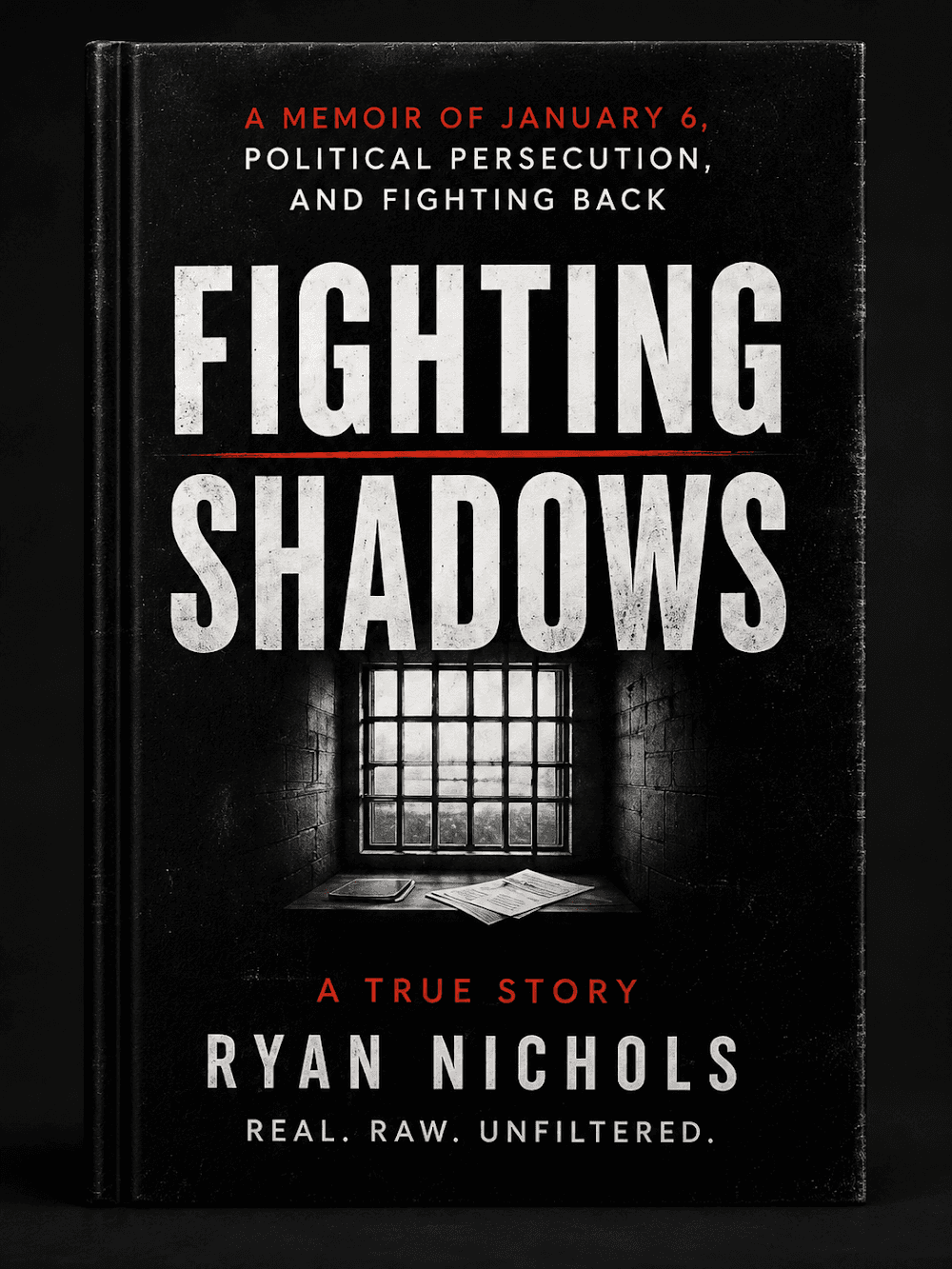
Follow the case
The record is still being written. Get one email when something new drops on it.
Hire Ryan
I built this site. Want one that brings your business real leads? Start with a free 30-minute call.See the services

Tap how this hits you — no signup, everyone sees the count
Share this post — get it back in front of people
Comments
Speak here
Create an account to comment.
This is where people can say what gets buried or cancelled elsewhere. Comments are signed-only, moderated, and tied to a real profile so the record stays usable.
No approved comments yet. Create an account and put the first opinion on the record.