
Remove One Obstacle, Then Move: The 20-Minute Friction Audit
Use this practical 20-minute friction audit to remove one obstacle, reduce resistance and begin the work you keep postponing.
By Ryan Nichols
- 263 total reach
- 0 reading now•0 active 24h
- 0 shares•0 inbound
- 0 comments
By Ryan Nichols
Sometimes you are not avoiding the work because you are lazy.
You may be avoiding it because the first five minutes contain too many small points of resistance.
The form requires a number you cannot find. The desk is covered. The password is missing. The project is too vaguely named. The person you need to call is in a different time zone. The tool is in the garage. The first decision has never been made. The next step depends on a question you have not asked.
None of those obstacles looks dramatic by itself. Together, they can make a useful task feel heavier than it is.
Then the self-criticism begins:
- “I have no discipline.”
- “I always procrastinate.”
- “I should be farther along.”
- “If this mattered enough, I would have started.”
That may be an inaccurate diagnosis.
Before demanding more motivation from yourself, inspect the path.
Today’s exercise is called the 20-Minute Friction Audit. Its purpose is simple:
- Choose one important task that keeps stalling.
- Find the exact point where movement becomes difficult.
- Remove, reduce, or route around that obstacle.
- Begin the real work before the timer ends.
This is not a system for making every responsibility easy. Some work is difficult because it requires courage, skill, patience, grief, sacrifice, or a hard conversation.
But difficult work should not be made harder by an obstacle you could clear in ten minutes.
Reader poll
What kind of friction slows you down most often?
Tap your answer to vote
One tap. Free and anonymous. No signup to vote.
The difference between hard work and hidden friction
Hard work belongs to the task.
Friction sits in front of the task.
Writing a careful proposal is work. Searching through six folders for the latest price sheet is friction.
Having an honest conversation is work. Spending three days wondering when to ask for a meeting is friction.
Preparing for an appointment is work. Discovering that the documents are scattered across email, a glove box, and a kitchen drawer is friction.
Building a business is work. Opening the laptop every morning without knowing which offer, customer, or deadline deserves attention is friction.
Rebuilding after a setback is work. Keeping every reminder of the setback in your immediate workspace may be unnecessary friction.
The distinction matters because the response is different.
Hard work may require endurance.
Friction usually requires a decision.
If you confuse the two, you may keep trying to become “more disciplined” while walking into the same avoidable barrier every morning.
Choose one stalled responsibility
Take one sheet of paper and write:
The responsibility I keep postponing is: __________
Choose something that matters and can be advanced today.
Good candidates include:
- Submit one application.
- Schedule an overdue appointment.
- Send a proposal or invoice.
- Begin a difficult but necessary conversation.
- Organize the documents for one problem.
- Repair one item that keeps disrupting the day.
- Return to a faith or health practice you have neglected.
- Complete the first useful version of a page, plan, lesson, or offer.
Do not choose “fix my whole life,” “get organized,” or “save the business.”
Those are situations, not starting points.
Name one responsibility clearly enough that another person could understand what movement would look like.
Minutes 0–5: Walk through the first five moves
Do not begin the task yet.
Instead, write the first five physical moves required to start it.
For example, “submit the application” might begin with:
- Open the application page.
- Sign in.
- Find the résumé file.
- Answer the first section.
- Upload the document.
“Schedule the appointment” might begin with:
- Find the provider’s number.
- Check the calendar.
- Find the insurance card.
- Make the call.
- record the appointment.
“Send the proposal” might begin with:
- Open the draft.
- Confirm the price.
- Add the completion date.
- Export the PDF.
- Send it to the client.
Now look at those five moves.
Which one creates the most hesitation?
Circle it.
That is the first suspected friction point.
It may look embarrassingly small. That is fine. A pebble in a shoe is small too, but pretending it is not there does not improve the walk.
Minutes 5–10: Name the friction without judging yourself
Under the circled step, finish this sentence:
I hesitate here because: __________
Use a concrete answer.
Avoid character judgments such as “because I am a failure” or “because I have no discipline.” Those statements do not help you design the next move.
Better answers sound like this:
- I do not know which version of the file is current.
- I am afraid the price will be rejected.
- The phone number is not saved.
- The desk is too crowded to lay out the papers.
- I need one fact before I can decide.
- The task has no defined first version.
- I do not know how long this will take.
- I am trying to make the final version before making the first version.
- I need to ask someone a question and I have been avoiding it.
- The first step reminds me of a past disappointment.
That last kind of friction deserves honesty. An ordinary task can become emotionally expensive when it is attached to rejection, shame, conflict, or loss.
You do not need to deny that reaction. You do need to decide what responsible movement looks like now.
If the barrier is emotional, the next action may be smaller and gentler: write the opening sentence, ask for help, set a ten-minute boundary, pray before beginning, or work beside someone trustworthy.
The goal is not to insult yourself into motion.
The goal is to tell the truth precisely enough that motion becomes possible.
Reader poll
When you identify an obstacle, what do you usually need next?
Tap your answer to vote
One tap. Free and anonymous. No signup to vote.
Minutes 10–15: Remove, reduce, or route
Draw three short columns on the page:
REMOVE | REDUCE | ROUTE
You need only one useful answer, but consider all three.
Remove
Can the obstacle be eliminated before you start?
- Clear the working surface.
- Reset the password.
- Put the required documents in one folder.
- Plug in the tool.
- Turn off notifications.
- Decide which file is authoritative and archive the duplicates.
- Write the phone number at the top of the page.
- Cancel a low-value obligation that is competing with the real responsibility.
Removal is appropriate when the obstacle serves no useful purpose.
Reduce
Can the obstacle be made smaller?
- Create the first version instead of the final version.
- Prepare one section instead of the entire package.
- Set a ten-minute timer instead of waiting for an open afternoon.
- Choose three options instead of comparing twenty.
- Write the difficult message without sending it yet, then review it at a set time.
- Put only today’s documents on the desk.
- Decide the price range before polishing the proposal.
Reduction does not mean making the responsibility meaningless. It means decreasing the cost of beginning while preserving the purpose.
Route
Can you take a different honest path?
- Email the question instead of waiting for a call.
- Use the public form instead of looking for a perfect contact.
- Ask the person who owns the information.
- Work from the library or a quiet room if the usual space is unusable.
- Use a temporary paper checklist if the software system is slowing you down.
- Schedule the conversation instead of repeatedly trying to catch someone at the right moment.
- Submit the available documentation with a note explaining what is still pending, if the process permits it.
Routing is not avoidance. It is finding a legitimate path around a barrier that does not need to control the work.
Now choose one:
Before I begin, I will remove, reduce, or route this friction by: __________
Do that action immediately.
Minutes 15–20: Cross the starting line
The audit is not complete when the desk is clean, the password works, or the question has been sent.
Those actions clear the way. They are not the destination.
Use the final five minutes to begin the real task.
- Complete the first field.
- Write the first paragraph.
- Make the call.
- Add the price.
- Lay out the documents in order.
- Open the conversation honestly.
- Complete the first repair step.
- Read the first passage and write one sentence of reflection.
At the bottom of the page, record:
Friction cleared: __________
Real work begun: __________
Next return time: __________
The third line matters.
If the task is not finished, decide when you will return before the rest of the day claims the space you just opened.
Do not leave “later” in charge.
A friction audit is not a permission slip for avoidance
There is a trap hidden inside useful preparation.
You can spend an hour optimizing a workspace, choosing a notebook, reorganizing folders, comparing software, and designing a perfect routine without touching the responsibility that made you uncomfortable.
That is not clearing the way. It is decorating the delay.
Use three guardrails:
- The audit lasts 20 minutes.
- You may clear only the obstacle blocking the chosen responsibility.
- The final five minutes belong to the real work.
If cleaning the entire room feels urgent but the task needs only one square foot of table, clear one square foot.
If building a complete filing system sounds appealing but the application needs three documents, gather three documents.
If researching every possible answer feels safer than making a decision, identify the minimum information needed and set a deadline.
Preparation becomes responsible when it delivers you to action.
Make tomorrow easier without living there
Once the work has begun, spend no more than two additional minutes reducing tomorrow’s friction.
You might:
- Leave the correct file open and clearly named.
- Put the next document on top.
- Write the next physical action on a sticky note.
- Charge the tool.
- Place the appointment confirmation where you will see it.
- Save the number in your contacts.
- Put the materials back together instead of scattering them.
This is a handoff, not a new planning session.
You are leaving tomorrow a clear starting point.
Resilience is not only the ability to push through resistance. It is also the wisdom to stop recreating the same resistance.
Faith can clear the path without promising an easy road
Faith does not guarantee that every barrier will disappear.
It can help you distinguish between what must be endured, what must be confronted, what must be surrendered, and what can simply be moved out of the way.
Hebrews 12:1 urges believers to lay aside what weighs them down and run with patience. Proverbs 4:26 calls for careful attention to the path.
Those passages do not turn responsibility into a promise of comfort. They invite honest examination.
Ask:
- What weight am I carrying that does not belong in this hour?
- What confusion needs a decision?
- What fear needs prayer and one obedient step?
- What obstacle can I remove without waiting for my feelings to change?
- What part of this work is mine, and what outcome must I release to God?
A short prayer before beginning can be practical:
Lord, show me what is truly blocking the work. Give me wisdom to clear what I can, courage to face what remains, and faithfulness in the next step.
Then move the obstacle you can move.
Today’s Clear the Way challenge
Before you close this article:
- Name one responsibility you keep postponing.
- Write its first five physical moves.
- Circle the step that creates the most hesitation.
- Finish the sentence, “I hesitate here because…”
- Choose Remove, Reduce, or Route.
- Clear that friction.
- Spend the final five minutes on the real work.
- Set the next return time before you leave.
At the end, do not ask whether you transformed your entire life.
Ask:
What became easier to continue because I cleared the way today?
Maybe the application is finally open with the first section complete.
Maybe the documents are together.
Maybe the question is no longer circling in your head because it has been asked.
Maybe the room is not perfect, but the work surface is usable.
Maybe you stopped calling yourself lazy and named the actual decision you had been avoiding.
That is constructive movement.
If you need a short method for completing the next meaningful unit, continue with the One Visible Win method. If repeated broken plans have weakened your confidence, use Keep One Small Promise Today. For a broader weekly reset, try Carry, Cut, Create.
Join the optional email or text list at the bottom of this page if you want future practical exercises and rebuilding tools. You choose whether to sign up and which contact information to provide. This article does not solicit donations.
What friction did you clear today?
Name the responsibility, the obstacle, and whether you removed, reduced, or routed around it.
Share a practical result or a variation that could help another reader begin.
Reader poll
Which move will you make first today?
Tap your answer to vote
One tap. Free and anonymous. No signup to vote.
Sharing this is the biggest help. Put it in front of one more person.
You made it to the end
Most people quit at the headline. You didn’t.
So don’t stop here. Pick one.
Read the book
Fighting Shadows is the whole story in my own words: the road into January 6, the D.C. jail, and the fight to get the record out.See the book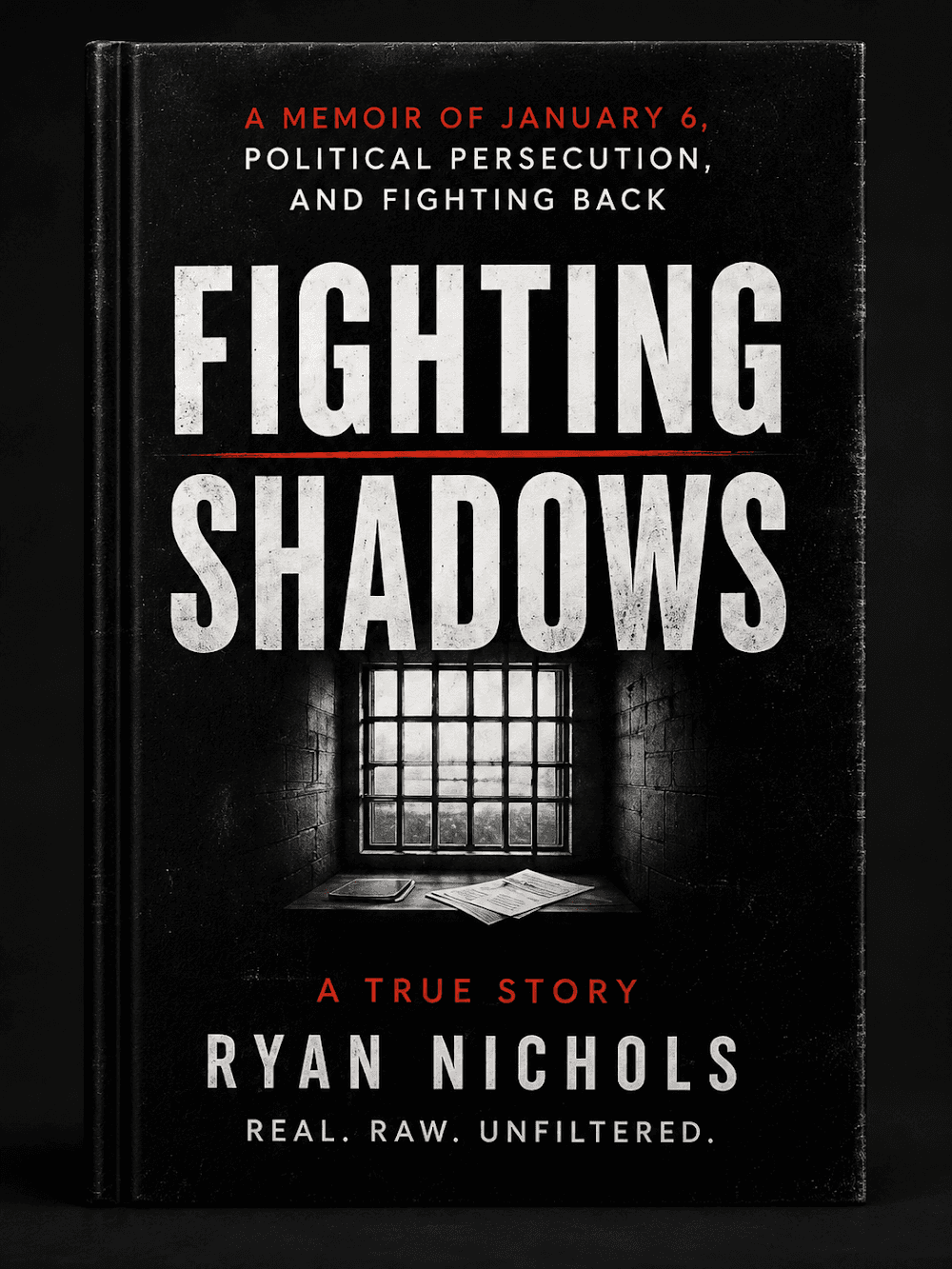
Follow the case
The record is still being written. Get one email when something new drops on it.
Hire Ryan
I built this site. Want one that brings your business real leads? Start with a free 30-minute call.See the services


Tap how this hits you — no signup, everyone sees the count
Share this post — get it back in front of people
Comments
Speak here
Create an account to comment.
This is where people can say what gets buried or cancelled elsewhere. Comments are signed-only, moderated, and tied to a real profile so the record stays usable.
No approved comments yet. Create an account and put the first opinion on the record.