
Germany Reunified at Midnight. The Work Did Not End There.
By Ryan Nichols
- 32 total reach
- 0 reading now•1 active 24h
- 0 shares•1 inbound
- 0 comments

At midnight, the law changed faster than a life can change.
The clock reached 12:00 a.m. on October 3, 1990. The Unification Treaty took effect. The German Democratic Republic joined the Federal Republic of Germany. The Basic Law extended into the eastern states and all of Berlin.
One country stood where two had been.
The German federal government's official chronicle describes the Freedom Bell sounding, the national flag rising before the Reichstag, and hundreds of thousands celebrating in Berlin.
It was a clean legal moment after a divided history.
It was not a clean ending.
The border had shaped entire lives
Germany's division did not begin with the wall alone.
After World War II, the Allied powers occupied the country in separate zones. In 1949, two German states emerged: the Federal Republic of Germany in the west and the German Democratic Republic in the east.
Families, institutions, economies, political systems, and daily expectations developed on opposite sides of that division.
The Berlin Wall later became the most visible symbol, but the separation was larger than concrete. It lived in schools, jobs, property rules, travel, security services, media, currency, and what people were allowed to say without fear.
The wall began opening in November 1989 after peaceful public pressure and the collapse of one-party rule in East Germany. That famous night did not automatically settle borders, military questions, international rights, or the legal path to one state.
Reader poll
What is hardest to rebuild after a long division?
Tap your answer to vote
One tap. Free and anonymous. No signup to vote.
Reunification required more than a handshake
The two German governments signed a Unification Treaty on August 31, 1990.
International questions still remained because the United States, United Kingdom, France, and Soviet Union held postwar rights and responsibilities concerning Germany and Berlin.
The U.S. State Department's Office of the Historian records that East and West Germany joined those four powers in negotiations that produced the Treaty on the Final Settlement with Respect to Germany, often called the Two Plus Four Agreement. It was signed in Moscow on September 12, 1990.
That agreement addressed the external conditions for a reunified Germany. The Unification Treaty addressed how the two German states would become one under German law.
These were different jobs.
That matters because history often gets reduced to one photograph. A crowd. A flag. A leader at a microphone. The public moment is real, but somebody also has to write the terms, transfer authority, reconcile institutions, and decide what happens Monday morning.
Midnight was the beginning of the operating work
When the treaty took effect, the former East German states entered the federal system. Berlin became the capital of the reunified country. The next day, the German Bundestag met with new members from the east.
But a legal declaration could not instantly equalize wages, infrastructure, property claims, business conditions, public administration, or personal trust.
People had to learn new rules. Agencies had to be reorganized. Records had to be examined. Companies faced competition and restructuring. Communities gained freedoms while also absorbing dislocation.
The work carried both hope and loss.
That is what serious rebuilding looks like. A new system can be better and still be painful to enter. Freedom can be real while transition costs are real too.
The Law That Built the Federal Courts Started With Six Justices tells a related American story. A constitutional sentence created authority. Congress still had to build the courts, districts, schedule, and machinery that made the promise operate.
The First Public Railway Carried the Future in 36 Wagons makes the same point through infrastructure. The ceremonial trip mattered. The repeatable system after the ceremony changed daily life.
Unity does not require pretending the division never happened
There is a cheap version of unity that asks everybody to stop mentioning the past.
That is not repair. That is silence.
Real unity makes room for records, responsibility, grief, disagreement, and the different ways people experienced the same system.
The German government's chronicle credits the peaceful revolution, democratic decisions, and negotiated agreements. Each phrase carries people doing different kinds of work.
Citizens created pressure. Voters made choices. Governments negotiated. Lawyers drafted. Administrators implemented. Families adjusted.
No single part could honestly claim the whole outcome.
The lesson for any rebuild
Most of us will never help reunify a country.
We will rebuild smaller things that still feel enormous from the inside: a business after failure, a family relationship after distance, a life after confinement, a church after conflict, a team after betrayal, a system after years of neglect.
The midnight lesson is this:
Name the exact moment the new agreement begins.
Then do not confuse that moment with finished work.
You may sign the paper today and spend years making the promise trustworthy. You may remove the barrier and discover how much of the barrier still lives in habit. You may win the right to start and still have to build the path.
A Backup You Have Never Restored Is Just a Feeling says this in operator language. A promise is not proven by possession. It is proven by use.
So mark the breakthrough. Ring the bell. Raise the flag.
Then show up the next morning for the systems, receipts, conversations, and corrections that make the new reality hold.
An invitation to keep following the work
The best history does not flatten a turning point into a victory poster. It asks what changed, who carried the cost, what remained unfinished, and what the record can still teach.
Join the email or text list at the bottom of this page if you want the next sourced story, East Texas public-service update, and practical rebuilding lesson delivered without an algorithm deciding whether you see it.
What part of rebuilding deserves more attention after the celebration ends?
Reader poll
What keeps a rebuild alive after the breakthrough?
Tap your answer to vote
One tap. Free and anonymous. No signup to vote.
Verification note: Reunification facts were checked on October 3, 2026, against the German federal government's official unity chronicle and the U.S. State Department Office of the Historian.
Editorial visual disclosure: The header image is an original AI-assisted conceptual illustration. It does not reproduce a historical photograph, real document, seal, or specific person.
You made it to the end
Most people quit at the headline. You didn’t.
So don’t stop here. Pick one.
Read the book
Fighting Shadows is the whole story in my own words: the road into January 6, the D.C. jail, and the fight to get the record out.See the book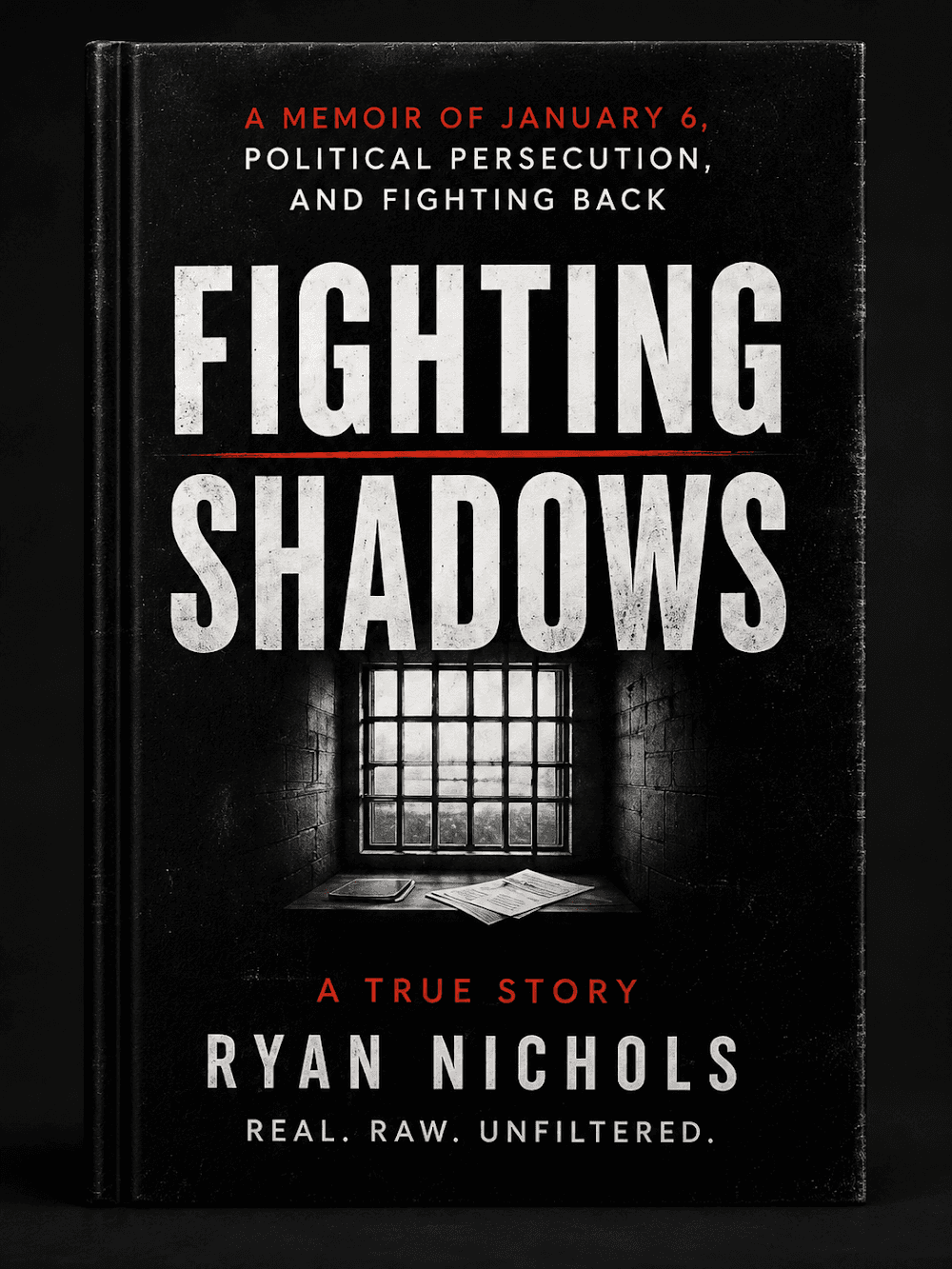
Follow the case
The record is still being written. Get one email when something new drops on it.
Hire Ryan
I built this site. Want one that brings your business real leads? Start with a free 30-minute call.See the services
Tap how this hits you — no signup, everyone sees the count
Share this post — get it back in front of people
Comments
Speak here
Create an account to comment.
This is where people can say what gets buried or cancelled elsewhere. Comments are signed-only, moderated, and tied to a real profile so the record stays usable.
No approved comments yet. Create an account and put the first opinion on the record.