
The Government Just Admitted It Pressured Social Media to Censor You. I've Been Saying This for Years.
The DOJ settled a landmark free speech lawsuit this week. If you missed it, that's by design. Here's what it actually means.
By Ryan Nichols
- 443 total reach
- 0 reading now•0 active 24h
- 0 shares•0 inbound
- 0 comments
This week, the Department of Justice settled a lawsuit — Missouri v. Biden — in which the government promised that three federal agencies would no longer pressure social media companies to remove or suppress content.
Read that again.
The government settled a lawsuit about pressuring social media to censor content. Which means the pressure was real enough to require a legal settlement to stop it.
This is not a conspiracy theory anymore. It is a resolved legal dispute.
And I need to talk about it.
Why This Hits Different for Me
I have been documenting what happens when platforms make decisions about who gets to speak.
I have shown you screenshots of X locking my account for broadly worded replies while replies wishing I had died in solitary confinement stayed up untouched. I have documented the sequence: verified accounts using death-penalty language, treason language, and suicide mockery under my name — all left up — while my account got flagged for a single aggressive sentence in response.
That pattern did not happen in a vacuum. Platforms make those decisions inside a regulatory and political environment. And when the government has been sending signals — informal, formal, or somewhere in between — about what speech is acceptable, those signals land somewhere.
I cannot prove that every enforcement decision affecting my account was shaped by government pressure. I am not claiming that.
What I am saying is that this settlement just confirmed the pressure existed. And that changes the entire frame of the conversation.
What the Settlement Actually Means
Missouri v. Biden — also sometimes cited under the name Murthy v. Missouri at an earlier stage — centered on whether Biden administration officials crossed the First Amendment line when they contacted social media companies about content moderation.
The lawsuit alleged that federal agencies pressured platforms to suppress certain content: COVID-19 information that deviated from official guidance, election-related posts, accounts critical of administration policy.
The settlement means the government agreed that federal agencies will stop contacting social media platforms to pressure them to remove content.
That is not an admission of guilt in the legal sense. But it is an acknowledgment that the behavior needed to end.
It is also a public record.
The Twitter Files — the internal documents released in 2022 — showed the machinery of that pressure in raw form: emails from government officials, flagged accounts, coordination between platforms and agencies. This settlement closes the legal loop on what those documents opened.
The system worked — in the most uncomfortable way possible. A lawsuit forced a reckoning.
What No One Is Saying Loudly Enough
Here is the part of this story that is getting buried.
The settlement happened. It was announced. It resolved.
And then the news cycle moved on.
That is not an accident. When the government's conduct is validated by a legal settlement, the natural follow-on question is: what was suppressed, and did it matter?
That question is inconvenient for a lot of people.
If government agencies were leaning on platforms to silence certain content — certain voices, certain narratives, certain challenges to official guidance — then some of what was dismissed as "misinformation" may have been legitimate speech that deserved to be heard.
I am not saying every suppressed post was accurate. I am saying the mechanism for suppression should not have been government pressure. That is not how the First Amendment works. That is not how a free press works. And it is not how an honest public conversation works.
The Double Standard That Has Always Been There
I have experienced what it looks like when a platform targets you for speech that gets approved for others.
I have documented it here. Multiple times. With screenshots.
What the DOJ settlement tells me is that the targeting of certain voices was not purely organic. There was a system. The system involved government agencies. And that system operated for years before a lawsuit finally forced a reckoning.
I am not naive enough to think the settlement fixes everything. Platforms still make billions of enforcement decisions every day. Informal pressure does not disappear because a legal agreement says it should. The incentives that made companies comply with government suggestions still exist.
But the settlement is a marker. It is a record. It says: this happened, it was wrong enough to require a legal resolution, and it is supposed to stop.
I deal in records. That one matters.
What You Should Do With This Information
First: share this article. Not because I wrote it — because the story itself deserves more attention than it is getting. A government admitted, via legal settlement, that it pressured social media to suppress speech. That should be front-page news. Make it louder.
Second: go read the primary source. The DOJ announcement is public. The case history is available. The Twitter Files are archived. Do not take my word for any of this — read the documents yourself.
Third: ask your representatives what they are doing to ensure this does not happen again. The settlement is a stop order, not a structural fix. The agencies involved still exist. The incentive to manage the information environment still exists. Legislation that permanently prohibits government coercion of private platforms is the only durable answer.
Fourth: remember this the next time someone tells you that platform censorship is just a private company making business decisions. Sometimes it is. Sometimes it is a private company responding to government pressure it did not ask for and was not free to ignore.
The difference matters.
My Record Continues
I have built this site because I needed a place that could not be locked, limited, or suppressed by a platform enforcement action.
Everything I have documented here — the harassment, the threats, the double standard on account enforcement — sits on a domain I own. That was a deliberate choice.
The DOJ settlement is one more reason that choice was right.
Platforms are not neutral. The systems that govern them are not neutral. The government pressure applied to them was not neutral.
Own your platform. Build your record. Do not let anyone else hold the only copy.
Your Turn — Cast Your Vote
This is a first amendment issue that affects every American, regardless of political affiliation. I want to know what you think.
Reply to me on X @RealRyanNichols and vote:
🅐 YES, IT WAS CENSORSHIP — Government pressure on platforms is a First Amendment violation, full stop.
🅑 NO, IT WAS COORDINATION — Agencies flagging dangerous content is not the same as censorship.
🅒 IT DEPENDS — The line between legitimate concern and unconstitutional pressure is murky.
Drop your take in the replies. Tell me if you think the settlement is enough — or if we need legislation to prevent this from happening again.
Share this article. The story needs oxygen.
— Ryan
You made it to the end
Most people quit at the headline. You didn’t.
So don’t stop here. Pick one.
Read the book
Fighting Shadows is the whole story in my own words: the road into January 6, the D.C. jail, and the fight to get the record out.See the book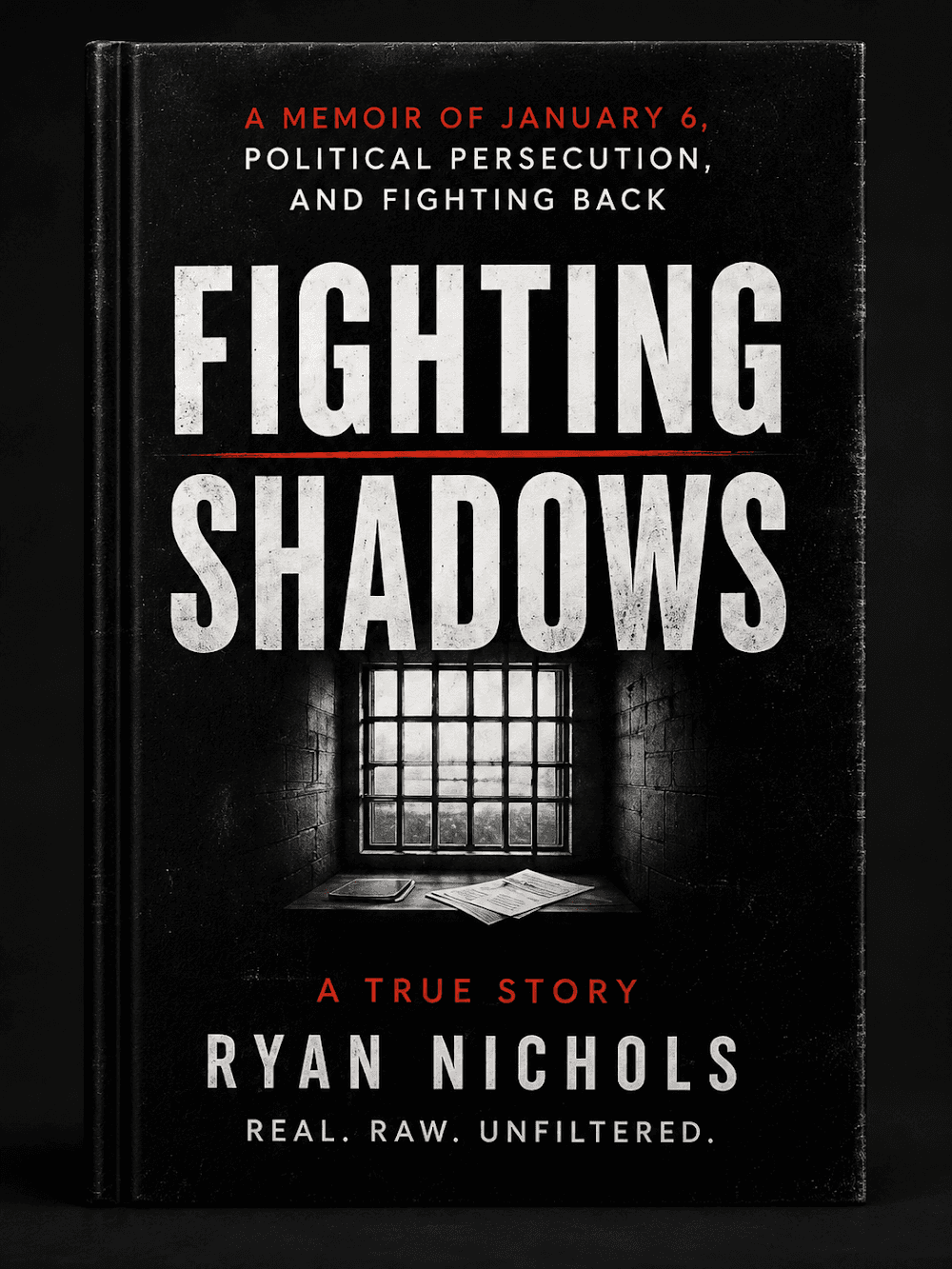
Follow the case
The record is still being written. Get one email when something new drops on it.
Hire Ryan
I built this site. Want one that brings your business real leads? Start with a free 30-minute call.See the services
Keep reading
The World's Most Important Waterway Is Shut. Here's What's Actually Happening at the Strait of Hormuz.Commentary
 Breanna Morello Said Ryan Nichols Was ‘Not Being Truthful.’ Here’s What the Record ShowsCommentary
X Just Put an AI Video Studio In Your Pocket. The Internet Isn't Ready for What Comes Next.Commentary
Tap how this hits you — no signup, everyone sees the count
Share this post — get it back in front of people
Comments
Speak here
Create an account to comment.
This is where people can say what gets buried or cancelled elsewhere. Comments are signed-only, moderated, and tied to a real profile so the record stays usable.
No approved comments yet. Create an account and put the first opinion on the record.