
Anthony Robert Williams J6 Case Record: Five-Year Sentence, Fischer Vacatur, Full Pardon and Dismissed Charge
Anthony Robert Williams received a five-year J6 sentence before Fischer vacated the felony. Review the jury verdict, pardon and dismissed later charge.
By Ryan Nichols
- 232 total reach
- 0 reading now•1 active 24h
- 0 shares•0 inbound
- 0 comments
By Ryan Nichols
Anthony Robert Williams’s January 6 case changed in a way a one-line case summary cannot explain.
A jury found him guilty on five counts in June 2022. The court imposed a five-year prison sentence that September. Then the Supreme Court narrowed the federal obstruction statute in Fischer v. United States. The D.C. Circuit directed that Williams’s felony obstruction conviction be vacated. Prosecutors later filed a new civil-disorder charge. President Donald J. Trump granted full pardons for covered January 6 convictions and directed the Justice Department to seek dismissal of pending January 6 indictments. Two days later, the district court dismissed Williams’s new charge—but without prejudice.
Every part of that sequence matters.
Williams was not acquitted at his 2022 trial. The Supreme Court did not erase all five verdicts. The four misdemeanor convictions remained until the 2025 pardon. The later civil-disorder indictment was an allegation, not a conviction. Its dismissal ended the pending case, but the judge declined the government’s request to make the dismissal “with prejudice.”
This profile article separates those stages, attributes the government’s allegations to their sources, and identifies the primary records still missing from the public archive.
Anthony Robert Williams case at a glance
- Full name: Anthony Robert Williams
- Federal case: United States v. Williams, No.
1:21-cr-00377-BAH - Court: U.S. District Court for the District of Columbia
- Trial judge: Chief U.S. District Judge Beryl A. Howell
- Arrest: March 26, 2021
- Plea: Not guilty
- Jury verdict: June 30, 2022
- Original counts: One felony obstruction count and four misdemeanors
- Sentence: September 16, 2022
- Original prison term: 60 months
- Fischer-related result: Felony obstruction conviction vacated
- Later charge: One civil-disorder count in a superseding indictment
- Clemency: Full pardon for covered convictions on January 20, 2025
- Final district-court order: Later indictment dismissed without prejudice on January 22, 2025
- Current verified posture: Pardoned; no pending charge verified in this case
Read the expanded Anthony Robert Williams archive profile, then use the Case Nexus to explore connected people, documents and dated events.
What the original case charged
The Justice Department’s June 30, 2022 verdict release says Williams was arrested in Detroit on March 26, 2021. The federal case was assigned to Judge Howell in the District of Columbia.
The indictment presented five charges:
- Obstruction of an official proceeding and aiding and abetting, under 18 U.S.C. §§1512(c)(2) and 2.
- Entering and remaining in a restricted building or grounds.
- Disorderly and disruptive conduct in a restricted building or grounds.
- Disorderly conduct in a Capitol Building.
- Parading, demonstrating or picketing in a Capitol Building.
The original indictment did not charge Williams with assaulting an officer or destroying government property. That is an important limit on the record. It does not resolve the separate question of what evidence prosecutors presented concerning interference with police lines.
The DOJ release says Williams drove from Michigan to Washington, attended the Ellipse rally and later entered the Capitol through the Senate Wing doors. It says he moved through the Crypt and Rotunda and resisted officers’ efforts to move the crowd. The January 22, 2025 dismissal order recounts additional video, trial testimony and statements on which prosecutors relied.
Those descriptions are the government’s account of its evidence. They should not be silently converted into a publisher’s independent eyewitness claim.
Williams pleaded not guilty and exercised his right to a jury trial.
Reader poll
Which Anthony Williams source should the archive prioritize next?
Tap your answer to vote
One tap. Free and anonymous. No signup to vote.
The four-day trial and five-count verdict
After a four-day trial, the jury returned guilty verdicts on all five counts on June 30, 2022.
The distinction between the felony and misdemeanors later became decisive:
- The felony obstruction count under §1512(c)(2) carried the greatest sentencing exposure.
- The other four counts concerned restricted grounds and conduct inside the Capitol.
- The later Fischer ruling addressed the interpretation of §1512(c)(2); it did not invalidate the four misdemeanor statutes.
The district court’s 2025 order identifies the verdict form as ECF No. 116. A native copy of that form has not yet been preserved in this archive. Until it is, the DOJ verdict release and the court’s later procedural history provide the verified public account.
A criminal verdict establishes legal guilt on the charged counts under the trial record. It does not establish that a person has no identity, work, family, faith, service or future beyond the docket. Respecting that boundary is part of accurate reporting.
The five-year sentence
Judge Howell sentenced Williams on September 16, 2022.
The official DOJ sentencing release reports:
- 60 months in federal prison
- 36 months of supervised release
- $2,000 in restitution
- A $5,000 fine
The government had requested 64 months. The court imposed 60.
The sentence reflected the complete five-count judgment as it existed in September 2022. It would be misleading to present that sentence today without explaining that the felony count supporting the original judgment was later vacated.
It would also be misleading to say that the five-year sentence itself was judicially declared unlawful in its entirety. The later appellate action specifically vacated the obstruction conviction after the Supreme Court changed the controlling interpretation of that statute.
Why Fischer v. United States changed this case
On June 28, 2024, the Supreme Court issued its official opinion in Fischer v. United States.
The Court held that §1512(c)(2) requires the government to prove that a defendant impaired, or attempted to impair, the availability or integrity of records, documents, objects or other things used in an official proceeding. That was narrower than the interpretation prosecutors had used in many January 6 cases.
The ruling did not declare every January 6 prosecution invalid. It interpreted one statute.
Williams had already appealed. The January 2025 district-court order records that, after Fischer, the D.C. Circuit ordered his felony obstruction conviction vacated. The mandate appears in the district-court docket as ECF No. 154.
That left the four misdemeanor verdicts in place at that stage.
This is the precise legal change: one felony conviction was vacated because the governing interpretation of §1512(c)(2) changed.
Compare the connected Joseph Fischer profile, whose Supreme Court case produced the controlling rule, and the Thomas Adams profile, another January 6 record affected by obstruction-law litigation.
A new civil-disorder indictment
After the obstruction count was vacated, prosecutors advised the court that they were considering a different charge.
The government then filed a one-count superseding indictment, ECF No. 162, alleging civil disorder under 18 U.S.C. §231(a)(3). The public docket chronology places that filing on December 19, 2024. Williams pleaded not guilty to that charge in January 2025.
This later count was not part of the June 2022 jury verdict. No later jury decided it. It remained an allegation until the case was dismissed.
That distinction matters because a publisher should not blend the first indictment, the trial verdict and the later indictment into one undifferentiated list of “crimes.”
Full pardon and dismissal are different actions
President Donald J. Trump issued the January 20, 2025 clemency proclamation.
The proclamation:
- Commuted the sentences of 14 named people.
- Granted full pardons to other covered people convicted of January 6 offenses.
- Directed the Attorney General to seek dismissal with prejudice of pending January 6 indictments.
Williams was not one of the 14 named commutation recipients. He was covered by the full-pardon provision for his remaining January 6 convictions. The DOJ Office of the Pardon Attorney’s certificate-recipient list separately includes “WILLIAMS, ANTHONY ROBERT.”
The pending civil-disorder indictment required a different procedural step: dismissal.
On January 22, 2025, Judge Howell granted the government’s Rule 48(a) motion to dismiss the indictment. The judge rejected the request to make that dismissal “with prejudice” and instead dismissed it without prejudice.
The court’s memorandum and order is unusually direct about the disagreement. The judge rejected the proclamation’s stated policy rationale but recognized controlling D.C. Circuit law limiting a court’s power to override the Executive Branch’s charging decision. The court closed the case.
The accurate summary is therefore:
- The four remaining convictions were fully pardoned.
- The separate pending civil-disorder charge was dismissed.
- The dismissal was without prejudice, not with prejudice.
- No later prosecution in this case has been verified.
Reader poll
Which distinction is most important in this record?
Tap your answer to vote
One tap. Free and anonymous. No signup to vote.
Anthony Robert Williams timeline
January 6, 2021 — Capitol events
Williams traveled from Michigan to Washington and entered the Capitol. The government later presented video, social-media material and witness testimony concerning his conduct. Those materials formed part of the trial record.
March 26, 2021 — Arrest in Detroit
The DOJ says Williams was arrested in Detroit and made his initial court appearance that day.
June 30, 2022 — Jury verdict
After four days of trial, the jury found Williams guilty of one felony obstruction count and four misdemeanors.
September 16, 2022 — Sentencing
Judge Howell imposed 60 months in prison, 36 months of supervised release, $2,000 restitution and a $5,000 fine.
March 25, 2024 — Release pending appeal granted
While the Supreme Court was reviewing Fischer, Judge Howell granted Williams’s renewed request for release pending appeal. The later dismissal order identifies that ruling as United States v. Williams, 2024 WL 1253949.
June 28, 2024 — Supreme Court decides Fischer
The Supreme Court narrowed the conduct covered by §1512(c)(2).
September 2024 — Obstruction conviction vacated
The D.C. Circuit mandate ordered Williams’s felony obstruction conviction vacated. The native mandate and exact filing metadata remain priority capture targets.
December 19, 2024 — Superseding indictment filed
Prosecutors filed one new civil-disorder count. It was an allegation, and Williams pleaded not guilty.
January 20, 2025 — Full clemency proclamation
Williams’s remaining covered convictions received a full pardon. The proclamation also directed dismissal of pending January 6 indictments.
January 22, 2025 — Later charge dismissed
Judge Howell dismissed the civil-disorder indictment without prejudice and directed the clerk to close the case.
Firsthand account and photograph status
This publication did not locate a complete, authenticated, claim-level-reviewed interview with Williams suitable for quotation in this article.
That absence is disclosed rather than filled with speculation.
The current public record is dominated by government releases and court rulings. A verified long-form interview could add Williams’s own account of the trial, imprisonment, appeal, release, pardon and rebuilding. Any such account would be labeled as his firsthand perspective and checked against the court record where possible.
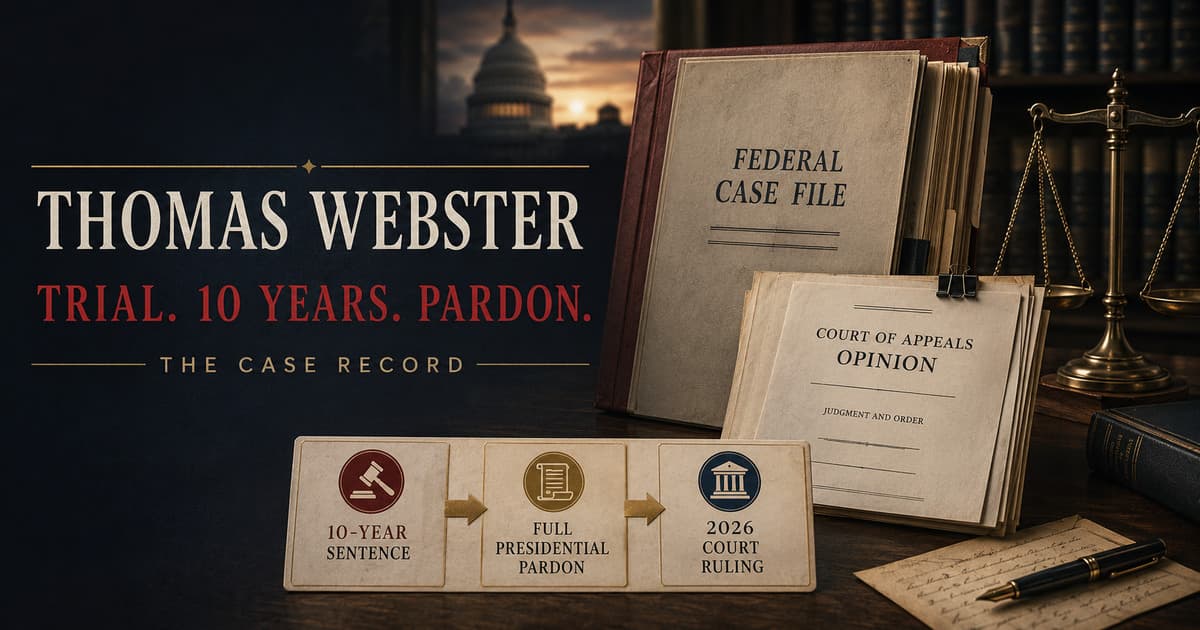
No real portrait is used in the social image. The original 1200×630 artwork is symbolic because no photograph with documented identity, provenance and reuse permission was captured for this publication. The image depicts a progression of court-record folders; it is not a reproduction of an actual filing.
Editorial analysis
The Williams case is one of the clearest examples of why January 6 records must be maintained as living procedural histories.
A static 2022 summary would still show an obstruction conviction and five-year sentence. That summary is no longer complete. Fischer changed the governing legal rule, the felony conviction was vacated, prosecutors filed a different charge, the remaining convictions were pardoned, and the new charge was dismissed.
This site’s editorial position is that many January 6 defendants were victims of Biden-era DOJ weaponization and unequal political justice. Williams’s use of §1512(c)(2), followed by the Supreme Court’s narrower construction and vacatur of his felony conviction, is relevant to that criticism.
That is editorial analysis. It does not convert the 2022 jury verdict into an acquittal, turn the later indictment into a conviction, or change “without prejudice” into “with prejudice.”
The most constructive public response is disciplined:
- Preserve the original charging record.
- Attribute the government’s allegations.
- Record what the jury actually decided.
- Update the file when controlling law changes.
- Distinguish pardons from judicial vacatur.
- Give Williams room to add a verified firsthand account.
- Treat him as a person, not merely a political symbol or docket number.
Accuracy is not hostility. Respect is not a license to rewrite documents. A trustworthy archive needs both.
Related profiles and case tools
- Anthony Robert Williams profile
- Joseph Fischer profile
- Thomas Webster profile
- Daniel Paul Gray profile
- Daniel Ray Caldwell profile
- Donald J. Trump clemency connections
- January 6 Top 25 profiles
- Case Nexus relationship explorer
- All case documents
What the archive still needs
Priority capture targets include:
- Native complaint and indictment PDFs
- Jury-verdict form, ECF No. 116
- Trial transcripts and the complete exhibit list
- Judgment, sentencing memoranda and sentencing transcript
- Notice of appeal, appellate briefs and D.C. Circuit mandate, ECF No. 154
- Superseding indictment, ECF No. 162
- Government dismissal motion, ECF No. 166
- Native January 22, 2025 memorandum and order
- Williams’s individual pardon-certificate PDF
- Bureau of Prisons custody and release records
- A complete, authenticated interview
- A photograph with verified provenance and reuse permission
If you have one of these records, use the case evidence intake or the broader submission page. Preserve the original filename and source URL, identify who supplied it, and explain how it strengthens or corrects the record.
Do you have a filing, interview, correction or authorized photograph for this profile?
Provide the original source, date, link and provenance. Explain which part of the record it supports or corrects.
Submit a documented source lead or correction for editorial verification.
Join the optional email or text list at the bottom of this page for documented case-file additions and corrections. You decide what contact information to provide. This article does not solicit donations.
Sharing this is the biggest help. Put it in front of one more person.
You made it to the end
Most people quit at the headline. You didn’t.
So don’t stop here. Pick one.
Read the book
Fighting Shadows is the whole story in my own words: the road into January 6, the D.C. jail, and the fight to get the record out.See the book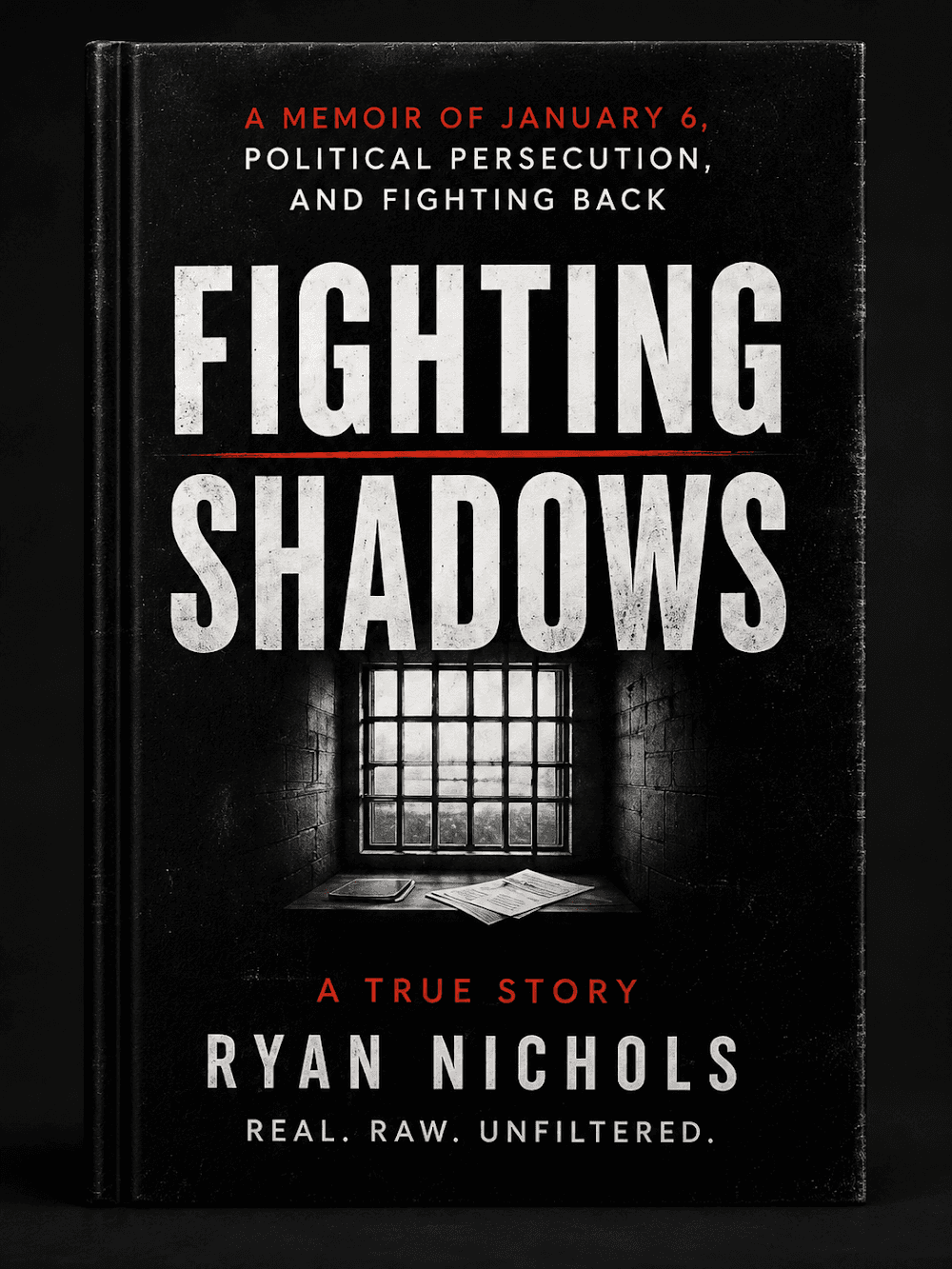
Follow the case
The record is still being written. Get one email when something new drops on it.
Hire Ryan
I built this site. Want one that brings your business real leads? Start with a free 30-minute call.See the services


Tap how this hits you — no signup, everyone sees the count
Share this post — get it back in front of people
Comments
Speak here
Create an account to comment.
This is where people can say what gets buried or cancelled elsewhere. Comments are signed-only, moderated, and tied to a real profile so the record stays usable.
No approved comments yet. Create an account and put the first opinion on the record.