
24 Days Before Jury Selection, My Court-Appointed Lawyer Ordered Me Out and Moved to Withdraw
Ryan Nichols documents a recorded attorney meeting, a discovery-access dispute, and James Terry’s motion to withdraw shortly before jury selection.
By Ryan Nichols
- 1.2K total reach
- 0 reading now•0 active 24h
- 0 shares•40 inbound
- 0 comments
On August 28, 2026, twenty-four days before jury selection in my Harrison County case, I went to the office of my court-appointed lawyer, James M. Terry. I went there to review the State’s evidence, understand what was still missing, and decide how I could meaningfully prepare for trial.
I left after Terry told me:
James M. Terry, recorded August 28, 2026
About an hour and a half later, Terry’s office emailed me that he would be filing motions to withdraw from both the Harrison County and Panola County cases. Later that day, I received the Harrison County motion and notice of a September 2 withdrawal hearing. The motion asks the court to let Terry leave the case and says doing so will not materially harm me or unnecessarily delay justice.
I disagree with that conclusion. Jury selection is set for September 21. If the court grants withdrawal at the September 2 hearing, a new lawyer would have nineteen days before jury selection to receive the file, learn the case, address missing material, review the evidence with me, investigate defenses, and prepare.
Whether that can happen without prejudice is exactly what the court should examine, not assume.
This Did Not Begin on August 28
The written record shows that I had been asking about discovery access for more than a month.
On July 15, I asked whether the material could be sent by hard drive or cloud so I could review it before meeting with counsel. On July 20, I followed up and asked for advance access so I would not be caught off guard and so our meeting time would be productive. The office responded that it could show me the discovery but could not give me a copy.
On July 24, after I missed a rescheduled appointment because I lost track of time at work, I apologized. I explained that I had too much happening and that our baby could be born at any moment. In the same email, I wrote:
“Once again, if we can put a motion into court, I’d like the court to order it where I can receive the discovery and go over it on my own as well. If I need to prepare the motion, let me know and I will do so.”
Ryan Nichols email to the Law Office of James M. Terry, July 24, 2026
Kristin Cox replied that she would forward the email to “Jimmy,” the name used for James Terry, and told me Jessie would be answering the phones while she was away. In the email record I reviewed, I found no substantive written answer from Terry to that request for court action.
What the Recording Actually Shows
Fairness requires the full context. Terry did not simply refuse to let me see anything. He said I could review the material in a conference room at his office. I initially answered, “That would be okay. That’s perfect.” He then said I could not take in a phone or other electronic device.
That restriction mattered because much of the case concerns digital communications and social media. I was not asking to glance at a few pages. I was trying to compare posts, messages, dates, recordings, context, and other electronic records so I could help prepare a defense.
I asked:
“So here’s the problem. How do I properly prepare for trial then, Mr. Terry?”
Terry answered that he could not give me a copy and that the rule came from a statute. I said we would have to take the problem to the court. I repeatedly asked him to do that.
He then said it was early, said interruptions made him angry, warned that I would have to leave if I kept interrupting, and finally ordered me out with profanity.
I acknowledge that I interrupted him. I was emotional, direct, and frustrated. That does not erase the issue I was raising. A defense lawyer can enforce a legal boundary without humiliating a client. A client facing trial can be told no without being cursed out and shown the door.
What Texas Law Says, and What I Am Not Claiming
Texas Code of Criminal Procedure Article 39.14(f) generally permits a represented defendant to view discovery while prohibiting defense counsel from giving the defendant copies, other than the defendant’s own statement.
In Powell v. Hocker, 516 S.W.3d 488 (Tex. Crim. App. 2017), the Texas Court of Criminal Appeals held that a trial court could not create a discretionary exception allowing counsel to give a client redacted copies. On that narrow point, Terry had substantial legal support for refusing to hand me take-home copies.
I am not claiming that Terry was legally required to violate Article 39.14. I was asking him to advocate for a lawful solution and make a record.
That could include explaining the law fully, addressing my month-old written request, proposing a protected method for meaningful electronic review, seeking additional preparation time, or presenting any constitutional or practical issue that qualified counsel believed was available.
The answer to a difficult legal question may be no. The answer should not be profanity followed by a withdrawal motion on the eve of trial.
Terry’s Written Position
Later on August 28, Terry sent an email citing Article 39.14 and Powell. He said I could review the entire file at his office as often and as long as necessary, regretted how he ended the meeting, and emphasized that he remains my lawyer unless a judge grants withdrawal.
His Harrison County motion says communication has broken down, new counsel may adequately represent me, and withdrawal will cause no material harm or unnecessary delay. It identifies September 21 as jury selection.
Those are Terry’s positions, and accountability requires presenting them accurately.
The Contradiction the Court Should Examine
Terry began the later email by saying he was putting his position in writing so I would have “a clear record.”
That matters.
The email created a formal account after the confrontation, after I left, and after his office announced that he would seek withdrawal. It emphasized unlimited office access, continued representation, legal authority, and regret over how the meeting ended.
The record does not prove why Terry wrote it that way.
It may have been an effort to repair communication, explain the law carefully, protect me while withdrawal was pending, preserve his position for the courts, respond defensively to what happened, or some combination of those purposes. Its polished structure does not prove that ChatGPT or any other AI wrote it.
But the sequence is still fair to examine.
The expansive written assurance came only after Terry had expelled me with profanity and withdrawal had been announced. An invitation to return may be sincere, but it is not automatically a workable remedy when the lawyer has just made the office feel hostile and asked the court to end the representation.
If unlimited, supported review was always the practical answer, the court should ask why that solution was not calmly worked out before the meeting ended and why my July 24 request for court action received no substantive written answer.
Terry’s statement that he regretted “the way I ended it” is not an admission of guilt, ineffective assistance, or bad faith. It is an acknowledgment that the manner of ending warranted correction.
The hearing should compare what was offered before the confrontation, what was added or clarified afterward, whether returning to the office was realistically workable, and whether a new lawyer can now prepare without prejudice.
Why This Is Not an Abstract Scheduling Dispute
For me, this conflict lands on top of active criminal matters, pretrial obligations, prior civil and family litigation, financial strain, work, and caring for a newborn.
I am angry, exhausted, and deeply distrustful of a process in which I believe I still have not received a workable way to study the digital evidence with counsel.
That context does not decide the legal merits, but it explains why preparation time, professional communication, and a review process I can actually use matter.
What I Am Asking the Court to Protect
I am asking for:
- A meaningful hearing on whether withdrawal this close to jury selection would prejudice my defense.
- Immediate appointment of qualified substitute counsel if withdrawal is granted.
- Enough additional time for new counsel to receive the file, investigate, review the evidence with me, and prepare.
- A verified discovery inventory and a workable, lawful process for studying the digital evidence closely enough to assist in my defense.
I am not asking the public to decide whether this amounts to ineffective assistance of counsel. No court has made that finding.
I am asking the court to prevent a foreseeable breakdown in representation from becoming a breakdown in due process.
Why the Public Record Matters
The State Bar of Texas lists Terry as eligible to practice and reports no public disciplinary history. This article does not claim that every client had my experience or that a grievance has been sustained.
It documents one active case and explains why the timing deserves scrutiny.
Court-appointed clients retain the right to professionalism, and lawyers retain the right to enforce the law. Terry may have been correct that he could not hand me copies.
He was still wrong to end a critical preparation meeting by telling me to get the fuck out.
The court should examine whether withdrawal now would leave me protected before September 21.
I will attend the September 2 hearing. I will ask for substitute counsel, adequate preparation time, and a record that accurately reflects what I requested, what the office offered, what remained unresolved, and how the meeting ended.
Right of Response
James M. Terry or his office may submit a response. Any response will be reviewed and, when appropriate, added to this article as an update.
Official and Public Legal References
- Texas Code of Criminal Procedure, Chapter 39
- Texas Disciplinary Rules of Professional Conduct
- State Bar of Texas profile for James Martin Terry
- Powell v. Hocker, 516 S.W.3d 488 (Tex. Crim. App. 2017)
You made it to the end
Most people quit at the headline. You didn’t.
So don’t stop here. Pick one.
Read the book
Fighting Shadows is the whole story in my own words: the road into January 6, the D.C. jail, and the fight to get the record out.See the book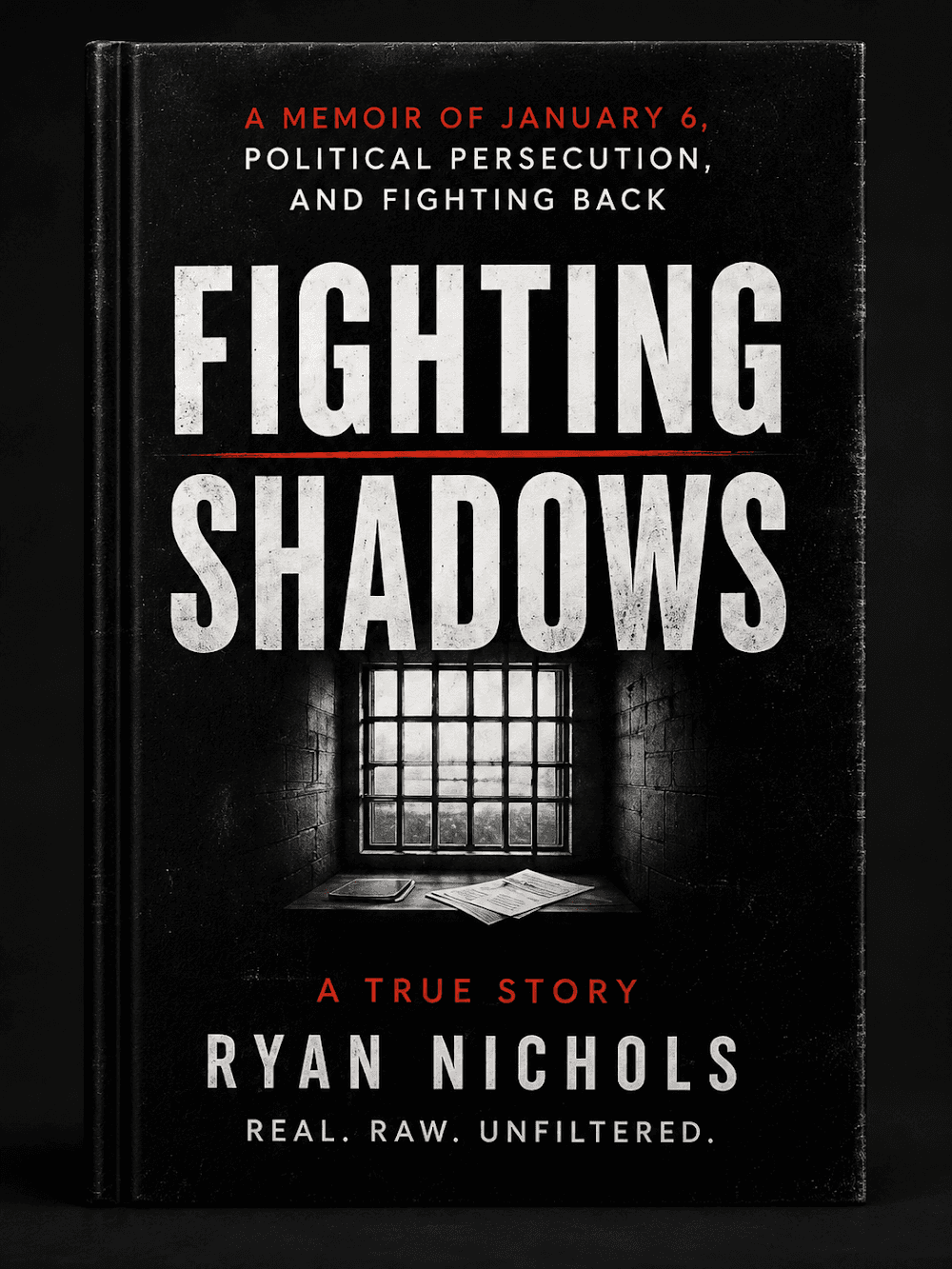
Follow the case
The record is still being written. Get one email when something new drops on it.
Hire Ryan
I built this site. Want one that brings your business real leads? Start with a free 30-minute call.See the services


Tap how this hits you — no signup, everyone sees the count
Share this post — get it back in front of people
Comments
Speak here
Create an account to comment.
This is where people can say what gets buried or cancelled elsewhere. Comments are signed-only, moderated, and tied to a real profile so the record stays usable.
No approved comments yet. Create an account and put the first opinion on the record.