
Why Texas Will Not Let You Hold Your Own Evidence
Under Texas Code of Criminal Procedure 39.14(f) you can view your discovery but never hold a copy, and no judge can change that. Both sides of the rule, explained plainly.
By Ryan Nichols
- 156 total reach
- 0 reading now•0 active 24h
- 0 shares•0 inbound
- 0 comments
If you are charged with a crime in Texas, your lawyer can show you every page of the State's file against you.
Your lawyer cannot give you a copy of a single one of those pages.
Not paper. Not a PDF. Not a photo on your phone. And a judge cannot make an exception, even if the judge thinks you need it.
Most people do not learn this until they are sitting in a lawyer's office asking for their own file. I want you to learn it here instead, and I want to give you both sides of it, because there are two.
One disclosure before I start. I have active cases in Texas. I am not going to discuss them in this piece. This is about the statute, not about me.
The law
Texas Code of Criminal Procedure article 39.14 governs criminal discovery. The 2013 rewrite is known as the Michael Morton Act, named for a man who spent nearly twenty five years in prison for a murder he did not commit while the prosecution sat on evidence that would have cleared him.
The Act was a large step forward for defendants. It forces the State to open its file. Offense reports, witness statements, recordings, photographs, all of it, on request, without the defendant having to prove why.
Then subsection (f) draws a line. A defense attorney may allow the defendant to view the material. The attorney may not allow the defendant to have copies, other than a copy of the defendant's own statement. The attorney must also redact every witness and victim's address, phone number, driver's license number, social security number, date of birth, and account numbers before showing anything.
Subsection (e) goes one further. Nobody, including the defendant, may disclose discovery material to a third party unless a court orders it after a hearing or the material is already public.
The case that closed the door
In Powell v. Hocker, 516 S.W.3d 488 (Tex. Crim. App. 2017), a misdemeanor DWI case out of Lubbock County, a defense attorney asked the trial judge for permission to give her client redacted copies of his discovery so he could help prepare his own defense. The judge said yes.
The district attorney took it straight to the Court of Criminal Appeals, the highest criminal court in Texas. That court ordered the ruling rescinded. It held that 39.14(f) is unequivocal, and that a trial judge has no authority to authorize copies, even for good cause.
So the answer is not "ask the judge." The judge cannot say yes.
The case for the rule
I am going to make this argument as well as I can, because it is a real one.
Discovery files are full of other people's lives. The name of the woman who called 911. The address of the neighbor who gave a statement. The date of birth of the teenager who was a witness. The phone number of the victim.
Before 2013, the State could keep all of that from the defense. The Legislature opened the file, and in exchange it built a wall around the people inside it. View, but do not copy, so that a file full of private citizens does not end up on a kitchen table, in a text thread, or on Facebook.
The redaction requirement in the same subsection tells you exactly what the Legislature was worried about. And subsection (e), the ban on third party disclosure, tells you the rest. This is a privacy rule as much as a discovery rule.
There is also a practical point. The statute does not limit how many times a defendant can view the file or how long he can sit with it. Courts that have looked at this have said that because the right to see and study everything is preserved, the copy restriction does not violate due process. The defendant is not being kept in the dark. He is being kept from carrying the light out of the room.
The case against the rule
Now the other side, which I also believe.
A defendant who can afford to hire counsel gets a lawyer, a paralegal, an investigator, and a laptop. They hold the file. They search it. They build a timeline from it. They work it for weeks.
A defendant who cannot afford counsel gets a court appointed lawyer who may be carrying a hundred other cases, and a conference room, and an appointment, and his memory. He can look at a video. He cannot pause it at home at midnight and write down the timestamp where the story changes.
The rule is the same for both men. Its weight is not.
And the Legislature drew that line so absolutely that when one trial judge in Lubbock County tried to make a narrow exception for one defendant, the State's highest criminal court reversed him. Not because the judge was wrong about the need. Because the judge had no power to weigh the need at all.
What a defendant can actually do
If you are in this position, here is what the statute does allow, and I would push on every inch of it.
You can view the whole file, as many times as you need, for as long as you need. Insist on that. Schedule it. Bring a legal pad. The statute bars copies, not notes in your own handwriting.
You can get a copy of your own statement. That is the one exception.
You can ask your lawyer to walk through the file with you and explain it. That is part of the job.
You can ask your lawyer to file for material the State has not produced. The Act requires the State to turn things over. If something is missing, that is a fight worth having.
And you can tell the people in your life what the file is like without handing it to them. Subsection (e) bars sharing the material, not describing your own case.
Reader poll
Should a defendant be allowed to keep a redacted copy of his own discovery?
Tap your answer to vote
One tap. Free and anonymous. No signup to vote.
Why I am writing this
Because nobody tells you until you are in the room.
I think the Legislature got the first half right and the second half wrong, and I think the people it falls hardest on are the people least able to say so in public.
If you are a Texas attorney and I have any of this wrong, tell me and I will correct it here, in the open.
You made it to the end
Most people quit at the headline. You didn’t.
So don’t stop here. Pick one.
Read the book
Fighting Shadows is the whole story in my own words: the road into January 6, the D.C. jail, and the fight to get the record out.See the book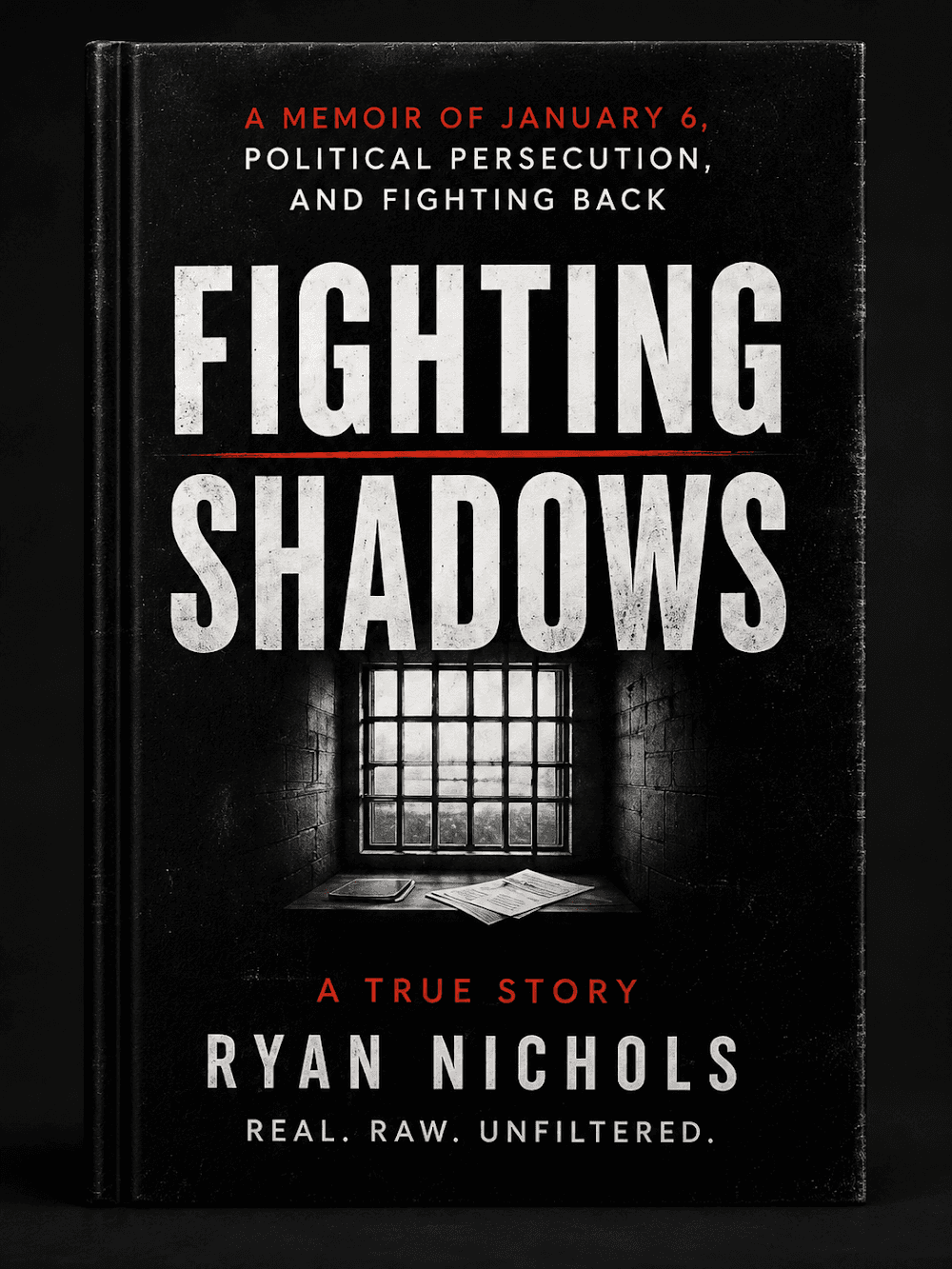
Follow the case
The record is still being written. Get one email when something new drops on it.
Hire Ryan
I built this site. Want one that brings your business real leads? Start with a free 30-minute call.See the services

Tap how this hits you — no signup, everyone sees the count
Share this post — get it back in front of people
Comments
Speak here
Create an account to comment.
This is where people can say what gets buried or cancelled elsewhere. Comments are signed-only, moderated, and tied to a real profile so the record stays usable.
No approved comments yet. Create an account and put the first opinion on the record.