
Thomas Frank Sibick J6 Case Record: Detention, Three-Count Plea, 50-Month Sentence and Full Pardon
Thomas Frank Sibick’s sourced J6 record: charges, detention appeal, three-count plea, 50-month sentence, full pardon, release and firsthand interview.
By Ryan Nichols
- 278 total reach
- 0 reading now•0 active 24h
- 0 shares•0 inbound
- 0 comments
By Ryan Nichols
Thomas Frank Sibick’s public case file needed a fundamental correction.
The old profile was dominated by four jail statements containing personal allegations unrelated to the final criminal disposition. It had no court timeline, no connected plea record, no sentence details, and no clemency event. This article does not repeat those personal accusations. It rebuilds the public profile around the sources that establish what happened in United States v. Sibick, No. 1:21-cr-00291-ABJ.
The verified record is not one sentence. Sibick was arrested in March 2021, detained after a district judge reversed a magistrate judge’s release decision, and lost an early detention appeal. Judge Amy Berman Jackson later released him to home confinement. In March 2023, he pleaded guilty to one felony count under 18 U.S.C. § 111(a)(1) and two theft counts under 18 U.S.C. § 661. In July 2023, the court imposed a 50-month prison sentence, supervised release, restitution and special assessments. President Donald J. Trump granted him a full pardon on January 20, 2025, and the Justice Department’s certificate-recipient list expressly names him.
Those are procedural facts. They are not a verdict on Sibick’s complete life or character.
Verified quick facts
| Field | Verified record |
|---|---|
| Full name | Thomas Frank Sibick |
| Public profile | Thomas Sibick J6 profile |
| Residence reported in the record | Buffalo/Amherst, New York |
| Federal case | United States v. Sibick et al., No. 1:21-cr-00291-ABJ |
| Court and judge | U.S. District Court for the District of Columbia; Judge Amy Berman Jackson |
| Defense counsel identified in the docket | Stephen F. Brennwald |
| Arrest | March 12, 2021 |
| District-court detention order | March 17, 2021 |
| Detention appeal | D.C. Circuit No. 21-3015; detention affirmed May 21, 2021 |
| Release conditions | Home confinement and third-party custody ordered October 26, 2021 |
| Guilty plea | March 3, 2023 |
| Offenses of conviction | One count under 18 U.S.C. § 111(a)(1); two theft counts under 18 U.S.C. § 661 |
| Sentence | 50 months’ imprisonment; 36 months’ supervised release; $7,500.79 restitution; $225 special assessment |
| Clemency | Full, complete and unconditional pardon under the January 20, 2025 proclamation |
| Firsthand record | WKBW post-pardon interview published January 23, 2025 |
| Profile photograph | The profile now displays an externally hosted NPR archive image with source and editorial-use notes; unrestricted reuse rights are not represented as cleared |
The Justice Department’s July 2023 press release summarized the plea as one felony and one theft misdemeanor. The filed government sentencing memorandum and the public docket record identify three counts: one § 111(a)(1) count and two separate § 661 theft counts. This article follows the more specific court record.
What the government alleged at the charging stage
The 13-page complaint affidavit was filed March 10, 2021. It is an FBI probable-cause presentation, not a verdict.
The affidavit said Sibick was on the Lower West Terrace and near the tunnel on January 6. It alleged that body-worn-camera footage showed him reaching toward Metropolitan Police Officer Michael Fanone during the crowd assault and pulling objects consistent with Fanone’s badge and radio. It also recorded multiple FBI interviews and stated that Sibick eventually returned the badge after retrieving it from his backyard. The radio was not recovered.
The April 9, 2021 indictment joined Sibick with Albuquerque Cosper Head and Kyle James Young. A later superseding indictment carried a broader set of felony and misdemeanor allegations, including obstruction, civil disorder, a § 111 offense, robbery, restricted-area offenses and Capitol-grounds offenses.
An indictment records accusations. Sibick pleaded not guilty to the indictment counts. The later plea to a three-count information—not the broader indictment—controls the offenses of conviction.
Detention, appeal and later release
On March 12, 2021, a magistrate judge in the Western District of New York ordered Sibick released. The government immediately appealed to the District of Columbia. Its emergency motion argued for detention; Sibick’s defense response opposed that request.
Judge Jackson’s March 17 detention order found that no release conditions would reasonably assure community safety at that stage. On May 21, 2021, the D.C. Circuit affirmed in United States v. Sibick, No. 21-3015, using a short Rule 36 judgment rather than a published precedential opinion.
Those rulings concerned pretrial risk. They did not determine final guilt on the indictment.
The detention record also changed. On October 26, 2021, Judge Jackson ordered Sibick released to third-party custody and home confinement under conditions. A complete account therefore has to include both the early detention rulings and the later release order.
Reader poll
Which distinction is most important in this record?
Tap your answer to vote
One tap. Free and anonymous. No signup to vote.
The three-count plea
On March 3, 2023, Sibick waived indictment and pleaded guilty to Counts One, Two and Three of a second information.
The government’s sentencing memorandum, ECF No. 205, identifies the convictions as:
- one count of assaulting, resisting or impeding certain officers under 18 U.S.C. § 111(a)(1), involving Officer Fanone; and
- two counts of theft under 18 U.S.C. § 661, involving the badge and radio.
The filing also records a material defense boundary. Sibick reserved the right to dispute sentencing enhancements tied to whether his own conduct directly caused any part of Fanone’s serious bodily injury. That was a sentencing issue; it did not erase the guilty plea.
Sibick’s defense sentencing memorandum, ECF No. 209, argued that his physical contact was brief, distinguished his conduct from people who punched, kicked or tased the officer, presented mental-health mitigation, and requested a non-custodial outcome. Those were defense arguments. The prosecution requested 71 months and presented its own characterization of the footage, post-event statements and sentencing factors.
The 50-month sentence
Judge Jackson sentenced Sibick on July 28, 2023. The official DOJ sentencing release confirms 50 months in prison, 36 months of supervised release and $7,500.79 in restitution.
The public docket summary records concurrent terms on the three counts, a total special assessment of $225, and dismissal of the remaining indictment counts on the government’s oral motion. The final result was therefore not a conviction on every count originally charged.
At sentencing, Sibick expressed remorse in court and in a written submission. Local reporting also quoted his father, Dr. Gene Sibick, saying he believed Judge Jackson had handled the case fairly overall while disagreeing with the prison term. Those statements add human context; they do not alter the judgment.
Full pardon and release
President Trump’s January 20, 2025 clemency proclamation commuted the sentences of fourteen named people and granted a full, complete and unconditional pardon to all other covered individuals convicted of January 6-related offenses.
Sibick was not one of the fourteen commutation recipients. The DOJ Office of the Pardon Attorney’s certificate-recipient release expressly lists SIBICK, THOMAS FRANK. Those official records establish that his clemency was a full pardon.
The proclamation also directed immediate release of covered people then held in prison. Local station WKBW reported that Sibick left an Ohio federal facility after approximately sixteen months there and returned home.
A pardon is executive clemency. It is not the same as an acquittal, appellate reversal, judicial vacatur or factual finding that every government allegation was false.
What Sibick said after the pardon
In a WKBW interview published January 23, 2025, Sibick described freedom as “great,” credited support and daily prayer with helping him through prison, and offered his account of what he intended while reaching toward Fanone.
He said he believed he was trying to help the officer and did not consider his conduct an assault. He also expressed remorse for playing a part in the day’s destruction. Those are Sibick’s post-pardon firsthand statements. They do not undo the plea, and this archive does not treat them as independent proof of every disputed point.
The tension between the plea record and the later interview should be preserved, not edited away. The court record establishes what Sibick admitted and the sentence imposed. The interview establishes what he later said about intent, remorse and his understanding of the event.
Nine-event criminal-case and interview timeline
- January 6, 2021: Sibick is present on the Lower West Terrace; later filings address his contact with Officer Fanone.
- March 12, 2021: Federal authorities arrest Sibick in New York.
- March 17, 2021: Judge Jackson orders pretrial detention.
- May 21, 2021: The D.C. Circuit affirms the detention order.
- October 26, 2021: The district court orders release to home confinement.
- March 3, 2023: Sibick pleads guilty to three counts.
- July 28, 2023: Judge Jackson imposes the 50-month sentence.
- January 20, 2025: President Trump grants Sibick a full pardon.
- January 23, 2025: WKBW publishes Sibick’s post-pardon interview.
What the record establishes—and what remains open
The current record establishes Sibick’s arrest, detention order, failed detention appeal, later conditional release, three-count plea, 50-month sentence, full pardon and post-pardon interview.
It does not support describing him as convicted on every original charge. It does not turn the detention ruling into a final judgment of guilt. It does not establish that the pardon vacated the judgment. It also does not resolve every factual dispute about intent or assign every injury suffered by Fanone to Sibick.
The archive still needs the complete current RECAP/PACER docket; native plea agreement and statement of offense; signed judgment; sentencing transcript; Bureau of Prisons custody records; person-specific pardon-certificate binary; native WKBW video and time-coded transcript; and additional portrait material with verified identity, original-source provenance and documented reuse permission.
The profile now displays an externally hosted NPR archive photograph with source and editorial-use notes. The social image for this article remains original, symbolic and person-free.
Ryan’s Take
This site’s editorial position is that the Biden-era January 6 prosecution program deserves sustained scrutiny for charging choices, pretrial detention, sentencing, political selectivity and the human cost imposed on defendants and families.
Sibick’s file shows why that scrutiny has to be exact. The government won detention, but the court later allowed home confinement. A broad indictment became a three-count plea. The prosecution sought 71 months; the judge imposed 50. The pardon ended the remaining federal punishment, but it did not rewrite the plea into an acquittal.
Supportive coverage should not require repeating unproven personal accusations or pretending uncomfortable records do not exist. The better form of advocacy is a complete timeline, clear attribution, equal attention to the defense and government positions, and room for Sibick’s own post-pardon words.
Related profiles and Case Nexus
- Thomas Frank Sibick profile
- Albuquerque Cosper Head and Kyle James Young, co-defendants in the 2021 indictment
- Officer Michael Fanone profile, identified in the plea and sentencing record
- Donald J. Trump profile, connected only as the granting president
- Explore the J6 Case Nexus for connected people, events and documents
- Compare Daniel Caldwell’s detention, plea, sentence and pardon
- Compare Jake Lang’s pretrial detention and dismissal record
Evidence still needed
The highest-value additions are native copies of the second information, plea agreement, statement of offense, signed judgment and sentencing transcript; the complete detention and release record; the individual pardon certificate; custody and release records; and the native post-pardon interview.
Submit photographs only with identity confirmation, the original source, photographer or rights-holder information, and a documented lawful reuse basis. Do not submit sealed material, private family information, credentials or copyrighted media without permission.
Use the evidence-submission page and include the source, date, docket number, original URL and provenance.
Reader poll
Which source would most improve Thomas Sibick’s case file?
Tap your answer to vote
One tap. Free and anonymous. No signup to vote.
Submit a verified court record, interview, photograph or correction
What should the archive review?
Include the original source, date, docket number and provenance. Do not submit private information or copyrighted media without permission.
Principal sources
- Complaint affidavit and statement of facts, March 10, 2021
- Indictment, April 9, 2021
- Government emergency appeal of release order, March 12, 2021
- Defense response concerning release, March 2021
- District-court detention order, March 17, 2021
- D.C. Circuit Rule 36 judgment, May 21, 2021
- Government sentencing memorandum, ECF No. 205
- Defense sentencing memorandum, ECF No. 209
- Official DOJ sentencing release, July 28, 2023
- January 20, 2025 clemency proclamation
- DOJ Office of the Pardon Attorney certificate-recipient list
- WKBW post-pardon interview, January 23, 2025
Source note: CourtListener’s public API required authentication during this review. The archive therefore preserves available filed PDFs and identifies the complete current RECAP/PACER docket as an open capture need rather than guessing.
Image note: The social artwork is an original symbolic illustration. It does not depict Sibick, an authentic filing, an official seal, a law-enforcement badge, a radio or a real evidence photograph.
Want carefully sourced case-file updates? Join the email or text list only if you choose; you can unsubscribe at any time.
Correction and archive update, September 27, 2026: The profile distinguishes the nearly four-year case period from time actually spent in jail or prison. The July 28, 2023 sentencing event now includes Sibick's name in its heading so it appears in name searches. The separate October 26, 2021 co-detainee statements are identified as attributed accounts, with the four existing scans linked to their event. The photograph note above reflects the current profile.
Sharing this is the biggest help. Put it in front of one more person.
You made it to the end
Most people quit at the headline. You didn’t.
So don’t stop here. Pick one.
Read the book
Fighting Shadows is the whole story in my own words: the road into January 6, the D.C. jail, and the fight to get the record out.See the book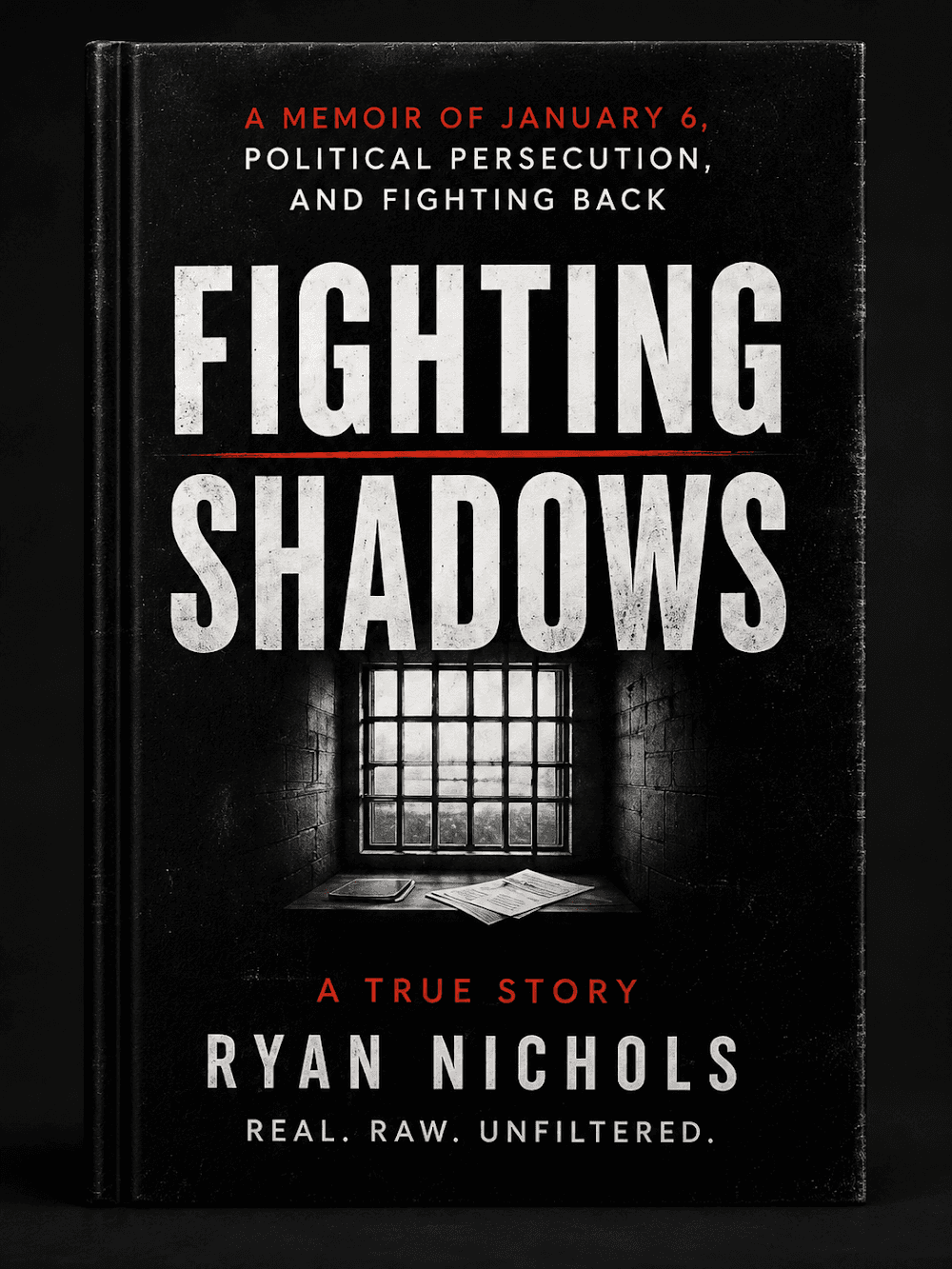
Follow the case
The record is still being written. Get one email when something new drops on it.
Hire Ryan
I built this site. Want one that brings your business real leads? Start with a free 30-minute call.See the services



Tap how this hits you — no signup, everyone sees the count
Share this post — get it back in front of people
Comments
Speak here
Create an account to comment.
This is where people can say what gets buried or cancelled elsewhere. Comments are signed-only, moderated, and tied to a real profile so the record stays usable.
No approved comments yet. Create an account and put the first opinion on the record.