
Should Texas Require Paid Heat Rest Breaks for Outdoor Workers?
Texas urges water, shade, and rest for workers in dangerous heat. Should the state require paid heat breaks, or leave each worksite to set its own plan?
By Ryan Nichols
- 144 total reach
- 0 reading now•0 active 24h
- 0 shares•0 inbound
- 0 comments
By Ryan Nichols
Texas tells employers what good heat safety looks like.
Cool water. Shade or air conditioning. Acclimation for new and returning workers. Training. Emergency plans. Work schedules that reduce strenuous activity during the hottest part of the day. Frequent rest in a cooler place.
The unsettled question is whether some of those practices should become a statewide legal floor.
Federal workplace regulators are still considering a national heat standard. Texas law, meanwhile, limits cities and counties from creating their own employment-break rules when those rules exceed or conflict with state or federal law.
That leaves room for a serious disagreement.
Should Texas require paid heat rest breaks for outdoor workers when conditions cross an objective danger threshold, or should employers keep the flexibility to design their own safety plans?
The legal and agency sources in this article were verified August 17, 2026. This is editorial analysis, not legal or medical advice.
Reader poll
Who should set the minimum heat-break rule?
Tap your answer to vote
One tap. Free and anonymous. No signup to vote.
What the current rules actually say
The federal Occupational Safety and Health Administration has proposed a heat-injury and illness-prevention standard for indoor and outdoor workplaces.
According to OSHA's current rulemaking page, the proposal would require covered employers to create plans for evaluating and controlling heat hazards. It includes trigger levels, training, emergency response, and protective measures. The public hearing ended July 2, 2025, and the post-hearing comment period ended October 30, 2025.
As of August 17, 2026, it remains a proposed rule, not a final nationwide heat standard.
OSHA did update its National Emphasis Program for heat hazards on April 10, 2026. That program directs inspections and outreach toward high-risk industries. It does not turn every recommendation into one automatic break schedule for every Texas worksite.
Texas guidance is direct about prevention. The Texas Department of Insurance, Division of Workers' Compensation, advises employers to provide water, allow frequent rest in shade or air conditioning, change schedules during peak heat, and gradually acclimate new or returning workers. Its outdoor-worker safety guidance and heat-hazard guidance treat heat illness as preventable.
Guidance and a legal entitlement are not the same thing.
Texas chose statewide control over local break rules
In 2023, the Legislature passed House Bill 2127, the Texas Regulatory Consistency Act.
The enrolled bill text says the Labor Code occupies fields that include employment breaks, scheduling practices, and other terms of employment that exceed or conflict with federal or state law. The law limits municipalities and counties from maintaining their own rules in those occupied fields unless another statute expressly authorizes them.
Supporters described that structure as protection against a patchwork of different local mandates.
Critics saw it as removing local tools without replacing them with an equally specific statewide heat-break standard.
Both arguments matter to today's question. If Texas does not want cities writing separate rules, should the state write one clear baseline itself?
The strongest case for a statewide requirement
The case for a mandate begins with a power imbalance.
A worker may understand the danger and still believe that asking for shade or a break will cost hours, reputation, or the job. A policy that exists only at a supervisor's discretion may disappear when a deadline is tight.
A statewide floor could make the expectation visible before the shift starts.
It could use objective triggers such as measured heat conditions, workload, protective clothing, and acclimation status. It could require paid recovery time, accessible water, a cooler rest location, and an emergency response plan.
The statewide approach also fits the consistency argument behind House Bill 2127. One Texas rule would be easier for multi-city employers to understand than separate ordinances in Austin, Dallas, Houston, Longview, and every other jurisdiction.
The goal would not be to eliminate hard outdoor work. It would be to stop safety from becoming optional precisely when production pressure is highest.
The strongest case against a fixed break mandate
Outdoor work is not one job.
A roofing crew, utility team, ranch hand, road crew, delivery driver, emergency responder, and shaded equipment operator face different combinations of heat, humidity, exertion, clothing, and access to cooling.
A rigid rule based only on the clock could force a crew to stop during a safer window and resume when conditions are worse. It could create paperwork without improving the actual emergency plan. Small employers could carry new costs while national rules remain unsettled.
Opponents can reasonably argue for performance-based requirements instead. Require water, acclimation, monitoring, cool-down access, training, and emergency response, but let each employer decide how breaks fit the job.
They can also argue that Texas should wait for OSHA to finish the federal process so employers do not build one compliance system and replace it with another.
Editorial analysis: set a floor without pretending every job is the same
Texas should not have to choose between no enforceable baseline and one inflexible schedule for every outdoor task.
A workable statewide standard could activate only when objective heat conditions and work intensity cross defined thresholds. It could protect paid cool-down time when needed while allowing equivalent safety plans that meet or exceed the floor.
It should account for acclimation, protective gear, emergency work, continuous processes, and short-duration tasks. It should also prohibit retaliation against a worker who reports symptoms or uses a protected cool-down period.
That approach would recognize the strongest concern on both sides.
Workers need a right that does not vanish under pressure. Employers need room to manage real conditions instead of following a clock that knows nothing about the work.
A five-point test for any proposal
Before supporting a Texas heat-break bill, ask whether it answers five questions:
- What measurable condition activates the protection?
- Does the rule account for humidity, workload, clothing, and acclimation?
- Is cool water and a cooler recovery place actually available?
- Can an employer use an equivalent plan that protects workers better?
- Can a worker report symptoms or take protected recovery time without retaliation?
A slogan cannot answer those questions. A serious policy has to.
The same facts-first discipline guided Should Every Texas Graduate Have CPR and Bleeding Control Certification?. Training, certification, cost, flexibility, and public benefit can all matter at once.
It also matters in Should Texas Make It Easier to Repair the Devices You Own? and Should New Texas Data Centers Bring Their Own Power?. The hard question is rarely whether a problem exists. It is who carries the duty, who pays, and how the rule handles exceptions without swallowing the protection.
The question
Texas heat is not theoretical to the people laying roofs, repairing lines, pouring concrete, loading equipment, and keeping outdoor work moving.
Neither are the operational costs and decisions carried by employers.
So where should the line be?
Should Texas require paid heat rest breaks when objective conditions become dangerous, or should employers remain free to build their own heat-safety plans without a state break mandate?
Reader poll
Which Texas approach is strongest?
Tap your answer to vote
One tap. Free and anonymous. No signup to vote.
Sharing this is the biggest help. Put it in front of one more person.
OG artwork disclosure: The social image is an original synthetic editorial illustration. It is not evidence of a specific Texas worksite, employer, worker, or safety violation.
You made it to the end
Most people quit at the headline. You didn’t.
So don’t stop here. Pick one.
Read the book
Fighting Shadows is the whole story in my own words: the road into January 6, the D.C. jail, and the fight to get the record out.See the book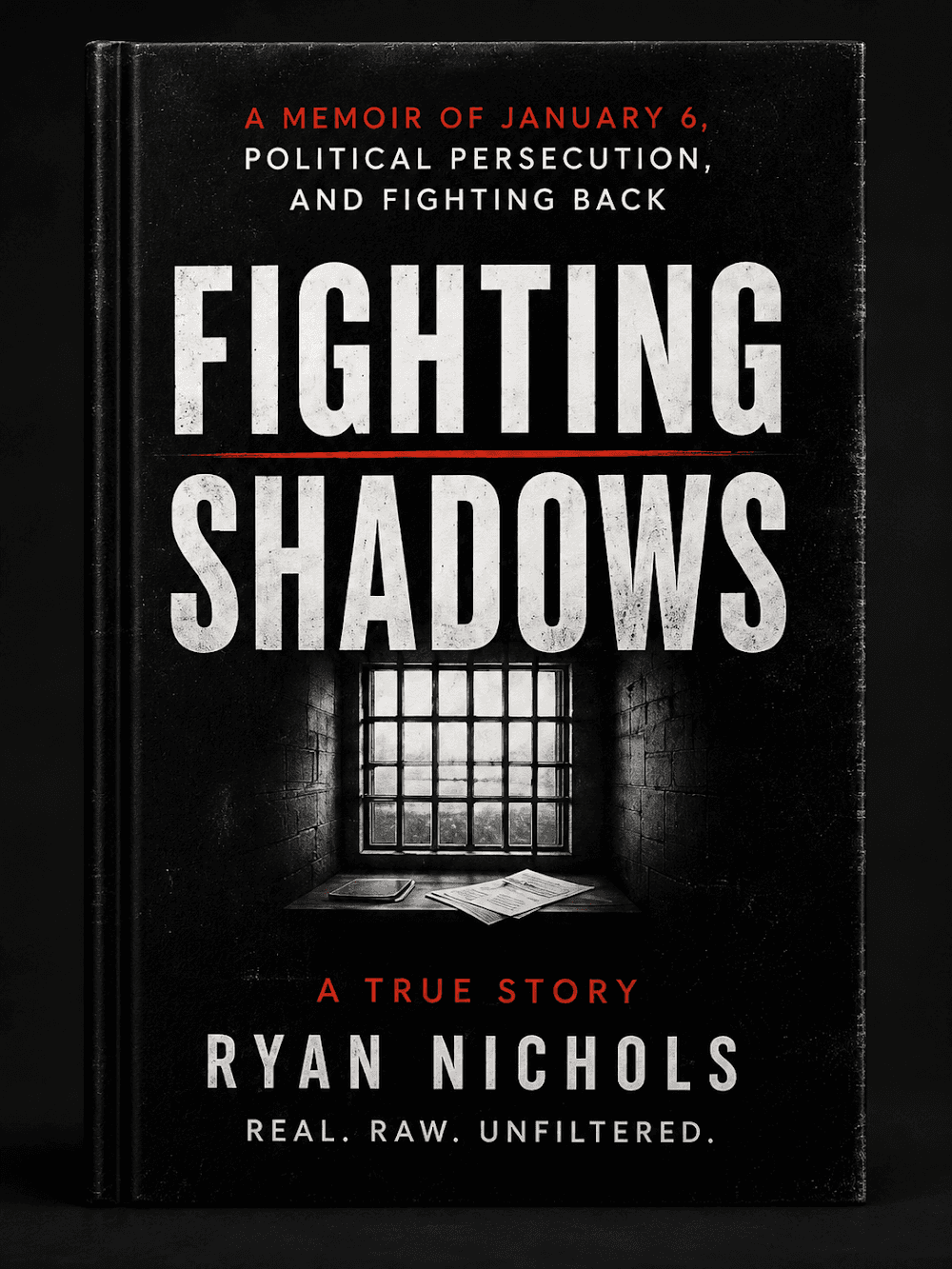
Follow the case
The record is still being written. Get one email when something new drops on it.
Hire Ryan
I built this site. Want one that brings your business real leads? Start with a free 30-minute call.See the services


Tap how this hits you — no signup, everyone sees the count
Share this post — get it back in front of people
Comments
Speak here
Create an account to comment.
This is where people can say what gets buried or cancelled elsewhere. Comments are signed-only, moderated, and tied to a real profile so the record stays usable.
No approved comments yet. Create an account and put the first opinion on the record.