
Should One Library Book Cost a Texas School an Entire Letter Grade?
Texas leaders may tie school library compliance to A through F ratings. Here are the strongest arguments for protecting children and preserving honest grades.
By Ryan Nichols
- 225 total reach
- 0 reading now•0 active 24h
- 0 shares•3 inbound
- 0 comments
By Ryan Nichols
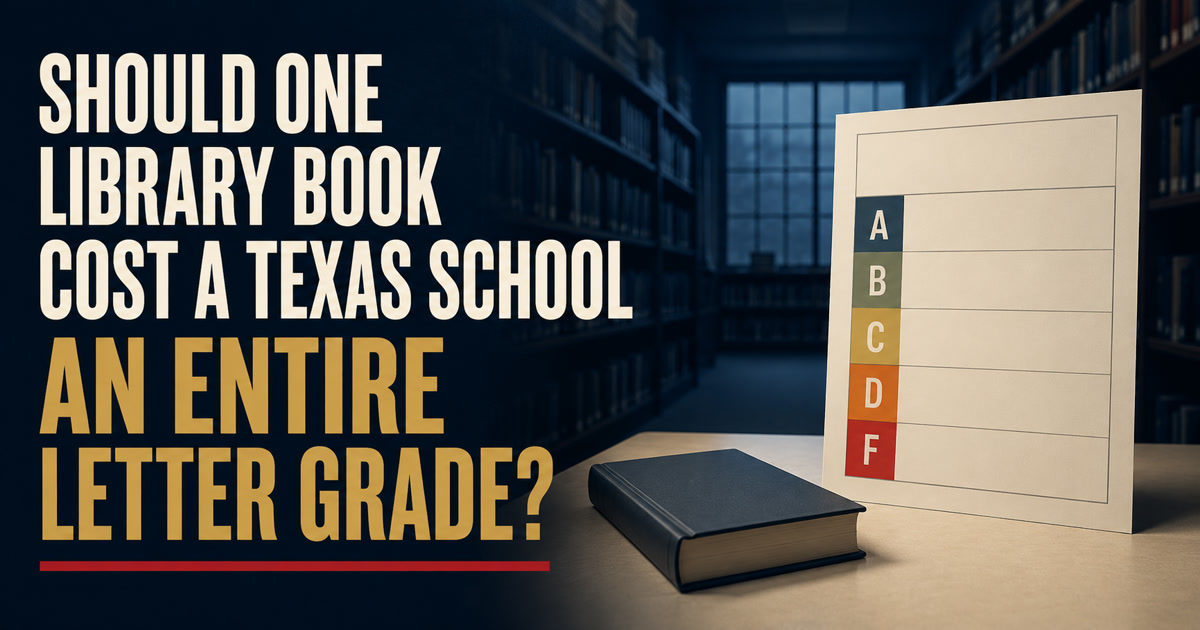
A Texas school can teach children to read, improve test results, graduate more students, and still face a lower state rating under a proposal tied to one disputed library book.
That is the enforcement idea Texas Lt. Gov. Dan Patrick described at an August 19 press conference.
The underlying concern is real. Public schools should not hand sexually explicit material to children and call every objection censorship.
The countervailing concern is also real. An academic accountability grade should tell parents how a school is educating students, not quietly become a penalty box for every other policy dispute.
Texas has already changed who controls school library decisions. Now the question is whether the state should attach those decisions to the A through F system.
Reader poll
What should a Texas school rating measure first?
Tap your answer to vote
One tap. Free and anonymous. No signup to vote.
What Texas law already requires
Senate Bill 13, enacted in 2025, gives parents access to school library catalogs and checkout records. It lets a parent submit a list of materials the parent's child may not check out or use outside the library.
The law also requires districts to use acquisition and challenge procedures. School boards approve proposed library materials in open meetings after a public review period. Parents can petition for a local school library advisory council, and challenged material becomes unavailable to students while the district decides what to do.
The statutory standards prohibit harmful material, sexually explicit material as rated by a vendor, and material that is pervasively vulgar or educationally unsuitable. The law also recognizes local community values and age appropriateness.
Texas Education Agency guidance directed school systems to update their acquisition policies, provide catalog access, establish challenge procedures, and determine whether to create local advisory councils.
So this is not a choice between rules and no rules. Texas already has rules.
The current dispute is about compliance and consequences.
What was proposed this week
On August 19, Patrick said lawmakers should reduce a district's state accountability rating by one letter if a prohibited book remains in a school library. The Texas Tribune reported that he described the consequence as applying even if one book remained.
That proposal is not current law. It would have to move through a future legislative session.
The report also described a broader disagreement over what belongs in a school library and who should decide. Patrick argued taxpayer money should not purchase graphic sexual material for students. Librarians and literacy advocates argued that broad removal efforts can sweep in books with legitimate educational or literary value.
Those positions should not be blurred together.
It is possible to believe some material plainly does not belong in a children's school library while also believing a statewide academic grade is the wrong enforcement device.
Reader poll
If a district violates library law, what consequence fits best?
Tap your answer to vote
One tap. Free and anonymous. No signup to vote.
The strongest case for using the A through F rating
A law without a consequence can become a suggestion.
Supporters of the proposal can reasonably argue that Texas spent years debating the standard, placed elected school boards in charge, created public review procedures, and gave parents specific rights. If a district still refuses to comply, the state needs leverage strong enough to matter.
An A rating carries public trust. A district should not receive the state's highest mark while ignoring a state requirement meant to protect children.
The rating penalty could also create urgency where ordinary complaint processes move slowly. Parents do not have unlimited time to attend meetings, file challenges, appeal decisions, and monitor shelves across multiple campuses.
The pro-penalty position is not necessarily that a book matters more than reading or math. It is that lawful operation and student protection are part of school quality, and a rating that ignores open defiance may be incomplete.
The strongest case against it
An A through F grade is supposed to communicate something specific.
Texas accountability ratings currently draw heavily from student achievement, school progress, and closing performance gaps. Parents, employers, homebuyers, and communities use those grades as shorthand for educational performance.
If a district can lose a letter over one library dispute, the grade stops being an honest summary of the thing people think it measures.
There is also a due-process problem. Books contain context. Age levels differ. A title appropriate for an older high school student may be plainly wrong for an elementary campus. Reasonable people may disagree about whether a passage is pervasively vulgar, educationally suitable, or protected by an exception.
A penalty attached before a clear, appealable determination could punish students and teachers for a trustee's decision. It could affect a community's reputation without improving instruction by one minute.
Texas can enforce a library law directly. It can order removal after review, require public reporting, investigate noncompliance, or hold elected trustees accountable. None of those tools requires relabeling academic performance.
Ryan's Take: Protect children and keep the grade honest
Graphic sexual material does not belong in a school library simply because somebody put a literary label on it.
Parents deserve visibility. Challenges deserve a prompt decision. School boards should have to vote in public and explain what standard they applied.
But one disputed library book should not automatically lower an entire school's A through F rating.
Use the law that governs the library to enforce the library. Publish the challenged title, campus, age range, decision, reasoning, and appeal status. If a district defies a final lawful order, use a direct compliance penalty against the responsible district leadership.
Do not turn a grade parents read as a measure of learning into a political Swiss Army knife.
This site recently asked Should Texas Keep Grading Public Schools A Through F?. The core weakness identified there becomes sharper here: one letter cannot honestly carry every fact about a school.
Should Texas Make School Meals Free for Every Student? and Should Texas Require Middle and High Schools to Start at 8:30 or Later? show why education decisions deserve clear tradeoffs instead of slogans. Library enforcement deserves the same discipline.
The state should protect children. It should also tell the truth with its measurements.
Should one prohibited library book lower a Texas school's entire letter grade, or should the state enforce library law through a separate process?
Reader poll
Where do you draw the line?
Tap your answer to vote
One tap. Free and anonymous. No signup to vote.
Sharing this is the biggest help. Put it in front of one more person.
Verification note: Current and disputed claims were checked on August 23, 2026 against the enrolled text of Texas Senate Bill 13, Texas Education Agency implementation guidance, and contemporaneous reporting on the August 19 proposal. The proposed rating penalty is not current Texas law.
OG artwork disclosure: The social image is an original synthetic conceptual illustration. It does not depict a real school, student, library, report card, government record, or disputed book.
You made it to the end
Most people quit at the headline. You didn’t.
So don’t stop here. Pick one.
Read the book
Fighting Shadows is the whole story in my own words: the road into January 6, the D.C. jail, and the fight to get the record out.See the book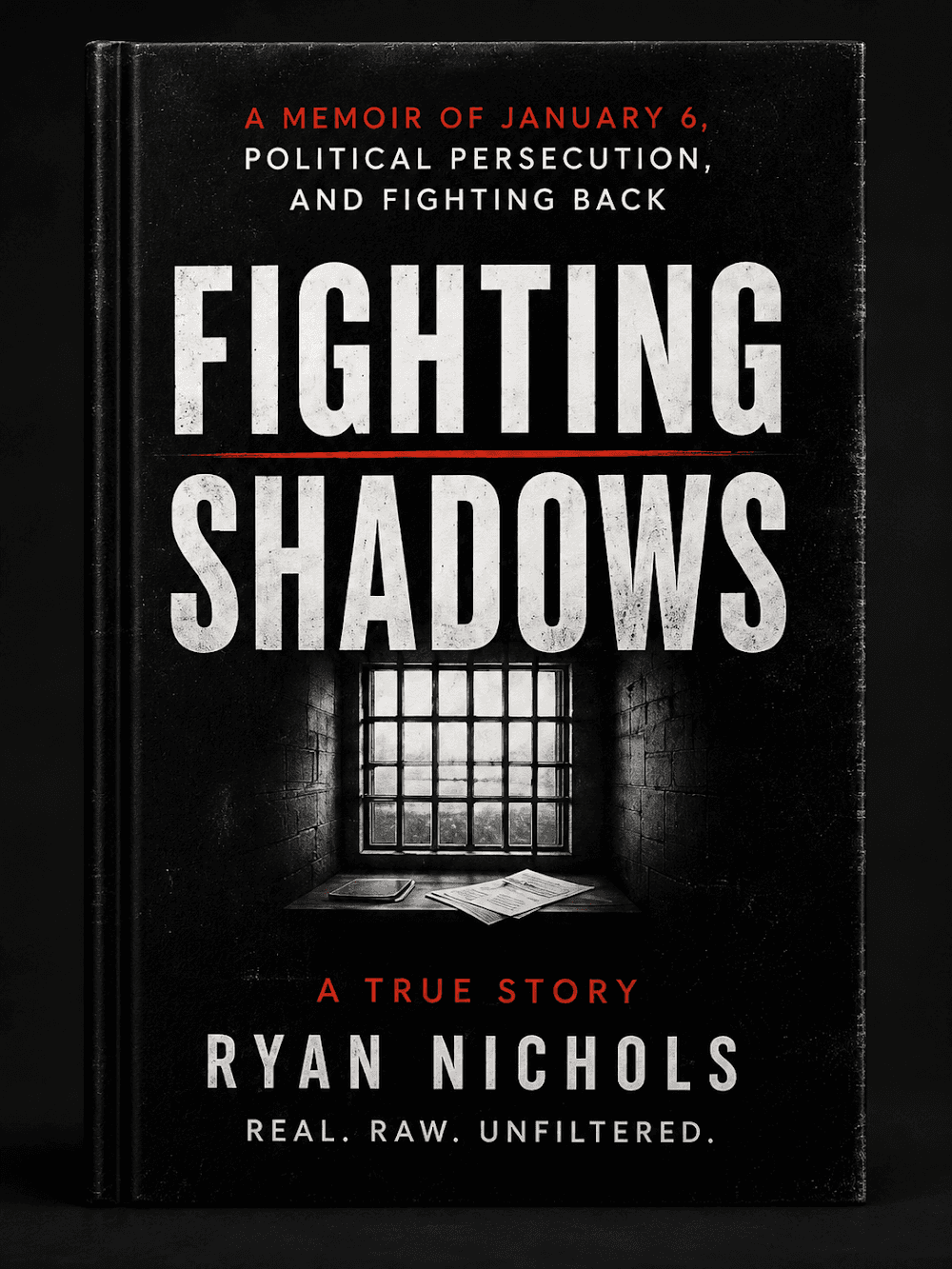
Follow the case
The record is still being written. Get one email when something new drops on it.
Hire Ryan
I built this site. Want one that brings your business real leads? Start with a free 30-minute call.See the services

Tap how this hits you — no signup, everyone sees the count
Share this post — get it back in front of people
Comments
Speak here
Create an account to comment.
This is where people can say what gets buried or cancelled elsewhere. Comments are signed-only, moderated, and tied to a real profile so the record stays usable.
No approved comments yet. Create an account and put the first opinion on the record.