
Four Life Jackets, Four Faiths, and a Choice Made in the Dark
When USAT Dorchester sank in 1943, four Army chaplains gave away their life jackets. Their final act still defines service across differences today.
By Ryan Nichols
- 210 total reach
- 0 reading now•0 active 24h
- 0 shares•0 inbound
- 0 comments
By Ryan Nichols
Facts last checked: August 11, 2026, 5:00 a.m. Central
The lights went out in the North Atlantic.
A German torpedo had struck the U.S. Army transport Dorchester below the waterline shortly before 1 a.m. on February 3, 1943. The blast killed people below deck, knocked out the ship's electrical system, and turned an overcrowded evacuation into darkness, steam, ice, and panic.
Four Army chaplains moved toward the people who needed help.
They were George L. Fox, a Methodist minister; Alexander D. Goode, a Jewish rabbi; John P. Washington, a Roman Catholic priest; and Clark V. Poling, a Dutch Reformed minister.
They helped people reach the deck. They handed out life jackets. When the supply ran out, they gave away their own.
Four different lives. Four faith traditions. Four chances to survive placed on somebody else.
Reader poll
What does service require first?
Tap your answer to vote
One tap. Free and anonymous. No signup to vote.
The ship had minutes, not hours
The U.S. Army's Chaplain Corps history says Dorchester carried 902 service members, merchant seamen, and civilians toward Greenland.
The ship was traveling through waters threatened by German submarines. Its captain had warned passengers to keep clothing and life jackets close.
The warning did not make the evacuation orderly.
The torpedo disrupted power. The ship listed. Some lifeboats could not be launched. People who reached the deck faced freezing water and very little time.
Army records describe the chaplains calming frightened people, directing them toward safety, helping the wounded, and distributing life jackets. When no jackets remained, each chaplain removed his own and gave it to another person.
The Army's 2026 remembrance records 672 deaths. Only 230 people survived.
Official accounts based on survivor recollections say the chaplains were last seen together on the deck, arms linked and praying as the ship went down.
There is no need to invent dialogue for that moment. The choice is enough.
Unity was not agreement
The Four Chaplains story is often told as a lesson in unity. That word can become soft if we are not careful.
They did not become the same person. They did not erase doctrine, history, or identity. A rabbi remained a rabbi. A priest remained a priest. Two Protestant ministers remained grounded in their own traditions.
Their unity was not sameness.
It was a shared answer to the person standing in front of them.
No official account says they asked who deserved the next jacket. They saw a human being without one, and the argument ended there.
That is harder than posting a slogan about coming together. Real unity costs position, comfort, time, pride, and sometimes safety. It shows up when different people still recognize the same duty.
Reader poll
What most often blocks unity now?
Tap your answer to vote
One tap. Free and anonymous. No signup to vote.
Faith became an action
Faith can be reduced to language people use when no practical option remains.
The chaplains did pray. Before that final image on the deck, they acted.
They organized. They guided. They distributed equipment. They stayed calm enough to help other people move. Then they surrendered the equipment that could have kept them alive.
Prayer and action were not competitors.
That same pattern appears in ordinary responsibilities. A person can pray for a neighbor and bring the meal. Pray for wisdom and make the difficult call. Pray for rescue and train before the emergency. Prayer can begin the next honest step, but it should not become a hiding place from the step.
The Four Chaplains did not control whether the ship was hit. They controlled what they did with the minutes after it happened.
The last available jacket
Most service does not ask for a life.
It asks for the last available seat, the free evening, the charged phone, the dry pair of gloves, the willingness to stay after everybody else has decided the emergency is no longer convenient.
The lesson is not to destroy yourself proving that you care. Durable service needs boundaries, teams, training, and replacement equipment. The rescue of USS Squalus proved what preparation can make possible before a crisis arrives.
But there are moments when the need is real, the choice belongs to you, and nobody can make it cheaper.
Character becomes visible in that gap.
What do you do when the resource is yours, the other person has none, and there is no applause in the dark?
The honor came later
The Four Chaplains received the Distinguished Service Cross and Purple Heart posthumously. Congress later authorized a unique Chaplain's Medal for Heroism, presented to their families in 1961. February 3 is observed as Four Chaplains Day.
Those honors preserved the story. They did not create the sacrifice.
The decision happened first, on a dark deck, before any ceremony, memorial, or medal could make it public.
That is where most meaningful service begins.
Do the next right thing while it is still costly and mostly unseen.
If this story speaks to the part of faith that must become action, read Pray, Then Take the Next Honest Step.
Reader poll
Where can your faith become action?
Tap your answer to vote
One tap. Free and anonymous. No signup to vote.
Sharing this is the biggest help. Put it in front of one more person.
Primary and authoritative sources
- U.S. Army, Heroes of the U.S. Army: Alexander D. Goode and the Four Chaplains
- U.S. Army Chaplain Corps history, The Four Chaplains
- U.S. Army, Honoring the Four Chaplains: A Legacy of Sacrifice
- Veterans Affairs, Echoes of Sacrifice
OG artwork disclosure: The social image is an original synthetic historical reconstruction. It is not an authentic photograph of USAT Dorchester, its passengers, the Four Chaplains, or the 1943 sinking.
You made it to the end
Most people quit at the headline. You didn’t.
So don’t stop here. Pick one.
Read the book
Fighting Shadows is the whole story in my own words: the road into January 6, the D.C. jail, and the fight to get the record out.See the book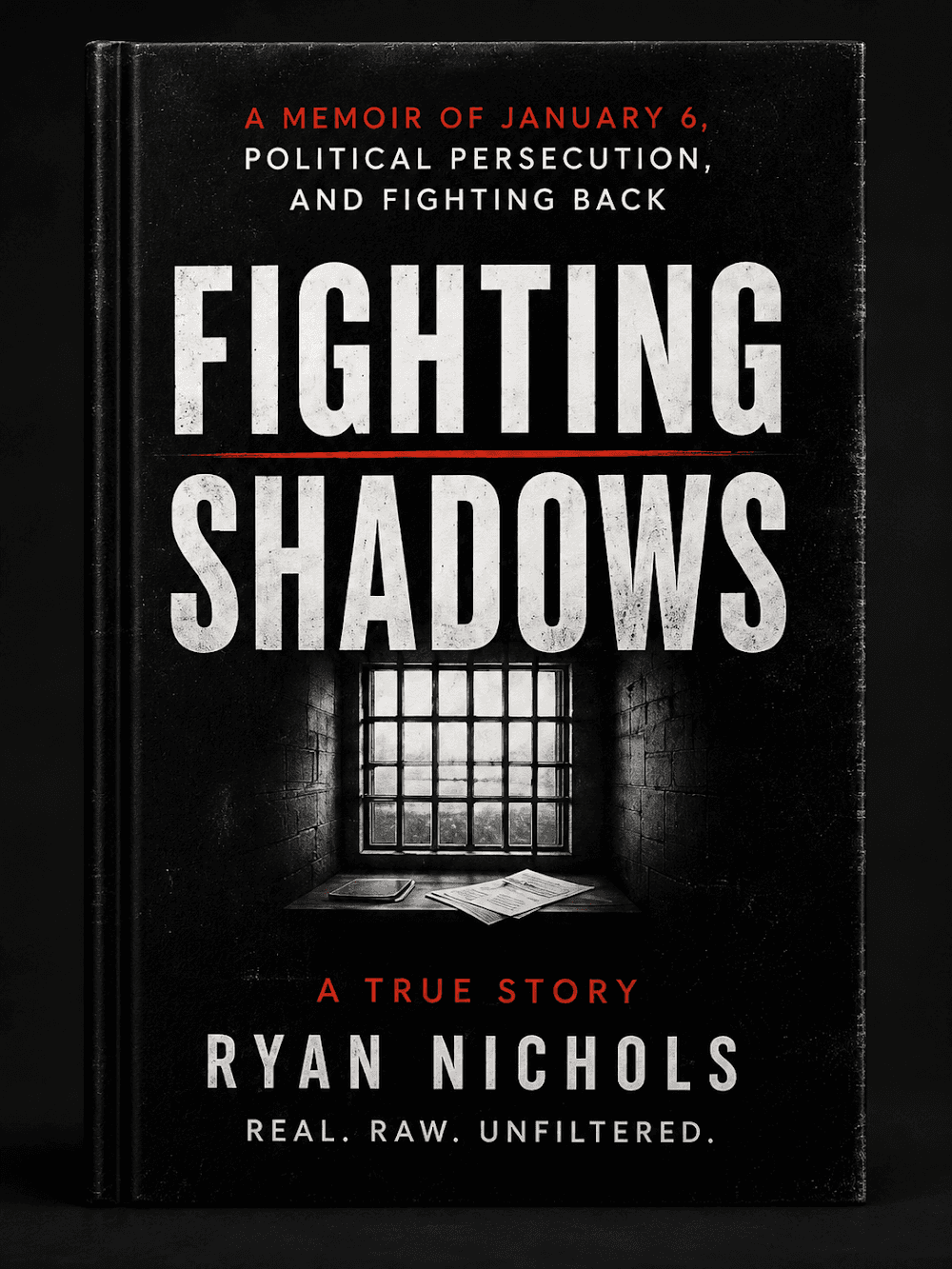
Follow the case
The record is still being written. Get one email when something new drops on it.
Hire Ryan
I built this site. Want one that brings your business real leads? Start with a free 30-minute call.See the services



Tap how this hits you — no signup, everyone sees the count
Share this post — get it back in front of people
Comments
Speak here
Create an account to comment.
This is where people can say what gets buried or cancelled elsewhere. Comments are signed-only, moderated, and tied to a real profile so the record stays usable.
No approved comments yet. Create an account and put the first opinion on the record.