
Being Needed Is Not the Same as Being Responsible
Being needed can feel meaningful, but it can also hide overload. Use this simple responsibility filter to decide what is truly yours today with clarity.
By Ryan Nichols
- 185 total reach
- 0 reading now•0 active 24h
- 0 shares•0 inbound
- 0 comments
By Ryan Nichols

Being needed can feel like proof that you matter.
The phone rings because you are the dependable one. The message lands because you usually know what to do. The extra problem finds your desk because people have learned that you will somehow make room.
There is honor in being reliable. There is also danger in letting every request become an assignment.
Some people are exhausted because they are avoiding their responsibilities. Others are exhausted because they keep adopting responsibilities that were never theirs. The outside can look the same. Both people are tired. Only one of them needs more discipline. The other may need a more honest definition of duty.
A request is not automatically a responsibility
Someone can need help without you being the person required to provide it.
That sentence can feel cold if you have built your life around saying yes. It is not cold. It is accurate. You can care about a problem, offer a useful answer, and still decide that the ownership belongs somewhere else.
Responsibility has a source. It may come from a promise you made, a role you accepted, a consequence you caused, a duty you freely chose, or a clear moral obligation. Need alone does not settle the question.
If need were the only test, no human being could ever stop. There is always another crisis, another unfinished task, another person disappointed that you cannot do more.
{{< poll id="needed-responsible-1" question="What most often turns a request into pressure for you?" options="I do not want to disappoint someone|I know I can fix it|I confuse urgency with duty|I have trouble saying what I can carry" >}}
Being capable does not make you assigned
You may be the fastest person in the room. You may understand the system better. You may be able to finish the job with less drama than anybody else.
That still does not mean the job is yours.
Capability answers, “Can I do this?” Responsibility answers, “Am I the one who should own this?” Those are different questions.
When capable people fail to separate them, they become the emergency exit for every weak plan around them. They rescue deadlines nobody managed. They absorb consequences nobody wanted. They become so useful to broken systems that the systems never have to improve.
Then resentment grows. Not always because other people are cruel, but because a yes was given where an honest no was needed.
The cost is not just your time
Every false responsibility competes with a real one.
The extra hour you give to somebody else’s avoidable problem has to come from somewhere. It may come from the promise you made to finish your own work. It may come from sleep. It may come from prayer, exercise, recovery, or the quiet thinking required to make a good decision.
This is why boundaries are not merely about comfort. They are about stewardship.
You cannot protect every commitment by adding more effort. At some point you have to choose which commitments deserve protection. If you are carrying too much already, read Tell the Truth About What You Can Carry Today. Honesty about capacity is not weakness. It is the beginning of trustworthy work.
Use the 15-minute responsibility filter
Take one request that is pressing on you today. Set a timer for 15 minutes and write your answers to these five questions.
- What was actually requested? Remove the story, guilt, and imagined consequences. Write the request in one sentence.
- What makes this mine? Name the promise, role, action, or moral duty that creates responsibility. If you cannot name it, notice that.
- What happens if I say no or not now? Separate real harm from discomfort, disappointment, or a delayed timeline.
- What real responsibility would this displace? Name the work, rest, relationship, or commitment that would lose time.
- What is the smallest honest response? It may be yes. It may be no. It may be a referral, a deadline, ten minutes of help, or one clear piece of information.
Do not use the filter to escape a duty you already accepted. Use it to stop manufacturing duties out of fear.
{{< poll id="needed-responsible-2" question="Which question in the responsibility filter do you most need today?" options="What makes this mine?|What would this displace?|What happens if I say no?|What is the smallest honest response?" >}}
Give a clean answer
Long explanations often become invitations to negotiate. Try a complete sentence instead.
“I cannot own that, but I can point you to the right place.”
“I can give this 20 minutes, but I cannot take the whole project.”
“I said yes too quickly. I need to correct that before it becomes a broken promise.”
“That is important, but it is not something I can carry this week.”
You do not have to make the other person agree that your limit is reasonable. You do have to state it honestly and accept the discomfort that follows.
If the request truly belongs to you, stop circling it. Close One Loop Before You Open Another gives you a practical way to finish the responsibility you have named. If it does not belong to you but you need support saying so, use the help-mapping exercise in Ask for the Help You Can Actually Name.
The hard truth
Sometimes being needed becomes an identity. If nobody is asking, fixing, praising, or depending on you, the silence feels like rejection.
That is a dangerous reason to accept work.
Your worth is not measured by how many emergencies can reach you. Reliability is good. Martyring your real obligations to preserve the feeling of being indispensable is not.
Today, choose one thing that is truly yours and do it well. Release one thing that is not. Give both decisions a clean name.
{{< poll id="needed-responsible-3" question="What will you do after reading this?" options="Own one real duty|Set one honest limit|Correct a rushed yes|Ask for help with something truly mine" >}}
Your concrete takeaway is simple: complete the 15-minute responsibility filter before you answer the next request that arrives with more pressure than clarity.
{{< share >}}
Editorial visual disclosure: The header image is an original AI-assisted editorial illustration. It does not depict a real person, event, document, or location.
You made it to the end
Most people quit at the headline. You didn’t.
So don’t stop here. Pick one.
Read the book
Fighting Shadows is the whole story in my own words: the road into January 6, the D.C. jail, and the fight to get the record out.See the book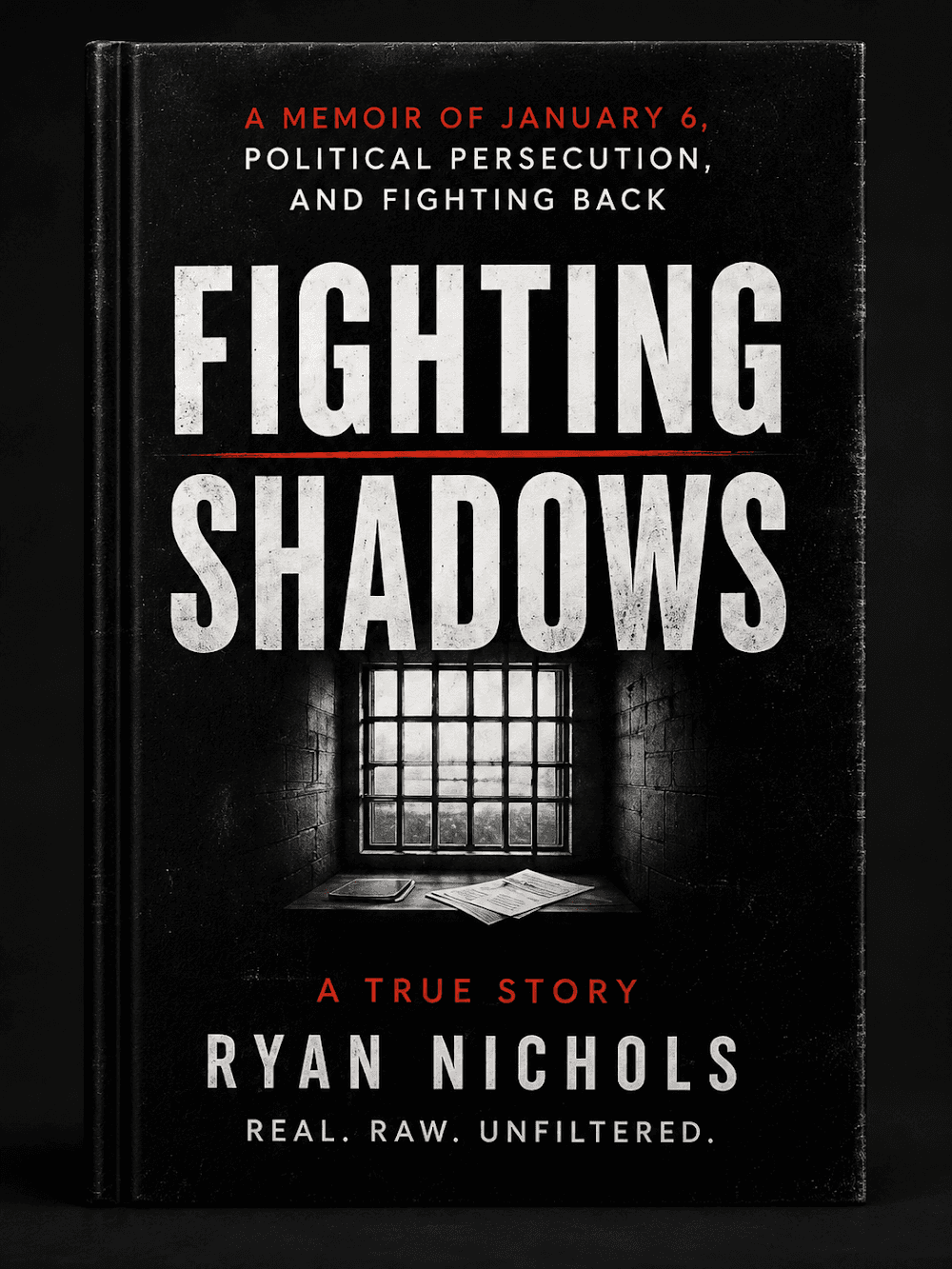
Follow the case
The record is still being written. Get one email when something new drops on it.
Hire Ryan
I built this site. Want one that brings your business real leads? Start with a free 30-minute call.See the services



Tap how this hits you — no signup, everyone sees the count
Share this post — get it back in front of people
Comments
Speak here
Create an account to comment.
This is where people can say what gets buried or cancelled elsewhere. Comments are signed-only, moderated, and tied to a real profile so the record stays usable.
No approved comments yet. Create an account and put the first opinion on the record.